Trump's Iran Policy Sparks Generational Rift
Young Trump voters show stark opposition to Iran war
Model Diplomat7 min readNorth America
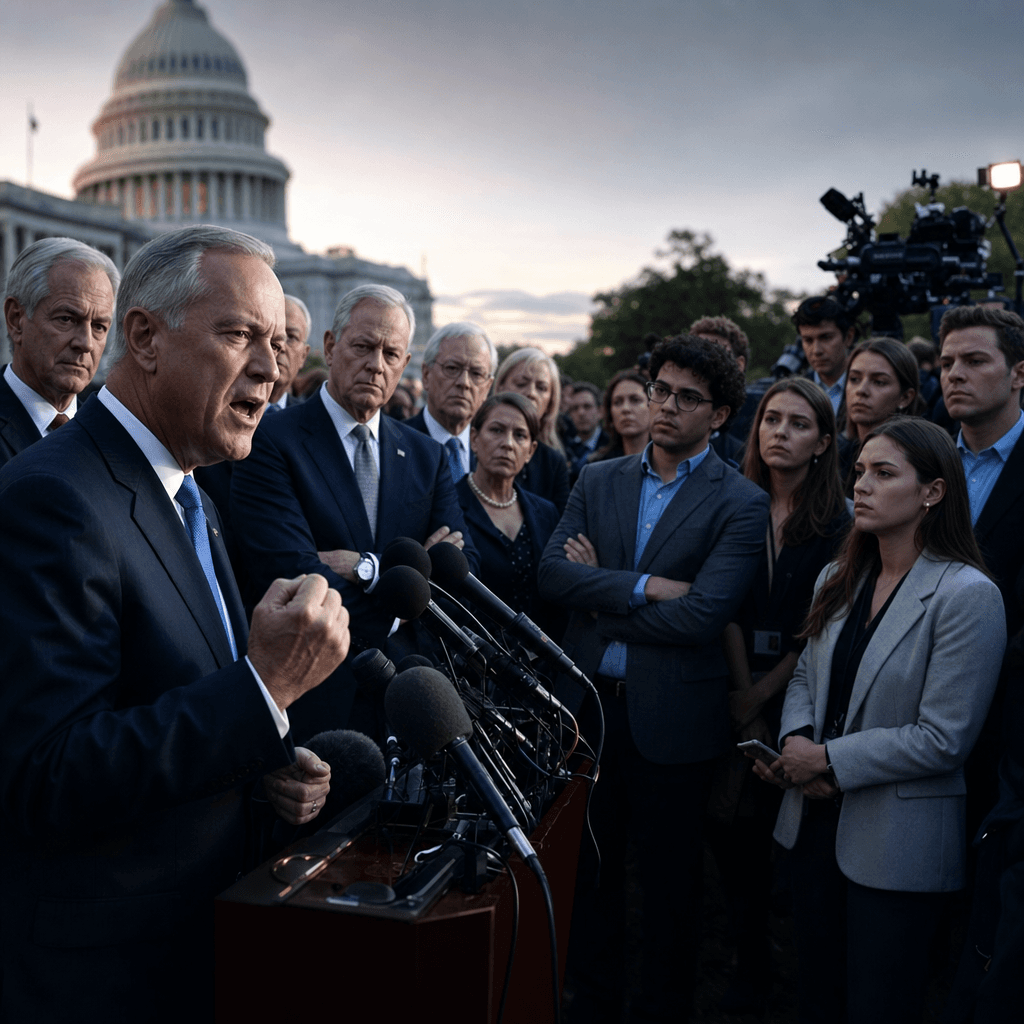
Trump's Iran War Opens a Generational Rift Inside MAGA
Young Trump voters back the Iran war by just +8 points versus +53 for the coalition overall — a generational fracture that is redrawing the MAGA movement and the 2026 midterm map.
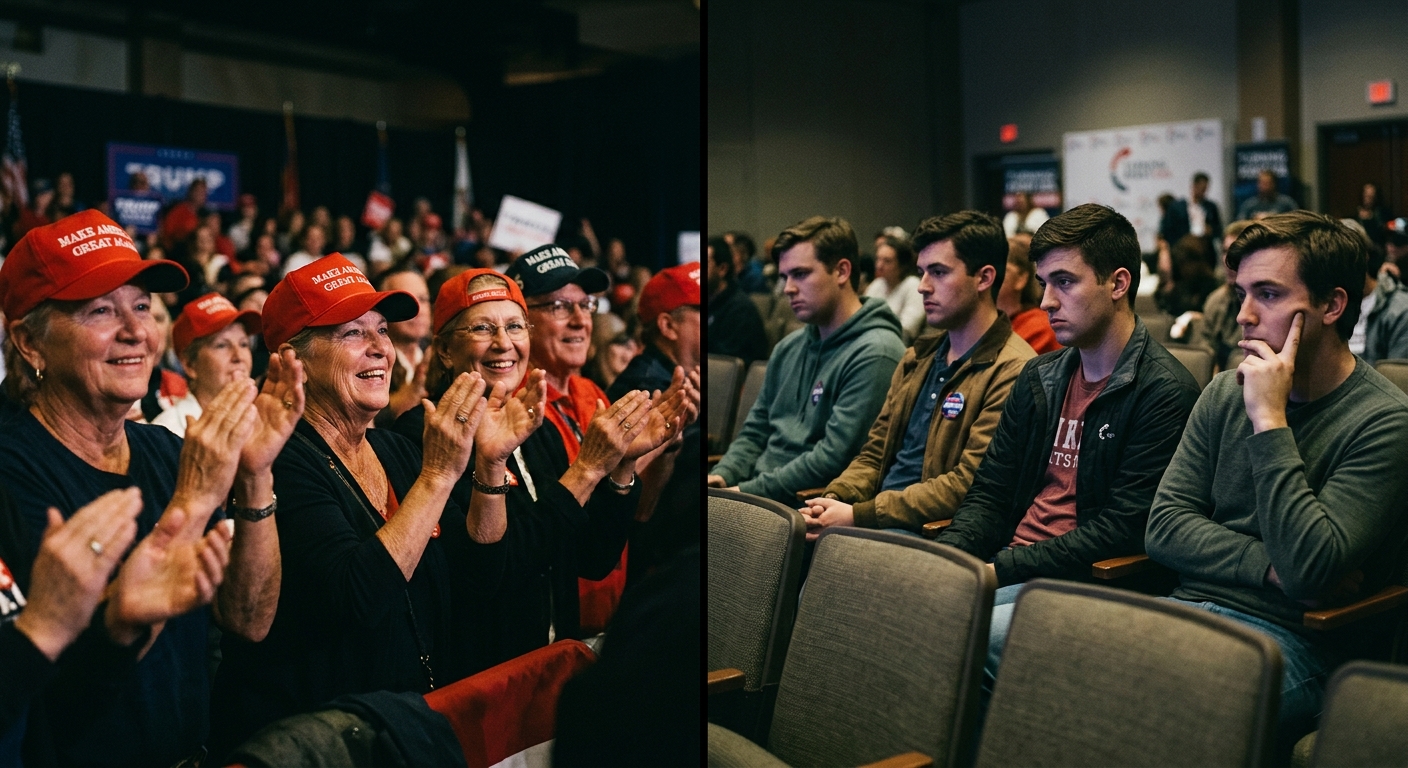
On March 14, 2026, an Ipsos survey of 804 Americans who voted for Donald Trump in 2024 measured net support for his war on Iran at plus-53 points — a landslide, except in one cohort. Among Trump voters aged 18 to 29, the same margin collapsed to plus-8. That 45-point generational gap, reported by the Quincy Institute and The American Conservative, is the sharpest quantitative evidence yet that the war Trump launched on February 28 has done what nothing in his first term managed: it has severed the emotional contract between the MAGA movement and the young men who ratified its return. The war is popular with the base Trump inherited. It is unpopular with the base he built. And with the Senate voting 50–48 on June 23 to invoke the War Powers Act for the first successful time in the statute's 53-year history, the split is no longer just a polling artifact — it is now a legislative record.
The numbers that expose the fracture
Pew Research's March survey found that 84% of Republicans aged 45 and older approved of Trump's Iran conduct, but only 49% of Republicans aged 18 to 29 did — a 35-point intra-party spread the BBC's CPAC dispatch called the clearest generational break in the modern GOP. NPR/PBS News/Marist put the picture in starker relief: overall approval of Trump's handling of Iran sat at 25% among 18–29s and 24% among Gen Z, versus 41% among the 45-plus cohort,
according to NPR's March 6 write-up.
The Quincy Institute/American Conservative poll is the sharpest instrument because it screens on 2024 Trump voters, filtering out the "MAGA-flight" problem that pollsters worry about — as Al Jazeera noted, some voters simply stop calling themselves MAGA once they disagree, artificially inflating in-group support. Even controlling for that, the age crosstab holds: young Trump voters back the war by +8, their 30-to-49-year-old peers by +26, and Trump voters overall by +53. Fifty-eight percent of all Trump voters said they would oppose sending U.S. ground troops into Iran,
per the Quincy poll.
By May, the drift had widened into the general electorate. NPR/PBS/Marist found Trump's Iran approval had slid to 33%, with 61% saying the military action had done more harm than good — including a quarter of Republicans. A
Brookings analysis of University of Maryland/Ipsos polling fielded May 15–21 found that a plurality of Republicans over 35 — the president's most reliable demographic — now judge the war's impact on U.S. interests to be more negative than positive.
Why this war, and not the others
Trump has ordered strikes before. He killed Qassem Soleimani in 2020 without a lasting political price. What is different in 2026 is that a generation of conservatives now defines "America First" against Middle East intervention — and the president is on the wrong side of the definition they learned from him.
The war's most influential critics are not Democrats. They are the same MAGA media figures who elected him. Tucker Carlson and Megyn Kelly — whose podcasts together reach more than 3.2 million listeners weekly, per NPR's April coverage — pivoted in the war's second month from criticizing the policy to criticizing the president personally, with Carlson calling Trump's threats to bomb Iranian civilian infrastructure "vile on every level." Candace Owens and former Rep. Marjorie Taylor Greene called publicly for the 25th Amendment to be invoked. Greene, who resigned from Congress in January over the Epstein files, told Megyn Kelly that "'Make America Great Again' was supposed to be America first, not Israel first,"
per NPR.
The ideological weight sits with Vice President JD Vance, whose opposition to starting the war was, as Brookings' Fiona Hill notes, "no secret" before the strikes — and whose 2028 prospects now rest on how loudly he can distance the movement from a war he never wanted. Rod Dreher, a conservative writer and Vance confidant, told the BBC he informally polled young men working in Republican politics on how many identified with Nick Fuentes's isolationist "groyper" faction and kept getting an answer around 30 to 40 percent,
BBC News reported. That is not a fringe. That is a wing.
The rebuke Congress could not stop
The generational rift produced the first successful concurrent War Powers Act resolution in the law's 53-year history. On June 3, the House passed H.Con.Res.86 by 215–208, with four Republicans — including Kentucky's Thomas Massie — crossing over,
according to the House Clerk's Roll Call 199. On June 23, the Senate followed 50–48. Bill Cassidy, Susan Collins, Lisa Murkowski, and Rand Paul crossed the aisle; John Fetterman was the only Democrat to vote against,
per the Senate's official roll call. Two Republican senators — Mitch McConnell and Dave McCormick — did not vote, a detail the White House cited to argue the resolution passed only through absence,
as the BBC reported.
The measure is symbolic — it faces a certain veto, and no two-thirds majority is in reach. But its constitutional weight is not. Federal law requires congressional approval to continue military action beyond 60 days; the strikes began February 28, and the Trump administration has argued that April's brief ceasefire reset the clock. Constitutional lawyer Bruce Fein told Al Jazeera that "the Constitution supplemented in part by the War Powers Resolution entrusts the war power exclusively to Congress and prohibits presidential wars like Iran," per Al Jazeera. A survey conducted weeks before the war began found 70% of the electorate agreeing that presidents should require congressional approval before military action,
Brookings reports.
Who wins, who loses
The immediate loser is the Republican midterm map. The Council on Foreign Relations calculates that Trump's approval has fallen 19.4 points since the strikes began. In the last five midterms, the president's party has lost an average of 31 House seats — and Republicans currently hold a five-seat majority. Brookings puts the generic Democratic ballot lead at 6.8 points by end of May, a nine-point swing from 2024. NPR/PBS/Marist has it at 10 points,
per its May 6 poll.
The clearest beneficiary is Vance, provided he plays the balance correctly. If the war continues to sour and Trump becomes term-limited on schedule, the 2028 nomination will be contested on whose "America First" is authentic — and Vance is the only senior figure who opposed the war before it was politically convenient. The clearest strategic loser, beyond Trump himself, is the neoconservative wing represented by Sen. Lindsey Graham, who cheered "unleashing" American power against Iran as a signal to Russia and China, per Al Jazeera's coverage of the strikes. That wing has now been outvoted in its own party's coalition on the war question — losing the audience, losing the podcasts, losing the under-30 vote.
The complication is turnout. Young voters disapprove of Trump but are also the least enthusiastic to vote — only 34% of 18–29s tell NPR/PBS/Marist they are "very enthusiastic" about the midterms. That is why Trump's July 2 primary defeat of Rep. Massie in Kentucky matters: the president can still discipline the caucus even as he loses the crowd. The generational rift is real in the country. It is not yet real inside the party's institutional apparatus.
Diplomat View
The evidence supports one call: Trump's Iran war has permanently changed what "America First" means, and he is on the losing side of the definition he authored. Not because he lost the base — his 2024 base is still with him by two-to-one — but because the coalition he added in 2024, young men who broke his way by a single point over Kamala Harris, has been cored out. The University of Maryland's Shibley Telhami is right that the Republican-over-35 turn against the war is the true inflection point; that cohort delivered Trump the presidency twice and does not defect casually. Vance is the coalition's insurance policy against Trump himself.
The forecast: Democrats gain the House in November 2026 by a margin between 15 and 30 seats, checked but not erased by GOP mid-cycle redistricting in Louisiana, Tennessee, Virginia, and Florida. The forecast changes if two things happen together — a durable Iran ceasefire holds through October, and gasoline retreats below $3.25 a gallon nationally. Absent both, the generational split hardens into a permanent feature of Republican coalition politics, and the 2028 primary becomes a referendum on whether MAGA was ever really about foreign wars in the first place.
What to watch next
- July 15, 2026 — Trump's expected veto of H.Con.Res.86; no override math exists, but the veto message will formalize the administration's Article II theory of the Iran authority.
- September 2026 — Fed decision on interest rates against a backdrop of Iran-driven gas prices; CFR flags this as the pivot on whether affordability displaces the war as the midterm's dominant issue.
- November 3, 2026 — Midterm election day. Watch turnout among 18–29 men in Michigan, Pennsylvania, Arizona, and Nevada, the states where Trump's 2024 gains with that cohort delivered the margin.
- Early 2027 — First 2028 GOP presidential straw polls. Vance's numbers against a hawkish challenger (Rubio, Cotton) will tell you whether the young-MAGA rift is a movement or a moment.
Discover more
Global Politics
Trump's Conflicting Messages on Iran War
Trump's mixed messages on Iran reflect a strategy of audience management, benefiting Tehran amid a complex geopolitical landscape.
US Politics
Next Generation Republicans
A leaked survey shows 39% of Republicans under 30 do not identify as MAGA, revealing a split in the GOP's future leadership.

Conflict & Security
Drone Warfare Killing Aid Workers at Unprec
Over 1,000 humanitarian workers killed in three years as cheap armed drones collapse legal protections. Gaza, Sudan, Ukraine, and DRC see deliberate targeting of aid convoys and hospitals with zero prosecutions.
Global
World Normalises Taliban as Afghan Women Eras
UN data shows Afghan women erased from public life as Russia recognises the Taliban, EU hosts officials in Brussels, and ICC warrants for gender persecution go unenforced.