Trump's Iran Deal Faces GOP Doubts
Republican skepticism complicates Trump's Iran strategy.
Model Diplomat3 min readNorth America
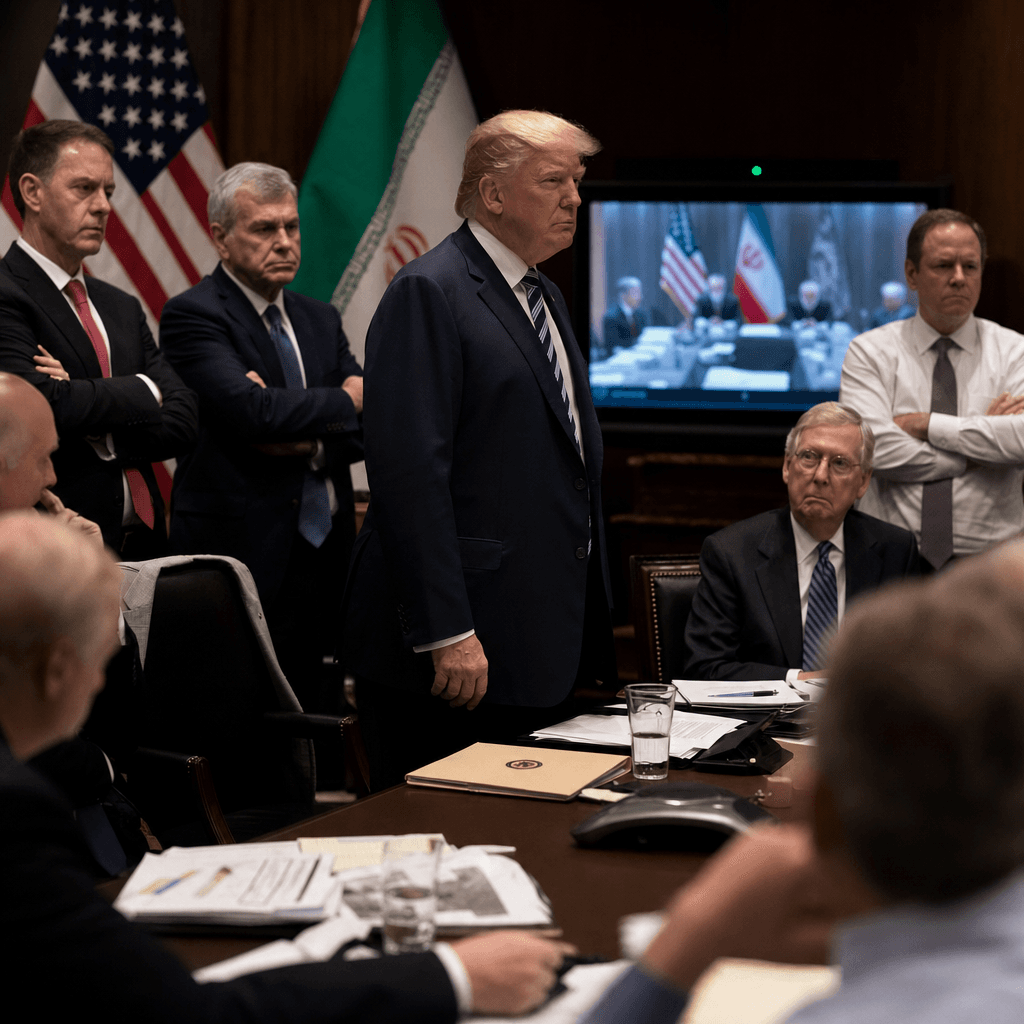
Trump’s Iran gambit runs into GOP skepticism
Trump is trying to sell a fragile Iran framework as victory, but the unresolved terms and Republican pushback suggest he has not yet banked the deal.
Donald Trump is leaning hard on a familiar asset: the claim that he “does not make bad deals.” The problem is that his own party’s hawks are not buying the first draft. In the latest reporting, Trump said a U.S.-Iran agreement was “largely negotiated,” while signaling that final details would come soon; but critics on Capitol Hill and in the Republican foreign-policy wing are treating that as a placeholder, not a settlement (The Guardian,
The New York Times).
The leverage is still with the most skeptical players
The immediate power dynamic is simple: Trump needs a deal fast, but Tehran, Congress, and even allied hard-liners know he is under pressure to avoid looking cornered. The proposed framework is still vague on the hardest questions — especially Iran’s nuclear stockpile, future enrichment, and the status of the Strait of Hormuz — and that ambiguity is exactly why Republican hawks are doubtful (The New York Times,
Al Jazeera).
That uncertainty matters because it weakens Trump’s normal negotiating posture. He usually sells maximalist demands first, then declares victory over whatever survives. Here, the reverse is happening: the administration is talking up a breakthrough before it has locked in the core concessions. That leaves him exposed to a simple charge from his own side — that he is repackaging an incomplete truce as a strategic win (Al Jazeera).
Republicans are not just debating the deal — they are debating the war
The domestic constraint is not abstract. On 13 May, three Republicans joined Democrats in backing a Senate effort to curb Trump’s Iran war powers, a vote that failed 50-49 but still showed measurable fractures inside the party (Al Jazeera). That matters because it tells Tehran something useful: Trump’s room to escalate is not unlimited, and his coalition is not fully aligned behind him.
For the White House, that split creates a narrow path. A deal that can be framed as preventing a broader war could peel off some Republican critics. But a deal that looks like sanctions relief in exchange for an unenforceable pause will invite attacks from the same hawks Trump has relied on to defend his toughness. The fight is now as much about audience management in Washington as it is about bargaining with Iran — a classic US politics problem with direct consequences for
Global Politics.
What to watch next
The next decision point is the release of the actual text. Until then, the key tests are narrow and concrete: whether the agreement says anything binding on uranium enrichment, whether the Strait of Hormuz is reopened on terms Washington can enforce, and whether Republican critics accept this as a pause or call it a retreat (The New York Times,
Al Jazeera). If the fine print does not land soon, Trump’s “good deal” pitch will start looking like a cover for strategic uncertainty.
Discover more
Conflict & Security
De la Espriella's Razor Win Resets US-Colomb
De la Espriella's razor-thin election win signals a reset in US-Colombia relations, reshaping security ties and the agenda under a Trump-aligned approach.
International Relations
Colombia's Razor-Thin Rightward Pivot
Colombia swings right as Abelardo de la Espriella narrowly wins the presidential runoff by under one percent, exposing a deeply divided and polarized nation.
Global Politics
Iran Demands US Enforce Ceasefire
Iran insists the United States must enforce a ceasefire in Lebanon to uphold the memorandum of understanding, raising pressure on Washington and Netanyahu.

Conflict & Security
Trump's Iran Deal Faces Bipartisan Backlash
Trump's Iran deal draws fierce criticism from both Republicans and Democrats, exposing deep political divides over the ceasefire and the terms of the agreement.