Trump's Immigration Policy Shift
A more subdued approach to immigration enforcement emerges.
Model Diplomat2 min readUnited States

Trump Ditches Deportation Showmanship in Immigration Policy Shift
The Trump White House has moved away from flashy immigration enforcement tactics amid public backlash, signaling a more subdued approach under new leadership.
The Trump administration, known for its aggressive immigration enforcement theatrics—on-site arrests that invited media attention, officials dressed up to deliver strongman imagery, and social media campaigns—has notably pulled back on that style. According to Axios, Chief of Staff Susie Wiles and her deputy James Blair are credited with steering the White House away from the high-visibility mass deportation stunts that dominated earlier phases of Trump's presidency and political career.
Why the Change Matters
This shift is more than cosmetic. The Trump approach to immigration policy has historically leaned heavily on spectacle to energize the base and intimidate opponents, often prioritizing shock value over policy coherence or political stability. Public backlash to past immigration enforcement—marked by viral images of children separated from parents, high-profile raids, and tone-deaf social media provocations—cost Trump political capital and fueled opposition narratives.
By dialing back the "deportation showmanship," the administration may be seeking to stabilize its immigration policy stance and potentially broaden appeal outside its hardline base. Susie Wiles and James Blair, both known for pragmatic, less confrontational approaches to governance, are recalibrating the White House’s messaging to avoid reinforcing negative headlines or alienating moderate voters. This signals a move away from the polarizing tactics that made immigration a constant headline during Trump's previous tenure.
This change also hints at a more coordinated and possibly bureaucratically driven immigration enforcement strategy rather than a media spectacle. It may reduce political risks at a time when immigration remains a highly volatile issue in American politics, particularly ahead of upcoming elections and amid complex economic and humanitarian pressures at the border.
What to Watch Next
The key question is whether this strategic quieting of immigration enforcement will translate into substantive policy shifts or simply represents a stylistic rebranding. Will the Trump administration pursue more sustainable immigration reforms, or revert to aggressive tactics if political calculations change?
Observers should watch administration statements on immigration arrests and deportations, congressional negotiations on border and visa policy, and public opinion trends. The success of Wiles and Blair’s approach may depend on balancing enforcement with diplomacy and messaging, especially if the Democrats capitalize on any missteps.
In a broader historical context, this move away from spectacle recalls moments in U.S. politics when administrations recalibrated messaging to stabilize governance—for example, post-2018 when the Trump administration briefly curtailed some harsh immigration practices amid backlash. If effective, this could mark a maturation in the Trump administration’s approach to a perpetual political flashpoint.
For detailed background on U.S. immigration politics and previous Trump-era policies, see our United States overview and the broader
US Politics section.
Source: Axios, April 17, 2026
Discover more

US Politics
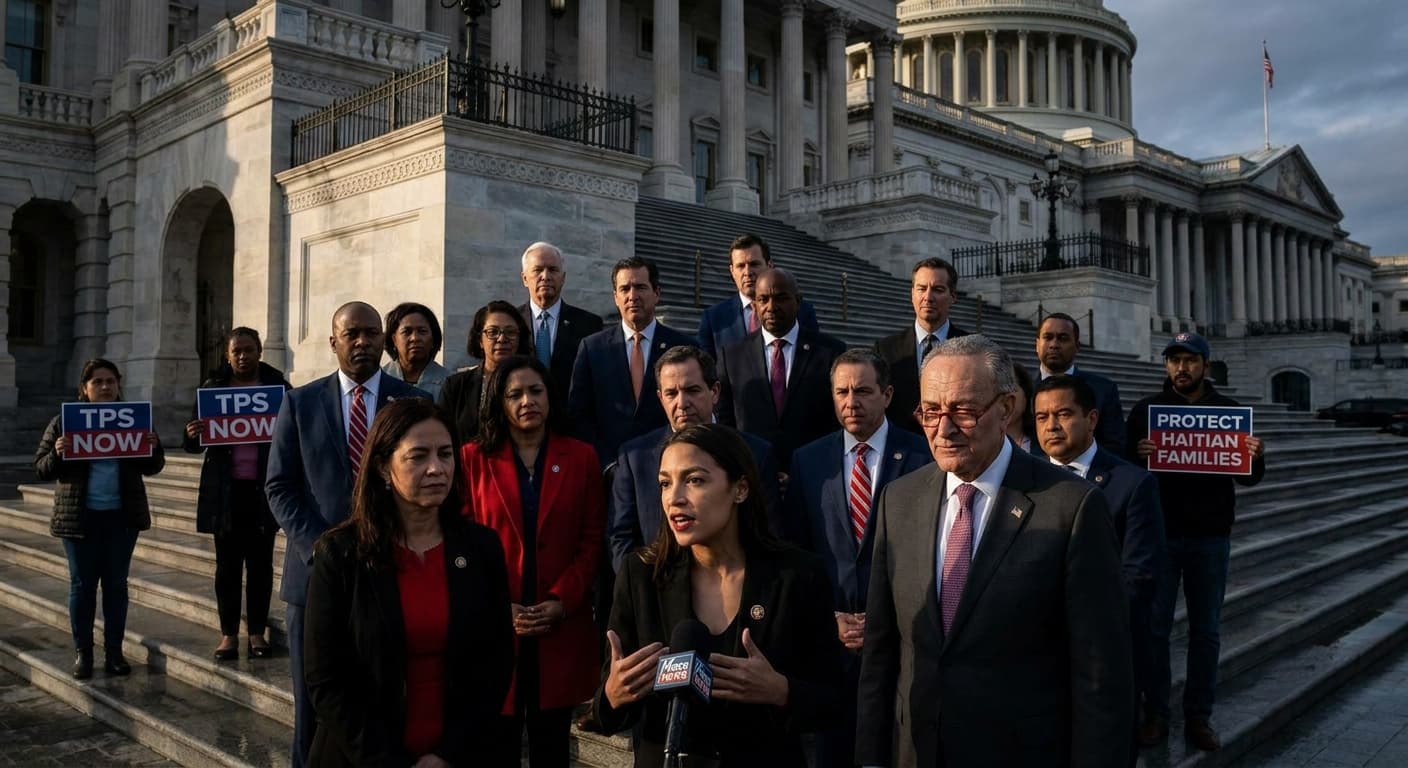
House Restores TPS for Haitian Immigrants
The House voted to restore Temporary Protected Status for 350,000 Haitians, defying Trump and exposing deepening GOP divisions over immigration policy.
US Politics
House Passes Bill for Haitian Immigrant Prote
The House advances a bipartisan bill protecting Haitian immigrants under TPS, countering Trump-era policies and addressing the deepening crisis in Haiti.

US Politics
House Republicans vs Senate
House Republicans split over DHS funding, pushing a narrow ICE and Border Patrol focus while the Senate backs a broader approach to immigration and security.

Conflict & Security
Drone Warfare Killing Aid Workers at Unprec
Over 1,000 humanitarian workers killed in three years as cheap armed drones collapse legal protections. Gaza, Sudan, Ukraine, and DRC see deliberate targeting of aid convoys and hospitals with zero prosecutions.

