House Passes Bill for Haitian Immigrant Prote
Legislation aims to extend TPS for Haitians amid political turmoil
Model Diplomat3 min readUnited States
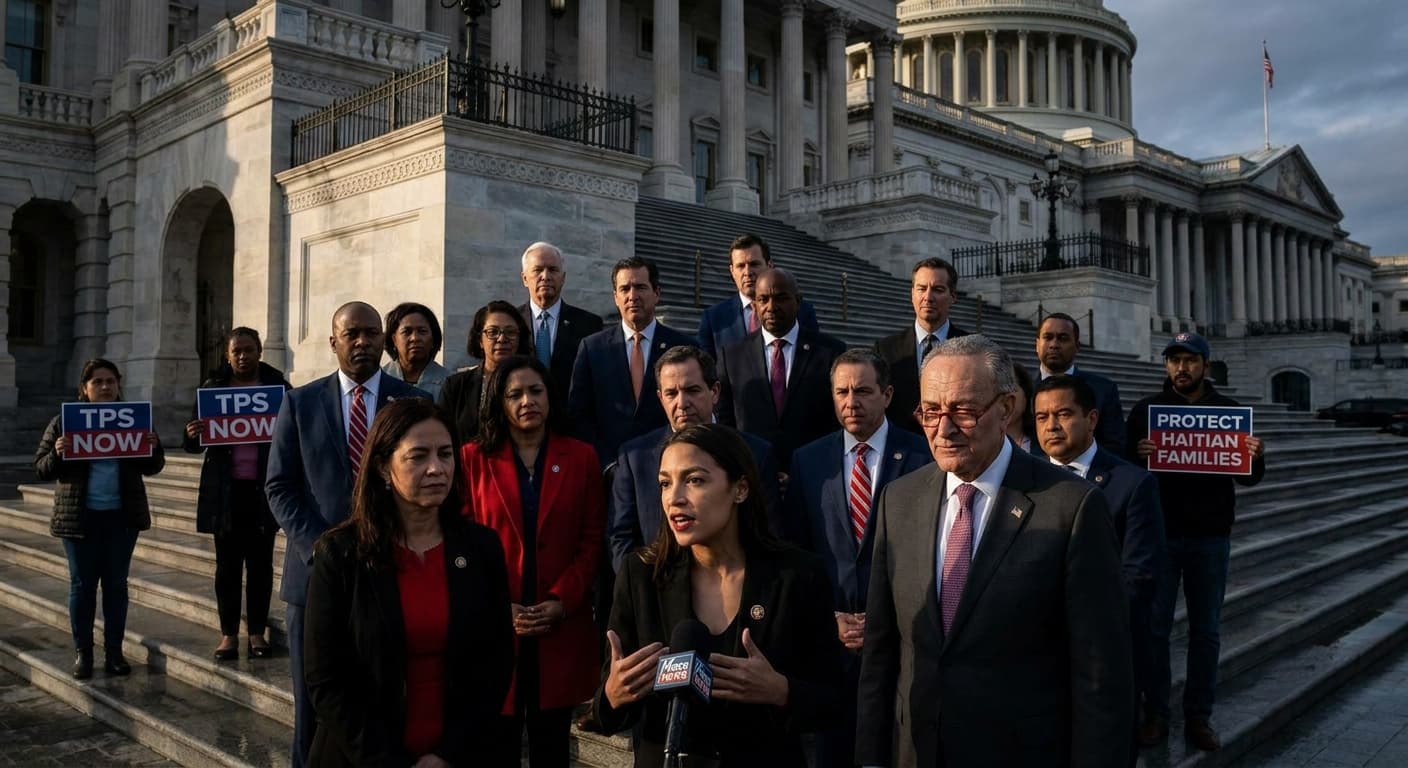
House Advances Bill to Protect Haitian Immigrants, Blocking Trump-Era Policy
House pushes bipartisan bill preserving Temporary Protected Status for Haitians, marking rare cross-party unity and resisting Trump administration’s rollback.
On April 16, 2026, the U.S. House of Representatives moved forward with a bipartisan bill to extend Temporary Protected Status (TPS) protections for Haitian immigrants. This legislative effort directly counters the Trump administration's decision to terminate TPS for Haiti, a move that sparked legal battles and uproar among immigrant communities. The legislation, now gaining traction, aims to secure legal status for around 30,000 Haitians currently covered under TPS, safeguarding them from deportation and allowing work authorization.
Why This Matters: Policy Reversal and Political Signal
TPS, established after catastrophic events such as the 2010 earthquake and later crises, grants temporary legal refuge to nationals from countries facing ongoing instability or disaster. Ending Haiti’s TPS in recent years was widely criticized, given Haiti’s continued struggles with political turmoil, economic crisis, and natural disasters.
By advancing this bill, the House signals a rare bipartisan alignment in a polarized Congress, underscoring humanitarian and strategic considerations that transcend party politics. Lawmakers are acknowledging that the conditions in Haiti remain precarious and that deporting TPS holders could exacerbate both humanitarian and diplomatic tensions. This also reflects growing recognition that immigration policy requires flexibility in response to evolving global crises, not abrupt reversals.
For Haitian immigrants, the bill is more than legal text—it’s a lifeline that secures access to employment, community stability, and protection from forced return to a still-fragile homeland. Their status often ties into broader U.S.-Haiti relations, where the U.S. remains a key donor and partner amidst Haiti's ongoing reconstruction and political crises. The bill’s bipartisan support may indicate Congressional willingness to recalibrate U.S. immigration policies to better reflect humanitarian realities, a sharp contrast to past restrictive immigration actions.
Historical Parallels and Broader Implications
The debate over TPS for Haitian nationals echoes past contests over TPS extensions for other countries facing long-term crises, such as El Salvador and Syria. The Trump administration’s efforts to terminate TPS for many nations met legal challenges and strong opposition, illustrating how immigration policy has become a proxy for larger ideological battles over America’s openness and obligations to global humanitarian crises.
The bipartisan nature of the bill also hints at shifting dynamics in U.S. immigration politics in 2026. As new immigrant groups grow in influence and American public attitudes evolve in favor of more humane policies, Congressional leaders may increasingly seek middle ground solutions. This could forecast broader legislative attempts to address gaps in the immigration system piecemeal rather than through sprawling, politically fraught reforms.
What to Watch Next
As the bill moves to the Senate, key questions remain: Will the Senate mirror the House’s bipartisan approach, or will the legislation stall amid broader partisan wrangling? How will the Biden administration respond if lawmakers pass a clear mandate to protect Haitian TPS recipients? The administration’s stance could define the balance between immigration enforcement and humanitarian protection for the remainder of the decade.
Additionally, watch for reactions from Haitian immigrant communities and advocacy groups, who have long lobbied for permanent solutions beyond TPS, such as pathways to citizenship. This legislation, while crucial, is a stopgap that underscores the urgent need for comprehensive immigration reform addressing the status of TPS holders nationally.
For now, Congress’s willingness to protect Haitian immigrants under TPS marks a significant policy pivot and a notable instance of bipartisanship, with human impact and diplomatic strategy at its core.
For more on U.S. politics and immigration policy, see United States and
Global Politics.
Haitian ImmigrantsTemporary Protected StatusBipartisan BillUS Immigration PolicyTrump Administration
Discover more

US Politics
House Restores TPS for Haitian Immigrants
The House voted to restore Temporary Protected Status for 350,000 Haitians, defying Trump and exposing deepening GOP divisions over immigration policy.

Global Politics
GOP Impeaches Mayorkas Over Immigration Fail
House Republicans push to impeach Secretary Mayorkas over alleged immigration enforcement failures, deepening partisan divides in a bitter border-policy fight.

US Politics
House Vote on Trump Iran Strikes Reveals Divs
The House narrowly declined to block Trump from striking Iran, a close vote that laid bare deep partisan divides over war powers and U.S. military action.

Economics
Fed's Amex AML order puts correspondent banking on notice
Federal Reserve's Amex AML order requires board-level controls and a 90-day plan; OCC fined the bank $350 million over enterprise-wide deficiencies.