Trump’s Gas-Tax Pause Puts Congress on the Spot Again
Trump is using the federal gas tax as a pressure valve, but Congress controls the lever — and the Highway Trust Fund pays the price if it moves.
President Donald Trump said he will suspend the federal gas tax for an unspecified period as Iran-war-driven fuel prices rise, a move that would require congressional approval and is aimed squarely at voters feeling the hit at the pump, the  The Washington Post and
  Reuters reported. The power dynamic is simple: the White House wants quick relief and a cleaner political message; Congress holds the actual authority to cut the tax.
Congress has the leverage
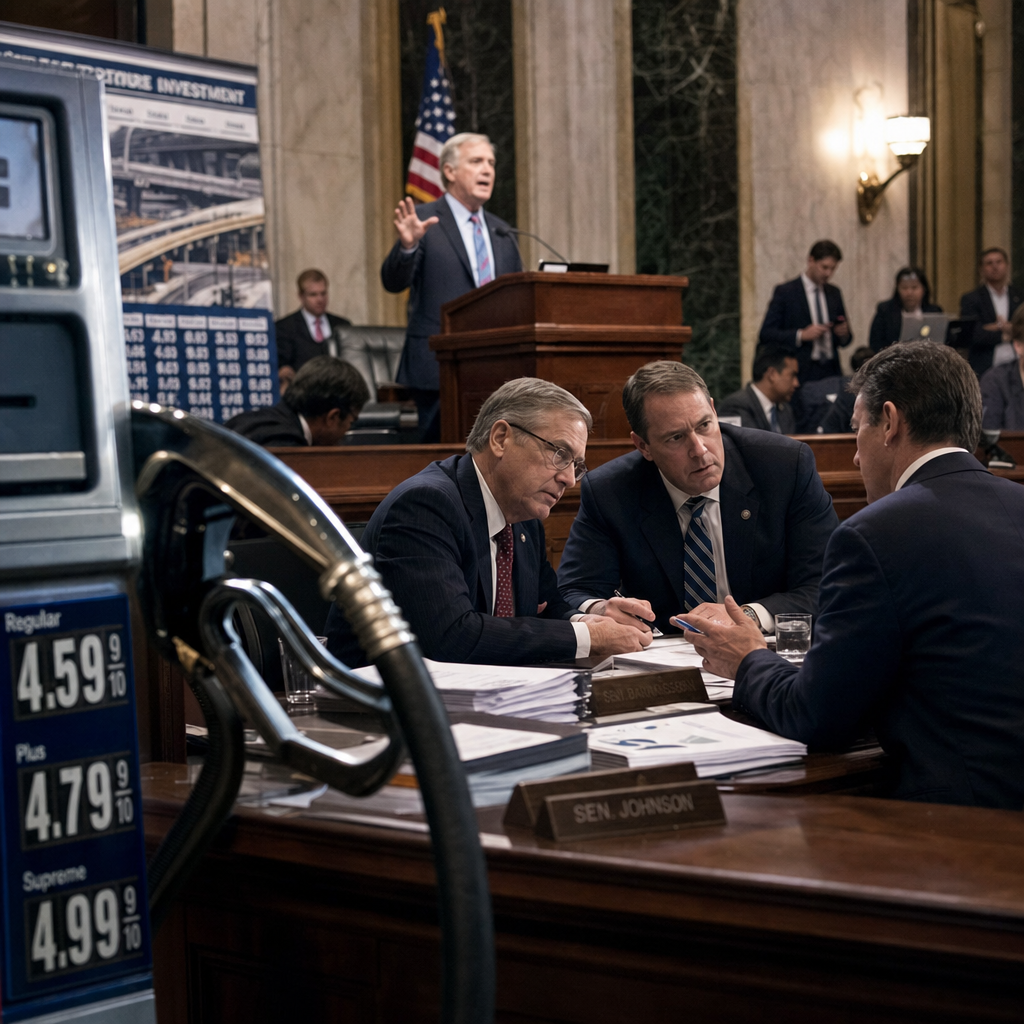
The federal gasoline tax is 18.4 cents a gallon and has been unchanged since 1993, according to Reuters and  USA TODAY. That makes the policy more symbolic than transformative: even if fully passed through, it would shave only a small amount off each fill-up. But the politics are larger than the cents on the receipt. The tax funds the Highway Trust Fund, so a suspension would shift the burden onto general revenues or leave infrastructure projects exposed, Reuters reported.
That is why the administration is not really negotiating with consumers; it is negotiating with lawmakers. Trump’s announcement places Republicans in Congress in a familiar bind: help him signal action on prices, or defend transportation financing and fiscal discipline. As USA TODAY reported, Sen. Josh Hawley and Rep. Anna Paulina Luna are already lining up behind the idea, while Democrats had previously floated their own suspension bill. That broad interest tells you the politics are real. The obstacle is that the same measure that polls well at the pump is hard to finance on Capitol Hill.
Why this matters now
Trump is tying the proposal directly to the Iran conflict, which means fuel prices have become part of the administration’s war messaging, not just its economic agenda. That is a tactical move: if prices keep climbing, the White House can blame a foreign crisis and point to a domestic relief proposal. If prices ease, it can claim to have pressured markets and helped consumers anyway.
The catch is that gas-tax holidays are popular precisely when they are least effective. They are visible, easy to explain, and politically safer than broader tax or spending changes. But they do little to alter the underlying oil market shock, which is being driven by Middle East risk, not federal policy. That means the administration gets a short-run political shield, while Congress inherits the long-run funding problem.
For  United States politics, this is another test of whether Trump can translate crisis management into legislative action. For Global Politics, it is a reminder that a regional conflict can quickly turn into a domestic cost-of-living fight in Washington.
What to watch next
The next decision point is Congress: whether GOP leaders turn Trump’s announcement into a bill, and whether it moves before the summer driving season hardens public anger over fuel costs. Watch for formal legislation from Hawley or House allies, and for any White House pressure on Speaker Mike Johnson to put a tax holiday on the floor. If that doesn’t happen soon, this is less a policy shift than a political signal.