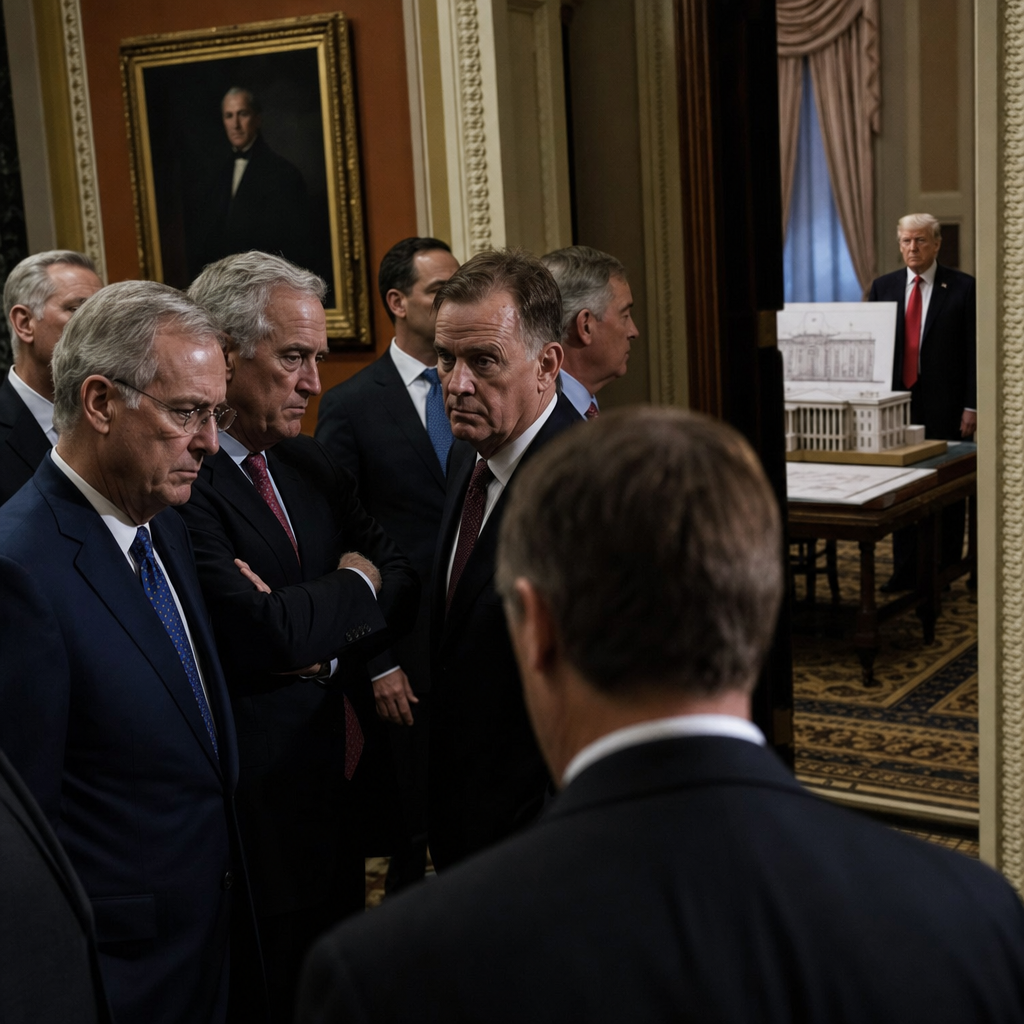
Trump’s ballroom fight is really a Senate loyalty test
The White House is turning Trump’s East Wing project into a security spend, forcing Senate Republicans to choose between party discipline and political exposure.
Trump officials are pressing Republicans to accept up to $1 billion in “security adjustments and upgrades” tied to the White House East Wing overhaul, a move first flagged by  Politico and detailed by
  CNN Politics and
  CBS News. The money would ride inside a reconciliation package for immigration enforcement, which gives Republicans a procedural path around Democrats but also turns a White House construction fight into a test of conference loyalty.
The real leverage is procedural
This is not really about chandeliers or architecture. It is about who controls the bill. By attaching the East Wing money to reconciliation, GOP leaders can move it with a simple majority, but they also need nearly every Republican to stay aligned. CNN Politics reported that the White House plans to escalate its pitch at a Senate GOP lunch, with the Secret Service director expected to brief lawmakers on how the funds would be used. Senate Majority Leader John Thune is trying to recast the line item as a security necessity for the entire East Wing, not a subsidy for Trump’s ballroom.
For the broader  US Politics picture, this is a familiar Washington move: use process to convert a controversial presidential priority into something harder to vote against.
Who wins, who gets boxed in
Trump is the principal beneficiary. He gets congressional backing for a project he says is privately funded, while also shifting the debate from vanity to protection. The Secret Service also gains a large budget line it can defend as an operational upgrade. But the political losers are easier to identify. Vulnerable Senate Republicans now have to explain why they are helping bankroll a White House makeover while claiming to police federal spending.
That is why Democrats smell an opening. CBS News said they are already preparing to challenge the provision under Senate rules and argue that Republicans are prioritizing Trump’s project over ordinary governance. The White House may not care about the criticism; the point is to force GOP senators to choose between a president who dominates the party and an electorate that may not like the optics.
What to watch next
The next decision point is the reconciliation markup and the Senate’s Byrd-rule review. CNN Politics said GOP leaders want the broader package moving later this month and that Trump has set a June 1 deadline for action. If moderates start peeling off, party leaders may quietly strip the ballroom money to save the larger immigration bill. If they keep it, Democrats will use the vote as evidence that Trump still sets the agenda inside the GOP.
For United States politics, the signal is clear: this is less about a ballroom than about whether Republicans will let Trump turn a procedural bill into a loyalty vote.