Hegseth's Iran Hearing Sparks Budget Clash
Senators probe war costs during Hegseth’s testimony on Iran.
Model Diplomat3 min readNorth America
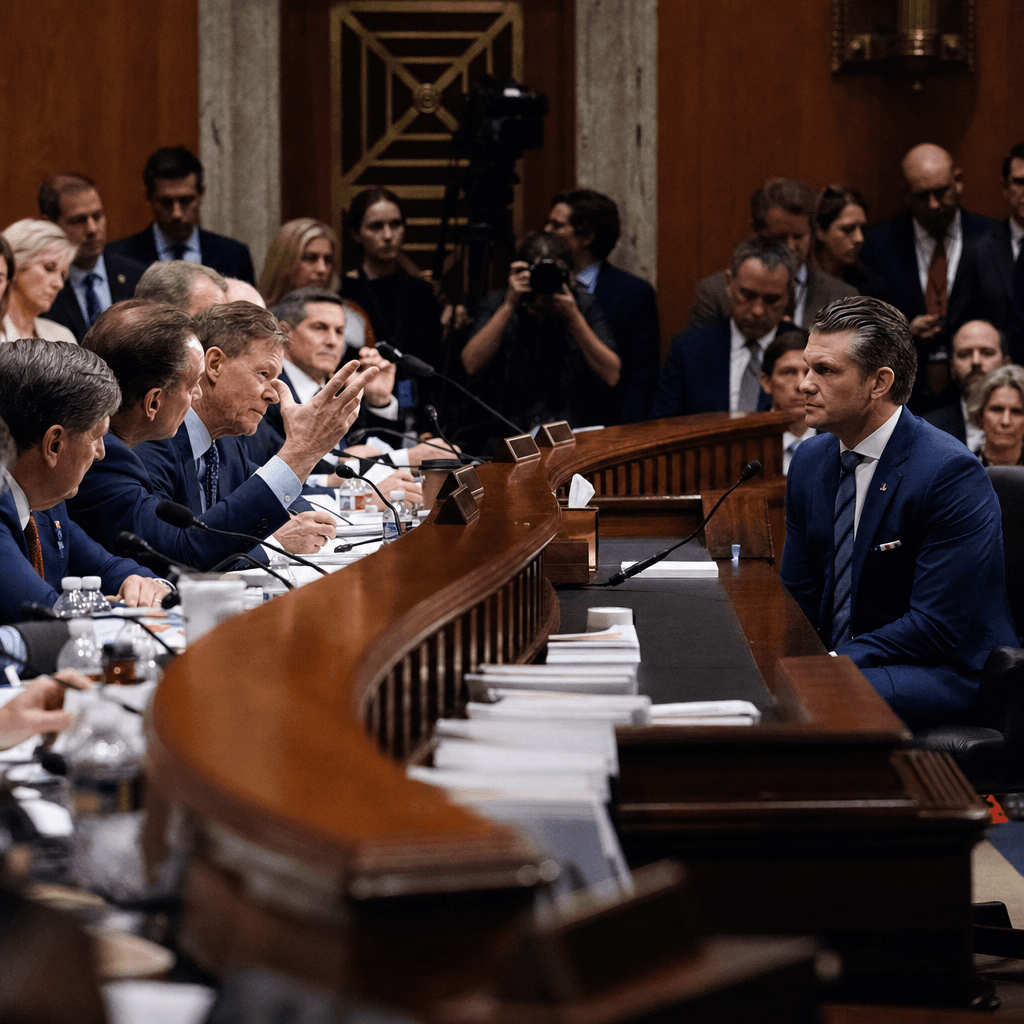
Hegseth’s Iran Hearing Turns Into a Budget Fight
Senators are using Hegseth’s Iran testimony to probe war costs, munitions drawdowns and Trump’s $1.5 trillion Pentagon plan.
Defense Secretary Pete Hegseth and Joint Chiefs Chair Dan Caine are back on Capitol Hill Tuesday for Senate Appropriations questioning on Iran and the Pentagon’s fiscal 2027 request, The Hill reported. The hearing is not just about strategy; it is about who absorbs the cost of a war the administration wants to keep politically contained. Pentagon officials already told the House that the conflict’s price tag is nearing $29 billion, and senators are now trying to pin down the bill before the budget hardens, according to
The Hill and
The Washington Post.
Where the leverage sits
Budget hearings are the remaining pressure point. War powers resolutions have not stopped the conflict, so appropriators are left with the tools that still matter in Washington: demand detail, slow money, and force the Pentagon to explain why Iran is burning through munitions and replacement stockpiles. CBC News reported that the 2027 request is a historic $1.5 trillion and that lawmakers are focused on drones, missile defense systems and warships — exactly the categories that determine which parts of the force get resourced first.
That is why this hearing matters beyond the headlines. The immediate winners are Pentagon planners who want replenishment money to keep the campaign going without exposing a wider readiness gap. The losers are members who want to show they can still exercise oversight over a war that began without a clean congressional mandate. For US Politics, this is the kind of fight that decides whether Congress is a check or a spectator.
The Iran fight has become a process fight
The debate has shifted from whether the U.S. should be in the war to how long the White House can keep Congress at arm’s length. CBC News reported that Democrats are pressing on the 60-day War Powers deadline, which arrives Friday, while Republicans are largely standing behind President Trump’s wartime posture, even as some want an exit. That creates a narrow political window for Hegseth: defend the operation, defend the spending, and avoid giving senators a clean opening on authorization.
The added problem for him is political distraction. The Hill reported that Hegseth is also likely to face questions over his feud with Sen. Mark Kelly, after accusing the Arizona Democrat of leaking confidential information. That exchange does not change the war’s trajectory, but it does signal how quickly the administration’s Iran file is colliding with domestic combat politics — and how little room Hegseth has to look above the fray.
What to watch next
Watch for three things: whether Hegseth gives a direct answer on total war costs, whether senators press for a supplemental to replace munitions, and whether the White House seeks an extension or authorization path before Friday’s War Powers deadline, CBC News and
The Washington Post reported. If the administration cannot turn this into a routine budget hearing, the next real fight moves from testimony to markup — where Congress can still turn scrutiny into a price.
*
Discover more
Global Politics
Trump's Conflicting Messages on Iran War
Trump's mixed messages on Iran reflect a strategy of audience management, benefiting Tehran amid a complex geopolitical landscape.

Conflict & Security
Drone Warfare Killing Aid Workers at Unprec
Over 1,000 humanitarian workers killed in three years as cheap armed drones collapse legal protections. Gaza, Sudan, Ukraine, and DRC see deliberate targeting of aid convoys and hospitals with zero prosecutions.

Global
World Normalises Taliban as Afghan Women Eras
UN data shows Afghan women erased from public life as Russia recognises the Taliban, EU hosts officials in Brussels, and ICC warrants for gender persecution go unenforced.
Conflict & Security
West Africa Food Crisis: Three Shocks in 2026
Conflict, climate extremes, and the Strait of Hormuz closure drive a severe food crisis in West and Central Africa, with fertilizer prices surging 80% and millions displaced.