Trump's Deportation Surge: A Quiet Crisis
Mass detentions rise under Trump without media coverage.
Model Diplomat8 min readNorth America
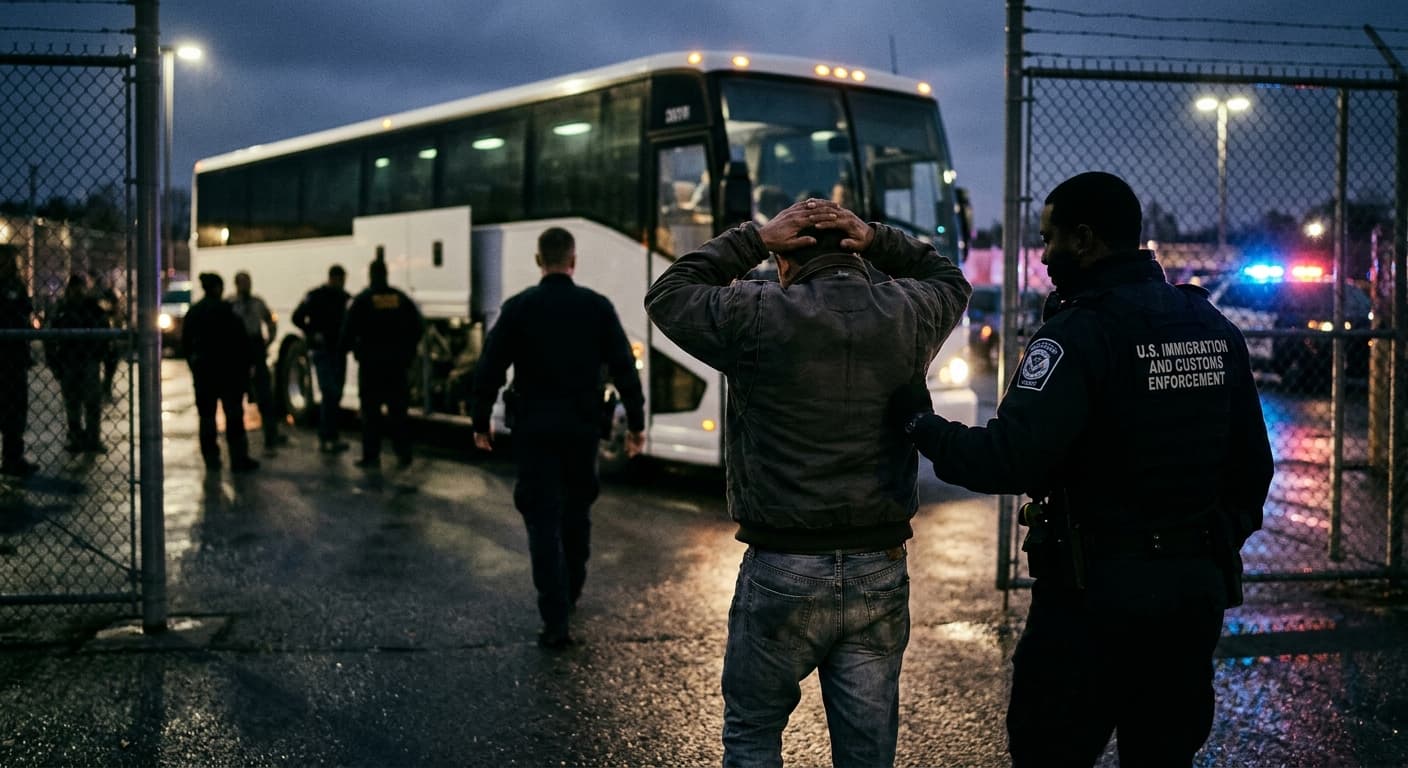
Trump's Quiet Deportation Surge Tests the Limits of US Detention
ICE arrested 10,000 people in five days in late June 2026 — a mass-detention push happening without cameras as UN monitors flag 19 deaths in custody this year.
The Trump administration is running one of the largest domestic detention campaigns in modern US history, and it is doing so with the television lights turned off — a deliberate pivot from the 2025 "shock-and-awe" phase that reset public expectations for what a state crackdown looks like when it stops performing itself. Immigration and Customs Enforcement (ICE) arrested roughly 10,000 people in a five-day span at the end of June 2026, or about 2,000 a day, according to figures obtained by the Associated Press and republished by the Inquirer USA. The pace comes without the black helicopters, masked stack teams, or livestreamed raids that defined Operation Metro Surge — and it is happening precisely as the UN human rights office demands accountability for 19 deaths in ICE custody so far this year.
The angle other coverage is missing: the Trump II enforcement machine has stopped needing spectacle. Congress permanently funded it, the Supreme Court cleared the way to strip protections from more than a million people, and a new DHS leadership team has traded imagery for throughput. That is not a de-escalation. It is a normalisation — a mass-detention regime designed to run indefinitely.
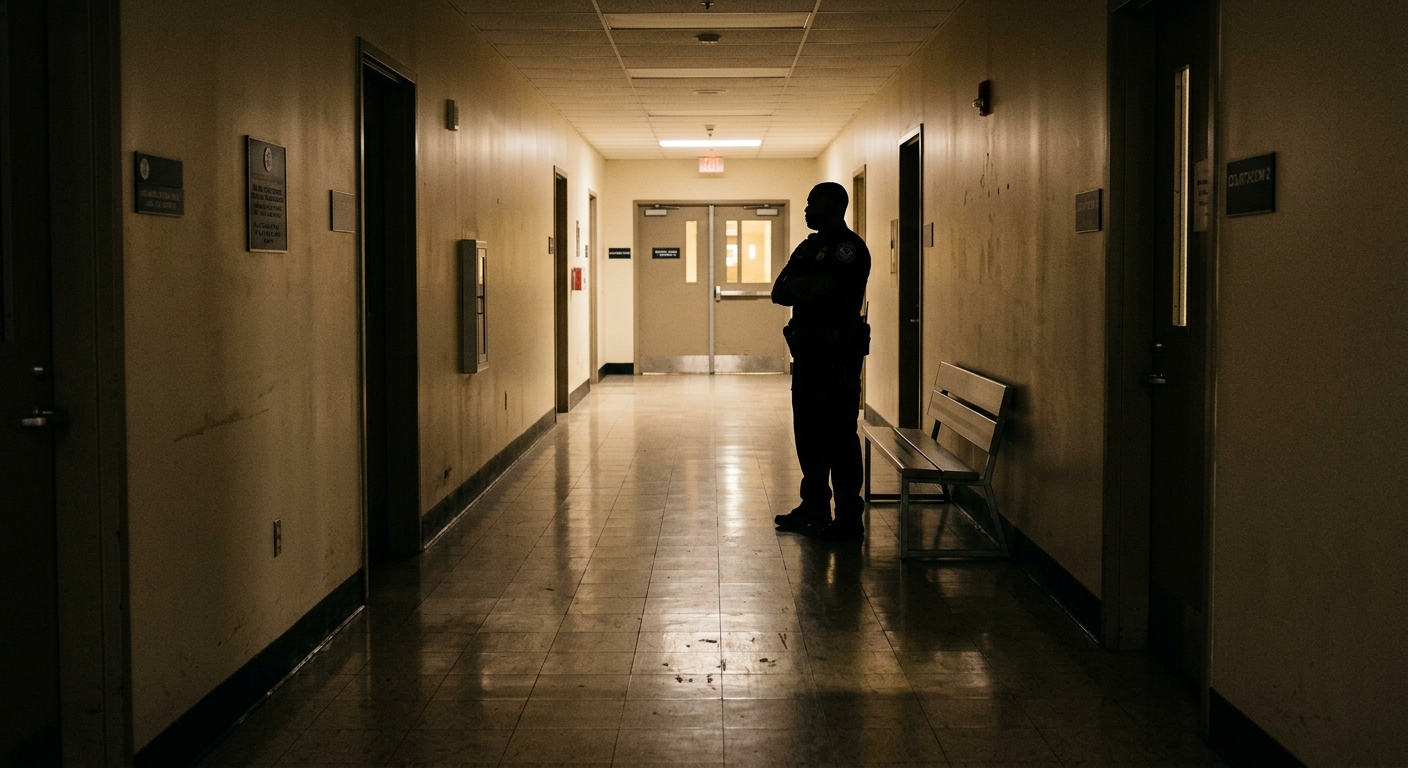
The pivot: from Metro Surge to metered arrests
The turning point was Minneapolis. In January 2026, federal agents shot and killed two US citizens — Renee Good and Alex Pretti — during Operation Metro Surge, prompting mass protests, the reassignment of Border Patrol chief Greg Bovino, and a 76-day partial DHS shutdown as Senate Democrats blocked ICE funding over officer-conduct safeguards. The Council on Foreign Relations catalogued the fallout in its tracker of Trump's enforcement architecture, noting that ICE detention had reached nearly 69,000 people by early January 2026.
On March 5, 2026, Trump fired Homeland Security Secretary Kristi Noem and installed Oklahoma Senator Markwayne Mullin, confirmed by the Senate on March 24 by a 54–45 vote. Mullin's mandate, in his own words to Newsmax, was to get DHS "out of the headlines." The point was never fewer arrests. It was fewer cameras.
That message travelled. By early May 2026, border czar Tom Homan was telling the Border Security Expo in Phoenix that ICE was averaging about 1,200 arrests a day and would climb from there. NPR's reporting from the Expo captured Homan's line — "you ain't seen s*** yet" — alongside Mullin's admission that on May 5, ICE had arrested more than 1,900 people in a single day.
The money that made the quiet surge possible
On June 9, 2026, after a months-long standoff triggered by the Minneapolis killings, Trump signed a $70 billion funding bill for ICE and Customs and Border Protection (CBP), passed by budget reconciliation. Al Jazeera reported that the bill funds both agencies for at least the remainder of Trump's term and allows further hiring — after Democrats had blocked earlier versions demanding safeguards on officer conduct.
That tranche sits on top of the One Big Beautiful Bill Act (OBBBA), signed in July 2025, which allocated roughly $170 billion for immigration enforcement over four years — including $45 billion to expand ICE detention capacity and about $30 billion to hire 10,000 more enforcement officers. Detention bed capacity currently sits near 70,000, with a stated DHS goal of 100,000. A Congressional Research Service brief reported that 66,978 people were in ICE detention as of April 9, 2026, and that DHS is scoping expansion to over 90,000 in FY2026.
The economics matter because they insulate the surge from the news cycle. Congress has now pre-committed the money; Mullin does not need a political win each week to keep the operation running.
Who is actually being arrested
The single fact that most cleanly contradicts the administration's public framing sits in a National Bureau of Economic Research working paper published in February 2026. Economists Chloe East, Caitlin Patler and Elizabeth Cox found that in the first nine months of Trump's second term, ICE "community arrests" — street, workplace, courthouse and check-in arrests — rose more than elevenfold over the final months of the Biden administration, with an eightfold increase in arrests of noncitizens with no criminal conviction. Data obtained by the Deportation Data Project and analysed by NPR showed that
about 74,000 of the roughly 200,000 people arrested in that period had no criminal record — more than a third of the total.
Brookings, using the same underlying data, estimates that around 400,000 immigrants have been booked into ICE detention from an interior arrest between January 20, 2025 and April 9, 2026, and that roughly 145,000 US citizen children have experienced the detention of a parent under the administration to date. That is the load-bearing comparison with prior administrations: Obama-era enforcement, though heavy, operated primarily through jail-to-ICE custody transfers of people already in the criminal justice system. As University of Colorado economist Chloe East told NPR's
Planet Money in May 2026, ICE activity now is "the most indiscriminate it's been in the modern era."
The human-rights record now under UN scrutiny
The UN Human Rights Office in Geneva has moved from concern to open censure. In a June 26, 2026 statement, High Commissioner Volker Türk cited US government data showing 18 deaths in ICE custody in the first five months of 2026, with a further death reported that month.
"I call for prompt, independent, impartial and effective investigations into all deaths in ICE custody. Those responsible for violations of the law must be held to account, and the rights of the victims' families to truth, justice and reparation and guarantees of non-recurrence must be upheld." — Volker Türk, UN High Commissioner for Human Rights,
OHCHR statement, June 26, 2026
Türk also flagged reported use of prolonged solitary confinement, warning it could amount to cruel, inhuman or degrading treatment under international law. In a separate January 2026 statement to UN News, he described a pattern of "arbitrary and unlawful arrests and detentions" and "flawed removal decisions" — the strongest language a UN rights chief has used about US domestic enforcement in decades.
The domestic reporting matches the pattern. NPR found in April 2026 that 29 people had died in ICE custody since the start of FY2026 in October — already surpassing the 2004 record of 28 for a full fiscal year. Physicians for Human Rights has counted at least five apparent suicides. Georgia Democratic Senators Jon Ossoff and Raphael Warnock told acting ICE Director Todd Lyons in an April 13 letter that ICE had issued the required 48-hour interim death notice in only 15 of 49 cases since January 2025.
The Supreme Court just widened the deportable pool
The scale question is about to get worse. On June 25, 2026, the Supreme Court cleared the way for the Trump administration to terminate Temporary Protected Status (TPS) for Haitians and Syrians, Al Jazeera reported. Justice Samuel Alito wrote for the majority that the TPS statute "plainly bars" judicial review of the executive's termination decisions and rejected a lower-court finding that Trump's Haiti policy was likely motivated by racial animus.
About 330,000 Haitians whose TPS work authorisations expire on July 10, 2026 now face deportation unless they qualify for another status; the ruling also affects roughly 6,100 Syrians and reaches Venezuelans covered by parallel litigation. Lawmakers from both parties have warned of a caregiving crisis in US healthcare if the workforce is stripped out at once. The point for enforcement planning is simpler: the deportable population just expanded by hundreds of thousands with the stroke of a 6–3 opinion.
Trump's June 27, 2026 nomination of former Oklahoma state trooper Lance Schroyer as ICE director, reported by Al Jazeera, completes the operational picture. If confirmed, Schroyer would be the first Senate-confirmed ICE director in 11 years — a symbolic institutionalisation of the enforcement build-out.
The historical parallel
Comparisons to the Obama-era "deporter-in-chief" moniker miss the structural break. Obama removed roughly 400,000 people in his peak year, but overwhelmingly through jail-based transfers of noncitizens already in criminal custody. The Trump II approach — 11-fold higher community arrests, an eightfold jump in arrests of people without convictions, and a detention footprint pushing toward 100,000 beds — is closer in scale and character to the internment infrastructure of the 1940s than to any recent enforcement era. NPR's analysis of ICE data noted the current daily detention population represents a scale of civil confinement not seen since the mass incarceration of Japanese Americans during World War II.
Public perception has drifted with the tactics. Ipsos polling reported by the BBC in its Minnesota field reporting shows immigration remains Trump's strongest issue even as disapproval outweighs approval — a split that suggests the "quiet surge" is calibrated to hold the base without mobilising the opposition. Removing the visible atrocity is the political strategy.
What to watch
- July 10, 2026 — Haitian TPS work authorisations expire; DHS enforcement priorities against this population will indicate whether the administration moves immediately on the roughly 330,000 affected or staggers removals.
- Schroyer confirmation vote — the Senate calendar for the first confirmed ICE director in over a decade; a party-line vote would lock in a militarised, ex-state-trooper leadership model at the operational core.
- Next OHCHR update — Türk has requested independent investigations into all 19 ICE custody deaths in 2026; any US refusal to cooperate could trigger a formal treaty-body communication under the International Covenant on Civil and Political Rights (ICCPR).
- FY2027 DHS budget markup — whether appropriators fund the move from 70,000 to 100,000 detention beds will show if Congress locks in the surge past the current Trump term.
The Bottom Line
The Trump administration has learned the lesson of Minneapolis: mass detention is politically survivable so long as it is not televised. With $70 billion in fresh ICE and CBP funding, a Supreme Court ruling stripping TPS from more than a million people, and a UN rights chief now publicly demanding investigations into 19 deaths in custody, the machinery of removal is being institutionalised — not de-escalated. The story flying under the radar is not that enforcement resumed. It is that it never stopped, and that the guardrails — judicial review of TPS, congressional leverage over ICE funding, and public visibility of raids — have each been dismantled in turn.
Read today's full | | Topic: US Politics
Discover more
India
Congress Accuses Modi of Stalling Women's Law
Congress accuses Modi of stalling women's reservation law by linking it to delimitation, revealing a deeper electoral strategy.

India
BJP's Misunderstanding of Women's Quota Needs
The BJP's linking of the Women Reservation Bill to delimitation risks delaying women's empowerment in India, misreading the aspirations of female voters.

India
Romanian Coalition Party Demands PM Resign
Romania's Social Democrats withdrew from coalition, joining far-right AUR to topple PM Bolojan, risking €10 billion in EU funds by August 2026.

Economics
Fed's Amex AML order puts correspondent banking on notice
Federal Reserve's Amex AML order requires board-level controls and a 90-day plan; OCC fined the bank $350 million over enterprise-wide deficiencies.