Trump’s College Sports Panel Pushes Congress to Rewrite NIL
The White House-backed committee is trying to freeze college sports costs, but the real lever is Congress: only lawmakers can give it legal cover.
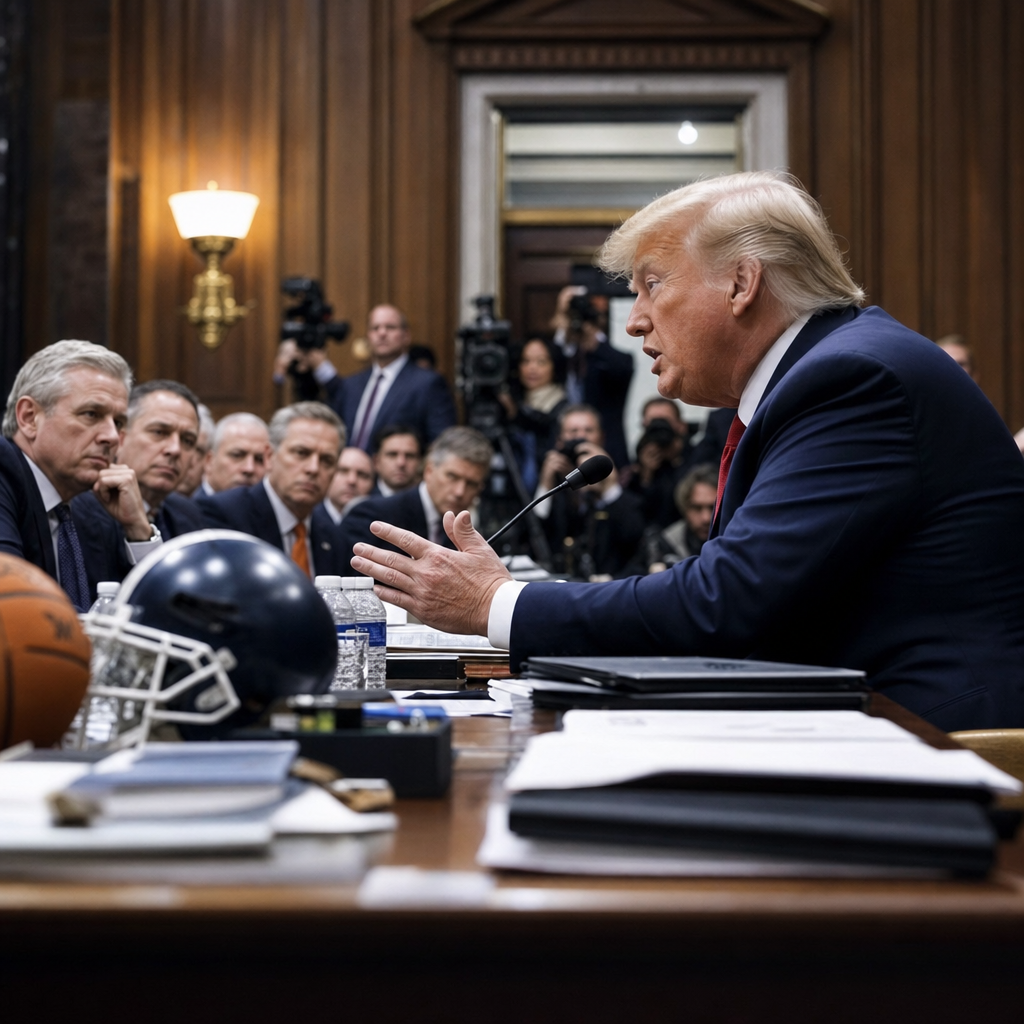
The Trump-appointed college sports committee is not offering a tweak; it is asking for a federal rewrite of the business model. In a draft circulated this week, the panel recommended a task force to pool media rights, cap coaches’ and administrators’ pay, tighten transfer-portal and eligibility rules, and stop what it sees as NIL-driven workarounds, according to  The Washington Post,
  CBS Sports, and
  Yahoo Sports. The committee is also pressing Congress to act before the summer recess, because without legislation its ideas are mostly a wish list, not policy, CBS reported.
Congress is the choke point
That is the core power dynamic. The committee can shape the conversation, but it cannot by itself override state laws, shield the NCAA from antitrust suits, or impose the kind of hard spending limits it is floating, according to CBS Sports and  CNN. The leverage now sits with House and Senate Republicans who are already working on college-sports legislation, including the SCORE Act and a separate proposal to let schools pool media rights,
  USA Today reported. That matters because the panel is effectively telling lawmakers: either grant national rules, or keep watching schools improvise state by state.
For Trump, this is a political opening as much as a sports fix. He gets to frame college athletics as a broken national market that needs federal intervention, while putting pressure on lawmakers to produce something concrete. For the NCAA and the power conferences, the value of the exercise is obvious: Washington is now being asked to bless a model that would have been much harder to defend in court.
Winners and losers are already visible
The likely winners are the sport’s richest institutions if Congress approves a structure that stabilizes spending without forcing a wholesale redistribution. The likely losers are the actors who have benefited most from the current chaos: coaches with nine-figure buyout cultures, booster collectives, and conferences that already control the best media deals. Yahoo Sports reported the draft also contemplates a “permanent governing body” and a 15-member board that would include power-conference commissioners, Notre Dame, student-athletes, and independent representation, signaling an effort to pull authority away from the NCAA’s traditional structure.
The bigger economic fight is over media rights. Pooling them could help weaker programs and the Group of Six, but it would also threaten the Big Ten and SEC’s ability to keep maximizing their own deals. That is why the richest conferences have resisted the idea and why the committee’s draft tries to pair revenue pooling with antitrust protection, USA Today reported.
What to watch next
The next decision point is legislative, not athletic: whether House Republicans move a college-sports bill before summer recess, and whether the Senate can accept the antitrust and preemption language such a bill would require, CBS Sports and CNN reported. If Congress balks, this becomes another White House sports summit with no binding follow-through. If Congress moves, the committee’s draft becomes the template for a more centralized college-sports regime. For policymakers tracking the spillover into  US Politics, that is the date that matters.