

Trump's AI Imports Exception
2 min readNorth America
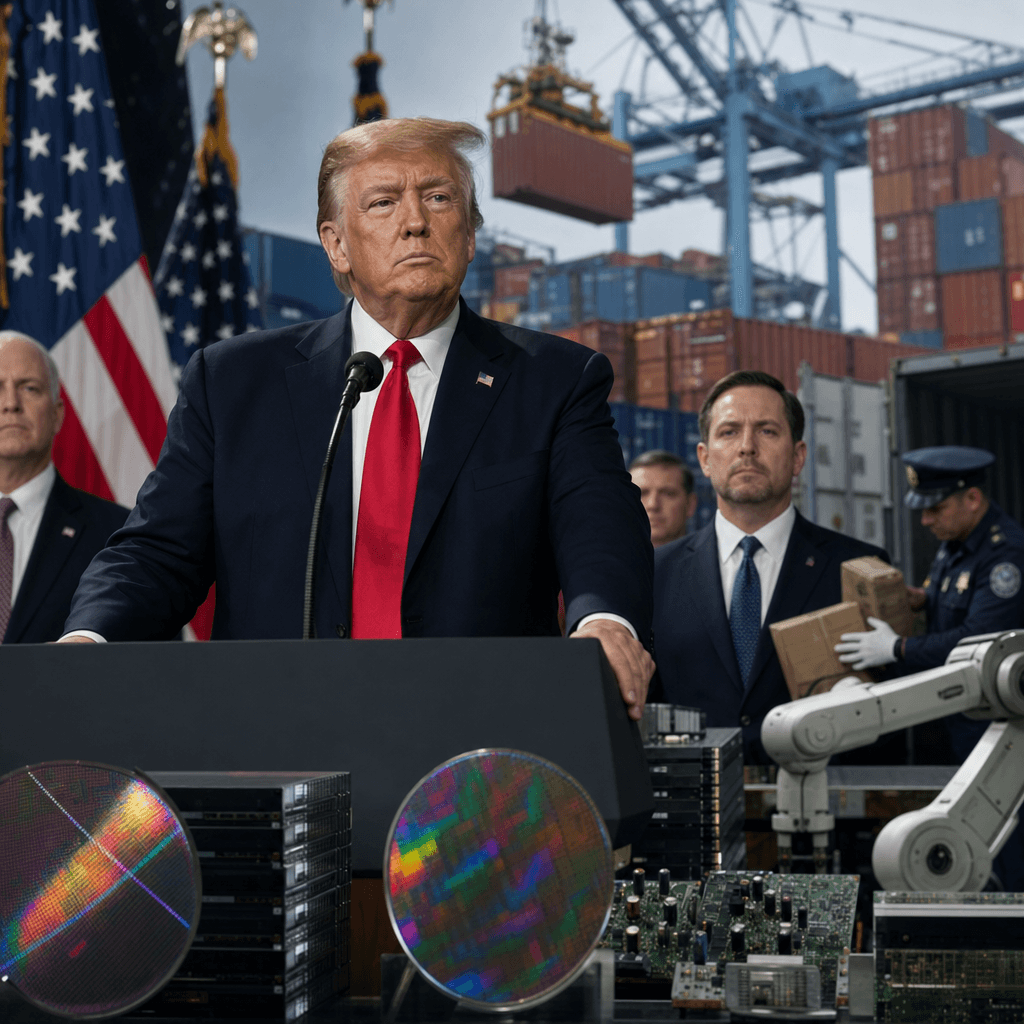
Examining Trump's selective approach to AI-related imports
Trump’s AI Imports Exception Reveals His Trade Priority
Trump is not abandoning tariffs. He is carving out an AI exception, rewarding imports that speed U.S. computing and data-center capacity.
The Trump White House is openly praising a surge in foreign imports tied to the AI build-out, despite President Donald Trump’s broader tariff-first politics and stated goal of shifting production onshore. That is not a reversal. It is a hierarchy of interests: faster U.S.-based AI capacity now matters more to the administration than ideological consistency on imports. Trump's tariff-friendly White House celebrates these foreign imports
Why the White House is making an exception
The economic backdrop explains the move. The U.S. economy grew at a 2% annualized rate in Q1 2026, while business investment rose 8.7%, helped by AI-related spending. U.S. economy grew 2% from January-to March, recovering from federal shutdown In March, core capital goods orders rose 3.3%, a sign that firms were still spending aggressively on equipment.
U.S. core capital goods orders blow past expectations in March
That matters because these imports are not politically toxic consumer goods. They are inputs into domestic computing power: the hardware, components, and electrical equipment needed to build data centers and AI infrastructure. The administration can still call itself protectionist while making room for imports that increase U.S. productive capacity. For readers following the broader Global Politics of industrial competition, this is the key distinction.
Who gains from the carve-out
Foreign chipmakers and equipment exporters gain leverage first. Taiwan’s TSMC reported a 58% jump in first-quarter profit, driven by AI demand, underscoring how much of the critical supply chain still sits offshore. Taiwan's chipmaker TSMC reports 58% jump in profit, warns about Iran war impacts
The White House is already adjusting policy around that reality. It recently cut tariffs on some metal-intensive industrial and electrical equipment to 15% from 50%, while preserving its broader protectionist stance. Trump cuts metal tariffs to 15% for some industrial, electrical equipment, down from 50% That is the giveaway: Trump’s trade policy is becoming selective, not softer.
The losers are domestic manufacturers that still cannot replace foreign supply at speed, and trade hawks expecting a universal clampdown on imports. In practice, Washington is signaling that imports are acceptable when they serve strategic build-out at home. That is a narrower, more transactional standard than “buy American.”
What to watch next
The next test is whether this stays a narrow AI exception or becomes a broader industrial carve-out. The U.S. trade deficit widened to $57.3 billion in February, and a further rise in AI-related imports will sharpen the contradiction between Trump’s rhetoric and the hardware needs of the U.S. economy. U.S. labour market remains stable as February trade deficit increases
Watch the next trade data, and watch tariff treatment of power equipment, semiconductors, and other AI bottlenecks. In international terms, the real question is simple: which foreign suppliers keep winning exemptions because Washington cannot build fast enough without them?
Keep reading
Global Politics
Trump's Conflicting Messages on Iran War
Trump's contradictory statements on the Iran war raise strategic uncertainty, complicating US policy and regional dynamics.
US Politics
Congress Targets AI Chatbot Access for Terror
House Chair Andrew Garbarino proposes government access to AI chatbot queries to combat terrorism, igniting privacy debates.
Conflict & Security
No Easy Bypass: Why Pipelines Can't Replace
Pipelines can't fill the gap left by the blocked Strait of Hormuz.