

No Easy Bypass: Why Pipelines Can't Replace
3 min readMiddle East
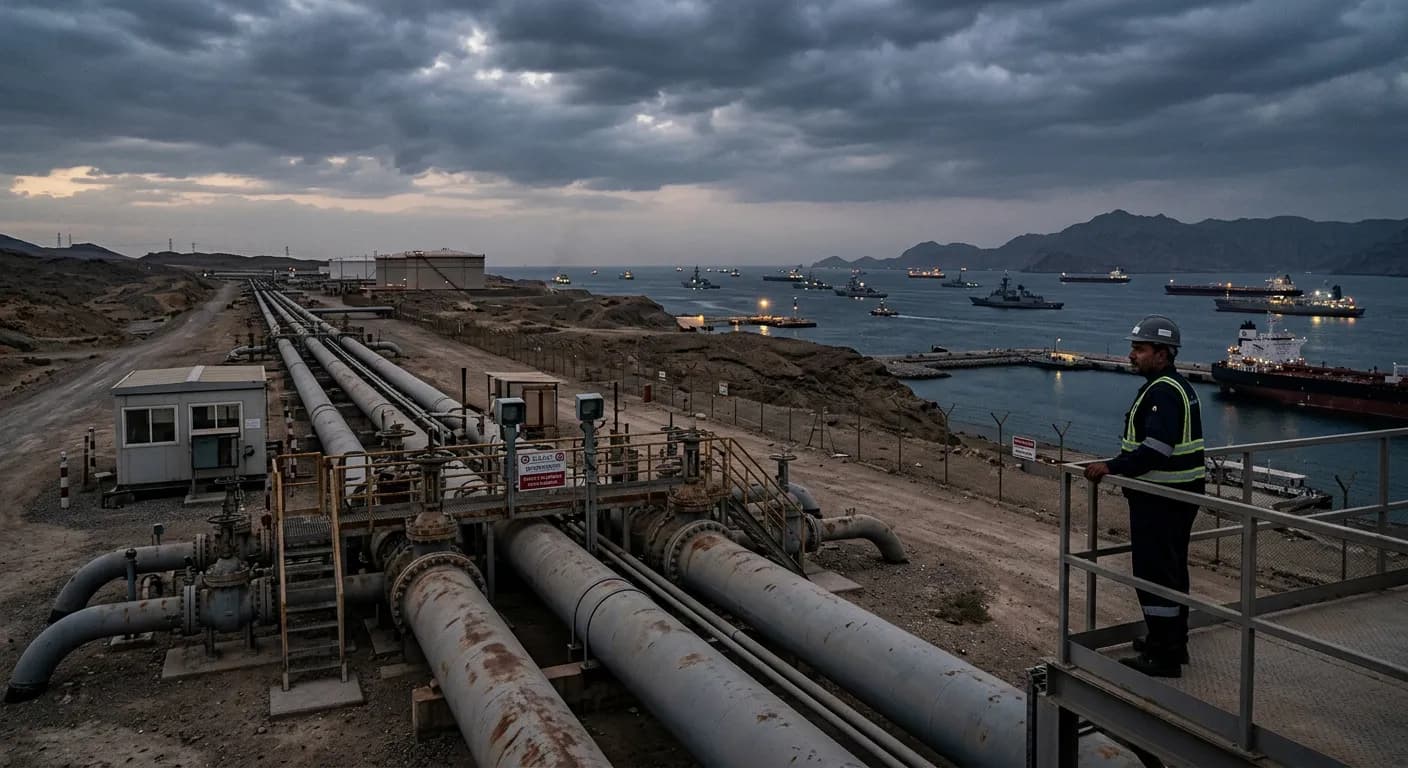
Pipelines can't offset blocked Strait of Hormuz traffic.
Based on my research, I now have strong sourcing from multiple outlets covering the feasibility of bypassing the Strait of Hormuz. Let me write the analysis piece:
No Easy Bypass: Why Pipelines Can't Replace Hormuz
Existing Saudi and UAE pipelines can offset only a fraction of blocked strait traffic—and they're just as vulnerable to attack as the waterway itself.
The Strait of Hormuz carried roughly 20 million barrels of oil per day before Iran effectively closed it in February 2026. In the months since, Saudi Arabia and the United Arab Emirates have frantically increased flows through pipelines designed to circumvent the chokepoint—but the arithmetic is unforgiving. Combined, these routes can move only 9 million barrels per day, leaving a 11 million barrel-per-day gap that no single alternative can fill.
The scale of the constraint became clearer this month as markets debated a pending US-Iran deal. While a ceasefire would nominally reopen the waterway, the BBC and Reuters reported that tanker traffic remains minimal, with shipping firms reluctant to risk vessels until certainty returns. That caution reflects a deeper reality: even if the strait reopens, the infrastructure fix attempted since February shows that alternatives are neither large enough nor resilient enough to be a lasting solution.
Start with capacity. Saudi Arabia's East-West Pipeline, running 1,200 kilometers from the Abqaiq oilfield to the Red Sea port of Yanbu, can push 7 million barrels per day at maximum. The
UAE's Abu Dhabi Crude Oil Pipeline to Fujairah handles 1.5 million barrels per day. The Iraq-Turkey route adds another 1.6 million, but carries only 200,000 barrels daily, choked by geography and politics. Even with the UAE fast-tracking a new West-East Pipeline set to double Fujairah capacity by 2027,
the combined network would top out at roughly 10 million barrels—still 50 percent short of Hormuz's normal traffic.
The deeper problem is vulnerability. These pipelines are fixed infrastructure snaking across hostile terrain. Energy analyst George Voloshin told Al Jazeera that "pipelines and pumping stations are static, high-value targets." This is not theoretical. In 2019, Houthi drones struck the East-West Pipeline, forcing a temporary shutdown. This year,
March drone attacks on the Fujairah port facility disrupted loadings at the UAE's pipeline terminus. If Iran can threaten shipping lanes with missiles and drones, it can equally threaten the infrastructure meant to circumvent those lanes. The benefit of pipelines—that they're land-based and therefore outside maritime assault—disappears when the adversary controls the airspace above the land.
Iraq's southern fields illustrate the bind. According to Voloshin, Iraq's bulk production in Basra has "no meaningful inland connection to the northern Turkish pipeline," forcing a near-total shutdown as storage fills. Trucking oil across borders is a non-starter:
the cost and logistical nightmare of coordinating tens of thousands of trucks daily, combined with the targeting risk, renders the option largely unsustainable, Voloshin added.
This matters because it destroys the basis for longer-term structural adjustment. Brookings analysts estimated in May that pipelines provide about 5.7 million barrels per day of incremental capacity—a real buffer, but one that evaporates as temporary reserve releases and floating stocks deplete. By mid-July, those buffers were projected to run dry, leaving the market absorbing a 7 million barrel-per-day shortfall.
Even if the US-Iran deal holds and the strait reopens, shipping companies have signaled they will move with extreme caution. The BBC reported that firms would likely remain "very hesitant" about sending new vessels into the Gulf given the protracted conflict and shifting signals from both sides. Insurance availability and pricing remain unresolved. That means the strait's reopening is not the same as a return to normal trade flows.
Watch the ceasefire hold. If it fractures—or if signals of fragility mount—expect a sharp repricing of oil and a forced deepening of the structural shortfall that no existing pipeline network can absorb.
Keep reading

Conflict & Security
Lavra's Reconstruction Faces Two-Year Climb
The Dormition Cathedral will take approximately two years to restore.

Conflict & Security
Argentina Enters Ecuador Activist Case
Ecuador's acceptance of Argentine experts signals doubt on suicide ruling.

Conflict & Security
West Bets on Grassroots for Mideast Peace
Grassroots groups urge G7 to intervene as two-state solution falters.