Trump-Xi Summit
Iran's influence shapes the upcoming Trump-Xi meeting.
Model Diplomat3 min readAsia
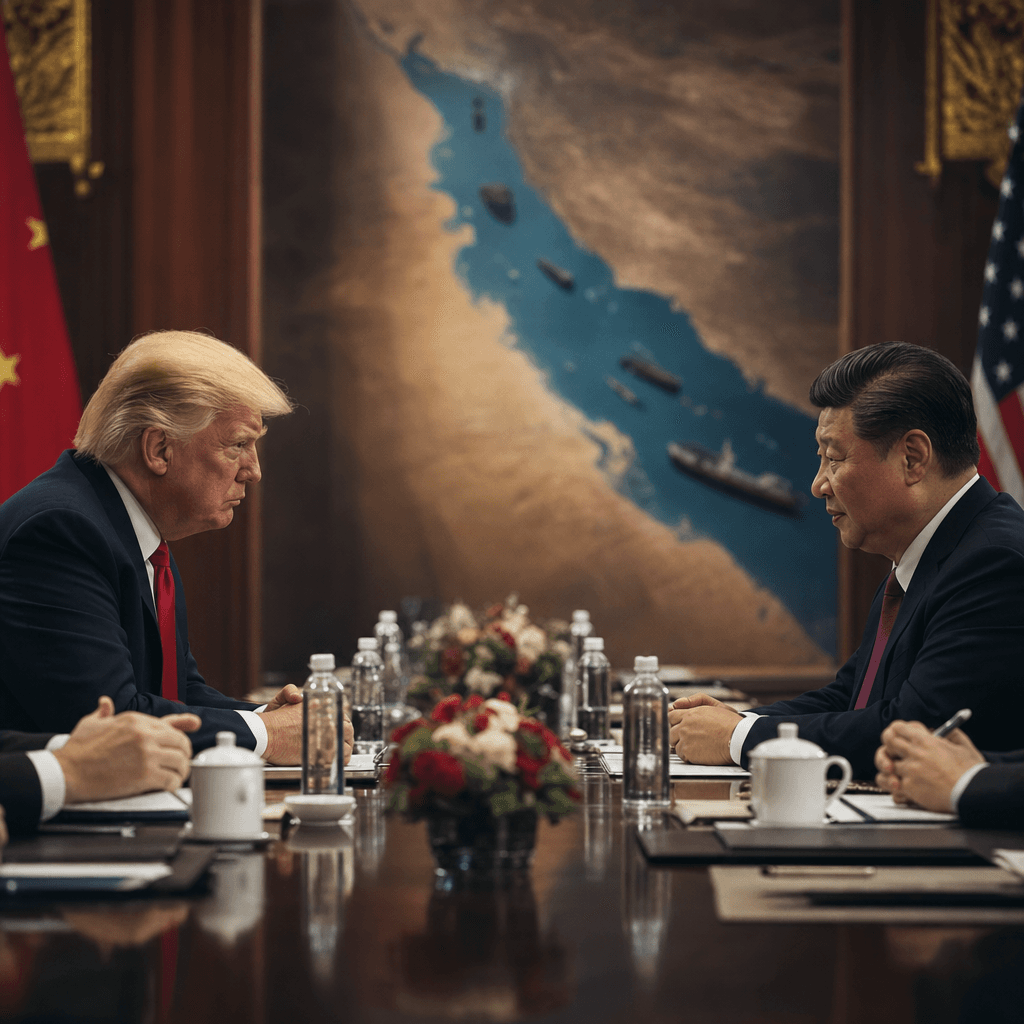
Trump-Xi Summit Becomes a Test of Iran Leverage in Beijing
China’s Tehran ties give Xi leverage; Trump needs help on Hormuz, and the delay has not strengthened Washington’s hand.
Iran, not trade, is setting the terms of the Trump-Xi meeting now slated for next week, with the White House pressing Beijing to help reopen the Strait of Hormuz even as China deepens contact with Tehran, the Washington Post reported. That makes the summit less a reset with China than a negotiation over whether Xi will help stabilize the Middle East on terms that also preserve Beijing’s freedom of action.
Iran is the agenda Washington did not want
Washington is trying to turn China’s ties with Iran into a tool, not a complication. Secretary of State Marco Rubio has urged Chinese officials to press Tehran to loosen its hold on the waterway, according to the Associated Press. In Beijing, Chinese foreign minister Wang Yi met Iranian foreign minister Abbas Araghchi and called for the Strait of Hormuz to reopen “as soon as possible,” the
BBC reported.
That is the core problem for Trump: the U.S. needs China to help unwind a crisis that Beijing can also use to display diplomatic relevance. As the Washington Post noted in an AP dispatch, China is not officially mediating, but both Washington and Tehran say it has played an important role in de-escalation. That gives Xi a useful posture: indispensable enough to matter, cautious enough to avoid ownership of the conflict.
Beijing has more room than Washington
China’s leverage comes from economics as much as diplomacy. It remains a major buyer of Iranian crude; CNBC reported that China imported 1.38 million barrels per day from Iran in 2025, about 12% of its total crude imports. That means Beijing has incentive to keep energy flows moving, but also room to bargain without surrendering its broader relationship with Tehran.
For Xi, the upside is obvious. By urging a ceasefire and safe passage through Hormuz, Beijing can present itself as a responsible power while avoiding direct military costs, a pattern noted in both the Associated Press and
CNBC. For Trump, the downside is sharper: he needs a visible win on Iran before he can claim the summit is about trade and not crisis management. That is why the Post’s read is telling — the two-month postponement has not improved Washington’s hand.
For readers tracking the wider bargaining map on Global Politics, the dynamic is straightforward: China can help, but only on terms that preserve its image and its access to Iran. That leaves Trump trying to extract cooperation from a partner that benefits from being seen as the calm adult in the room.
What to watch next
Watch whether Beijing issues a public commitment to press Tehran on Hormuz before the summit begins, and whether Trump ties any trade announcement to that outcome. The next decision point is the summit itself: if Trump walks in without a Chinese concession on Iran, the meeting will start from a position of U.S. dependence, not leverage.
Discover more
Conflict & Security
De la Espriella's Razor Win Resets US-Colomb
De la Espriella's razor-thin election win signals a reset in US-Colombia relations, reshaping security ties and the agenda under a Trump-aligned approach.
International Relations
Colombia's Razor-Thin Rightward Pivot
Colombia swings right as Abelardo de la Espriella narrowly wins the presidential runoff by under one percent, exposing a deeply divided and polarized nation.
Global Politics
Iran Demands US Enforce Ceasefire
Iran insists the United States must enforce a ceasefire in Lebanon to uphold the memorandum of understanding, raising pressure on Washington and Netanyahu.

Conflict & Security
Trump's Iran Deal Faces Bipartisan Backlash
Trump's Iran deal draws fierce criticism from both Republicans and Democrats, exposing deep political divides over the ceasefire and the terms of the agreement.