Trump Seeks Supreme Court Rehearing on Birth
Trump requests Supreme Court to revisit citizenship ruling
Model Diplomat8 min readNorth America
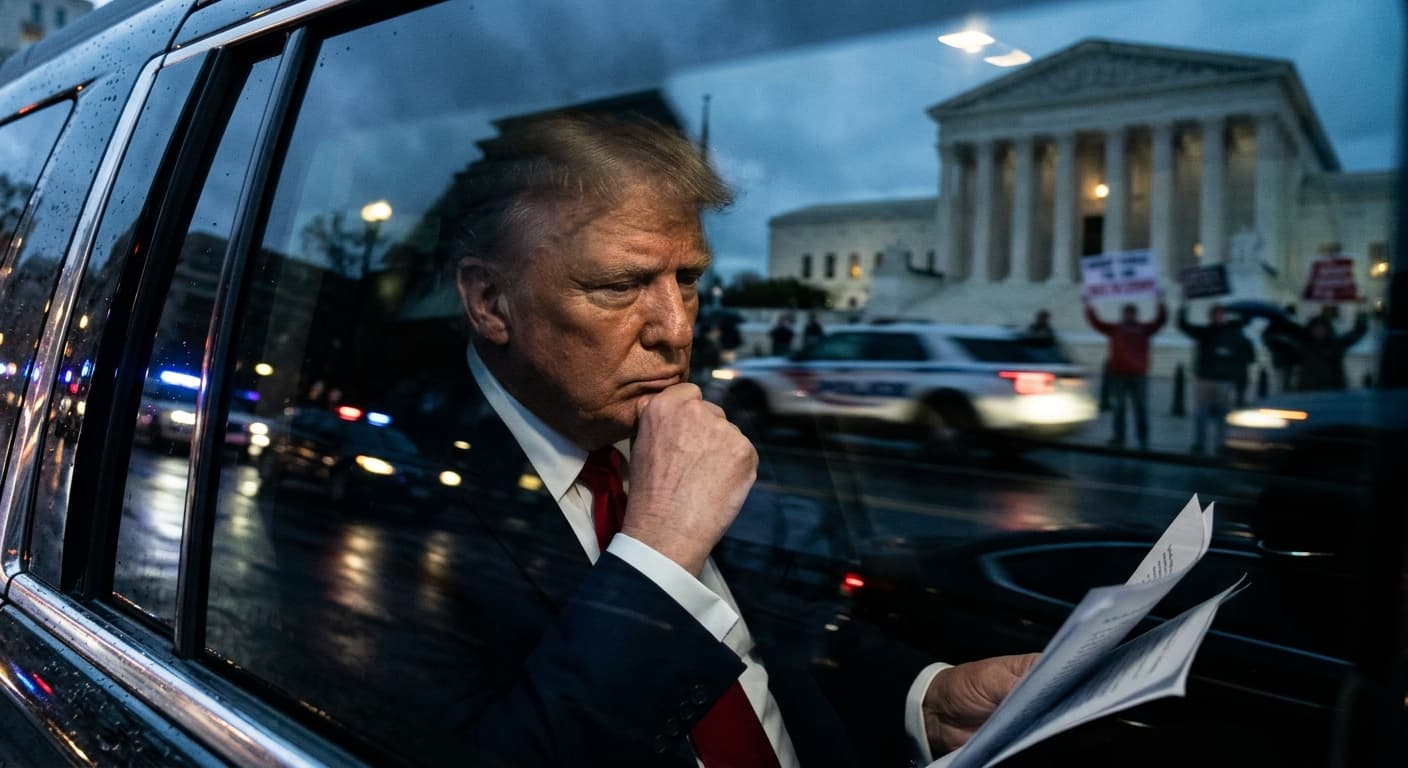
Trump asks Supreme Court to rehear Trump v. Barbara birthright case
After a 6–3 loss on June 30, President Trump is invoking a rarely granted Rule 44 rehearing to reopen the Supreme Court's ruling that struck down his birthright-citizenship order.
On July 8, 2026, President Donald Trump announced on Truth Social that he would "IMMEDIATELY" ask the U.S. Supreme Court to rehear Trump v. Barbara, the 6–3 decision issued on June 30 that struck down his executive order restricting birthright citizenship. The mechanical odds of that request being granted are close to zero — the last time the Court reversed itself on rehearing in an argued case is measured in decades — which means the filing is not really about the case. It is about keeping Executive Order 14160 politically alive long enough to hand the fight to Congress and to a future, differently composed Court. The immediate consequence is that the White House will now run its immigration agenda on the theory that the Fourteenth Amendment's Citizenship Clause is still contested territory, even after the Chief Justice said it was not.
The 6–3 majority in Trump v. Barbara, No. 25-365, held that children born in the United States to parents "unlawfully or temporarily present" are "citizens at birth" under the Fourteenth Amendment. Chief Justice John Roberts, writing for the Court, framed the outcome in unusually blunt terms: "Citizenship, then and now, was the right to have rights — to freely participate in our political community. The Framers of the Fourteenth Amendment extended that promise to 'every free-born person in this land,' " he wrote, according to the BBC's live coverage. "We keep that promise today."
The president's response, in a Truth Social post captured by Al Jazeera, read: "AMERICAN CITIZENSHIP IS NOT FOR SALE! In fact, that is a crime, and therefore, the Supreme Court's ruling is wrong. I will be asking for a Rehearing by the United States Supreme Court, IMMEDIATELY."
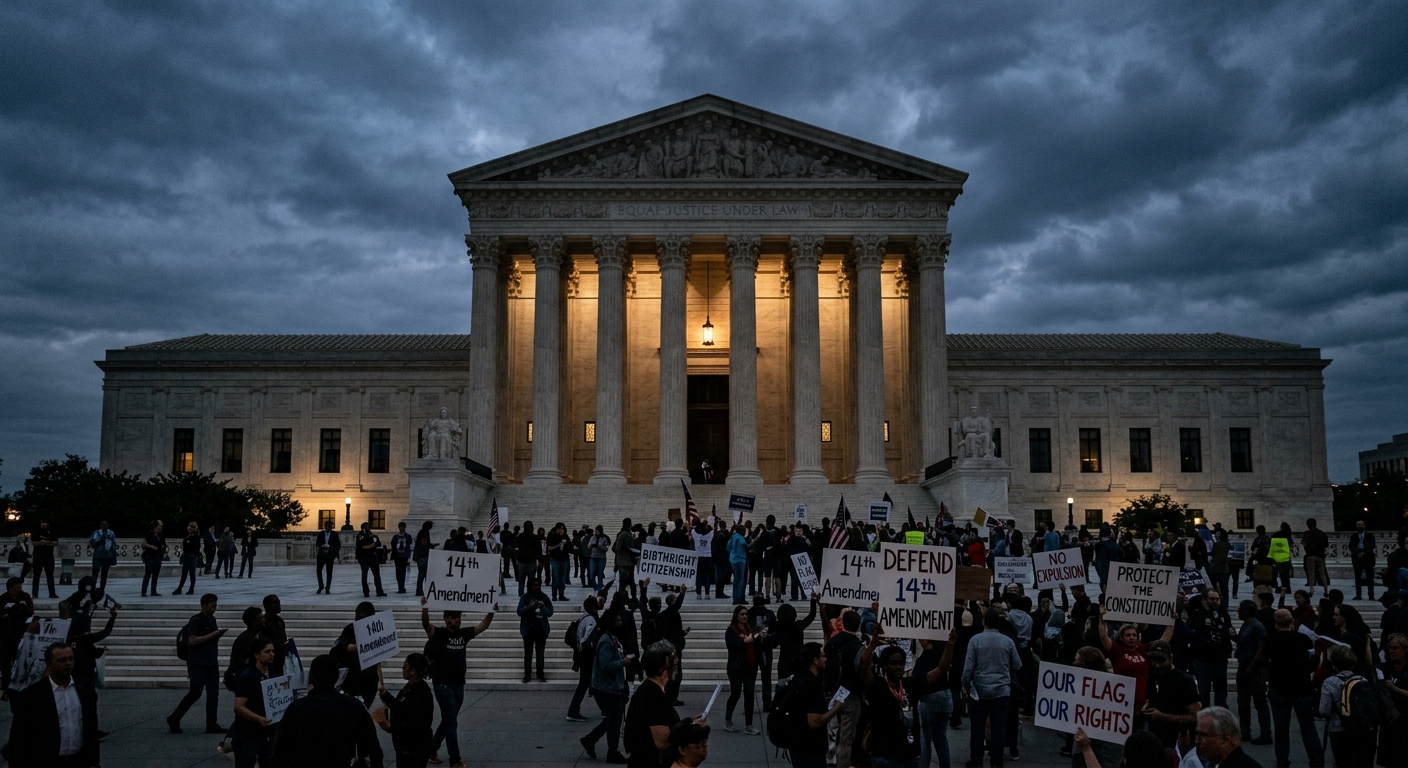
The procedural reality of Rule 44
Rehearing petitions at the Supreme Court are governed by Rule 44. The text is short and the bar is high. The petition must be filed within 25 days of the judgment — meaning by July 25, 2026, unless a justice extends the deadline. It must be certified as "presented in good faith and not for delay." Critically, it "will not be granted except by a majority of the Court, at the instance of a Justice who concurred in the judgment or decision."
That last clause is the wall. To grant rehearing, at least one member of Roberts's six-justice majority — Roberts himself, Sonia Sotomayor, Elena Kagan, Ketanji Brown Jackson, Amy Coney Barrett, or Brett Kavanaugh — would have to move for it, and five would have to agree. There is no realistic path. Rule 44.2 further limits rehearing to "intervening circumstances of a substantial or controlling effect or to other substantial grounds not previously presented," language the Court's own 2025 term statistics show it interprets restrictively; rehearing grants in argued cases are so rare the Court no longer tracks them as a routine category.
Legal scholarship in the Cambridge Journal of Law and Courts confirms that rehearing requests, while common on the shadow docket, are granted at a rate that rounds to zero. The last widely cited reversal on rehearing in a fully argued merits case dates to the 1950s.
Why file anyway
The rehearing bid is a policy signal, not a litigation strategy. Three second-order effects flow from it.
First, it freezes the political coalition. By promising to keep fighting, Trump prevents his immigration-hawk flank — chief of staff Stephen Miller most visibly — from treating the June 30 decision as a defeat that requires strategic retreat. Miller called the ruling "one of the most destructive and outrageous decisions" in the Court's history, according to the BBC. A rehearing petition, however doomed, is the cheapest way to hold that coalition together while Congress debates.
Second, it revives the Kavanaugh footnote. Justice Kavanaugh joined Roberts's constitutional holding but wrote separately to argue that Executive Order 14160 was primarily invalid under the Immigration and Nationality Act rather than the Constitution itself. In the Brookings analysis of the ruling, David Barker notes that Kavanaugh said the president "would have to persuade Congress to amend these statutes" to reach his goal lawfully. Senator Eric Schmitt read that as "a door" — and pledged to walk through it with new legislation. That door is what the Trump legal team wants kept open, and a rehearing filing keeps it framed as unfinished business.
Third, it forces the states' hand. The Court's ruling did not resolve dozens of state-level implementation fights that the administration has already begun to lose in lower courts. As long as the White House officially maintains that the Court got it wrong, U.S. Citizenship and Immigration Services can slow-walk the guidance updates needed to conform practice to the June 30 ruling. That drift matters most in Republican-run states experimenting with restrictive vital-records regulations.
What the majority actually decided
The opinion's central move was to sever citizenship from parental status. The Trump administration's government brief had argued that the phrase "subject to the jurisdiction thereof" was adopted "to confer citizenship on the newly freed slaves and their children, not on the children of aliens who are temporarily present in the United States or of illegal aliens." Roberts rejected that construction as ahistorical, tracing the rule through English common law, the 1868 ratification debates, and the 1898 decision in United States v. Wong Kim Ark.
The Cornell Legal Information Institute's syllabus records the holding in a single sentence: "Children born in the United States to parents unlawfully or temporarily present are 'subject to the jurisdiction' of the United States and are citizens at birth under the Fourteenth Amendment's Citizenship Clause."
Justice Samuel Alito, in dissent, called the ruling a "serious mistake" that "confers citizenship on virtually anyone who happens to be born in this country," per the BBC. Justice Clarence Thomas's 91-page dissent argued that historical evidence supported a domicile-based reading of the clause. Roberts pushed back that "citizenship and domicile were unrelated legal categories," according to
Brookings.
The immigration-policy consequences the White House now has to absorb
The stakes measured in people are large. A Migration Policy Institute–Penn State amicus brief filed in the case estimated that the executive order, if implemented, would have stripped citizenship from roughly 255,000 U.S.-born children per year — 5.7 percent of all births — producing 4.8 million affected children by 2045 and 12.8 million by 2075. The brief warned that the order "would create a self-perpetuating, multigenerational underclass — with U.S.-born residents inheriting the social disadvantage borne by their parents and even, over time, their grandparents and great-grandparents."
Scholarship by Cristina Rodríguez and colleagues in The Consequences of Ending Birthright Citizenship makes the less-noticed administrative point: because the United States has no centralized birth registry, ending universal jus soli would force every American to prove citizenship through parental documentation, not just their own birth certificate. That reallocates burden to state and county governments unequipped to administer it. A separate
PubMed-indexed perspective in the Maternal and Child Health Journal warned of downstream effects on immigrant maternal healthcare access if the executive order had survived.
The Council on Foreign Relations notes that roughly 30 countries currently offer unrestricted jus soli; contrary to Trump's April 1 Truth Social post claiming the U.S. is "the only Country in the World STUPID enough" to do so, the practice is standard across the Americas.
The Congress route — and its ceiling
Legislation is the White House's realistic Plan B, and it is already drafted. On January 21, 2025, Rep. Brian Babin introduced H.R. 569, the Birthright Citizenship Act of 2025, gathering 87 Republican cosponsors. On January 29, 2025, Sen. Lindsey Graham filed the Senate companion,
S. 304, joined by Ted Cruz and Katie Britt.
Both bills would amend 8 U.S.C. § 1401 to define "subject to the jurisdiction" to require that at least one parent be a U.S. citizen, a lawful permanent resident, or an active-duty service member. In a January 2025 press release, Graham's office said the bill "stops the practice of granting citizenship to both the children of illegal immigrants and the children of non-immigrants." Graham has since pledged to make it a Judiciary Committee priority.
Yet the June 30 opinion effectively pre-empts this statutory path. Because the Court grounded the outcome in the Constitution, not the INA, a statute redefining "subject to the jurisdiction" would face immediate constitutional challenge and, on the reasoning of Trump v. Barbara, would lose. Brookings quotes House Speaker Mike Johnson conceding as much: "You got to amend the Constitution to fix this." Senator Mike Lee added: "The long fight for a constitutional amendment begins now."
That is the real ceiling. Amending the Constitution requires two-thirds majorities in both chambers and ratification by 38 state legislatures — a threshold reached only 27 times in U.S. history. Public opinion is not near that supermajority: polling cited by Al Jazeera consistently shows majority support for birthright citizenship.
Who wins, who loses
The immediate beneficiaries of Trump v. Barbara are the roughly 255,000 U.S.-born children each year whose citizenship no longer sits on a contested constitutional footing, plus the state and municipal governments that would have had to administer a two-tier documentation system. ACLU attorney Cecillia Wang, herself a birthright citizen who argued the case, said the decision "reaffirms a fundamental American promise — if you are born here, you are a citizen," according to Al Jazeera.
The losers are narrower than the political rhetoric suggests. Trump's broader immigration agenda continues to score wins on the merits — the same June 30 order day included rulings that let the administration wind down Temporary Protected Status for several countries and physically block asylum seekers from U.S. soil. Birthright citizenship was always the ceiling of that agenda, not the floor. What the ruling forecloses is the constitutional short-cut. It does not slow deportations, employment-verification tightening, or the administration's use of the shadow docket to defend those policies.
The quiet loser is the legislative right's argument that a friendly Court would eventually bless a statutory redefinition. Six justices, including two Trump appointees, said otherwise.
What to watch
- July 25, 2026 — Deadline under Rule 44.1 for filing the petition for rehearing, absent an extension. Whether the administration files a serious petition or a cursory one will indicate whether it expects any justice on the majority to entertain it.
- Senate Judiciary Committee calendar, fall 2026 — Sen. Lindsey Graham has said he will prioritize
S. 304. A markup would test whether Republicans push a bill the Court has effectively pre-decided.
- USCIS implementation guidance — Watch for revised or withdrawn agency guidance from U.S. Citizenship and Immigration Services conforming practice to the June 30 ruling. Continued non-conformance would preview the next round of litigation.
- State vital-records regulations — Republican-controlled states, particularly Texas and Florida, retain rulemaking authority over birth certificates. New documentation rules there would be the practical successor fight to Trump v. Barbara.
The Bottom Line
The bottom line: Trump's rehearing bid in Trump v. Barbara will not survive Rule 44, and the White House knows it — the filing is a political device to keep Executive Order 14160 alive as a rallying point while the fight shifts to Congress and the states. The Court has said the Fourteenth Amendment settles the constitutional question; what it has not settled is whether the administration will accept that answer, and every implementation choice from USCIS forward is now the real test.
Discover more

Global Politics
U.S. Naval Blockade Heightens Iran Tensions
The U.S. naval blockade of Iran collapsed oil exports, creating a new maritime regime in Hormuz that favors Tehran.
Global Politics
U.S. Maritime Pressure on Iran
Washington escalates maritime security operations and sanctions on Iran, disrupting Gulf shipping and reshaping global energy flows in a major strategy shift.
India
700 Activists Accuse PM Modi of MCC Breach
Over 700 activists allege PM Modi breached election code with a televised address attacking opposition parties just before state elections.

Economics
Fed's Amex AML order puts correspondent banking on notice
Federal Reserve's Amex AML order requires board-level controls and a 90-day plan; OCC fined the bank $350 million over enterprise-wide deficiencies.