Trump's Tougher Demands on Iran Amid Hormuz T
Trump raises stakes in Iran peace talks, demanding more concessions.
Model Diplomat3 min readMiddle East

Trump Raises Price on Iran Peace Bid as Hormuz Leverage Grows
Trump is using Iran’s new peace proposal to demand bigger concessions on ceasefire, shipping and deterrence before giving Tehran relief.
Trump has publicly raised the bar for any ceasefire with Iran, saying Tehran has “not yet paid a big enough price” while he reviews a new peace proposal, according to CNN’s May 3 live coverage Trump says Iran has ‘not yet paid a big enough price’ as he reviews new peace proposal. AP reported that the proposal was relayed through Pakistani mediators and that Trump had already rejected Iran’s latest terms as insufficient
Trump rejects Iran's latest proposal to end war with US.
The power dynamic is straightforward: Washington controls escalation at sea and the sanctions architecture; Tehran still controls disruption risk in the Strait of Hormuz. Reuters reported that, after talks stalled, the U.S. moved to block maritime traffic to and from Iranian ports, while the BBC said Washington also threatened sanctions on shipping firms that pay Iranian tolls in Hormuz US military to block ships from Iranian ports after talks yield no agreement
Strait of Hormuz: US threatens shipping firms with sanctions if they pay Iran tolls.
Why Trump is hardening the terms
Trump is not just bargaining with Tehran; he is bargaining from a position of visible coercive leverage. Reuters said the White House argued on May 1 that the war had “terminated” after hostilities that began on Feb. 28, even as Democrats challenged that interpretation under the War Powers Resolution Trump says Iran war 'terminated,' as war powers deadline arrives. A tougher public line helps the administration show it is still dictating terms rather than ratifying a ceasefire on Iranian conditions.
Tehran’s leverage is narrower but still real. Reuters noted that the Strait of Hormuz carries about 20% of global energy supplies, and the BBC reported that normal traffic of roughly 3,000 ships a month has dropped to only a few per day since the blockade pressure intensified US military to block ships from Iranian ports after talks yield no agreement
Strait of Hormuz: US threatens shipping firms with sanctions if they pay Iran tolls. That makes shipping access—not abstract diplomacy—the real currency of this negotiation.
For readers tracking the broader International and
US Politics implications, this is the core test: whether Trump can convert military and financial pressure into a narrower deal without reopening a larger war.
What to watch next
Watch Islamabad first. The BBC reported Iran had not yet decided whether to attend a new round of peace talks with the U.S., and said Pakistani mediators were pressing both sides before the current truce window closes Iran yet to decide if it will attend new peace talks with US, official tells BBC.
Watch Hormuz even more closely. AP reported Iran offered to reopen the strait if the U.S. lifts its blockade, effectively trying to separate shipping access from the wider nuclear and security dispute Iran offers to reopen Strait of Hormuz if US lifts blockade. That is the next decision point: whether Trump uses today’s rhetoric to justify more force, or to force a smaller bargain on shipping, ceasefire enforcement and Iran’s next move.
Discover more

Global Politics
US Seizes Iranian Ship, Tensions Surge
The US seizure of the Iranian ship Touska highlights a shift in control over the Strait of Hormuz, favoring Iran's strategic position.

Conflict & Security
Drone Warfare Killing Aid Workers at Unprec
Over 1,000 humanitarian workers killed in three years as cheap armed drones collapse legal protections. Gaza, Sudan, Ukraine, and DRC see deliberate targeting of aid convoys and hospitals with zero prosecutions.

Global
World Normalises Taliban as Afghan Women Eras
UN data shows Afghan women erased from public life as Russia recognises the Taliban, EU hosts officials in Brussels, and ICC warrants for gender persecution go unenforced.
Conflict & Security
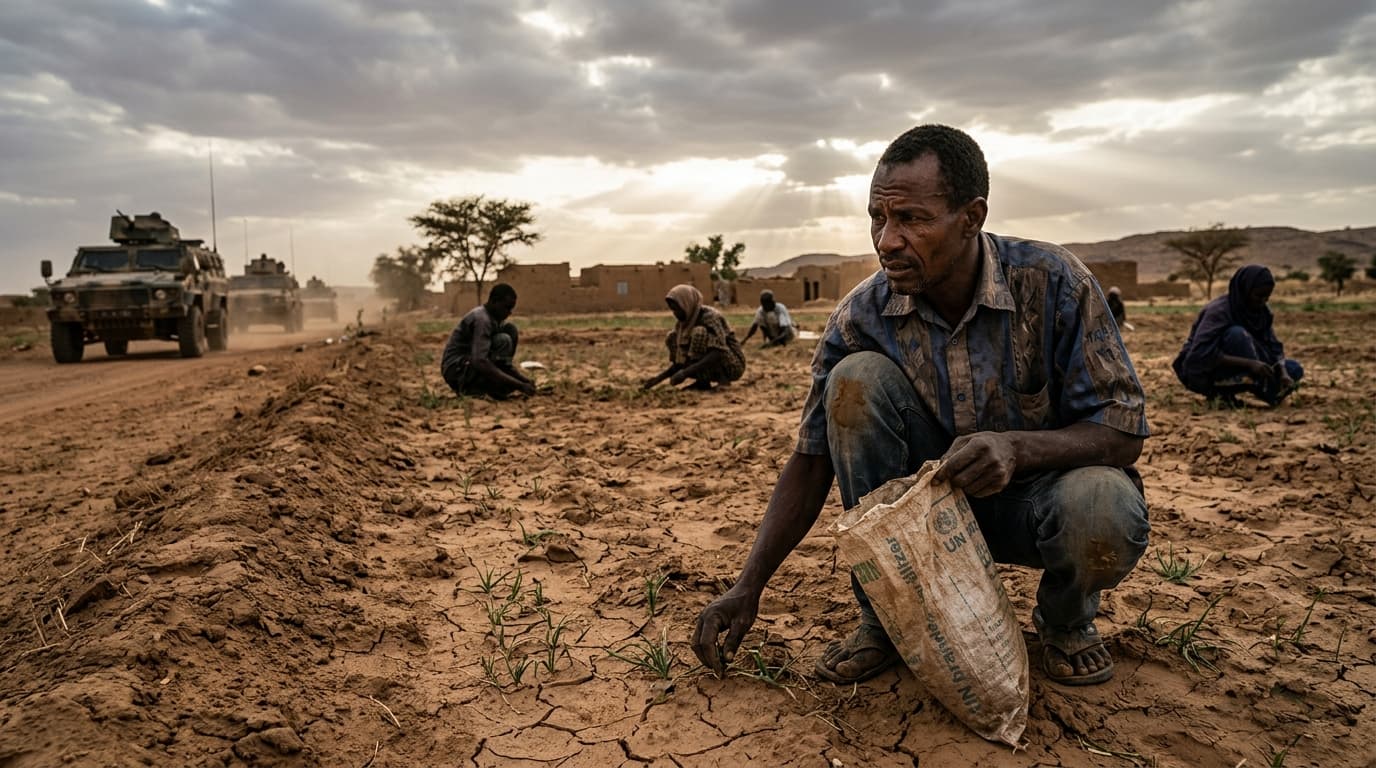
West Africa Food Crisis: Three Shocks in 2026
Conflict, climate extremes, and the Strait of Hormuz closure drive a severe food crisis in West and Central Africa, with fertilizer prices surging 80% and millions displaced.