Trump Ends Iran Ceasefire Amid Gulf War Costs
Gulf states bear the brunt of escalating US-Iran tensions.
Model Diplomat9 min readMiddle East
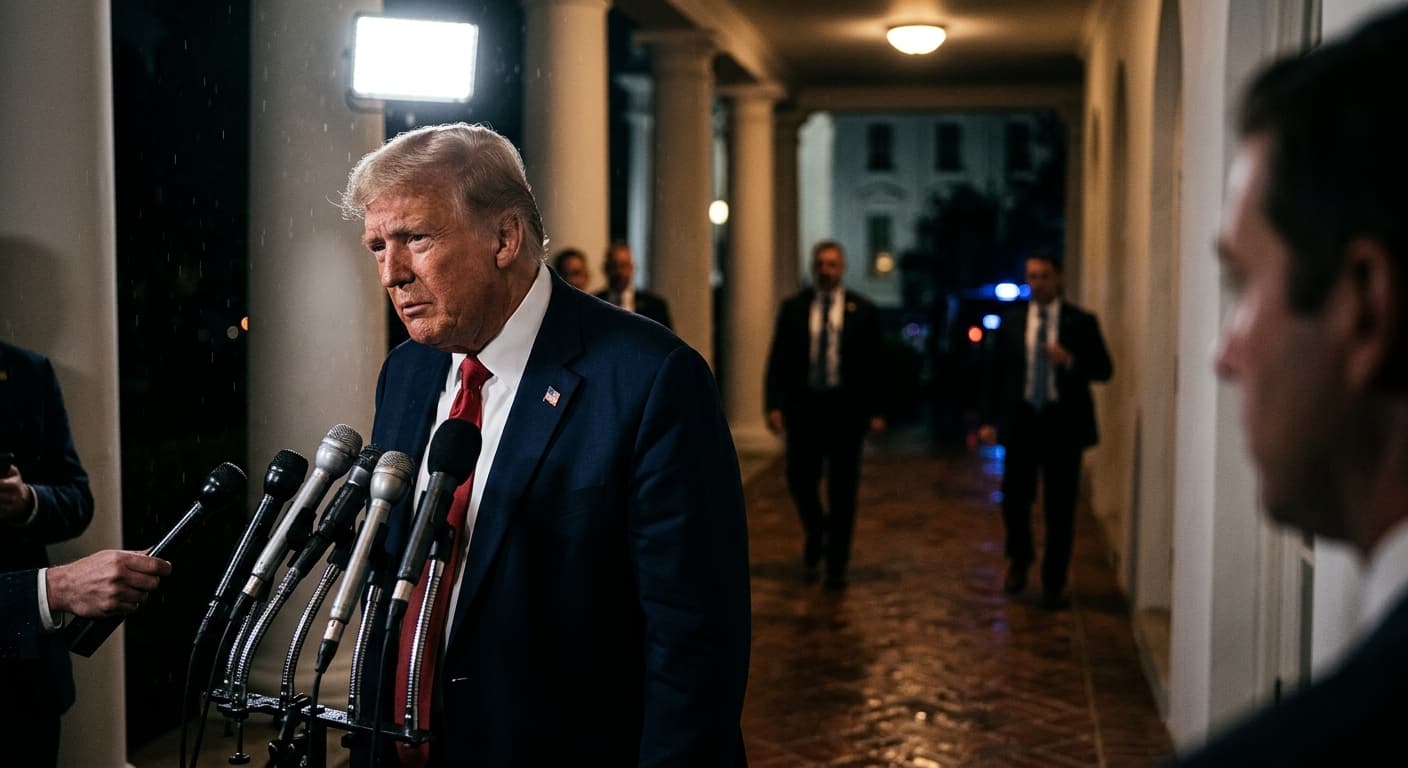
Trump Declares Iran Ceasefire "Over" as Gulf States Absorb the War
Iran hit US bases in Bahrain and Kuwait on July 8, 2026; Trump killed the MoU signed at Versailles. The Gulf, not Washington, now carries the war's costs.
US President Donald Trump declared the 21-day-old US–Iran memorandum of understanding "over" on July 8, 2026, hours after the Islamic Revolutionary Guard Corps said it had struck 85 US military sites across Bahrain and Kuwait in retaliation for a CENTCOM barrage on more than 80 targets in southern Iran. The break exposes what the Gulf Cooperation Council has been trying to manage since February 28: the ceasefire architecture built at Versailles never resolved who controls the Strait of Hormuz, and it left the six GCC states hosting the bases, absorbing the missiles, and paying the economic bill — without a seat at the table where their sovereignty was being negotiated. The real losers of this collapse are not in Washington or Tehran; they are in Manama, Kuwait City, Abu Dhabi and Doha.
That is the central power dynamic. Iran is not fighting to defeat the United States. It is fighting to force Washington — and by extension Gulf capitals — to acknowledge Iranian jurisdiction over a waterway that carried roughly 20 million barrels of oil per day in 2024, according to the US Congressional Research Service. The MoU obliquely conceded the point; the Trump administration refused to say so out loud; and every tanker attack since June 17 has been Tehran teaching Riyadh, Abu Dhabi, Manama and Kuwait City that the price of that ambiguity is their airspace.
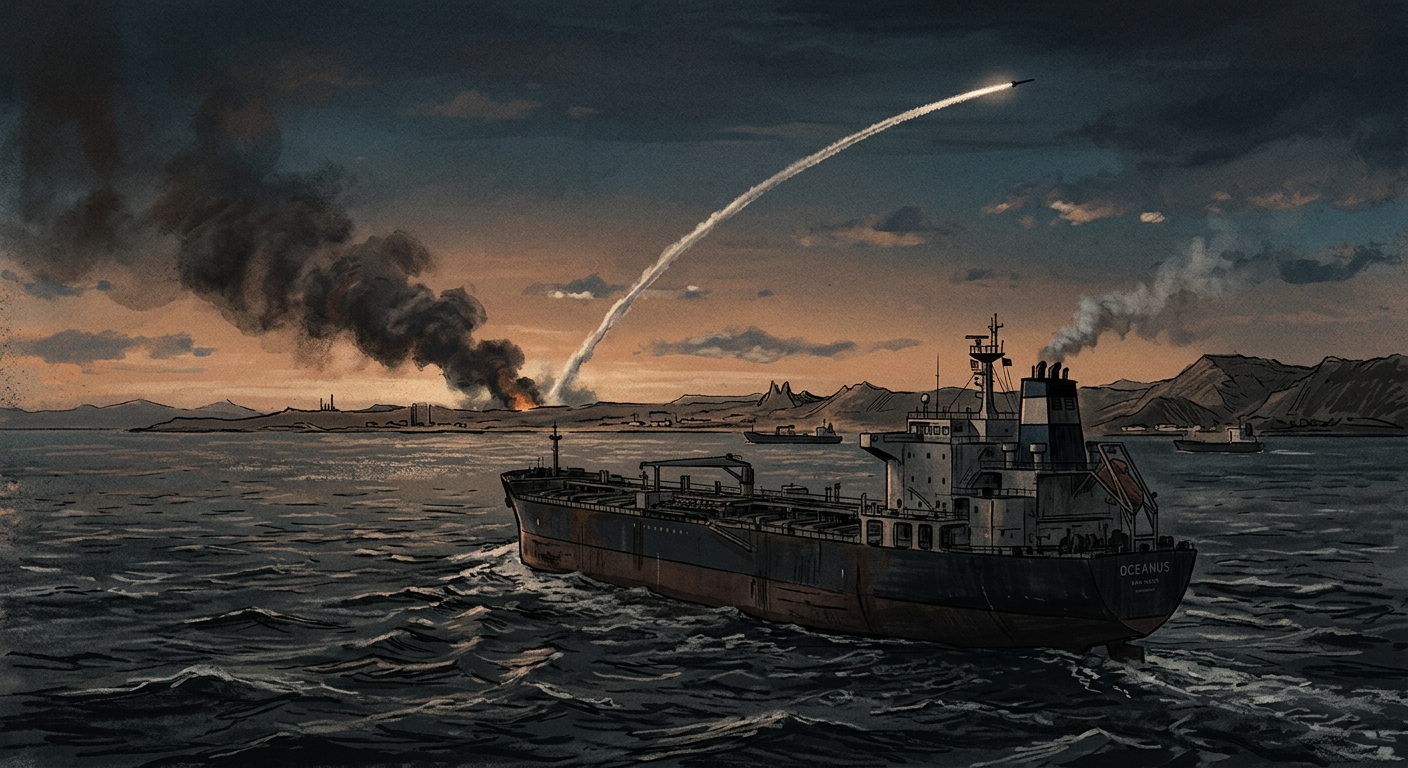
What broke, and how fast
The chronology is unforgiving. On June 17, Trump and Iranian President Masoud Pezeshkian electronically signed a 14-point MoU that the White House called "America First in Action." Point 4 required the US to lift its naval blockade of Iranian ports within 30 days. Point 5 asked Iran to ensure "safe passage of commercial vessels with no charge for 60 days" through Hormuz and to open talks with Oman on the strait's "future administration." Point 10 committed the US Treasury to issue an oil-sales waiver, which it duly
did on June 22, authorising Iranian crude sales through August 21.
The full text was published by the BBC and read verbatim by a senior US official; a parallel Al Jazeera transcript matches it. UN Secretary-General António Guterres, quoted in the same White House release, called the agreement "a critical step towards the peaceful settlement of the conflict."
Within eleven days it was fraying. On June 28, Iran struck Ali Al Salem airbase in Kuwait and the US Fifth Fleet headquarters in Bahrain after CENTCOM hit ten Iranian targets in response to a drone attack on the Kiku oil tanker, Al Jazeera reported. By July 7 three commercial tankers had been struck in or near the strait; the US Treasury revoked the oil waiver effective 12:01am EDT on July 17; CENTCOM launched its second wave of "over 80" precision strikes on Qeshm, Bandar Abbas and Sirik; and the IRGC fired back at 85 US facilities in Bahrain and Kuwait, according to the
BBC.
Speaking on the sidelines of the NATO summit in Ankara, Trump called Iran's leaders "sick" and "vicious, violent people" and declared the MoU dead — a moment captured by Al Jazeera's live coverage. NATO Secretary-General Mark Rutte defended the US strikes as "absolutely necessary," arguing Iran was "basically violating the ceasefire." French President Emmanuel Macron split the difference: Iran had violated the MoU, but negotiations must continue.
The unresolved sentence at the heart of the MoU
Read Article 5 closely and the collapse is legible. Iran committed to "best efforts" on safe passage — not a legal guarantee — and to "dialogue with the Sultanate of Oman to define the future administration and maritime services in the Strait of Hormuz." Iran's chief negotiator, parliamentary speaker Mohammad Bagher Ghalibaf, told state television within hours of the June 17 signing that the strait "will not return to pre-war conditions" and that Iran would "charge fees for services" from shipping, per Al Jazeera.
The Trump administration had simultaneously assured allies the strait would be "permanently toll-free," according to the same Al Jazeera dispatch reporting Iran's counter-position. Both sides walked out of Versailles with incompatible readings of the same clause.
That gap is the war Iran is now prosecuting through drones. Reporting from the White House on July 7, Al Jazeera's Mike Hanna noted that since the MoU was signed, Iran has insisted shipping transit a northern route "which is closer to Iran and which it effectively controls," while the US Navy has directed vessels through a southern protected corridor. Every tanker strike is Iran policing its preferred route; every CENTCOM barrage is Washington rejecting the claim.
Ali Akbar Dareini of Tehran's Center for Strategic Studies put it bluntly to Al Jazeera: Iran "cannot tolerate these smaller-scale military attacks aimed at targeting the infrastructure that allows Iran to control the Strait of Hormuz," and could pursue a "horizontal war" across the region if Washington kept pressing. That is a threat directed less at the US than at Iran's Arab neighbours.
The GCC absorbs a war it did not start
The GCC is where the analysis has to land. Iran's July 8 salvo hit Bahrain and Kuwait, but the pattern is older and wider. Since the February 28 opening of hostilities, the UAE has taken more than 250 Iranian strikes, Kuwait 79, Bahrain 46, Qatar 27 and Oman 22, according to a June brief from India's Manohar Parrikar Institute for Defence Studies and Analyses. The Doha Institute's
Arab Center for Research and Policy Studies reports Qatar suspended LNG exports under force majeure after Iranian drones hit Ras Laffan; Kuwait cut oil output to domestic demand only; Iraq shed about 1.5 million barrels per day; Saudi Arabia's Ras Tanura refinery was struck.
The damage to US installations is now quantified. A BBC Verify satellite investigation identified damage at roughly 20 US military sites across Saudi Arabia, the UAE, Qatar, Kuwait, Iraq, Jordan, Bahrain and Oman — "the actual figure could be higher, with some analysts placing the number of bases hit as high as 28." The American Enterprise Institute
estimated the rebuilding tab at around $5 billion, with hangars, runways, warehouses and satellite terminals destroyed at Ali Al Salem, Camp Arifjan, Camp Buehring, Al Udeid, Al Dhafra and the Fifth Fleet headquarters. AEI's Kelly Grieco warned in the same BBC report that "the current conflict has consumed US and partner air-defence stocks at a significant rate" and there is "no rapid path to replenishment" — meaning any renewed Iranian assault would be met with "a fraction of the interceptors available when the conflict started."
That is the decisive number for Gulf capitals. Manama and Kuwait City can no longer assume the Patriot and THAAD envelope over their capitals will function at the density it did in March.
The GCC's diplomatic response has been more unified than its military one. On March 5, GCC and EU foreign ministers issued a joint statement — published on the European Council's site — invoking Article 51 of the UN Charter and affirming the GCC's right to "take all necessary measures to defend their security and stability." A month later, GCC Secretary-General Jassim al-Budaiwi told the UN Security Council that 85% of Iranian projectiles had targeted Gulf states, with the UAE hardest hit, per
Al Jazeera. Qatar's foreign-ministry spokesman Majed al-Ansari told reporters — as
the BBC quoted — "all the red lines have already been crossed."
Yet no GCC state has retaliated militarily against Iran. Kuwait and Bahrain have refused to let US aircraft use their territory or skies to strike Iranian soil, MP-IDSA notes, and Anwar Gargash, diplomatic adviser to the UAE president, publicly urged Iran to "return to your surroundings" rather than meeting force with force. That posture — condemn, host, absorb — is the operating GCC doctrine, and it is not sustainable if the war becomes permanent.
Who benefits, who loses
Trump benefits domestically from a hard line delivered against a leader — the new Supreme Leader Mojtaba Khamenei, elevated by the Assembly of Experts on March 8, 2026 after his father was killed in the opening US-Israeli strikes — whom he had called "unacceptable" even before the appointment. Mojtaba benefits from a war that rallies Iranians around a hereditary succession the clerical establishment finds awkward: as the
Carnegie Endowment noted, dynastic succession is "antithetical" to the 1979 revolution, and only external threat papers over that contradiction.
The clearest losers are Gulf economies. Analyst Vandana Hari-style consultancies, cited by Al Jazeera's oil-market report, warn that passage through the strait "could remain below 50 percent of pre-war levels for many months," per MST Marquee's Tony Sycamore and Rapidan's Clay Seigle. Iranian oil sales, which Treasury had authorised through August 21, snap back under sanctions on July 17 — a $30-plus-per-barrel cushion Iran briefly enjoyed evaporates.
The unexpected winner is Oman. Article 5 of the MoU names Muscat as the co-designer of the strait's "future administration," giving a small sultanate diplomatic leverage over global energy flows disproportionate to its size. Every escalation raises Oman's mediating price.
The historical parallel worth naming is not the 1980s tanker war — a bilateral US–Iran clash largely fought at sea — but the years 1987–88, when Kuwait's decision to reflag its tankers under the US flag pulled Washington into the Gulf as a permanent security guarantor. This time the arrow points the other way: the US guarantee is being tested, found partial, and Gulf states are quietly recalibrating. Saudi Arabia's East–West pipeline and the UAE's Abu Dhabi–Fujairah line together offer only about 2.6 million barrels per day of bypass capacity around Hormuz, the Congressional Research Service reports — roughly one-eighth of normal throughput. The bypass is a footnote, not a solution.
Diplomat View
The MoU is dead in name; whether it is dead in substance depends on two decisions inside two weeks. First, whether Iran fires on any target in Saudi Arabia or the UAE — the two GCC states with the will and the arsenal to retaliate — or confines strikes to Bahrain and Kuwait, which will not. Second, whether Treasury's oil-waiver revocation actually takes effect on July 17 or is quietly extended as a face-saving off-ramp; Iran's foreign ministry has already called it a "blatant violation" and the trigger for its escalation. My working thesis: this is a controlled collapse, not a return to full war. Trump wants leverage for a renegotiation on US terms; Mojtaba Khamenei needs a war to consolidate. Both will accept a second, worse MoU by early autumn — one that explicitly concedes Iranian "services" over Hormuz in exchange for tighter nuclear caps. What would falsify this call: an Iranian strike on Saudi or Emirati energy infrastructure, or an Israeli strike on Mojtaba himself. Either forces a war neither Trump nor Tehran currently wants.
What to watch
- July 17, 2026 — Treasury's revocation of the Iranian oil waiver takes legal effect; the deadline Tehran has flagged as the decisive breach.
- The next tanker. A fourth strike in the strait, particularly on a Saudi- or UAE-flagged vessel, converts a controlled crisis into an Article 51 test for the GCC.
- Mojtaba Khamenei's first public speech. He has never given one; whether he opens a diplomatic door or closes it will set the price of any second MoU.
The Bottom Line
The July 8 collapse is not a failure of diplomacy — it is the diplomacy working exactly as its ambiguity was designed to. Iran signed a document that let it claim jurisdiction over Hormuz; Washington signed one that let it deny that claim; the Gulf states signed nothing and are paying for both readings in destroyed hangars, halted LNG cargoes and depleted interceptor stocks. The next US–Iran deal will be written not in Versailles but in Muscat, and it will cost the GCC more than the last one.
Discover more
US Politics
House Ethics Committee Pushes Sexual Miscond.
The House Ethics Committee has shifted responsibility for sexual harassment settlement records to the Office of Congressional Workplace Rights, complicating disclosure efforts.
US Politics
Congress Targets AI Chatbot Access for Terror
The House passed the Generative AI Terrorism Risk Assessment Act, focusing on AI's role in terrorism and potential surveillance implications.
India
Romanian Coalition Party Demands PM Resign
Romania's Social Democrats withdrew from coalition, joining far-right AUR to topple PM Bolojan, risking €10 billion in EU funds by August 2026.
Conflict & Security
Guatemala: El Niño 2026–27 becomes regional security test
UNICEF: 25.8M children face El Niño risks in Latin America; Guatemala maps 188 municipalities for drought and food insecurity amid regional security test.