Trump Claims Iran War Ended Before 60 Days
Congress disputes Trump's claim on Iran war powers.
Model Diplomat2 min readNorth America

Trump Says Iran War Ended Before 60 Days. Congress Won’t Agree
The White House is trying to shut down the Iran war-powers clock by redefining the conflict as already over. Congress’s leverage is now the real battlefield.
The Trump administration’s claim that the Iran war was “terminated” before the 60-day War Powers deadline is less about the battlefield than about institutional control. The immediate goal is to block the argument that the president now needs explicit congressional authorization to continue any Iran-related operation. That is the core dispute in the administration’s latest legal framing, as lawmakers and outside critics argue the clock has already run. The Hill
CNN
The White House is protecting executive freedom
Under the 1973 War Powers Resolution, a president who introduces U.S. forces into hostilities without authorization must end that involvement within 60 days, with a possible 30-day withdrawal period. CNN The administration is now arguing that threshold does not apply because the war effectively ended before the deadline hit.
The Hill
That position benefits Trump, the Pentagon, and any future president who wants maximum room to launch limited wars first and sort out legal authority later. It hurts Congress, because if a ceasefire or operational pause can retroactively “terminate” hostilities, lawmakers lose the strongest timing mechanism the War Powers law gives them. That is why critics in both parties have pushed back; CNN reported that some Republicans, including Sen. Susan Collins, rejected the idea that a ceasefire pauses the statutory clock. CNN
This follows a familiar war-powers playbook
The broader pattern is not new. The Iran conflict reportedly began in late February, and Trump announced a two-week ceasefire on April 8 before later extending it without a firm new deadline. USA Today
CNN What is new is how explicitly the administration is using that pause to argue the legal clock never matured into a congressional veto point.
The Hill
CNN
Washington has seen this method before: presidents avoid the word “war,” define hostilities narrowly, and force Congress to react after the fact. CNN noted the administration had already resisted describing the Iran conflict in terms that would strengthen demands for a formal declaration or authorization. CNN For readers tracking the wider
US Politics fight, the legal language matters because it shapes who can escalate next without another vote.
What to watch next
The next test is not rhetorical. It is whether Congress can force a vote anyway. House Republicans blocked a Democratic war-powers push on April 9, showing how hard it is to convert legal criticism into binding action. USA Today If military operations resume, or if the ceasefire remains indefinite while coercive measures continue, lawmakers will press the same question again: was the war actually over, or merely relabeled? That is the next decision point for the White House — and for
the United States Congress.
Discover more

Global
Qatari Tanker Strike Exposes Hormuz Tensions
A Qatari tanker was struck off Oman, revealing the fragility of the Hormuz ceasefire and Iran's influence over maritime security.
Global
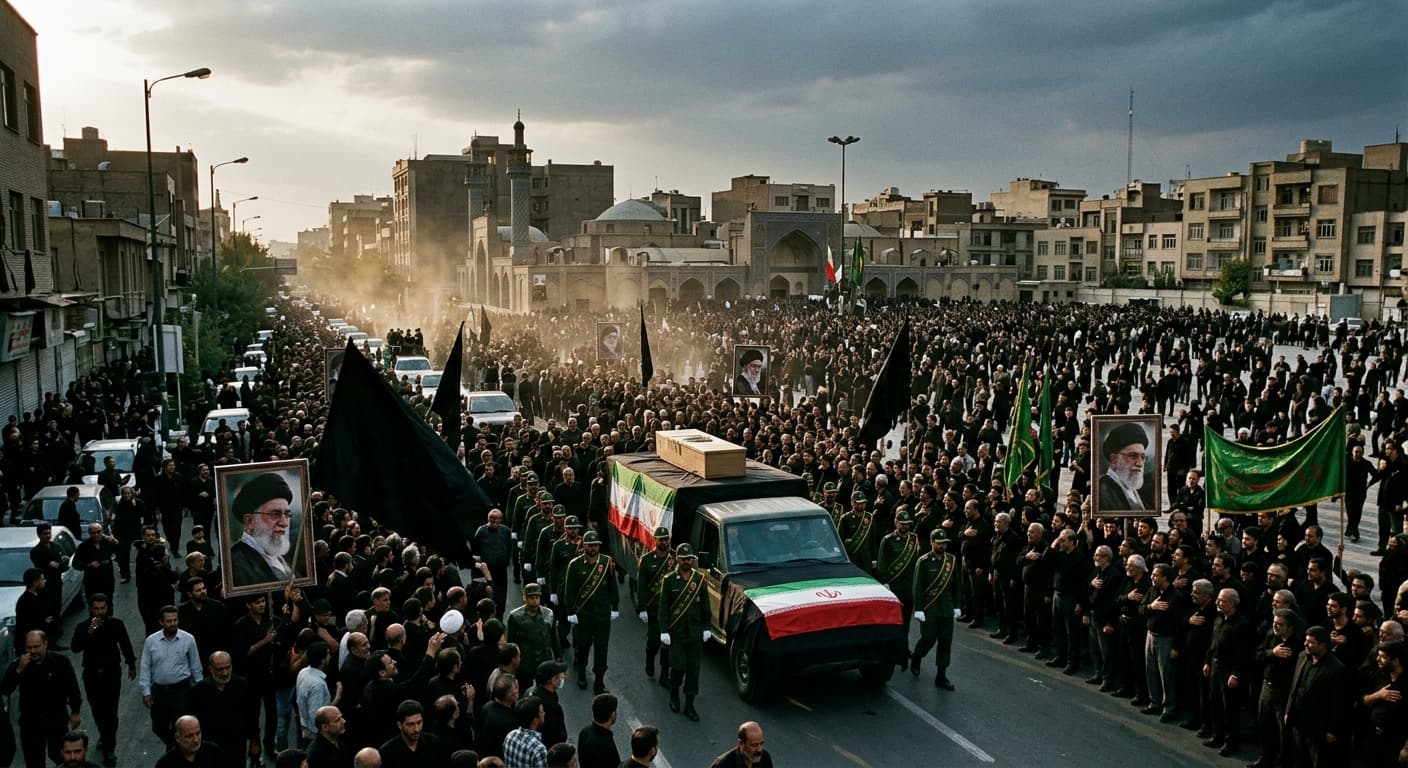
Khamenei's Funeral Signals Iran's Decline
The funeral of Ayatollah Khamenei highlights Iran's diminished influence in the Gulf, with regional powers now dictating terms.

Global
Iran's Hormuz Missile Strikes: A Toll Booth
Iran's missile attack on a Qatari-linked tanker highlights Tehran's strategy to control the Strait of Hormuz, impacting Gulf states and maritime law.

Tech Policy
Iran's Cavern Manticore Targets Israel's IT
Cavern Manticore, an Iran-linked hacking group, targets Israeli IT vendors, prompting a shift in Israel's cybersecurity policy and legislative efforts.