TRT Censors NATO Question on Comedian
Censorship at NATO summit reveals Turkey's media control.
Model Diplomat8 min readEurope
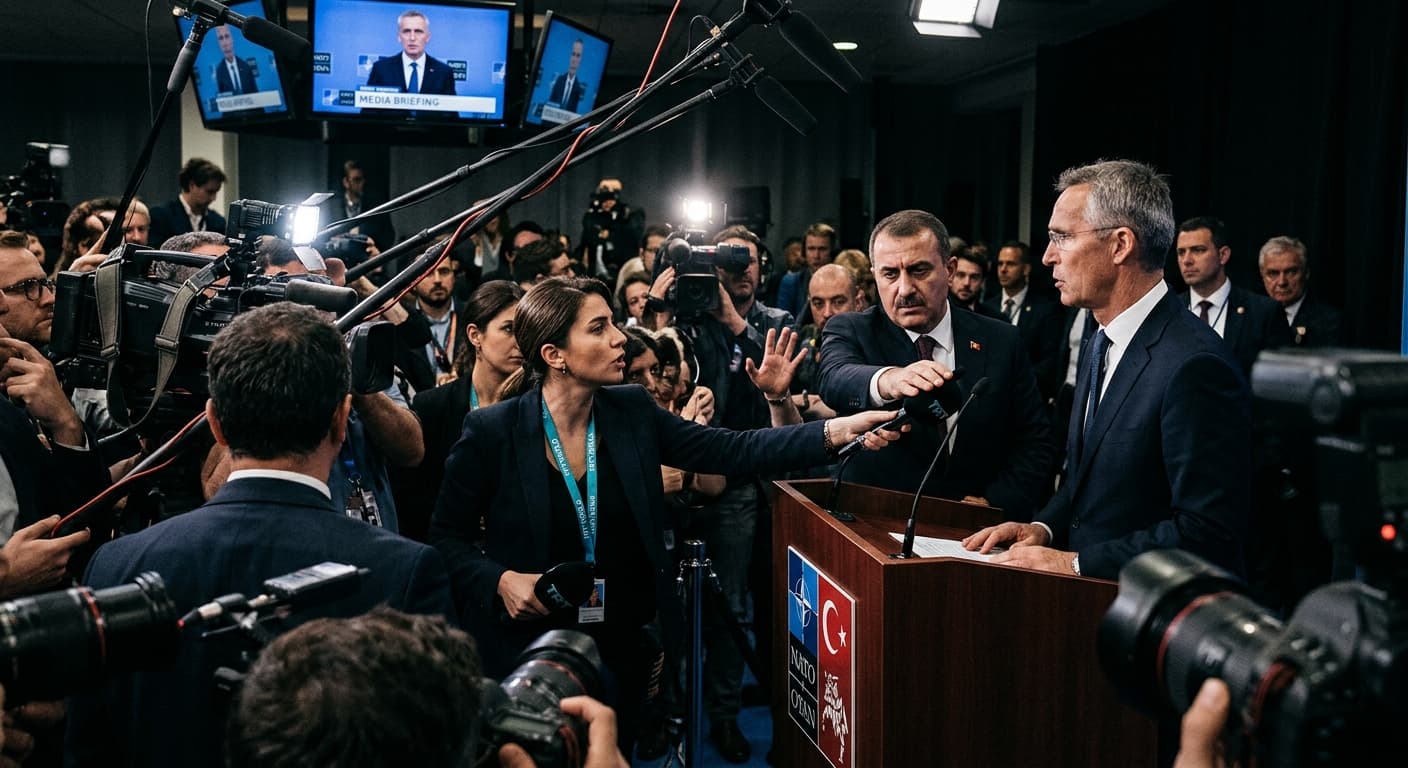
TRT Censors NATO Question on Jailed Comedian as Ankara Summit Opens
Turkey's state broadcaster stripped a Dutch reporter's question about detained comedian Deniz Göktaş from its live NATO feed on July 6, 2026 — exposing a censored version of the alliance's summit to Turkish viewers.
The censorship was small, deliberate, and revealing. On July 6, 2026, the Turkish public broadcaster TRT translated a Dutch reporter's question to NATO Secretary General Mark Rutte about jailed comedian Deniz Göktaş and Turkey's pre-summit detentions into a bland query about "democracy and the judiciary" — omitting every specific name, number, and abuse the reporter had listed. Ankara is hosting a NATO summit whose opening communiqué is expected to reaffirm the alliance's founding commitment to democracy, and the host government could not tolerate that phrase being tested in Turkish on live television. The gap between what NATO said in English and what Turkish viewers heard in Turkish is now the clearest measure of how far NATO's democratic self-description has drifted from the reality of one of its members.
What TRT cut, and what Rutte actually said
The exchange took place at the Beştepe Presidential Compound during Rutte's pre-summit press conference, an event NATO's own media programme advertised as "open to all accredited media representatives" and available in multiple languages. A Dutch journalist asked whether Ankara was an appropriate venue for a gathering of "liberal democracies" given the recent detention of critics and the imprisonment of the stand-up comedian Deniz Göktaş, and whether NATO leaders would raise these cases with President Recep Tayyip Erdoğan.
TRT's live Turkish translation dropped Göktaş's name, dropped the detentions, and dropped the framing of the summit as a meeting of liberal democracies, according to a side-by-side comparison published by Sözcü TV presenter Damla Doğan Tuncel and detailed by the Stockholm Center for Freedom. What Turkish audiences heard instead was a generic reference to "democracy, the judiciary and the Erdoğan administration." The Turkish media outlet
Sok Gazetesi reported the same discrepancy, and critics noted that TRT also cut portions of Rutte's answer from its live feed.
Rutte's answer, in English, was unusually direct for a NATO secretary general standing on the host's soil.
"Democracy is much more than only free elections. It is also about free media, independent journalism, the ability to ask questions, the right to demonstrate."
The line, reported verbatim by BBC Türkçe, was not a rebuke — Rutte did not name Göktaş, did not name İmamoğlu, and did not commit to raising cases with Erdoğan. But the sentence about journalists being able to attend "major events such as NATO summits" landed pointedly, because several independent Turkish outlets had been denied accreditation to the summit, a fact Amnesty International flagged in a
statement calling on NATO to reverse the exclusions.
The scale of the crackdown NATO was told not to hear about
The names TRT scrubbed from its feed sit inside a specific, documented pattern. In a statement issued on 25 June 2026 and cited by Amnesty International, the Ankara Chief Public Prosecutor's Office confirmed that 225 people had been detained during dawn raids on 23 June; 135 were referred to court with requests for pretrial detention, 103 were remanded, and 26 were placed under judicial control including house arrest. On 22 June, the Ankara Governorate imposed a 13-day blanket ban on all public assemblies from 28 June through 10 July, citing "national security" tied to the summit.
Human Rights Watch, in a dispatch published four days before the summit, framed the pattern bluntly: "the increased geopolitical capital that Turkey has enjoyed since Russia's full-scale invasion of Ukraine … is proving convenient cover for President Recep Tayyip Erdoğan to jail and remove political rivals and critics at home." The organisation catalogued the March 2025 arrest of Istanbul Mayor Ekrem İmamoğlu — the opposition's presidential candidate, now facing charges that could carry more than 2,000 years in prison — and the May 2026 court order removing CHP chair Özgür Özel and the party's entire national executive, an intervention the former head of Turkey's Constitutional Court called worse than any of the state's historic party closures.
Göktaş, 32, was ordered into pretrial detention over jokes about Erdoğan and religion in his show "Ölü Deniz." The BBC reported that prosecutors accused him of insulting the president, denigrating religious values and inciting hatred; the performance had drawn 9.4 million views on YouTube. He is the latest in a wave of performers, journalists, lawyers and academics detained in the weeks before the summit. The Warsaw-based
OSW Centre for Eastern Studies documented approximately 5.5 million criminal proceedings opened by Turkish prosecutors in 2025 and one of the world's highest incarceration rates — around 400,000 prisoners.
Why the translation matters more than the ban
State-owned Turkish broadcasters have censored uncomfortable questions before. What is new is the venue. TRT was not translating a domestic protest or a foreign human-rights hearing; it was translating NATO's own press conference, on the eve of a summit designed to project alliance unity. The 2026 World Press Freedom Index published by Reporters Without Borders ranks Turkey 163rd of 180 countries, four places lower than in 2025 and neighbouring Iraq and Yemen. Freedom House's
Turkey report records that Turkish authorities blocked more than 311,000 URLs in 2024, the highest number since 2007, and that at least 58 journalists were detained during 2025.
The Journalists Union of Türkiye, cited by Amnesty International in a March 2026 briefing, counted 14 journalists and other media workers in prison as of that month. Amnesty's statement is worth quoting verbatim as a primary-source finding:
"The initiation of criminal investigations of journalists simply for doing their work of informing the public is a direct violation of the right to freedom of expression and an attack on media freedom in the country."
For NATO, the operational problem is not that TRT censored a question. It is that TRT censored a question about the alliance's own founding principles from within the alliance's own press facility. Article 2 of the North Atlantic Treaty, in the alliance's official text, commits members to "strengthening their free institutions" and "promoting conditions of stability and well-being." The Council on Foreign Relations argued in a
pre-summit brief that convening the summit in Ankara at this moment "lends legitimacy" to a government that has jailed its main political rival and dismantled the opposition's leadership.
The angle nobody wants to name: NATO as democratic cover
The censored translation exposes the mechanism, not just the moment. Erdoğan's calculation for hosting the summit was never about defence-industrial spectacle alone; the 2026 Ankara Summit media programme sells Turkey's role as an alliance pillar, and NATO's own July 6
news release reinforced it, praising Turkey's more than 3,000 defence companies. The domestic pay-off is the image of a president who cannot be isolated so long as he is indispensable — to European rearmament, to Black Sea deterrence, to the Ukraine supply chain, and increasingly to a Trump White House that has reframed transatlantic burden-sharing as a bilateral favour.
TRT's edit made that trade explicit. The Turkish audience was permitted to hear Rutte praise Turkey's defence industry and its role as summit host; it was not permitted to hear that a Dutch journalist had described Ankara as an unsuitable venue for "liberal democracies." Carnegie Endowment analysts convening a June 2026 panel on "Türkiye's Democratic Breakdown" framed the country as a case of "authoritarian consolidation" in which elections remain competitive but institutions have been hollowed out. The Ankara summit, in that reading, is the moment when NATO's collective silence becomes part of the consolidation.
That is the historical parallel worth naming. Turkey last hosted a NATO summit in 2004, at the peak of its EU accession bid, when democratic reform was still the direction of travel. Human Rights Watch's analysis makes the contrast direct: in 2026, member states will be greeted by "a president who has consolidated power in his own office under a super presidency and is using the courts to quash the main opposition party." NATO can either treat that as a diplomatic inconvenience or as an institutional problem. The censored translation suggests Ankara is betting on the former.
Rutte's line, and what it commits NATO to
Rutte's sentence about democracy being "more than only free elections" is now on the record. It will be quoted at every future NATO discussion of Turkey. It also raises a concrete question: what does the alliance do when a member state edits the secretary general's own words for its own citizens?
The immediate answer, judging by the summit's defence-spending focus, is nothing. Rutte demanded that allies present "clear, concrete and credible plans" for the 5% of GDP defence-spending target agreed at The Hague in 2025 and celebrated Turkey's defence-industrial base as "a great example." Human rights did not feature in the alliance's public agenda, and the summit communiqué, expected on 8 July, is not anticipated to name Turkey.
That vacuum is the real story. The TRT edit is a symptom; the willingness of allied capitals to treat democracy language as ceremonial is the cause. Amnesty's Esther Major, deputy director for research in Europe, put the point directly in the organisation's June 2026 statement:
"The blanket ban on all protests in Ankara must be lifted and everyone arbitrarily detained in prison or under house arrest in connection with the NATO summit must be released."
Neither happened before the summit opened.
What to watch
- İmamoğlu's next hearing at Silivri prison. The Istanbul mayor is defending himself against more than 140 charges; a conviction on the lead indictment would formally bar him from the 2028 presidential race and settle the succession question in Erdoğan's favour.
- The Court of Cassation on the CHP leadership. The higher court's review of the May 2026 ruling that removed Özgür Özel will determine whether the main opposition party retains any elected leadership at all before local political mobilisation begins.
- The Ankara summit communiqué (8 July 2026). Watch for any reference to democratic values, media freedom or the rule of law inside NATO. Their absence — not their presence — will be the news.
- Göktaş's indictment. The prosecutor's formal charge sheet will indicate whether Ankara intends to test how far the "insulting the president" statute (Article 299 of the Turkish Penal Code) can be pushed against satirists, and set a precedent for the dozens of performers currently under investigation.
The Bottom Line
The bottom line: Turkey's state broadcaster did not censor a question — it censored NATO's own definition of itself, and no ally objected. As long as Ankara remains indispensable to European rearmament and Ukraine's supply chain, the alliance's democratic conditionality is rhetorical; the Göktaş case, the İmamoğlu trial, and the removal of the CHP leadership will proceed unimpeded. The Ankara summit will be remembered less for what NATO decided than for what it agreed, in silence, not to translate.
Discover more
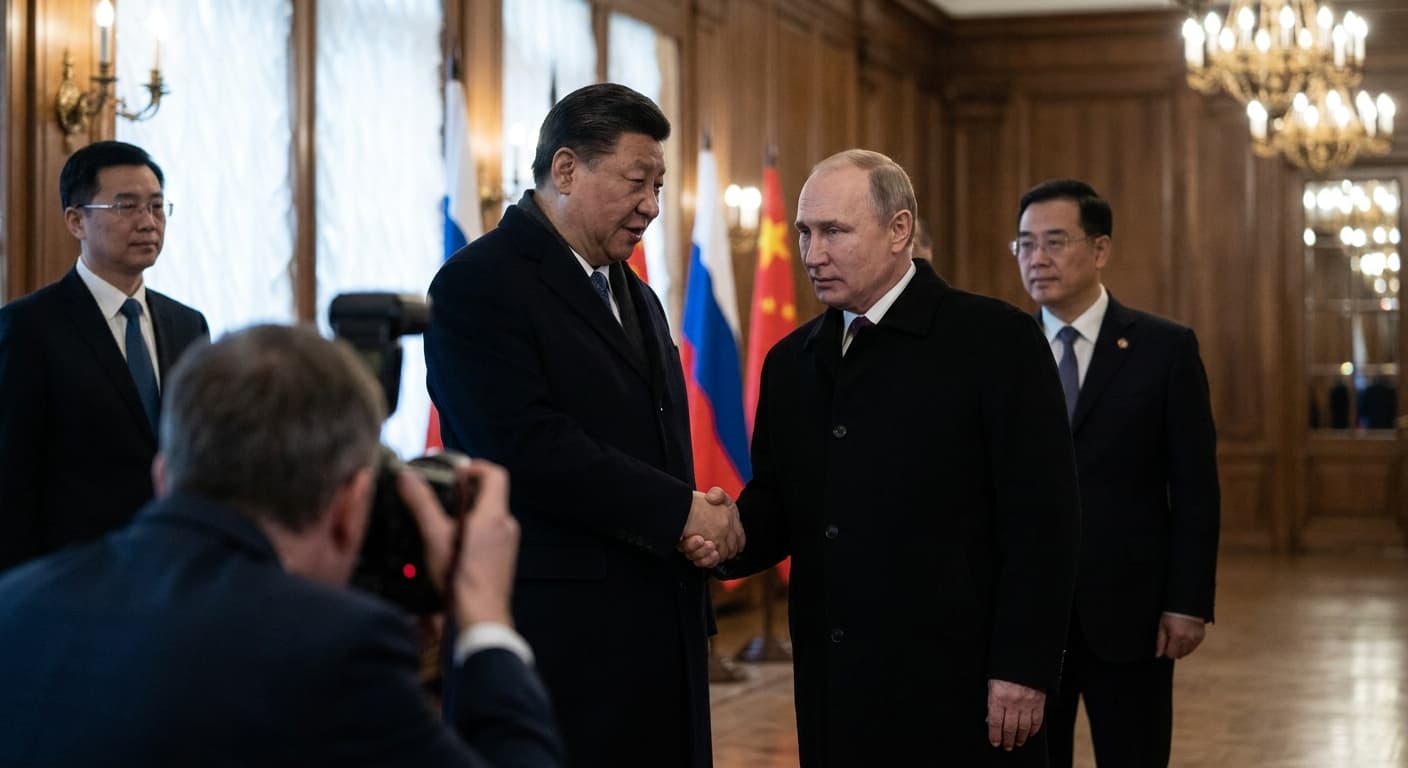
Global Politics
Xi Jinping Calls China-Russia Ties 'Precious'
Xi Jinping's description of China-Russia ties as 'precious' reflects a strategic imbalance, with Beijing dictating terms in the partnership.
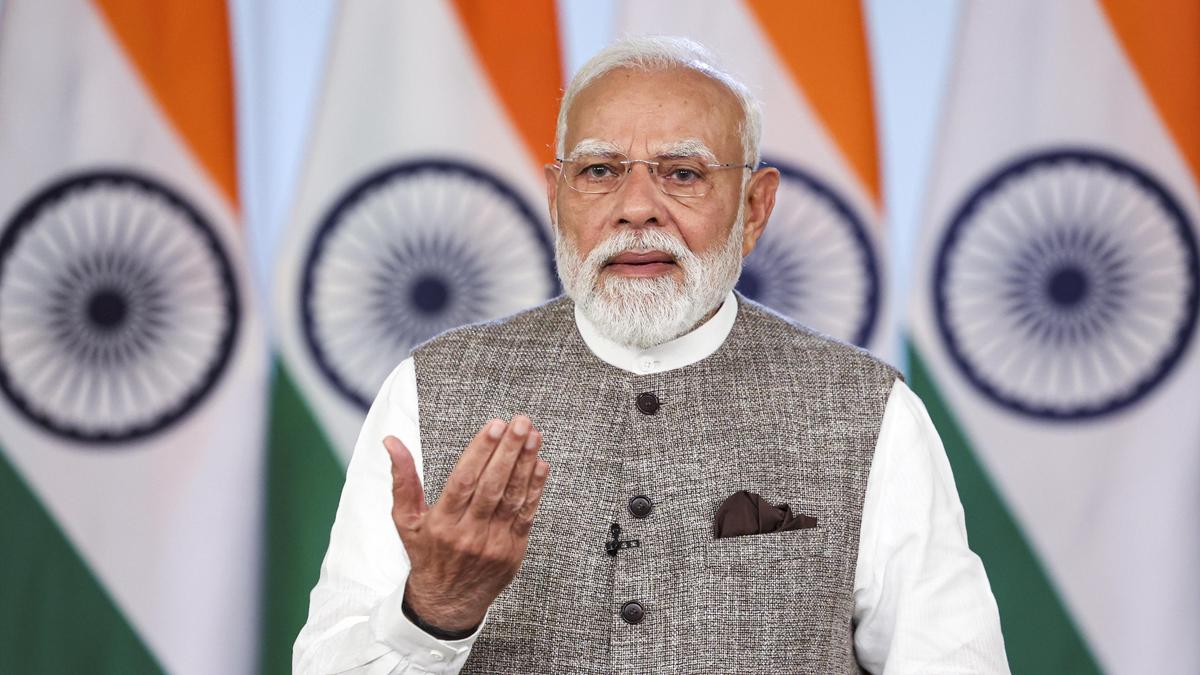
India
700 Activists Accuse PM Modi of MCC Breach
Over 700 activists allege PM Modi breached election code with a televised address attacking opposition parties just before state elections.
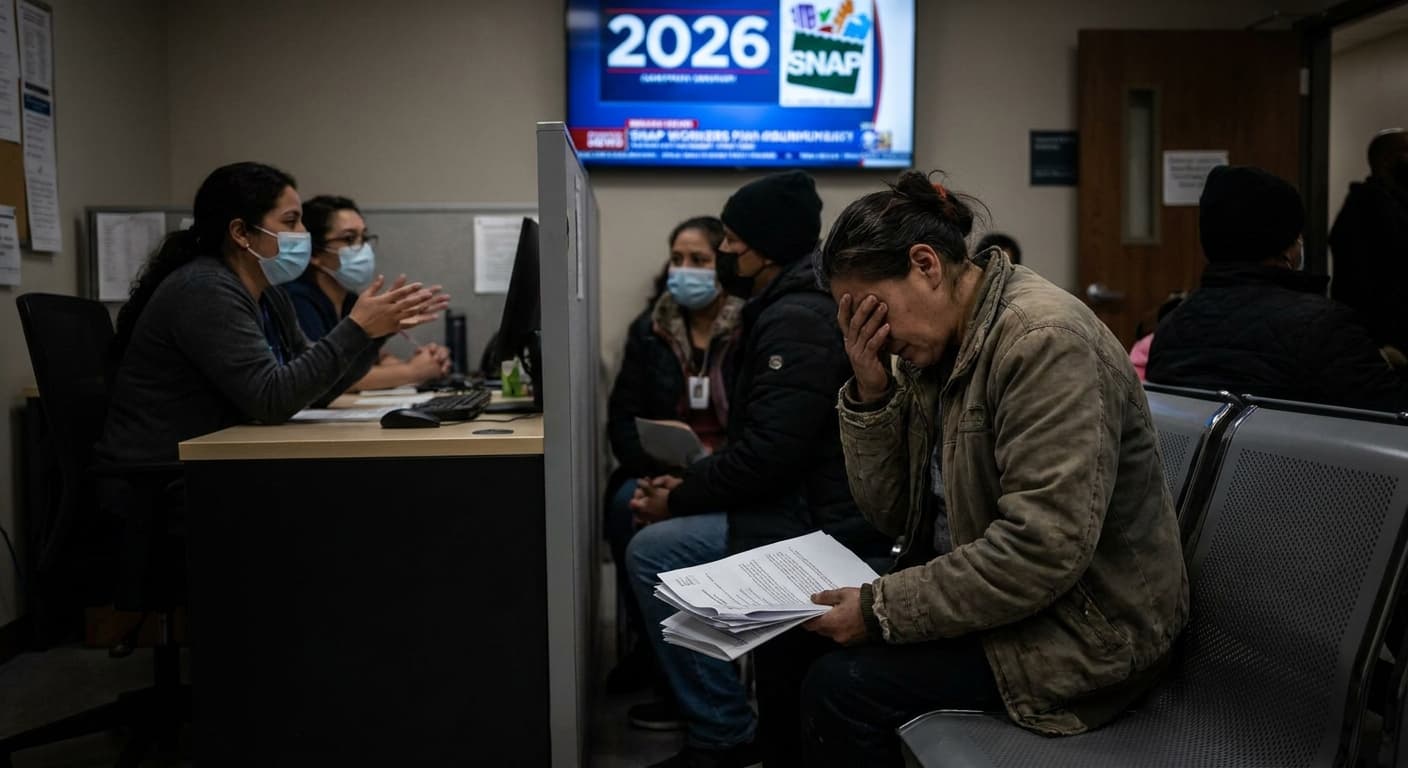
US Politics
SNAP Food Assistance Faces Legal Challenges
In 2026, SNAP faces stricter eligibility rules and mounting legal challenges, threatening food assistance for the millions of Americans who rely on the program.

Conflict & Security
Drone Warfare Killing Aid Workers at Unprec
Over 1,000 humanitarian workers killed in three years as cheap armed drones collapse legal protections. Gaza, Sudan, Ukraine, and DRC see deliberate targeting of aid convoys and hospitals with zero prosecutions.