TMZ's Capitol Hill Coverage
TMZ's shift in focus impacts Washington's media landscape.
Model Diplomat3 min readNorth America

TMZ’s Capitol Hill Push Is Rewiring Washington Media
TMZ’s move into Congress coverage is less about gossip than leverage: it raises the political cost of looking detached in a low-trust era.
CNN’s latest The Assignment episode puts the real shift on the table: TMZ is no longer treating Washington as a side beat. Audie Cornish’s April 29 interview with Jacob Wasserman, co-managing editor of TMZ DC, centers on the outlet’s “rapid integration” into Capitol Hill coverage and the “culture shock” it has created inside the political press corps. TMZ is Turning Heads on Capitol Hill - The Assignment with Audie Cornish
Why this matters
TMZ’s leverage is not policy expertise. It is reputational pressure. Founder Harvey Levin told CNN on April 24 that the outlet plans to “break stories” in Washington and expand beyond entertainment, including from official briefings. That signals a different competitive model: less committee markup detail, more image-driven accountability, speed, and humiliation. ‘We really are going to be breaking stories’: TMZ’s Harvey Levin on their plan for covering Washington
That model landed because Congress handed it an opening. During the spring partial shutdown fight, CNN highlighted lawmakers getting the “TMZ treatment,” including footage and photos of members away from Washington while the impasse dragged on. Members of Congress get the TMZ treatment amid a partial government shutdown Levin then formalized that pressure campaign, using crowdsourced images of lawmakers in public and branding it “OWTA” — “Out With Their Asses” — as a nonpartisan anti-incumbent push.
TMZ’s founder wants to kick everyone out of Congress one photo at a time
The bigger context is a low-trust electorate. A June 2025 CNN poll found a record share of Americans wanted government to do more, while few trusted either party to actually deliver. CNN Poll: A record share of Americans want the government to get more done. Few trust either party to do it In that environment, TMZ benefits because it turns diffuse frustration into shareable evidence: a photo, a hallway ambush, a clip that says a member looks unserious. For more on that broader mood, see Diplomat’s
US Politics coverage.
Who wins and who loses
TMZ wins if Washington keeps producing visible hypocrisy. Incumbents lose when private downtime becomes public political evidence. Legacy Hill outlets lose their gatekeeping advantage over what counts as “real” political journalism, even if they still dominate policy substance.
The pressure is strongest on members who rely on message discipline rather than legislative results. A recess photo now competes directly with a floor speech. That matters in the United States, where anti-incumbent sentiment is often broader than partisan loyalty.
What to watch next
The next test is whether TMZ can move from viral shaming to original Washington scoops. If it does, this stops being a novelty beat and becomes a permanent change in how Capitol Hill manages exposure.
The next political trigger is also clear: CNN reported GOP leaders were working toward a June 1 target for a broader DHS and immigration package after the shutdown standoff. GOP leaders declare path to end DHS shutdown — but enormous hurdles remain If Congress stumbles again, expect TMZ to treat the next recess not as downtime, but as opposition research.
Discover more
US Politics
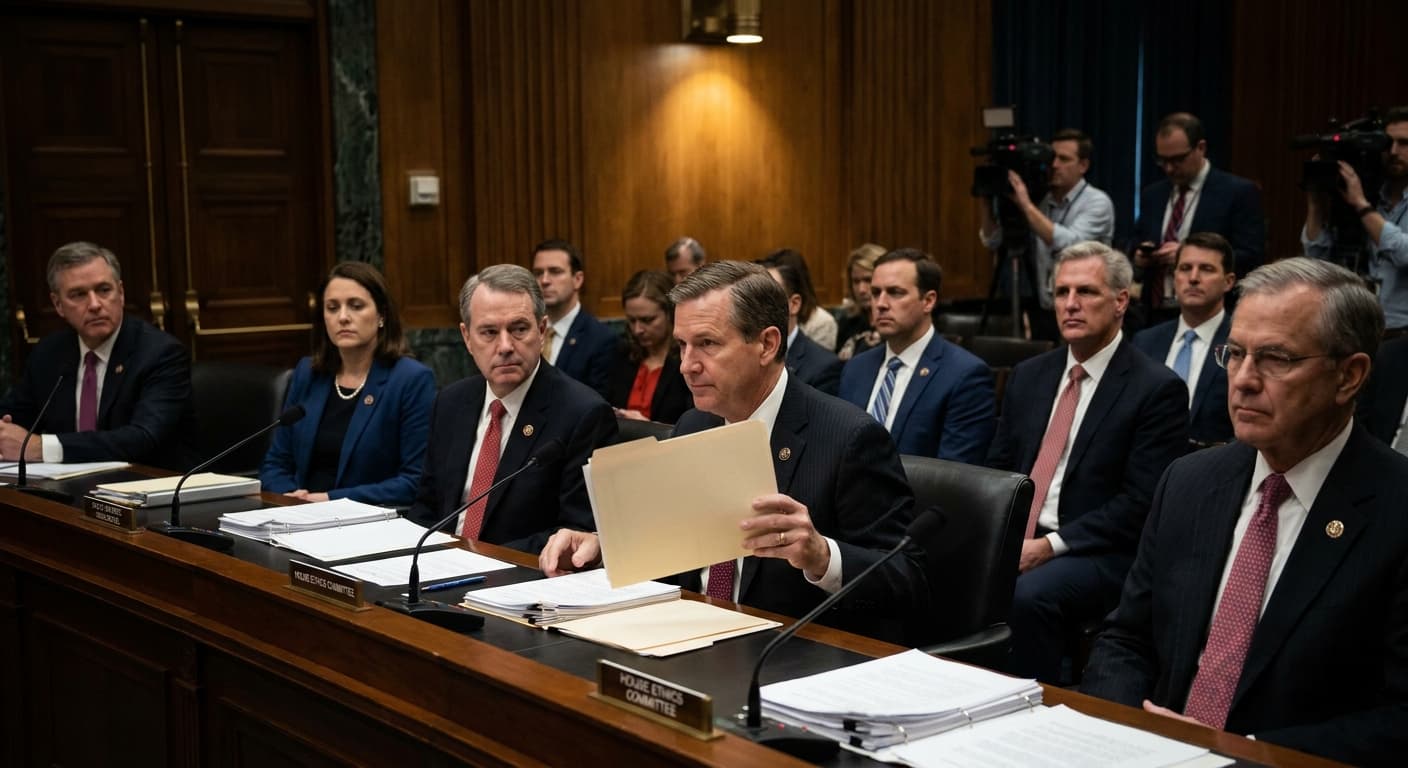
House Ethics Committee Pushes Sexual Miscond.
The House Ethics Committee has shifted responsibility for sexual harassment settlement records to the Office of Congressional Workplace Rights, complicating disclosure efforts.

Economics
Fed's Amex AML order puts correspondent banking on notice
Federal Reserve's Amex AML order requires board-level controls and a 90-day plan; OCC fined the bank $350 million over enterprise-wide deficiencies.

Conflict & Security
Guatemala: El Niño 2026–27 becomes regional security test
UNICEF: 25.8M children face El Niño risks in Latin America; Guatemala maps 188 municipalities for drought and food insecurity amid regional security test.
Economics
Fed's stress-test overhaul is a capital-smoothing exercise
Federal Reserve finalized stress-test overhaul: two-year averaging for bank capital buffers and public input, expected to halve volatility.