Tigray Authorities Accused of Abducting Boys
HRW report details forced recruitment of minors in Tigray
Model Diplomat8 min readAfrica
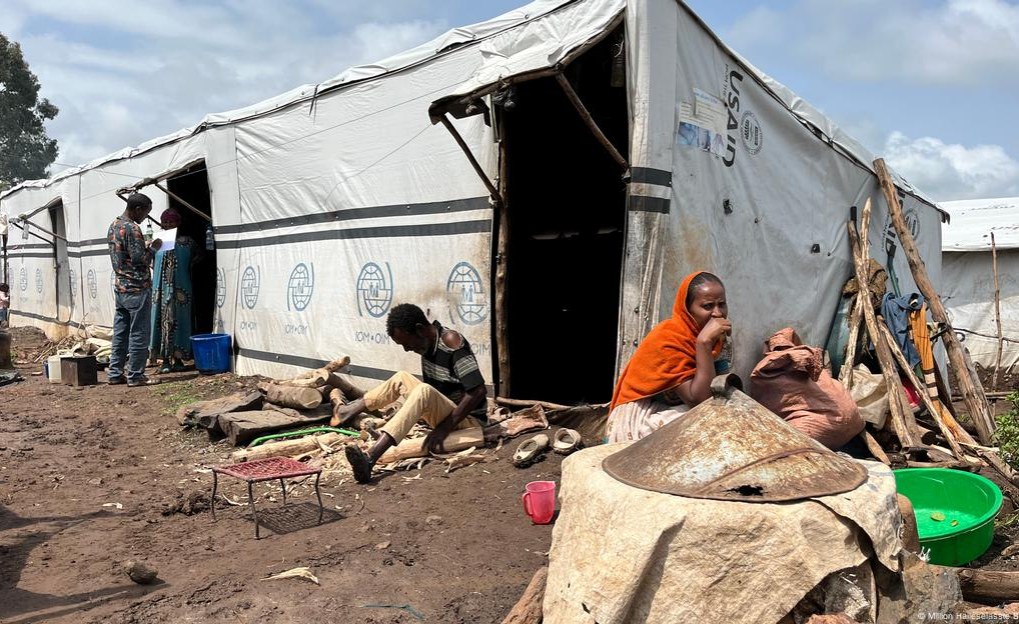
HRW Says Tigray Authorities Abducted Boys as Young as 15
Human Rights Watch's July 6, 2026 report accuses the TPLF-run Tigray administration of forcibly recruiting children and civilians since April 2026 — findings that meet the age threshold for war crimes under the Rome Statute, but land in an enforcement vacuum after the UN's Ethiopia investigation was allowed to lapse.
Human Rights Watch on July 6, 2026 accused authorities in Ethiopia's Tigray region of abducting civilians and children as young as 15 into military service since at least April 2026 — an atrocity finding that formally crosses the age threshold at which international law treats recruitment as a war crime, but arrives against a hollowed-out international response architecture that offers targeted visa bans and statements of concern rather than accountability. The report, based on remote interviews with 18 witnesses, documents six cases of forced recruitment across the region and describes a "climate of fear" driving families to sleep outside or flee. What the finding changes is less the facts on the ground than the legal exposure of Tigray's ruling faction: a UN Human Rights Council-mandated commission that could have taken jurisdiction on paper no longer exists, and the leverage available to Washington, Brussels and Addis Ababa is now overwhelmingly political.
What HRW documented
The July 6 release from Human Rights Watch describes systematic abductions in streets, markets, offices, homes and artisanal gold mines across Tigray's Central, Northwestern and Southern zones. Interviewees told the organization that Tigrayan forces and local officials used lists of former Tigray Defense Forces (TDF) fighters and neighborhood informants to identify targets, then held them in local administration offices, jails and schools before transporting them to training camps.
In one incident on May 25, 2026, near Kola Tembien in Central Tigray, police and TDF members ordered miners to stop working, then divided them by district of origin and forced them onto trucks. A miner who escaped told the organization:
"We were hungry and thirsty … A wereda leader came and informed us we would join the TDF. All of us opposed the decision … they had their guns, and began pushing everyone onto trucks … They were driving really fast, at a high speed. One guy jumped off and fell on the road. When we looked back, we saw he wasn't moving."
That account and others were published verbatim by Human Rights Watch. Laetitia Bader, HRW's deputy Africa director, said in the report that "the authorities should immediately end their campaign and allow those unlawfully recruited to return home."
The July 6 findings build on a June 23, 2026 HRW statement calling on Tigrayan authorities to withdraw a security and mobilization proclamation issued in early June, which the organization described as introducing "the death penalty for a wide range of vaguely defined offenses" and sentences of up to 25 years for offenses related to resistance or criticism. HRW's June 23 statement is available on its site.
A Tigray party spokesperson, in a media interview cited by HRW, denied the allegations and claimed that those defending the region were doing so voluntarily. The BBC quoted Tesfaye Abadi, head of security in north-western Tigray, saying "the youths are simply getting training to defend themselves."
Why the age threshold matters legally
The specific number in HRW's findings — 15 — is the load-bearing figure. Article 8(2)(e)(vii) of the Rome Statute of the International Criminal Court makes it a war crime to conscript, enlist or use children under 15 in hostilities in a non-international armed conflict. The Cornell Legal Information Institute's summary of the offense confirms that "the victims were under the age of 15" is the operative element of the crime, as set out on its Wex reference page. US federal law extends further: 18 U.S.C. § 2442, codified at
Cornell LII, criminalizes recruitment of under-15s "whether or not it is state-sponsored" and provides up to 20 years' imprisonment, with universal jurisdiction over any offender "present in the United States."
Ethiopia is not a party to the Rome Statute, so the ICC has no direct jurisdiction over crimes committed on Ethiopian territory absent a UN Security Council referral. The practical route to accountability under existing international law therefore runs through either a Security Council referral — which China and Russia would almost certainly block — or through domestic jurisdictions applying universal jurisdiction, or through a UN-mandated investigative body.
The last of those was allowed to expire. The International Commission of Human Rights Experts on Ethiopia (ICHREE), established by Human Rights Council resolution S-33/1 of December 17, 2021, was the only independent international mechanism investigating the 2020-2022 war. Its mandate is documented on the OHCHR site. The Council declined to renew that mandate in October 2023 under sustained pressure from the Ethiopian government and its African partners. A May 2026 civil-society letter to the Council, archived by
Amnesty International, notes that "civil society organisations have called for the reinstatement of the International Commission of Human Rights Experts on Ethiopia (ICHREE) or the creation of a similar investigative mechanism on Ethiopia" — a demand that has, to date, gone unmet.
The international response, in tools available
Washington moved first among Western capitals. On June 18, 2026, State Department spokesperson Thomas Pigott announced that Secretary of State Marco Rubio, using authority under Section 212(a)(3)(C) of the Immigration and Nationality Act, would impose visa restrictions "on hardline members of the TPLF and their immediate family members." The statement is published by the US Department of State and does not name individuals. It notes that "members of the Tigray Security Forces (TSF) clashed with Ethiopian National Defense Forces (ENDF), their first direct engagement since the end of the 2020-2022 conflict, which resulted in the loss of 600,000 lives."
The European Union followed with a June 27, 2026 statement from its Delegation to Ethiopia, condemning what it termed the defunct TPLF's forced conscription and the ousting of the interim regional administration. The statement was carried in full by state-linked Fana Broadcasting Corporate. Five members of the European Parliament, spanning the ECR and PPE groups, filed a written question to the Commission on June 17, 2026 asking whether the EU intends "to support the mechanisms for investigating human rights violations committed during the conflict," according to the
European Parliament record. The Commission has not yet formally responded.
Neither Washington's visa ban nor Brussels' condemnation reaches the actors HRW identifies as directly responsible for abductions — the local wereda leaders, TDF unit commanders and militia members carrying out roundups. Section 212(a)(3)(C) restrictions apply only if a designated individual seeks to travel to the United States, which for mid-level Tigrayan officials will rarely be the operative constraint. Sanctions specialists at the International Crisis Group note that the tool is essentially reputational: Magnus Taylor, an ICG Horn of Africa analyst, told the BBC that "with this very polarised, poisonous regional politics in which Addis Ababa believes that TPLF is siding with Ethiopia's enemies, there is more chance it might escalate into a regional conflict centred on Tigray."
The federal calculation
The HRW findings serve a second audience: Prime Minister Abiy Ahmed's government in Addis Ababa. The 2020-2022 war left more than 878,000 conflict-and-climate-induced internally displaced persons still in Tigray, according to the International Organization for Migration, and 1.9 million IDPs across Ethiopia per the
UNHCR May 2026 update. Federal forces have massed on Tigray's borders since early 2026, and the International Crisis Group's May 2026 briefing recorded that Addis Ababa sent fighter jets over Mekelle after Debretsion Gebremichael's faction ousted federally-backed Chief Administrator Tadesse Werede on May 5, 2026. That analysis is available from the
International Crisis Group.
Every HRW documentation of TPLF abuse marginally reduces the political cost to Abiy of a federal military response — a dynamic the organization itself has flagged in its broader African-continent analysis. In an April 17, 2026 essay titled "Known, Documented, and Ignored," HRW warned that in contexts like Ethiopia, "governments deflect, allies equivocate and international institutions struggle to sustain pressure."
Former Tigray interim president Getachew Reda and former national security adviser Redwan Hussein — both now aligned against the Debretsion faction — argued in a June 11, 2026 Al Jazeera op-ed that the TPLF rump, "taking a few pages from the Eritrean playbook," is "engaged in forced conscription and trying to turn Tigray into another 'dystopia of liberation.'" HRW's own July 6 release explicitly compares the June proclamation's provisions to Eritrea's indefinite national service — the system the UN Commission of Inquiry on Eritrea concluded in 2016 constituted enslavement as a crime against humanity.
The historical parallel Addis Ababa is invoking
The Eritrea comparison is not incidental. If Tigray's mobilization proclamation is judged by outside actors to replicate the Eritrean model — indefinite conscription, punitive detention of families of evaders, and use of forced labor camps — the legal and political framing shifts from "internal governance dispute" to "systematic crime against humanity." That framing is what Ethiopia's federal government has consistently sought since PM Abiy publicly acknowledged Eritrean atrocities in Tigray in February 2026, per Al Jazeera's reporting.
HRW's report also documents collective punishment: the woman held with other parents "at the local administration offices … for 10 days," according to the organization's July 6 findings, describes a system explicitly designed to coerce family compliance. Under Common Article 3 of the Geneva Conventions, which the Cornell LII notes is fully incorporated into Rome Statute jurisdiction over non-international armed conflicts, collective punishment is a per se violation.
The gap the ICHREE lapse created
The practical problem for anyone seeking accountability is that HRW's six documented cases and 18 interviews do not, on their own, constitute the evidentiary basis for prosecution. That was ICHREE's function. When the Human Rights Council declined to extend the Commission's mandate in October 2023 — a decision the Amnesty-led civil society coalition has continued to protest — it removed the only body with the mandate, resources and access to build case files against named individuals for prosecution under universal jurisdiction in third countries.
What remains is a documentation ecosystem — HRW, Amnesty, the Ethiopian Human Rights Commission (EHRC), and Tigrayan diaspora bodies including TAHRJE and STIL, whose July 2026 statements are collected by Horn News Hub — but no formal investigative mechanism attached to a court or Council resolution. Renewal of an ICHREE-style mandate would require nine votes on the 47-member Human Rights Council; the last ICHREE renewal vote in 2022 passed 21-19 with 7 abstentions, and African-bloc opposition has hardened since.
What to watch
- Human Rights Council 60th session, September 2026. The next scheduled window for a member state to table a resolution reinstating an ICHREE-type mechanism or a Special Rapporteur on Ethiopia. Advocacy groups including the International Federation for Human Rights and DefendDefenders have signaled they will press for this; no member state has yet publicly committed to tabling.
- US Treasury OFAC designations. The June 18 State Department visa restrictions do not include asset freezes. If Washington escalates under Executive Order 14046 (the September 17, 2021 Ethiopia authority), specific named designations of Tigrayan officials or TDF commanders would follow. No timeline has been announced.
- Federal government response to the TPLF proclamation. The Ethiopian Council of Ministers has not, as of July 6, 2026, formally declared the June proclamation unconstitutional or ordered federal forces to enforce its nullification. Any such move — or any renewed clash between the ENDF and TDF beyond the isolated engagement reported earlier in 2026 — is the trigger event for a return to open conflict, per the International Crisis Group's May 2026 assessment.
- EU Commission reply to written question E-002501/2026. The Commission's answer to the June 17 parliamentary question on investigative mechanisms is expected by mid-August 2026 under Rule 144 timelines and will indicate whether Brussels is prepared to fund or diplomatically back a new accountability process.
Discover more
US Politics
House Ethics Committee Pushes Sexual Miscond.
The House Ethics Committee has shifted responsibility for sexual harassment settlement records to the Office of Congressional Workplace Rights, complicating disclosure efforts.
US Politics
SNAP Food Assistance Faces Legal Challenges
In 2026, SNAP faces stricter eligibility rules and mounting legal challenges, threatening food assistance for the millions of Americans who rely on the program.

India
Romanian Coalition Party Demands PM Resign
Romania's Social Democrats withdrew from coalition, joining far-right AUR to topple PM Bolojan, risking €10 billion in EU funds by August 2026.

Conflict & Security
Drone Warfare Killing Aid Workers at Unprec
Over 1,000 humanitarian workers killed in three years as cheap armed drones collapse legal protections. Gaza, Sudan, Ukraine, and DRC see deliberate targeting of aid convoys and hospitals with zero prosecutions.