The fight over a final honor for America’s dead
An Air Force Band veteran is trying to make live “Taps” the default again, turning a ceremonial gap into a national volunteer network.
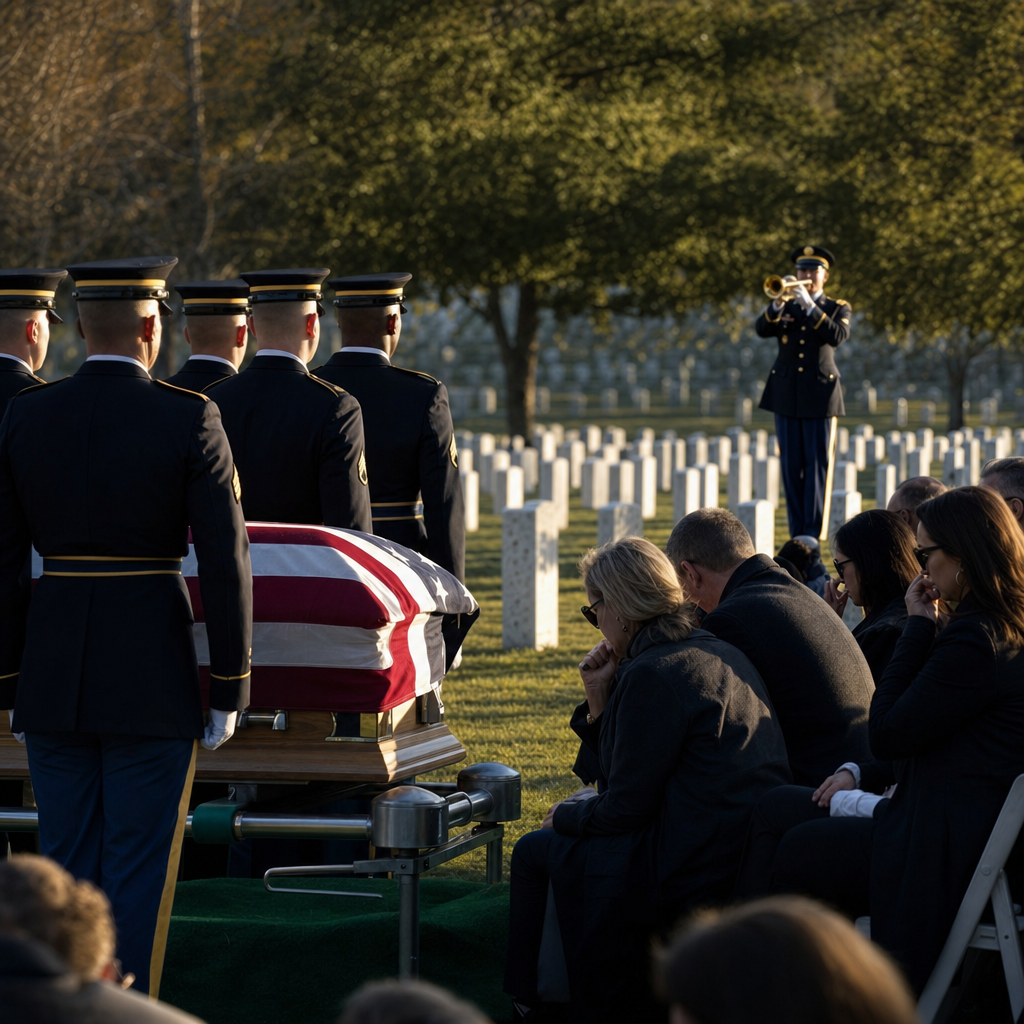
Jari Villanueva’s pitch is simple: a veteran’s last military honor should not come from a speaker hidden inside a bugle. CNN reports that the former U.S. Air Force Band bugler has spent decades performing “Taps” and building Taps for Veterans, a nationwide network that connects live buglers with families and veteran groups ( CNN). His effort matters because it exposes a quiet mismatch between military ritual and military capacity: the country still promises live honors, but it often relies on recordings when no bugler can be found.
Why this small ritual has become a policy problem
The power in this story sits with the people who can supply a live bugler. When they show up, families get the ceremony they expected; when they do not, the system defaults to an audio workaround. That is not new. The Pentagon acknowledged decades ago that it lacked enough buglers for the volume of veterans’ funerals, and Congress allowed recorded “Taps” when no musician was available, according to a Washington Post report from 2000 ( The Washington Post). The result is a longstanding compromise: the state preserves the form of the honor, but not always the live performance.
Villanueva’s response is to bypass the shortage rather than wait for the military to fix it. WTVM reports that he spent 23 years with the U.S. Air Force Band, played at thousands of ceremonies, and helped launch a volunteer system designed to place real buglers at funerals, including Memorial Day ceremonies ( WTVM). That shifts leverage away from the Pentagon and toward a civic workaround: veterans’ organizations, local musicians, and volunteers who can fill in where the military cannot.
Who benefits — and who is left with the burden
Families benefit most from live “Taps.” The difference is not cosmetic. It is the difference between a performance that feels immediate and one that can fail technically, or emotionally, at the worst possible moment. CBS has reported that the problem is especially acute in rural areas and in states such as Texas, California, and the Dakotas, where volunteer networks are stretched thin ( CBS Evening News). That is the real policy implication here: America’s funeral honors system is only as strong as its local talent pool.
The military benefits too, in a narrow sense, because volunteer organizations are taking on a task the services cannot always staff. But that is also a warning sign. If the last salute depends on ad hoc civilian networks, then the burden has quietly shifted from the institution with the obligation to the community that wants to preserve the ritual.
What to watch next
The next pressure point is Memorial Day, when the demand for live buglers spikes and the shortage becomes visible. If Villanueva’s network can reliably place musicians at more ceremonies, it will look less like a feel-good volunteer effort and more like an alternative delivery system for a broken federal function. If it cannot, recordings will remain the default in too many places.
For policymakers, the question is not whether “Taps” still matters. It clearly does. The question is whether the country wants a national promise that depends on volunteers, or a system built to deliver live honors where they are expected. On Memorial Day, that gap is the story.