Syria's Reconstruction: Gulf States Take Lead
U.S. removes Syria from terror list, opening reconstruction market.
Model Diplomat5 min readMiddle East
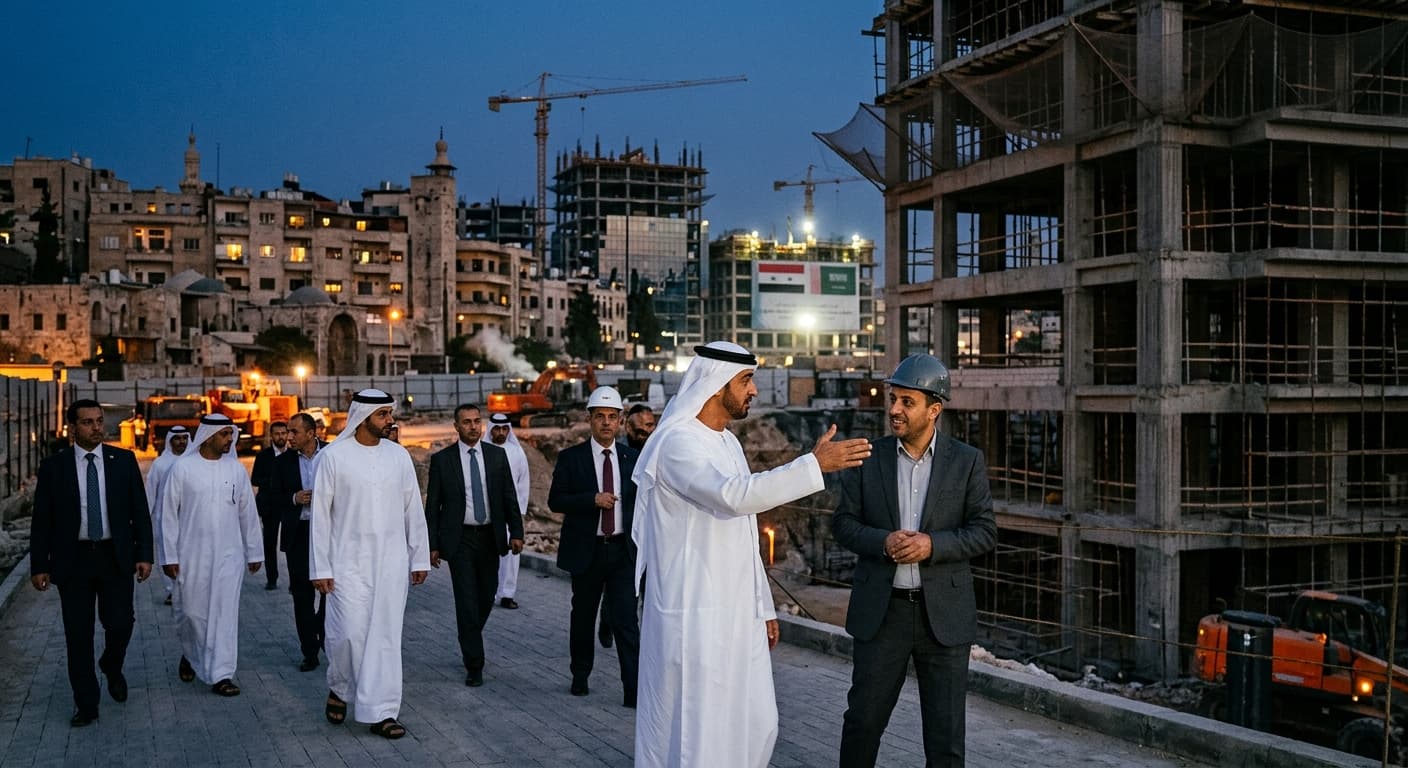
The Trump administration formally notified Congress on July 9, 2026 of its intent to remove Syria from the State Sponsors of Terrorism list — ending a 47-year designation — clearing the last U.S. legal barrier to a $216 billion reconstruction market Gulf capital has already colonised. Saudi Arabia, Qatar and the UAE inked roughly $14 billion of infrastructure deals in a single August 2025 signing ceremony, Al Jazeera reported, including Qatar's UCC Holding taking $4 billion of the Damascus airport revamp and DP World's $800 million contract for Tartous port. In February 2026, Saudi Arabia's newly launched Elaf fund committed a further $2 billion to Aleppo aviation while ACWA Power took the country's flagship water-and-power file, per
Al Jazeera.
The Gulf International Forum, in a June 2026 assessment, maps the division of labour: Saudi firms in upstream oil-field rehabilitation, the UAE in ports and logistics corridors, Qatar in gas, power generation and LNG supply through the Arab Gas Pipeline. American firms — ConocoPhillips and Chevron — hold MOUs, not contracts. Between the SST tag and Caesar, they had no legal room to move first; they now have to catch up to counterparts with 18 months of relationships in Damascus.
The macroeconomic hole al-Sharaa is trying to fill
The reconstruction number reads big because the base is very small. Nominal GDP contracted from $67.5 billion in 2011 to an estimated $21.4 billion in 2024, the World Bank said in its damage assessment. Total external debt was reported at $22.3 billion — 104% of GDP — with substantial arrears, particularly to Iran, per a
World Bank macro-fiscal note.
Central Bank Governor Abdel-Qader Husrieh faces a currency and payments-system reset: the pound collapsed from 50 to roughly 11,000 to the dollar before redenomination, and the Central Bank held $200 million in FX reserves at end-2025 versus $17 billion at end-2010, according to Reuters figures cited by Al Jazeera. New banknotes stripped of Assad imagery entered circulation on January 1, 2026. The banking system's
reconnection to SWIFT, documented by Carnegie's Joseph Daher in October 2025, made hard-currency inflows technically feasible. The SST removal makes them legally feasible for U.S.-correspondent banks.
The World Bank's Macro Poverty Outlook for April 2026 projects modest 2026 growth driven by refugee return, higher public wages and recovering oil and gas output, noting that "reopened trade routes, sanctions relief, and renewed oil and gas export potential could support economic activity" but flagging security risk and the Middle East conflict as material downsides.
The strategic story: Iran's corridor is closed, Israel's mechanism is holding
The SST designation, in the U.S. narrative of the past decade, was overwhelmingly about Iran and Hezbollah — Secretary of State Marco Rubio's July 8 announcement cited Syria's new leadership's counterterrorism assurances as the operative trigger. Al Jazeera's coverage noted the label was "primarily related to al-Assad's relationship with Iran and support for Hezbollah." Remove Assad, remove the corridor, and the analytical basis for the designation dissolves.
The Belfer Center's April 2026 study on Iran's proxy model documents the mechanics: 600 Israeli strikes on Iran- and Hezbollah-linked sites in Syria in 2025 alone; dissolution of the U.S.-trained Syrian Democratic Forces in January 2026 bringing the Syrian Arab Army to the Iraqi border; northeastern Arab tribes defecting from Iranian coordination to Damascus. "Iran's proxy architecture in the Levant shifted from consolidated influence to fragmented survivalism," Belfer concludes.
Meanwhile a Syria–Israel "communication cell" — brokered by the U.S. and France in Paris on January 7, 2026 — has kept a lid on escalation without normalisation, per Al Jazeera's readout. Trump had publicly pressed al-Sharaa to join the Abraham Accords; Syria declined; Trump delisted anyway. That sequence tells you the political price of admission has dropped — U.S. engagement is now transactional on ISIS containment and Iran exclusion, not conditional on Israel normalisation.
The Stimson Center's Joaquin Matamis argued in May that "Damascus no longer hosts meaningful Iranian military influence, which has allowed President Ahmad al-Sharaa to secure greater U.S. support for limiting Israeli escalation in Syria." That is the leverage al-Sharaa purchased with counterterrorism assurances — and the reason the SST rescission moved through a Republican administration with an assist from Democrat Jeanne Shaheen, Foreign Policy op-eds and Ambassador Tom Barrack's back-channel, as
Shaheen's office documented.
Who wins, who loses
Winners. Saudi Arabia, Qatar and the UAE, in that order, hold pole position on the reconstruction tender pipeline. Türkiye cements a northern energy corridor and refugee-return leverage, having brokered al-Sharaa's rise and hosted the pipeline restart to Aleppo. Israel gets a de-Iranised buffer without the political cost of formal peace. The al-Sharaa government converts battlefield legitimacy into fiscal legitimacy: the World Bank's $146 million June 2025 electricity grant was the first Bretton Woods money in Damascus in a generation.
Losers. Iran loses the last piece of its Levant land bridge and $22 billion of legacy Syrian debt Damascus is unlikely to service. Russia's Tartous naval lease is renegotiable against DP World's $800 million port terms. Hezbollah loses the arms corridor Belfer's data confirms is now interdicted. U.S. and European contractors — TotalEnergies, Chevron, ConocoPhillips, Gulfsands — will bid for infrastructure Gulf sovereign wealth funds have already priced.
What to watch next
- August 22, 2026 — 45-day congressional review window closes. A joint resolution of disapproval requires both chambers; Shaheen (D) and Wilson (R) have already publicly endorsed the delisting, per
Shaheen's office.
- IMF Article IV consultation — the first in over a decade is expected in the second half of 2026; the Fund's macro framework will set the terms for World Bank reconstruction lending.
- Suwayda security file — July 2025 Druze-Bedouin violence drew Israeli strikes on Damascus. A repeat inside the 45-day window is the only realistic scenario that reopens the SST debate on Capitol Hill.
- Chevron/ConocoPhillips MOU-to-contract conversion — the test of whether U.S. firms can close ground with Gulf incumbents once the legal impediment falls.
Diplomat View
Removing Syria from the terror list is being framed in Washington as a reward for reform. Read it instead as a legal formality catching up to a strategic reality already priced in by Riyadh, Doha and Abu Dhabi: Iran is out of the Levant, and the reconstruction contract is the geopolitical prize. The falsifiable call: within 18 months, Gulf state and quasi-state entities will book more than half of contracted reconstruction value — a share that would have been legally impossible for European or American firms to contest even if they had wanted to, because Caesar and SST kept them out through the window in which relationships were formed. What would change this forecast: a sectarian breakdown in Suwayda or the Alawite coast that draws sustained Israeli strikes on Damascus and forces the U.S. to reimpose targeted counterterrorism sanctions on specific Syrian security-service figures. Absent that, the 47-year designation ends not with a debate but with a signing ceremony.
The Bottom Line
The SST delisting is not a counterterrorism judgement on al-Sharaa; it is the removal of the last U.S. legal barrier to a $216 billion reconstruction market in which Gulf capital has already established first-mover positions. The story of Syria's return to the international system is now a story about who books the contracts — and on that, Washington has ratified an order the Gulf built while U.S. firms were still reading OFAC advisories.
Related: Global Politics.
Discover more
US Politics
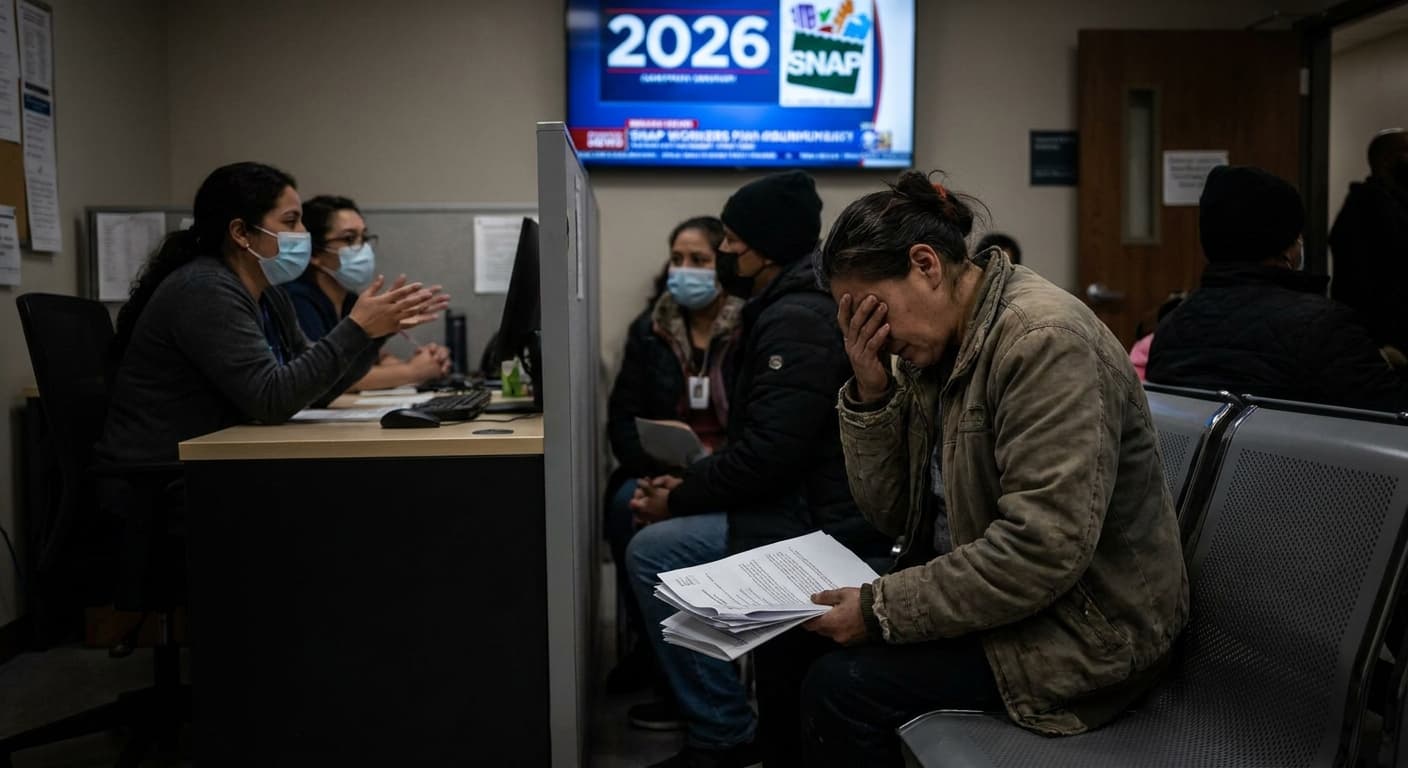
SNAP Food Assistance Faces Legal Challenges
In 2026, SNAP faces stricter eligibility rules and mounting legal challenges, threatening food assistance for the millions of Americans who rely on the program.
US Politics
Congress Targets AI Chatbot Access for Terror
The House passed the Generative AI Terrorism Risk Assessment Act, focusing on AI's role in terrorism and potential surveillance implications.
India
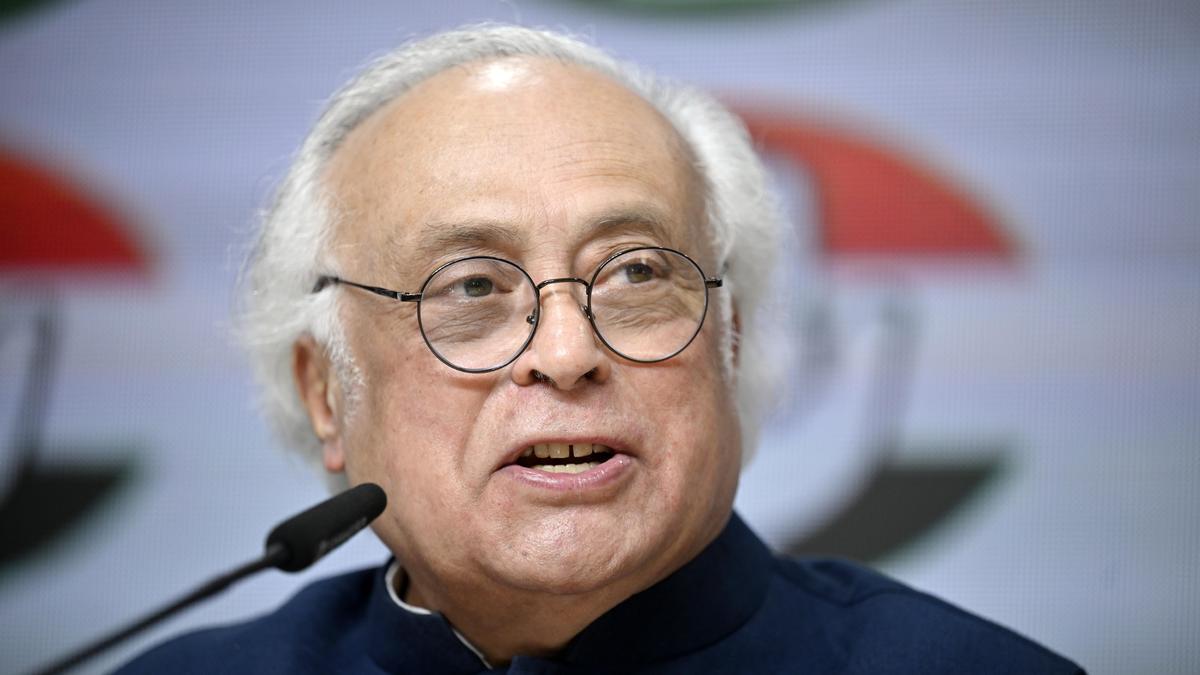
Congress Accuses Modi of Stalling Women's Law
Congress accuses Modi of stalling women's reservation law by linking it to delimitation, revealing a deeper electoral strategy.

Economics
Fed's Amex AML order puts correspondent banking on notice
Federal Reserve's Amex AML order requires board-level controls and a 90-day plan; OCC fined the bank $350 million over enterprise-wide deficiencies.