Supreme Court's Slaughter Ruling Explained
Court decision reshapes U.S. bank regulation landscape
Model Diplomat7 min readNorth America
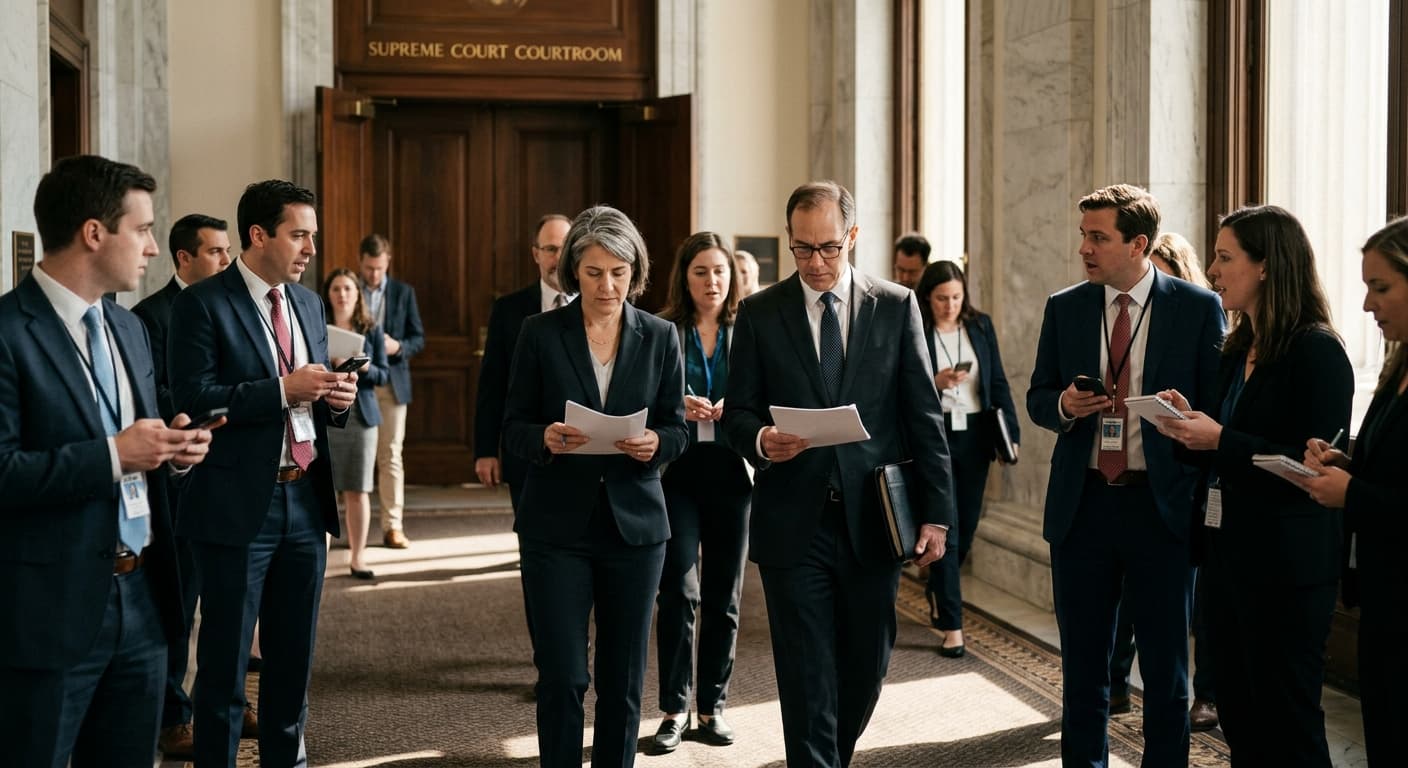
Slaughter Ruling Ends 91 Years of Bank-Regulator Independence
The Supreme Court's 6-3 decision in Trump v. Slaughter overruled Humphrey's Executor on June 29, 2026, handing the White House at-will removal power over the FDIC, SEC and CFTC — and, scholars warn, ending the durability of U.S. bank rules across presidencies.
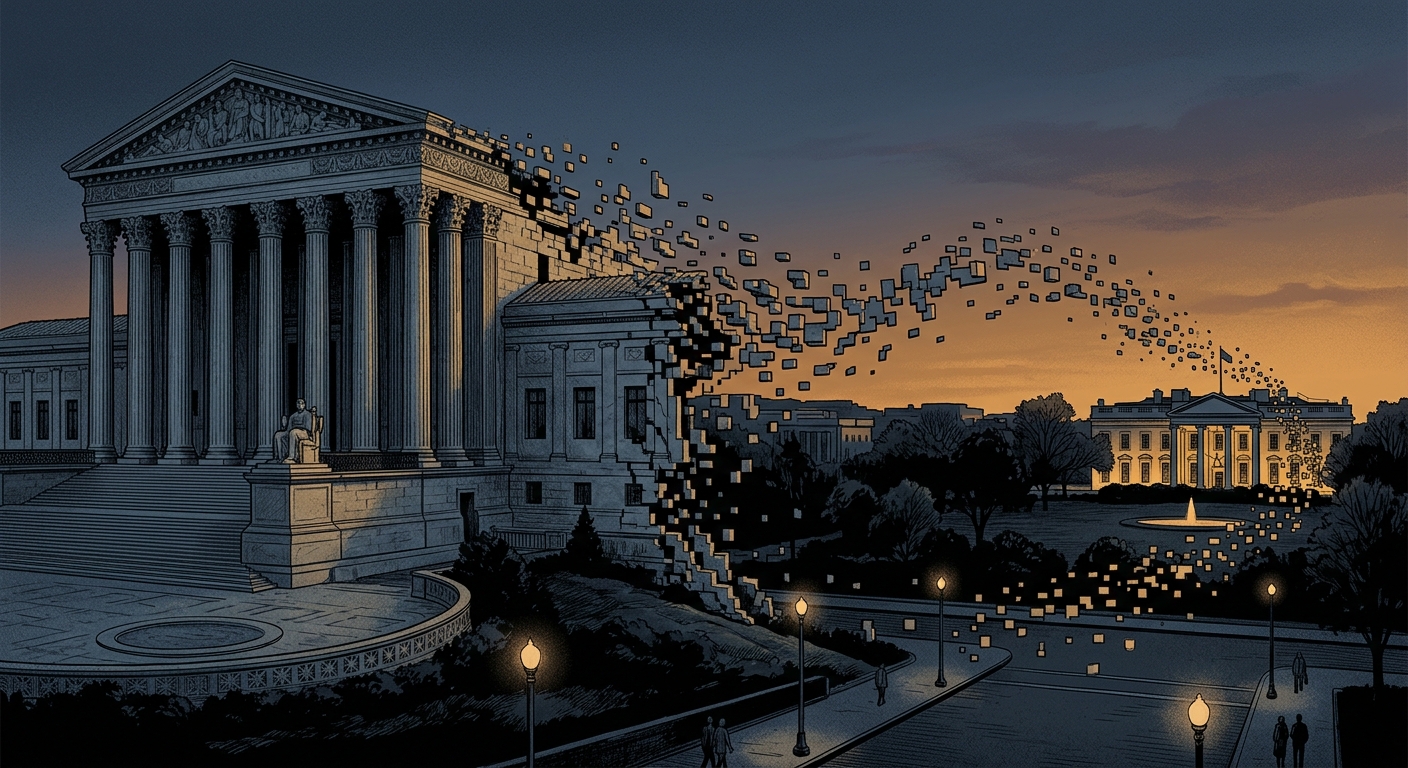
The Supreme Court's June 29, 2026 decision in Trump v. Slaughter did more than end Rebecca Slaughter's tenure at the Federal Trade Commission — it collapsed the constitutional scaffolding under every multimember financial regulator except the Federal Reserve, and Columbia Law's Jeffrey N. Gordon calls it a "Brexit moment" for U.S. economic governance. The load-bearing claim is simple: the durability of U.S. bank rules across presidencies — the feature that made Washington a credible rule-writer for four decades — is now gone. What replaces it, according to the scholars quoted by American Banker, is a system where FDIC, SEC and CFTC policy resets every four years, states rush to fill the gaps, and the Fed sits alone on an increasingly fragile island of independence.
What the Court actually did
Chief Justice John Roberts, writing for a six-justice majority, held that the for-cause removal protection in the FTC Act "is contrary to the separation of powers enshrined in the Constitution," as reported by Al Jazeera. The Court expressly overruled Humphrey's Executor v. United States, the unanimous 1935 decision that had shielded multimember agency heads from at-will dismissal — a precedent summarized on the Supreme Court's own
Legal Information Institute docket page for the case. In the government's reply brief, Solicitor General filings argued the 1935 ruling rested on the "erroneous premise that the 1935 FTC exercised no executive power at all," a premise that "has not withstood the test of time," per the
Supreme Court petitioner brief.
The companion case, Trump v. Cook, split 5-4. Roberts and Justice Brett Kavanaugh joined the three liberals to block Trump's attempt to fire Federal Reserve Governor Lisa Cook without notice, holding that the Fed retains a "distinct historical tradition" traceable to the First and Second Banks of the United States. But Roberts included a pointed footnote noting nothing prevents Trump from "trying again," according to Al Jazeera's account of the opinion.
Justice Elena Kagan, in dissent, warned that the majority had discarded "the will of Congress, this Court's seminal decision approving independent agencies' for-cause protections, and the ensuing 90 years of this Nation's history," as NPR quoted from her earlier opinion in the parallel Wilcox/Harris stay that previewed the reasoning.
"We hold that such protection from removal is contrary to the separation of powers enshrined in the Constitution." — Chief Justice John Roberts, majority opinion, Trump v. Slaughter, June 29, 2026
Why bank regulators are the real story
The FTC dispute was the vehicle; bank regulation is the payload. The Federal Deposit Insurance Corporation, National Credit Union Administration, Securities and Exchange Commission and Commodity Futures Trading Commission share the same statutory design: multimember boards, party-balanced, with for-cause removal language now unenforceable. Bloomberg Law's analysis of the ruling noted that Monday's decision "will reverberate across dozens of agencies previously insulated from transition turmoil," and law-firm advisories cited by
Mondaq describe Slaughter and Cook as "fundamentally reshaping the balance of power between the presidency and independent regulatory agencies."
Todd Baker of Columbia's Richman Center offers the operating example. He told American Banker that Acting Comptroller Michael Hsu had already reversed the fintech and payments charter initiatives launched by predecessor Brian Brooks, halting crypto-related trust bank charters — and that 18 months into the second Trump administration, those Hsu reversals have themselves been unwound. That pattern, Baker argues, is about to become the operating norm across the FDIC and SEC.
"If I were a bank today, I would be very worried about the staying power of any regulatory policy not specifically required by law beyond the end of a presidential term," Baker told American Banker. "Many of the agency's actions and interpretations could — and almost certainly will — be reversed or amended by a future Comptroller appointed by a Democratic President."
The Brexit analogy, unpacked
Gordon's "Brexit moment" is not rhetorical flourish. His argument, laid out in the American Banker piece, is that Slaughter is a one-way structural break: Congress can no longer credibly bind its own successors through independent commission design, because any protection it writes is now constitutionally suspect. The consequence, in his framing, is that "the states will step into the regulatory vacuum and we will lose many of the advantages of a single market."
That is the mechanism Britain's financial-services sector experienced after 2016. A SAGE study by Scott James and Lucia Quaglia documents how Brexit forced UK regulators to trade market access for autonomy — and how "bureaucratic politics" reshaped preferences once the anchor of a unified rulebook was gone. The Financial Times, marking the referendum's tenth anniversary in its
June 25, 2026 retrospective, noted the mainstream-economist consensus that leaving the EU imposed persistent growth costs — the "structural break" Gordon is invoking.
The U.S. analogue is the dual banking system, in which state authorities like the New York Department of Financial Services — which already supervises 17 global systemically important banks — have the standing infrastructure to move fast when federal supervision softens. Preemption, as the Congressional Research Service laid out in its
primer on the dual banking system, was tightened by Section 1044 of Dodd-Frank, which requires state consumer-financial laws to be preempted only where they "significantly interfere" with national bank powers — the standard the Supreme Court reaffirmed in
Cantero v. Bank of America in 2024. The door for state-level financial rulemaking is legally open; Slaughter provides the political trigger.
The compounding problem: Slaughter plus Loper Bright
Baker's second warning is that Slaughter does not sit alone. It compounds the Court's 2024 decision in Loper Bright Enterprises v. Raimondo, which ended Chevron deference to agency interpretations of statute. A politicized agency now writes rules under closer judicial scrutiny than at any point since 1984 — a combination that, as one SSRN analysis of Loper Bright's banking implications argues, gives litigants far more purchase to challenge regulator actions on both process and substance.
"One of America's greatest economic advantages since the end of the second world war has been a transparent legal and regulatory system that did its best to deliver predictability for businesses and investors," Baker told American Banker. "When that foundation is undermined, the advantage disappears quickly."
Who benefits, who loses
The immediate winners are large regulated banks aligned with the current administration's deregulatory posture: expect faster capital-rule rollbacks, a lighter merger review at the FDIC, and continued unwinding of the CFPB's supervisory footprint under a single director already removable at will since Seila Law. The losers are the same institutions on a five-year horizon — banks that build compliance systems around 2026 rules will pay to rebuild them around 2029 rules and again in 2033.
The Federal Reserve is the paradox. Its carveout in Cook is real but, as Baker argues, structurally awkward: the Fed's supervisory arm oversees bank holding companies under the same institutional roof as monetary policy. If a future president tests the "notice and cause" limits Roberts sketched — the Commercial Record noted the Court "didn't define to what extent" Fed independence survives — the supervisory function is the softest target. The Economist's
June 29 essay framed the term as one that "handed Donald Trump a power no other president has possessed in almost a century."
What to watch
- Trump v. Cook remand. Roberts's footnote invited a second attempt at removing Governor Lisa Cook with proper notice. The next filing in the D.C. District Court will define the operational limits of the Fed's carveout. Any expansion beyond monetary policy — say, to Fed supervisory decisions — collapses the Cook firewall.
- FDIC and SEC board turnover. Watch for at-will removals or resignations at the FDIC (Chair Travis Hill's board) and SEC (Chair Paul Atkins's board) as a signal of how quickly the administration operationalizes Slaughter beyond the FTC. Bloomberg Law flagged this as the next domino.
- State-level action. NYDFS Superintendent Adrienne Harris and California DFPI have both signaled interest in expanding non-bank supervision. A coordinated multi-state consumer-finance rule — the kind Section 1044 of Dodd-Frank permits — would be the first concrete evidence Gordon's "states fill the vacuum" prediction is materializing.
- Congressional response. Any bipartisan bill re-designing agency structure — for example, converting board members into fixed-term Article II inferior officers with mission-specific removal standards — is the only legislative path left. None is currently on the calendar.
The Bottom Line
Trump v. Slaughter did not merely settle Rebecca Slaughter's job — it eliminated the constitutional foundation for durable, apolitical bank regulation in the United States, leaving the Federal Reserve as the sole surviving island of independence and, according to Columbia's Jeffrey Gordon, ending the "single market" advantage that made U.S. financial rules exportable. The regulatory cycle now tracks the electoral cycle, and the banks that thrive will be the ones that treat rulebooks as four-year assets. If the Cook carveout erodes on remand, the last firewall between monetary policy and White House preference falls with it.
Discover more
US Politics
Congress Targets AI Chatbot Access for Terror
The House passed the Generative AI Terrorism Risk Assessment Act, focusing on AI's role in terrorism and potential surveillance implications.

US Politics
SNAP Food Assistance Faces Legal Challenges
In 2026, SNAP faces stricter eligibility rules and mounting legal challenges, threatening food assistance for the millions of Americans who rely on the program.

US Politics
House Ethics Committee Pushes Sexual Miscond.
The House Ethics Committee has shifted responsibility for sexual harassment settlement records to the Office of Congressional Workplace Rights, complicating disclosure efforts.

Conflict & Security
Drone Warfare Killing Aid Workers at Unprec
Over 1,000 humanitarian workers killed in three years as cheap armed drones collapse legal protections. Gaza, Sudan, Ukraine, and DRC see deliberate targeting of aid convoys and hospitals with zero prosecutions.