Supreme Court's Control Over India's Election
Debate over independence of India's election referee intensifies
Model Diplomat3 min readAsia
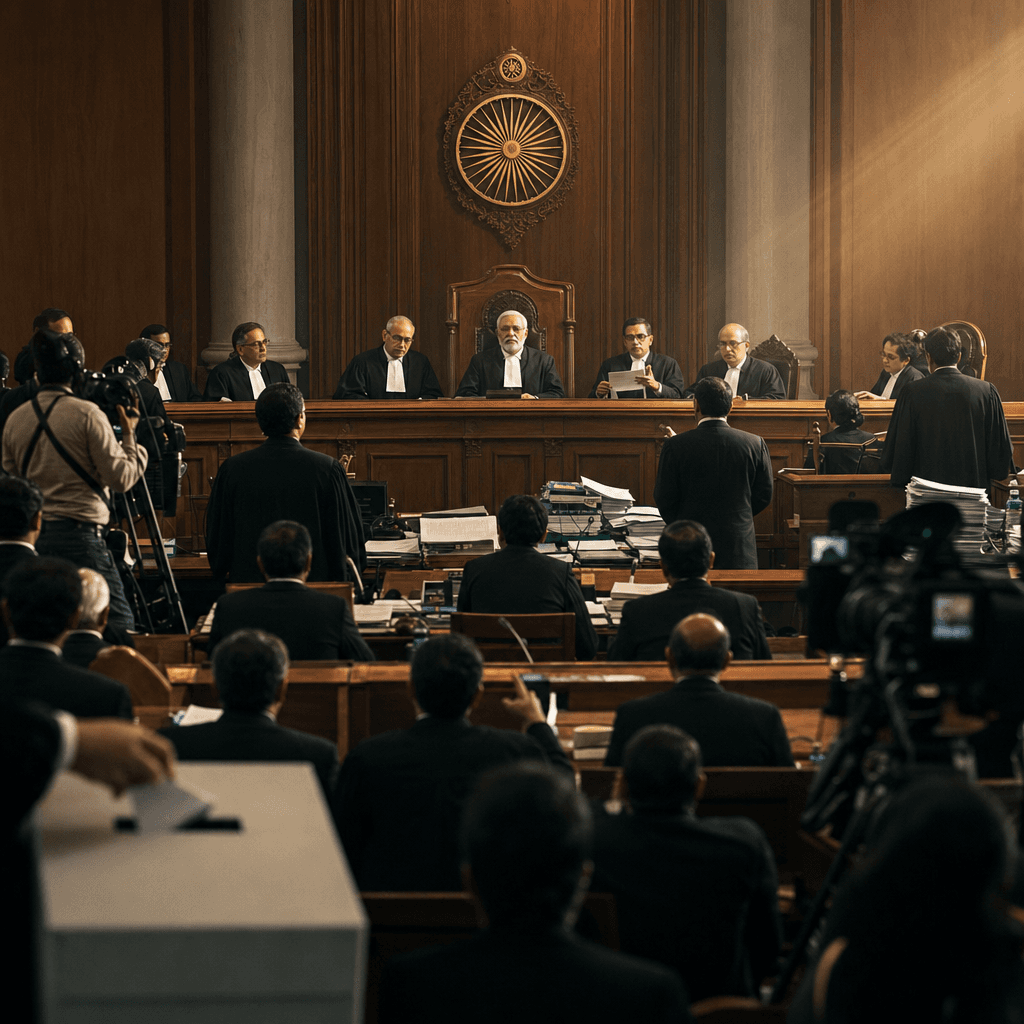
Supreme Court Tests Who Controls India’s Election Referee
The court’s “tyranny of the elected” remark signals a deeper fight over who appoints India’s poll watchdog—and how independent it really is.
The Supreme Court has put the core issue plainly: who controls the Election Commission controls the referee. On Thursday, a bench led by Justices Dipankar Datta and Satish Chandra Sharma heard petitions challenging the Chief Election Commissioner and Other Election Commissioners (Appointment, Conditions of Service and Term of Office) Act, 2023, and questioned why successive governments never built an independent appointment system before Parliament acted after the court’s 2023 ruling in Anoop Baranwal (NDTV;
Indian Express).
The real fight is over leverage
This is not a technical dispute over process. It is a struggle over whether the political executive keeps decisive leverage over the body that supervises elections. Under the 2023 Act, the selection committee includes the Prime Minister, a Union Cabinet minister nominated by the PM, and the Leader of Opposition in the Lok Sabha — a structure petitioners say still leaves the government with the upper hand because the executive controls two of the three seats and the search process itself (Bar and Bench;
NDTV).
For India, that matters because election legitimacy depends less on the counting day than on public confidence that the Election Commission is not beholden to the ruling party. The petitioners, including the Association for Democratic Reforms and activist Jaya Thakur, argue that excluding the Chief Justice of India from the panel dilutes the court’s own Anoop Baranwal remedy and restores the defect the bench had tried to fix (
NDTV;
Indian Express).
Why the court’s language matters
The bench’s “tyranny of the elected” remark is more than rhetoric. It shows the court sees a recurring pattern: opposition parties demand an independent appointment system, then soften once in office. Justice Datta said that trend is “unfortunate for the country,” while the petitioners’ counsel, Prashant Bhushan, framed the issue as a question of “tyranny of the majority” and constitutional safeguards against executive capture (NDTV;
Indian Express).
That leaves Parliament in a difficult position. The court has already said its 2023 Anoop Baranwal arrangement was a stopgap until legislation arrived, which gives the government formal cover to say it complied. But the petitioners are arguing that compliance in form is not compliance in substance if the new law simply re-centers executive power under a different committee structure (Bar and Bench;
NDTV).
What to watch next
The next decision point is whether the bench treats the 2023 Act as a genuine legislative answer or as a cosmetic rewrite that still violates the principle of an independent Election Commission. The petitioners also attacked the March 2024 appointments of Gyanesh Kumar and Sukhbir Sandhu as rushed; the court did not accept the pre-emption allegation without evidence, which suggests it is still sorting legal principle from political inference (Indian Express;
Deccan Chronicle). If the court pushes further, the real issue will be whether India’s election watchdog is appointed by an independent process — or by the government it is meant to regulate.
Discover more
India
Women’s Reservation Bill 2026
The Women’s Reservation Bill's defeat reveals a deeper battle over delimitation, impacting India's electoral landscape and gender representation.
Global Politics
Iran Releases $12B Frozen Assets Deal
Iran secures $12 billion in frozen assets as US lifts oil sanctions under new deal.

India
India-UK Trade Pact Removes Tariffs on 99%
India's trade pact with the UK eliminates tariffs on 99% of exports, but execution risks loom.
International Relations
US Releases $12 Billion in Frozen Iranian Aid
The US releases $12 billion in frozen Iranian assets, signaling a shift in negotiations.