SP’s Reservation Audit Reframes Uttar Pradesh’s Jobs Fight
Akshilesh Yadav is turning UP’s vacancies row into a quota-compliance attack, shifting the BJP’s charge sheet from patronage to constitutional breach.
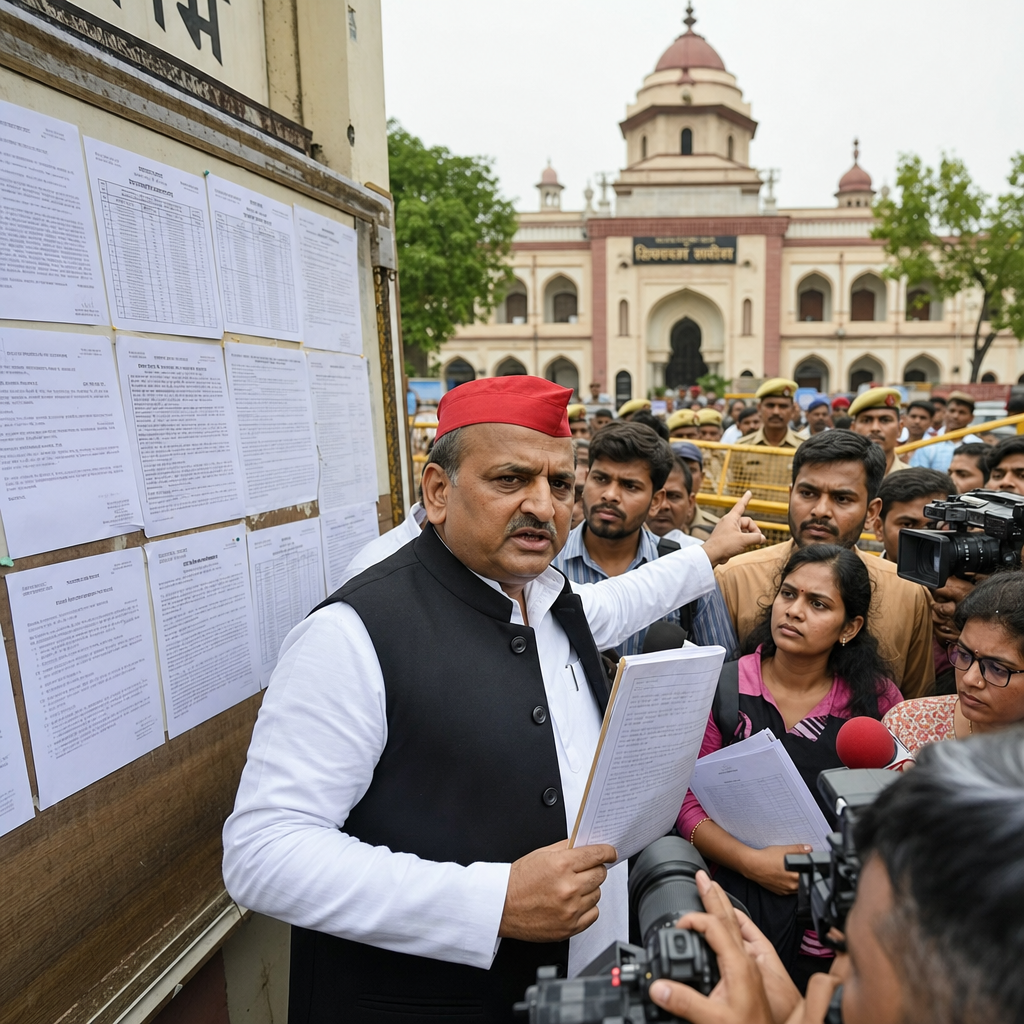
The Samajwadi Party is trying to change the terms of the Uttar Pradesh jobs fight. Instead of answering the BJP’s “Yadav bharti” accusation on identity grounds, Akhilesh Yadav has recast the issue as a “reservation audit,” releasing a “Samajwadi Audit Report” that claims quota shortfalls across 22 recruitment drives, including the 69,000-teacher hiring process ( The Hindu;
  The Indian Express).
What the SP is doing
The numbers are the point. In the teacher recruitment case, Yadav said OBC candidates were entitled to 27% reservation but got only 3.86%, while SC candidates got 16.21% against a 21% quota; he also alleged that over 11,514 reserved-category seats were not filled according to rules across the 22 drives covered by the report (The Hindu). The SP is not just alleging bias; it is building a paper trail that can be repeated district by district, vacancy by vacancy, until the BJP is on the defensive over procedure rather than pedigree.
That shift matters because the BJP’s “Yadav bharti” framing is politically useful only if the argument stays personal. Once the SP turns it into a reservation audit, the debate moves to whether the state followed its own roster rules, whether departments left posts vacant, and whether the government can prove compliance. In  India, that is often where caste politics becomes administrative politics.
Why this matters in UP
This is a classic UP move: translate a recruitment dispute into a broader story about social justice. The SP is trying to widen its coalition beyond Yadav voters by speaking the language of “PDA” — backwards classes, Dalits and minorities — and by arguing that the BJP is not merely filling jobs badly, but weakening the reservation system itself (The Hindu). That gives the SP a cleaner line for the 2027 Assembly cycle: the fight is no longer about who got what post, but whether the ruling party respected the constitutional order.
The BJP’s problem is that a technical rebuttal will not be enough if the opposition keeps producing category-wise figures. A patronage charge is easiest to neutralize with a few examples and a counterattack; a reservation-audit charge forces the government to explain records, rosters and selection lists. That is a much harder arena for a party that has already been vulnerable in UP’s employment politics.
What to watch next
Watch for two things: whether the Adityanath government answers the SP point by point on the recruitment data, and whether the SP expands this into a state-wide campaign around more hiring files before the story hardens into a permanent anti-BJP theme. The next real test is not rhetoric; it is whether Lucknow can dislodge the audit with documents, not slogans (The Indian Express; The Hindu).