Siddaramaiah Blasts PM Modi on Women's Rights
Karnataka CM accuses PM of hypocrisy on women's quota.
Model Diplomat7 min readKarnataka
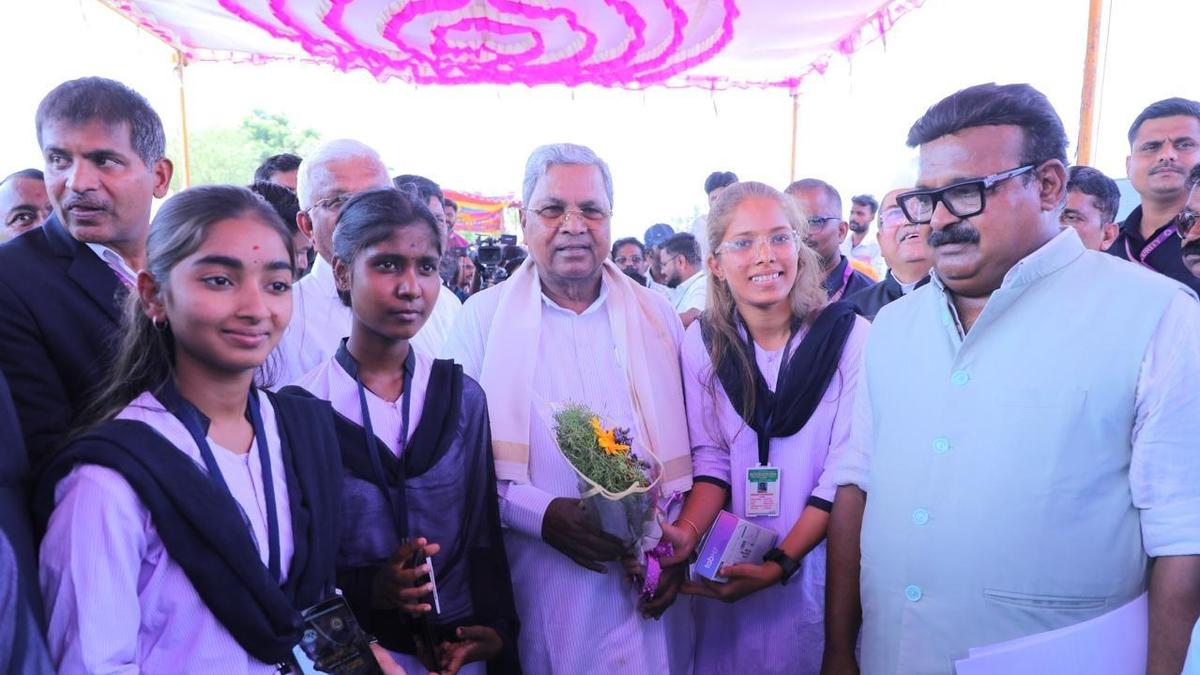
Siddaramaiah Blasts Modi on Women's Rights: The South's Real Fight
Karnataka's CM accuses PM Modi of "double standards" on the 2023 women's quota. The real battle is delimitation — and southern seats.
Karnataka Chief Minister Siddaramaiah's April 20 broadside against Prime Minister Narendra Modi — accusing him of "double standards" on women's reservation and later of being "not in favour of social justice" — reads as a gender-rights argument. It is not. It is the sharpest public sign yet that the Congress-led south is willing to sink a long-promised women's quota rather than accept the delimitation formula that comes bundled with it, because that formula would transfer parliamentary power from India's low-fertility, higher-income south to the BJP's northern heartland. The 131st Constitutional Amendment fell in the Lok Sabha on April 17, 2026 by 298 votes to 230 — 54 short of the two-thirds threshold, according to the BBC Hindi service. Siddaramaiah is now defending that defeat, not apologising for it.
What actually happened
On April 15, Modi arrived at HAL airport in Bengaluru and was photographed leaning in to whisper to Siddaramaiah. Social media speculated for days. On April 20, in Mysuru, the chief minister volunteered the content of the exchange: Modi had asked him where he stood on women's reservation. "I replied we are in favour of women's reservation," Siddaramaiah told reporters, according to The Hindu. He then accused the prime minister of politicising the issue and delaying implementation of the Nari Shakti Vandan Adhiniyam, the 2023 law that reserves one-third of Lok Sabha and state-assembly seats for women.
The prime minister had launched a three-day special session on April 16 with three linked bills: two to operationalise the 2023 quota, and a third — the Delimitation Bill 2026 — to redraw constituencies based on the 2011 census and expand the Lok Sabha from 543 to 850 seats. "We're set to take historic steps to empower women," Modi told the chamber, Al Jazeera reported. Congress leader Rahul Gandhi called it "an attempt to seize power through delimitation and gerrymandering." Tamil Nadu Chief Minister M K Stalin burned a copy of the bill outside the chamber.
Two days later, the constitutional amendment failed. It is the first time in twelve years a Modi-era constitutional amendment has been voted down in the Lok Sabha, per BBC Marathi's account of the vote. Siddaramaiah's Mysuru press conference — his "double standards" attack — is Congress's post-defeat framing operation.
The primary text everyone is fighting over
The 2023 law itself is the thing being weaponised on both sides. The Constitution (128th Amendment) Act — passed 454–2 in the Lok Sabha in September 2023 and signed the same day by President Droupadi Murmu — inserted Articles 330A and 332A into the Constitution. Home Minister Amit Shah restated the government's position in a Press Information Bureau release: "The Nari Shakti Vandan Act stipulates that reservation for women will be ensured in the delimitation exercise to be carried out after the Census conducted post-2026." That sequencing — quota first requires census, then delimitation — is written into the amendment itself.
That is the sequencing constraint Siddaramaiah is exploiting. As the Carnegie Endowment observed in a May 2026 analysis, "the Women's Reservation Bill is politically salient in its own right, [but] these bills sought to operationalize it for a distinctly political purpose: The quota for women functioned as a vehicle to push through a broader reengineering of India's electoral design." The southern argument writes itself: the BJP wrote a poison pill into its own signature gender reform, and now demands the opposition swallow it.
Who wins if delimitation goes ahead — and who doesn't
The numbers are the argument. India's Lok Sabha has 543 seats. The government's bill would raise the ceiling to 850, with the expansion based on 2011 census figures. The Takshashila Institution's April 2026 modelling, extrapolating 2011 population trends to 2026, projects that Bihar, Madhya Pradesh, Uttar Pradesh and Rajasthan would gain roughly 22 seats between them, while Tamil Nadu, Kerala, Andhra Pradesh and Telangana would lose 17. "The southern states rightly interpret the loss of seats in the 'people's house' as a 'loss of voice,'" the Takshashila analysts wrote.
Home Minister Amit Shah has repeatedly denied any such loss, telling NPR that the government "will make sure that not even one seat is reduced in delimitation," and telling Parliament that the five southern states' share would move from 23.76% to 23.87% of an expanded chamber, per the PIB release cited above. But as Arghya Sengupta of the Vidhi Centre for Legal Policy told the
BBC, "the draft delimitation bill does not explicitly spell this out… While no state may lose seats, the absence of a clear proportional formula means outcomes could vary — and favour more populous states."
Sengupta flagged a second asymmetry that has drawn little coverage: the bill raises the cap on the Lok Sabha but does not similarly expand state assemblies, "creating a mismatch: fast-growing states could gain more MPs without a corresponding rise in MLAs." Karnataka's assembly is where Siddaramaiah's own political base sits.
The angle: a quota held hostage, by both sides
The obvious frame — Congress versus BJP on women's rights — misses what the vote arithmetic reveals. Both parties are using the same 33% quota as leverage for something else.
The BJP tied implementation to delimitation because a redraw based on the 2011 census expands its northern base and consolidates the political map before 2029. Congress and the DMK voted against the amendment because the quota is the only lever powerful enough to force the government to negotiate on delimitation itself. Neither side is prepared to unbundle the two. The women who would occupy those 33% of seats are the collateral.
Siddaramaiah's "confidential exchange" disclosure is the key move. By making public that Modi personally solicited his position at HAL airport on April 15, and by then framing Congress's April 17 vote against the bill as principled — "we could have implemented [women's reservation] in 2023 itself," he told reporters in Mysuru on April 21 — the Karnataka CM is trying to inoculate Congress against the BJP's inevitable counterattack: that the opposition killed a women's reservation bill in an election year. Congress President Mallikarjun Kharge has taken the same line, telling reporters, per
The Hindu's related coverage, that "women's reservation was Modi's ruse to bring in delimitation to defeat DMK."
Shah's line, in a post-vote statement quoted by BBC Hindi, is the mirror: "Now the women of the country will not get the 33% reservation in Lok Sabha and assemblies, which was their right. Congress and its allies have done this not for the first time, but repeatedly." Expect this to be the BJP's Bengal, Tamil Nadu and Kerala talking point for the next twenty-four months.
The data behind the fight
India's underrepresentation of women in national politics is not disputed. The U.S. Congressional Research Service's statistics report puts women's share of the Lok Sabha at roughly 14–15%, ranking India 152nd out of 181 national legislatures tracked by the Inter-Parliamentary Union, against a global average of 27.4% as of April 2026. The Observer Research Foundation's
analysis notes that although only 74 women were elected to the Lok Sabha in 2024, women candidates have historically won at a higher rate than men in every general election since 1957 — meaning the binding constraint is candidate selection by parties, not voter preference.
That fact matters for the Diplomat View below: even a rotational 33% quota, once implemented, would collide with entrenched male incumbents in every party — including Congress — and the arithmetic of which constituencies get "rotated" is where the next fight lives. As Sanjay Kumar of CSDS told the BBC: "What criteria will be used to reserve seats for women? That's the tricky part. How do you decide which constituencies are set aside?"
Diplomat View
Siddaramaiah's attack is not a moral argument about women's rights; it is a jurisdictional argument about who controls the map. Congress has calculated that the political cost of being blamed for the quota's delay in 2029 is lower than the constitutional cost of ratifying a delimitation formula that hard-wires BJP dominance for a generation. The bet is defensible — the 2024 Al Jazeera post-poll analysis showed Modi's women-voter outreach delivered no clear gender premium — but it is a bet.
Our call: the 131st Amendment will return to the floor before the 2029 general election, but with a de-linked women's quota implemented on the current 543-seat house first, delimitation deferred to a later constitutional negotiation. That is the only compromise that gives both sides a face-saving win. It would falsify our forecast if (a) the Modi government wins two-thirds control of the Lok Sabha at a mid-term realignment or through a floor-crossing gambit, in which case delimitation goes through bundled; or (b) the DMK–Congress southern bloc fractures under BJP pressure in Bengal and Tamil Nadu polls, freeing the government to run down opposition resistance state by state. Watch Siddaramaiah's own party's India internal signals: if the Congress Working Committee formally endorses de-linking, the compromise is coming.
What to watch
- Bengal and Tamil Nadu results (post-April 29 counts, 2026): if the BJP gains meaningfully in Bengal on a "Congress betrayed women" line, expect the amendment to be reintroduced before the winter session.
- 2027 Census schedule: the Registrar General's fresh census launched in April 2026 is the constitutional trigger; a published preliminary count by mid-2027 forces the government's hand on whether to seek fresh delimitation or accept the current-house quota compromise.
- Karnataka's own assembly reservation: Siddaramaiah has not yet committed to implementing 33% reservation in the Karnataka assembly ahead of the state's 2028 poll. If he does, his "double standards" attack lands. If he doesn't, the BJP will make sure voters notice.
The Bottom Line
Siddaramaiah is not defending a women's rights principle against a hostile prime minister; he is defending southern India's parliamentary weight against a redistricting bill that used the 2023 women's quota as its trojan horse — and the 298–230 defeat of the 131st Amendment on April 17 proves the strategy works. The next test is whether either side is willing to unbundle the quota from the map. If they are not, the 33% reservation stays on paper and 850 seats stay theoretical, and the fight over who represents India moves — inevitably — to the courts.
Discover more

India
INDIA Bloc's Delimitation Strategy
The INDIA bloc is using delimitation and women's reservation to challenge the BJP's federalism narrative, setting up a high-stakes fight over representation.
India
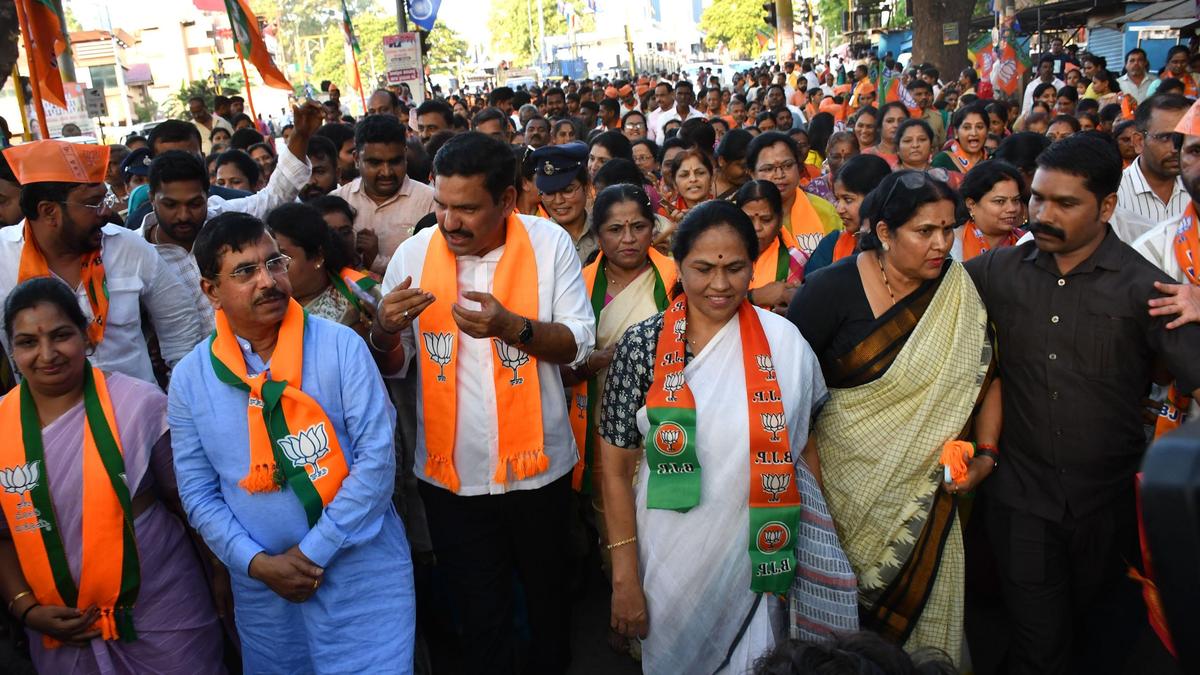
BJP Uses Hubballi Protests for Women's Quota
The BJP is using Hubballi protests to pin blame for delays on women's reservation onto Congress in Karnataka, sharpening its women's quota political offensive.
India
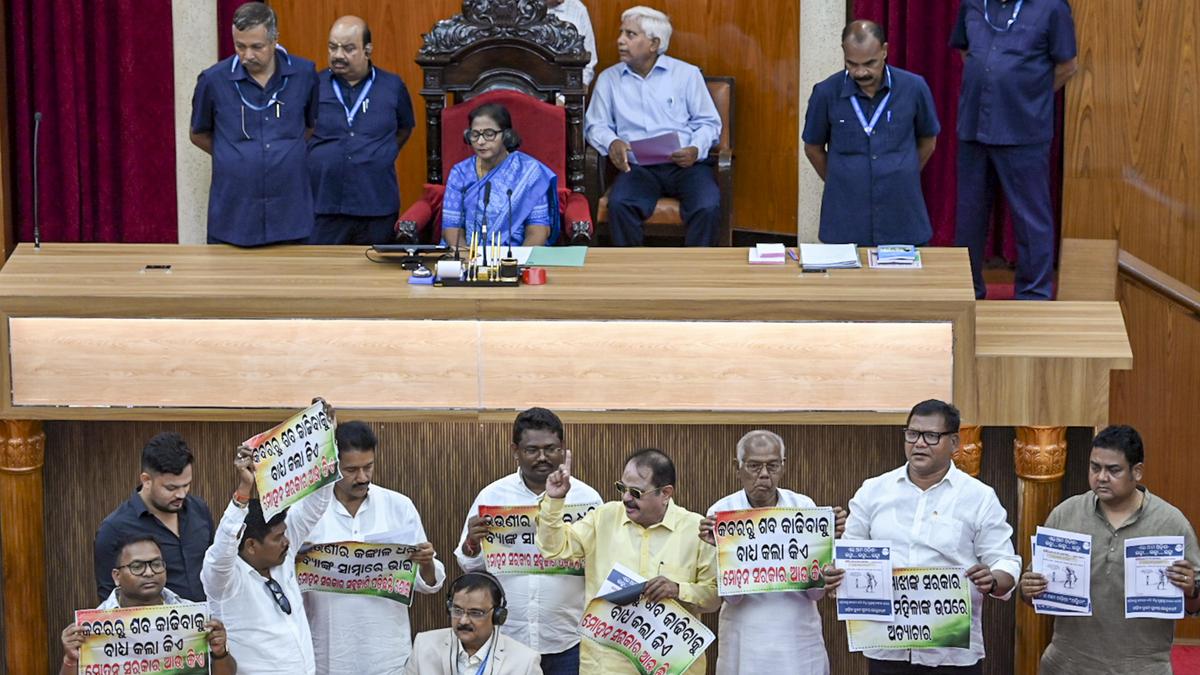
Odisha's Women's Reservation Debate
The fight over women's reservation in Odisha is shaping up as a calculated BJP and BJD strategy aimed squarely at gaining ground before the 2029 elections.
India
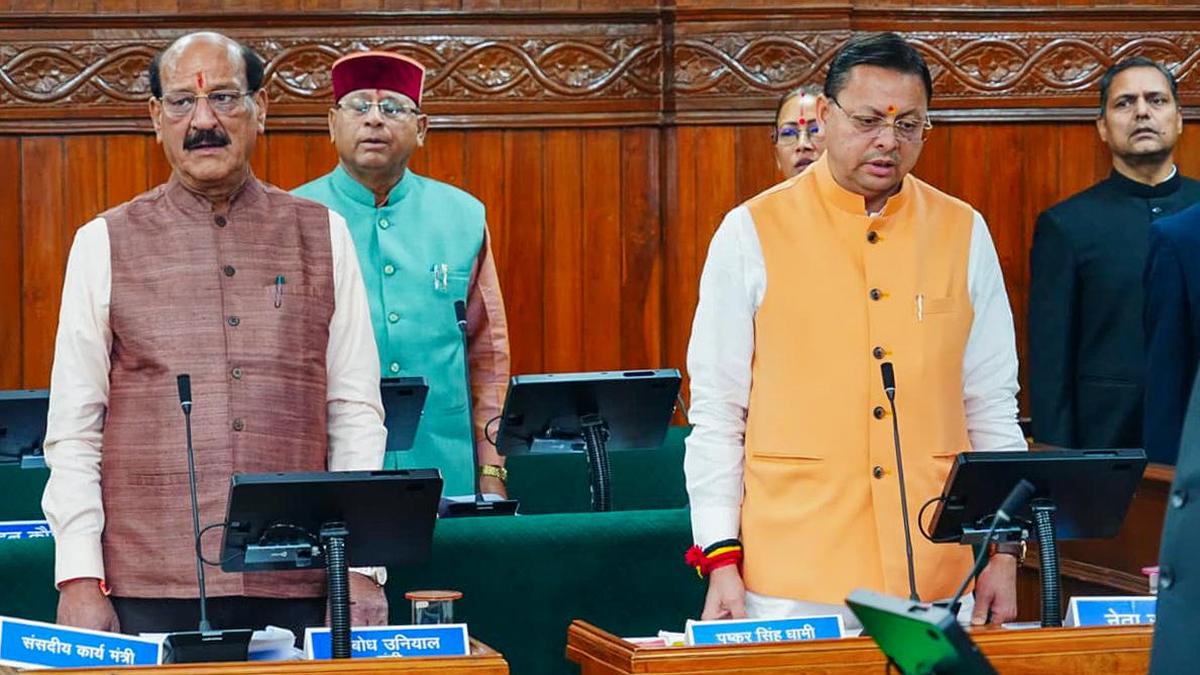
Uttarakhand's Push for Women's Reservation
Uttarakhand CM Dhami's push for women's reservation is a strategic political move that follows national defeat and aims to reclaim momentum for the BJP.