Senegal’s Speaker Exit Hands Sonko Power
El Malick Ndiaye's resignation boosts Ousmane Sonko's influence.
Model Diplomat3 min readAfrica
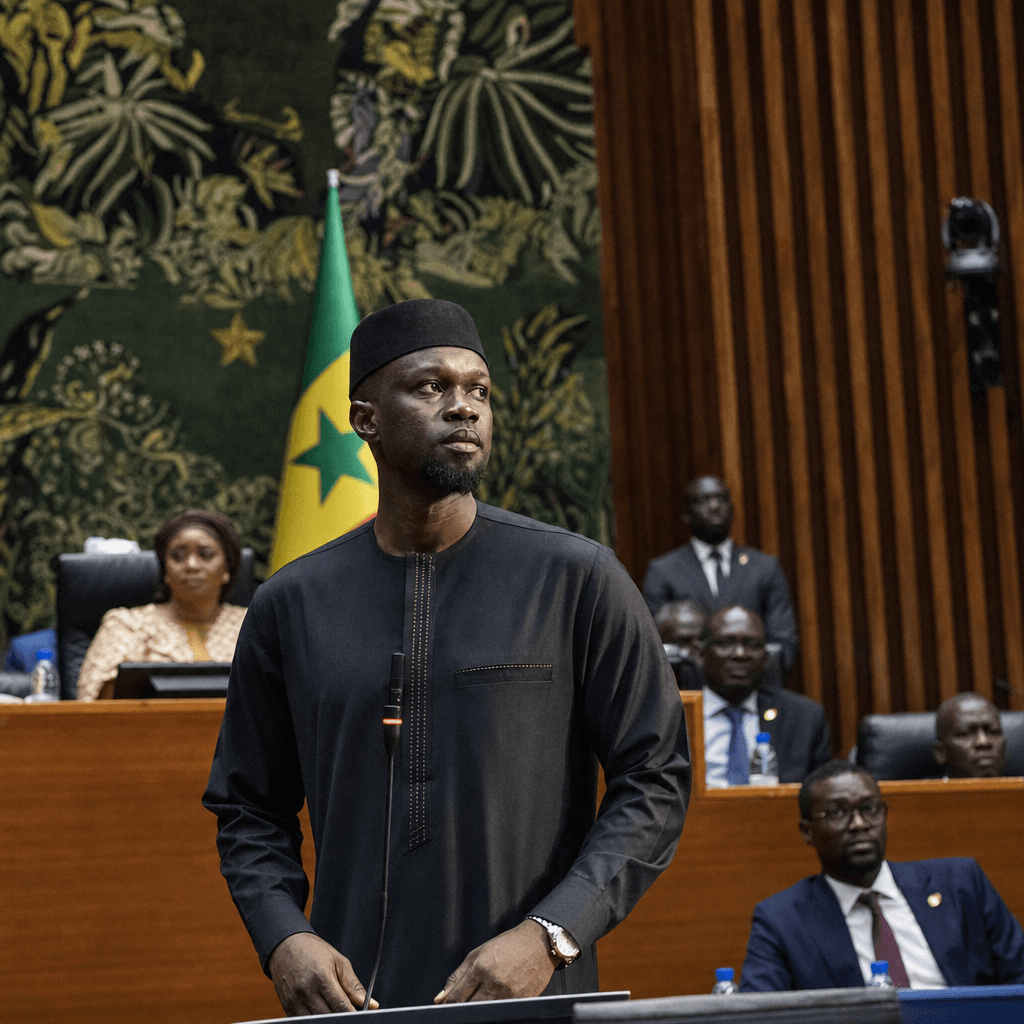
Senegal’s Speaker Exit Hands Sonko a New Power Base
El Malick Ndiaye’s resignation clears space for Ousmane Sonko to seize parliament, tightening Pastef’s grip just as Bassirou Diomaye Faye needs calm to strike an IMF deal.
Power shift inside Pastef
Senegal’s parliamentary speaker El Malick Ndiaye said on Facebook that he is stepping down, a move that opens the door for Ousmane Sonko to compete for the National Assembly presidency and keep institutional leverage even after losing the prime minister’s office, according to Al Jazeera. The resignation comes two days after President Bassirou Diomaye Faye dismissed Sonko and dissolved the government, a decision confirmed by the presidency and reported by
Agence Ivoirienne de Presse.
This is not a cleanup move; it is a power contest. Pastef still dominates the National Assembly, so whoever controls the chamber controls the legislative tempo. Ndiaye’s exit makes it easier for Sonko to translate his party’s numerical strength into a second center of gravity inside the state, one that can check Faye’s room to maneuver, Al Jazeera. For broader regional context, see
Global Politics.
Why this matters for the economy
The political split lands in the middle of Senegal’s most urgent file: debt and the IMF. Al Jazeera said the IMF froze a $1.8 billion lending programme after discovering misreported debt, pushing Senegal’s end-2024 debt load to 132 percent of GDP; Finance Minister Cheikh Diba told parliament on Friday the government still hoped to resume talks in early June and reach agreement by June 30, Al Jazeera. The presidency has now replaced the prime minister and left the cabinet in a caretaker role, which buys Faye breathing space but also signals internal rupture,
Agence Ivoirienne de Presse.
That matters because Faye’s leverage with the IMF depends on appearing able to deliver reforms. Sonko, by contrast, has become the political voice of resistance to austerity inside the ruling camp. If he controls parliament or moves Pastef toward open opposition, Faye will face a legislature that can slow budget measures, complicate subsidy reforms, and weaken the credibility of any IMF package, Al Jazeera. The result is a government with formal executive authority but less political coherence than it had two weeks ago.
Who gains, who loses
For now, Sonko gains the most. He has lost the prime minister’s chair, but he has not lost Pastef’s machinery, its National Assembly majority, or his own claim to be the movement’s authentic standard-bearer, Al Jazeera. Faye gains a chance to appoint a more compliant cabinet, yet he risks governing against the party that elected him in 2024. That is a worse bargaining position, not a better one.
The losers are straightforward: Faye’s reform agenda, the IMF timetable, and any investor hoping for policy stability before June. The next decision point is whether Sonko uses Parliament to reassert control over Pastef’s agenda, and whether Faye names a prime minister who can actually pass a deal. Watch the June IMF talks closely; if they slip beyond the June 30 target, this crisis will stop being internal politics and start becoming a financing problem.
Discover more
India
Romanian Coalition Party Demands PM Resign
Romania's Social Democrats withdrew from coalition, joining far-right AUR to topple PM Bolojan, risking €10 billion in EU funds by August 2026.
India
BJP Congress Clash Over MP Bill Defeat
The BJP's defeat of the women's quota amendment sparks a political narrative war with Congress, impacting future elections.

Conflict & Security
Guatemala: El Niño 2026–27 becomes regional security test
UNICEF: 25.8M children face El Niño risks in Latin America; Guatemala maps 188 municipalities for drought and food insecurity amid regional security test.

Economics
Fed's stress-test overhaul is a capital-smoothing exercise
Federal Reserve finalized stress-test overhaul: two-year averaging for bank capital buffers and public input, expected to halve volatility.