Security Council's Sexual Violence Debate
UN debate reveals P5 paralysis on sexual violence sanctions
Model Diplomat7 min readGlobal
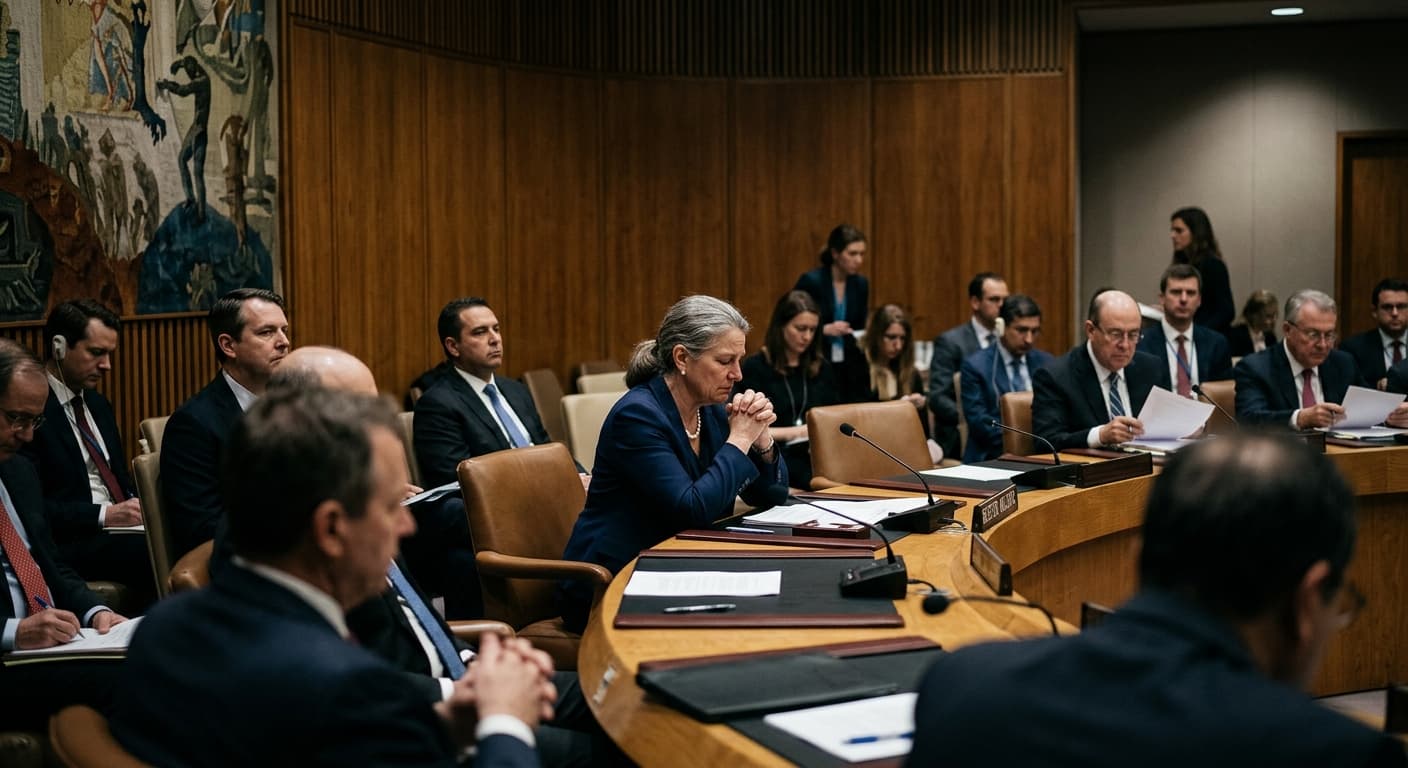
Security Council's sexual-violence debate exposes P5 paralysis
The UN's July 8 open debate on conflict-related sexual violence lands with cases doubling to 9,788 — and Russian and Israeli forces on the "list of shame" for the first time.
The UN Security Council's July 8, 2026 open debate on conflict-related sexual violence is not a solemnity — it is a stress test the Council is failing. UN-verified cases more than doubled to 9,788 in 2025 from 4,617 the year before, according to the Secretary-General's report S/2026/321, and the annex now names Russian and Israeli state forces alongside the Rapid Support Forces, M23, Wazalendo, the Mai-Mai and Haitian gangs. The remedy the Council itself designed — Chapter VII sanctions triggered by that annex — has become inoperable precisely because two permanent members and one of Washington's closest allies now sit on the wrong side of it. That is the angle to watch today: the "list of shame" is finally catching up with the geopolitics of atrocity, and the sanctions architecture built to punish it cannot.
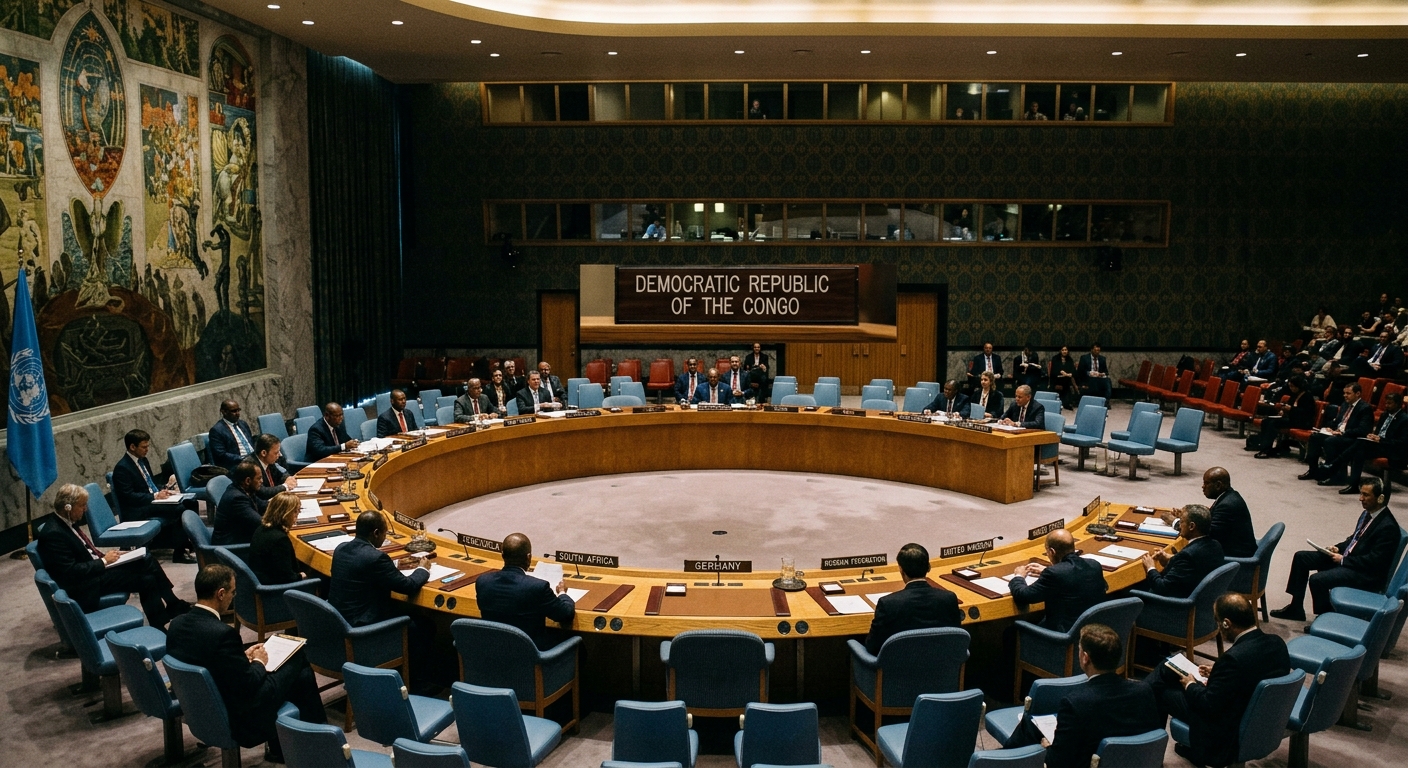
Today's session is chaired by Democratic Republic of the Congo Prime Minister Judith Suminwa Tuluka, whose government holds the July presidency and whose eastern provinces produced more verified cases than any other setting in the report. The concept note from Kinshasa, previewed by Newsy Today, pushes members to make sexual violence a stand-alone criterion for targeted sanctions and to route survivor voices directly into Council decision-making. That framing is not accidental: the DRC needs the sanctions lever to bite on M23 and its backers, but it is asking a Council in which the two vetoes it most needs — from Washington and, especially, Moscow — are the ones now shielding listed actors.
The numbers behind the debate
The 2026 report — signed off on April 21, made public on May 29, and mandated by Security Council resolution 2467 (2019) — documents a scale of brutality that Special Representative Pramila Patten calls "a staggering increase of over 100 per cent from the previous year." In her
remarks in Rome on June 10, Patten warned that verified cases remain "indicative, rather than comprehensive," noting that humanitarian providers estimate 10 to 20 unreported cases for every one reaching a clinic. The report also flags that women and girls account for over 90 per cent of verified victims, with ages spanning from one year old to 75, and that more than 65 per cent of the parties on the annex are "persistent perpetrators" who have appeared on the list for five or more consecutive years — the exact category resolution 1960 (2010) empowered the Council to sanction as a matter of intent.
The geography is unforgiving. In eastern DRC, service providers recorded over 90,000 cases between January and September 2025, with UN-verified incidents up 86 per cent year-on-year, driven by M23 gains around Goma. In Sudan,
UN monitors documented 546 incidents against 838 victims since April 2023, and the Strategic Initiative for Women in the Horn of Africa put its own tally at
nearly 1,300 cases, attributing 87 per cent of identified perpetrators to the RSF. In the RSF's October 2025 seizure of El Fasher, the UN human-rights office found
"reasonable grounds" that systematic sexual violence, mass killings and starvation amounted to war crimes and a possible crime against humanity. Haiti's caseload — 1,668 women and 187 girls verified in 2025 alone — is the other axis of the crisis, one the DRC concept note flags as a test case for deploying Women's Protection Advisers to the UN Integrated Office in Port-au-Prince.
The annex problem: shame without sanction
The genuinely new feature of the 2026 report is the annex. For the first time, the Secretary-General has listed Russian armed and security forces — the Federal Penitentiary Service, the FSB, and the armed forces themselves — for conflict-related sexual violence documented in Ukraine, where Patten reports
sexual and gender-based violence rose 36 per cent since 2022. The Israel Defense Forces, the Israel Prison Service and the border police counter-terror unit are listed for detention-setting violations in Israel and the State of Palestine. Both governments have rejected their inclusion. Both have permanent-member protection: Moscow directly, Israel through Washington's veto.
That matters because resolution 2467 gave the annex teeth in principle. Its paragraph 10 urges sanctions committees to "apply targeted sanctions against those who perpetrate and direct sexual violence in conflict" where designation criteria allow. The Secretary-General's
own recommendations for 2026 go further: sanctions should be applied to any perpetrator listed for five or more years without remedial action, and sexual violence should become "a stand-alone designation criterion" across all regimes. Yet only five UN sanctions regimes — the Central African Republic, DRC, Mali, Somalia and South Sudan — currently use sexual violence as a designation criterion, and CAR is
the sole regime where it is stand-alone. Myanmar, Ukraine, Palestine and Haiti have no such trigger. The Council's own gender-based lever cannot reach half its own annex.
The El Fasher case shows how the workaround now runs through non-UN sanctions instead. The UN Security Council did eventually sanction four RSF commanders — including Abdul Rahim Hamdan Dagalo, brother of the RSF chief — but only after the United States, the United Kingdom and the European Union had done so first, and only after Amnesty International and the UN fact-finding mission had documented "three days of horror." The ICC's mandate remains geographically capped:
Human Rights Watch notes that even 20 years after resolution 1593 (2005), the Court's jurisdiction is limited to Darfur, despite the fact-finding mission's call for the Council to extend it nationwide. Prosecutor Karim Khan's office is
pursuing new warrants for post-2023 crimes in West Darfur, but Sudan's cooperation remains partial and the SAF-RSF war continues unabated.
The invisible losers: donor withdrawal at the survivor end
The second, quieter power shift in the room is fiscal. As UN monitors register the highest annual caseload on record, the world's largest donor to survivor services has walked out. The Trump administration's January 20, 2025 executive order suspending foreign aid, followed by the March rescissions message, targeted precisely the programming that keeps rape survivors alive after 72 hours — clinical management of rape, post-rape kits, HIV prevention, psychosocial support. The
White House proposal explicitly framed "family planning," "reproductive health" and "'equity' programs" as antithetical to American interests. Congress approved $7.9 billion in rescissions in July 2025.
The downstream numbers are stark. A U.N. Women survey published in October 2025 and reported by NPR found that over 40 per cent of organisations working to end violence against women and girls had to scale back life-saving services or shut down in the previous year; the Women's Refugee Commission tallied more than $400 million in U.S. cuts to grants explicitly tied to gender-based violence. Domestically,
NPR reported that on April 1, 2025 — the first day of Sexual Assault Awareness Month — HHS fired most of the CDC's Division of Violence Prevention. Overseas,
International Crisis Group estimated that the family-planning freeze alone would deprive 11.7 million women and girls of care in its first year.
Read against the report's own diagnosis — that "acute funding cuts to United Nations entities hollowed out assistance to survivors, shuttering women and girls' safe spaces and reducing services" — the U.S. retreat has effectively doubled as an atrocity accelerant. The named beneficiaries: armed actors who exploit the vacuum. The named losers: the 45,095 DRC survivors receiving specialised care under Kinshasa's interim measures programme, whose external funding stream is drying up.
Diplomat View
The forecast: today's open debate produces a strong presidential statement, no resolution, no new sanctions trigger. The DRC will get language commending survivor-centred approaches and calling on sanctions committees to consider CRSV information more systematically; Russia and Israel will formally reject the annex from the floor. What would change this forecast is narrow and identifiable — a European-led draft resolution establishing sexual violence as a stand-alone designation criterion across all sanctions regimes, or a French or UK move to table extending the ICC's Sudan jurisdiction beyond Darfur along the lines the fact-finding mission has urged. Neither is on the near-term programme of work.
The structural point is harder. The Women, Peace and Security architecture built between 2000 and 2019 — resolutions 1325, 1820, 1888, 1960, 2106, 2467 — was designed for a Council in which the annex would list mainly non-state actors and pariah regimes. It was not designed to list two of the P5's most consequential state clients. The 2026 annex is where that mismatch finally breaks the surface. Absent a rewiring of the sanctions link, the Council will spend the next decade producing better data on atrocities it has less and less capacity to punish.
What to watch next:
- October 23, 2026: MONUSCO mandate renewal — the fight over whether Women's Protection Advisers stay funded into the drawdown will be the first concrete test of today's rhetoric, per the
UN programme of work.
- Late October 2026: the annual Women, Peace and Security open debate marking 26 years of resolution 1325 — the venue where any push for a stand-alone CRSV sanctions criterion would surface as draft text.
- Q4 2026: ICC Prosecutor's next report to the Council under
resolution 1593, expected to include new arrest-warrant applications for post-2023 West Darfur crimes.
The Bottom Line
The Council now has the data, the annex, and the legal framework to sanction sexual violence as a threat to international peace and security — and, for the first time, it has listed permanent-member forces and a close U.S. ally among the perpetrators. That is why nothing decisive will happen today. The 2026 debate marks the moment the "list of shame" outgrew the sanctions machinery designed to enforce it, and the moment donor withdrawal quietly turned the survivor-services architecture from a global commitment into a patchwork of collapsing local programmes.
Discover more

US Politics
US Military Funding Request for Iran Looms
The White House Budget Director signals a formal funding request for military operations against Iran, foreshadowing rising tensions and congressional clashes.

India
Delhi CM Rekha Gupta Blasts Opposition's Delm
Delhi CM Rekha Gupta's remarks on women's quota defeat reveal BJP's strategy for the 2029 Lok Sabha elections, focusing on delimitation.

US Politics
White House Pressures Congress for Crypto Leg
The Trump administration's push for the CLARITY Act aims to reshape crypto regulation, impacting trillions in market value and the Trump family's wealth.

Economics
Fed's Amex AML order puts correspondent banking on notice
Federal Reserve's Amex AML order requires board-level controls and a 90-day plan; OCC fined the bank $350 million over enterprise-wide deficiencies.