SCOTUS Confirms Federal Jurisdiction in Arbit
Supreme Court rules on arbitration award jurisdiction
Model Diplomat7 min readNorth America
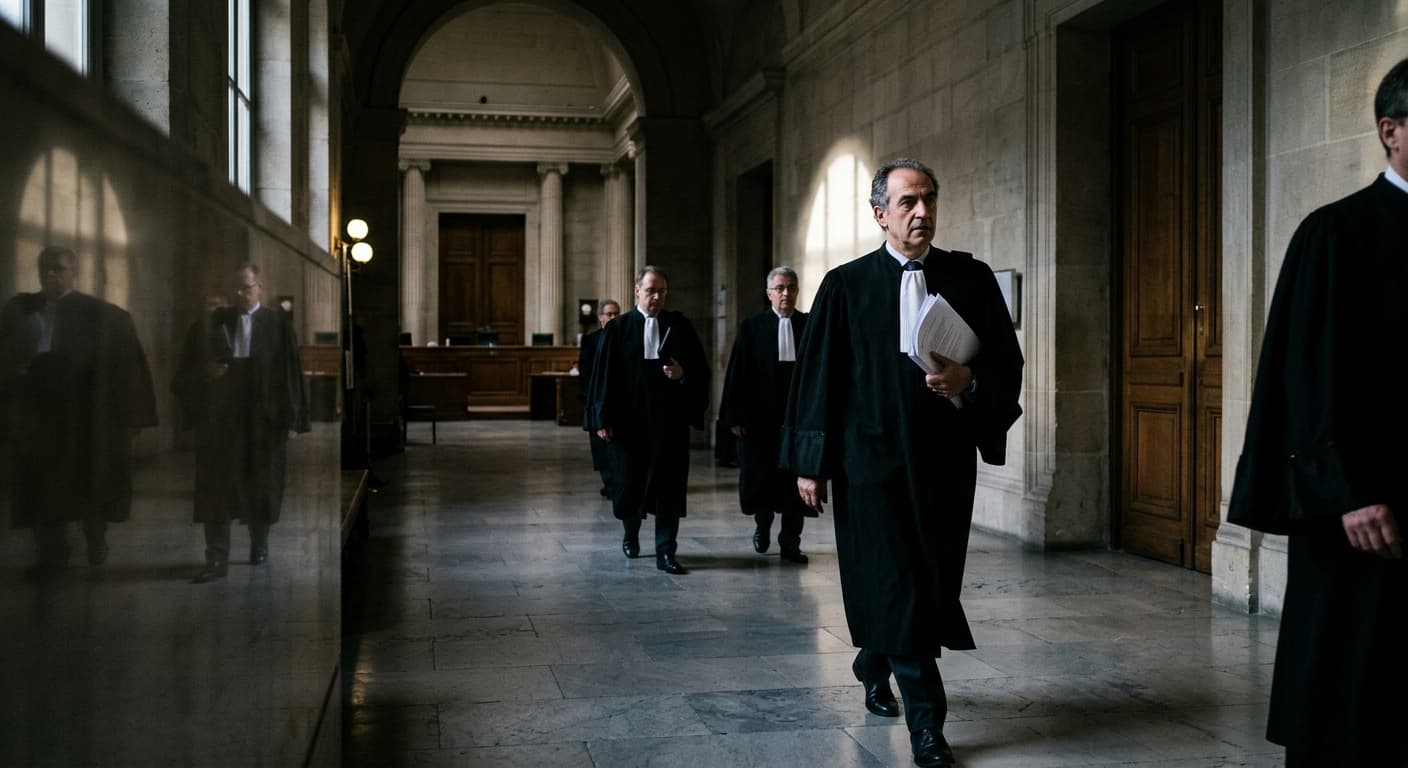
SCOTUS Locks In Federal Forum For Arbitration Awards
Jules v. Andre Balazs Properties (May 14, 2026) unanimously holds that federal courts keep jurisdiction to confirm or vacate arbitration awards in cases they stayed under FAA § 3.
The Supreme Court's unanimous decision in Jules v. Andre Balazs Properties, handed down May 14, 2026, quietly rewires the map of American arbitration enforcement — and the biggest beneficiary is not the winning plaintiff but the U.S. Chamber of Commerce, whose members can now route almost any commercial dispute into a federal forum by filing (or removing) in federal court before compelling arbitration. In an opinion by Justice Sonia Sotomayor, the Court held that a federal court that stays a suit under § 3 of the Federal Arbitration Act retains subject-matter jurisdiction to confirm or vacate the resulting award under §§ 9 and 10, even when those post-award motions would not, standing alone, satisfy federal jurisdictional requirements. That single sentence narrows the reach of Badgerow v. Walters (2022), resolves a four-year circuit split, and shifts the strategic center of gravity in FINRA, JAMS and AAA disputes from state courts to federal district courts.
What the Court held — and what it did not
The case arose from a mundane employment fight. Adrian Jules, a security guard laid off from West Hollywood's Chateau Marmont in March 2020, filed a discrimination suit in the Southern District of New York, invoking both federal-question and diversity jurisdiction. The district court stayed the case under FAA § 3 in May 2021 after finding Jules's claims covered by his arbitration agreement. The arbitrator ruled entirely against Jules and awarded roughly $34,500 in sanctions to the respondents, according to the slip opinion issued by the Court.
When the parties returned to the district court, Jules argued that under Badgerow the court now lacked jurisdiction over the § 9 and § 10 motions because they raised only state-law issues on their face. Justice Sotomayor's opinion rejected that framing. "Jurisdiction to decide [a] case includes jurisdiction to decide [a] motion" within that case, she wrote, quoting the Court's own Badgerow opinion — and nothing in the FAA "eliminated that jurisdiction while the parties arbitrated," according to the
syllabus published by Cornell's Legal Information Institute.
The distinction is narrow but decisive. Badgerow had asked whether a court, presented for the first time with a bare § 9 or § 10 application, could "look through" that application to a state-law dispute in search of federal jurisdiction. The answer was no. Jules asks the opposite question: whether a court that already possesses jurisdiction over a live federal case loses it because the parties detoured into arbitration. The answer, again unanimously, is no. As one practitioner summary in the National Law Review put it, "the federal court does not relinquish its jurisdiction over the claims by compelling arbitration."
Crucially, Jules does not transform the FAA into an independent grant of federal jurisdiction. Standalone applications to confirm or vacate — the Badgerow fact pattern — still require diversity or an award-face federal question. The Jules rule instead affirms what the Second Circuit had called the "jurisdictional anchor" theory: the original federal filing is the anchor, and everything downstream stays tethered to it.
The circuit split that forced the Court's hand
The unanimity masks how sharp the pre-decision disagreement was. Before Jules, at least five federal circuits had endorsed some version of the anchor theory, tracing it back to dicta in Cortez Byrd Chips, Inc. v. Bill Harbert Construction Co., 529 U.S. 193 (2000), and pre-Badgerow circuit precedent such as the Second Circuit's Smiga v. Dean Witter Reynolds. The Fourth Circuit had gone the other way in SmartSky Networks, LLC v. Wireless Systems Solutions, LLC, reading Badgerow to require an independent jurisdictional basis at every stage. Jules's counsel argued in his merits brief that the anchor theory has "no textual support" anywhere in §§ 9 and 10, and that the FAA envisions those applications as "standalone actions requiring their own jurisdictional bases, not as motions in an underlying federal case."
The respondents — represented by former Deputy Solicitor General Daniel Geyser — countered that the FAA's structure treats post-arbitration motions as adjuncts to the live case, not as new lawsuits. Their brief emphasized that the district court had "retained jurisdiction over the stayed matter and required the parties to submit periodic status reports" — the litigation never actually left federal court.
Sotomayor's opinion sided with that structural reading and layered on a workability argument. Under Jules's rule, she wrote, "confirm-or-vacate proceedings would likely commence in state court just as the arbitrability appeal begins in federal court," creating the risk that "a state court may confirm an arbitral award on claims that a federal court of appeals may ultimately hold were never properly subject to arbitration in the first place." That dual-track nightmare — flagged in the Cornell LII case bulletin as a central respondent argument — seems to have carried the Court's centrist bloc.
Who wins: the Chamber's quiet victory
The most-cited amicus brief in the case came from a single organization: the U.S. Chamber of Commerce, representing what it described as "approximately 300,000 direct members" and indirectly more than three million companies. Its argument was blunt: state courts are "hostile" to arbitration, and forcing enforcement into state forums would make commercial arbitration clauses "less reliable" and "discourage arbitration."
That framing — long-standing Chamber doctrine — now has a unanimous Supreme Court behind it. Sotomayor's opinion echoes it in policy terms, warning that Jules's rule "would also undermine the efficiency interests at the heart of the FAA by forcing parties who were previously in federal court (often, as here, against their wishes) to launch a fresh state-court proceeding, complete with 'a new filing fee,' to secure confirmation or vacatur of an arbitral award."
The second-order effect is where the ruling starts to bite. Katten's post-decision client alert — which specifically flagged implications for FINRA and NFA arbitrations — spelled out the new playbook: "The Jules decision incentivizes parties who wish to adjudicate any such post-arbitration proceedings in federal court to either file suit there or, if defending, remove a state court case to federal court before compelling arbitration and seeking a stay." Broker-dealers, futures commission merchants and prop-trading firms — Katten's actual clients — now have a template to lock in a federal forum at the outset of nearly any customer or employment dispute.
Employees like Adrian Jules are the mirror image. Jules won this case on jurisdiction and lost on everything else — his own merits brief concedes the Second Circuit affirmed the district court's determination that there was "no reason to vacate the award." He goes home with a $34,500 sanction against him and a legal footnote bearing his name.
The Badgerow paradox
The most interesting doctrinal implication is what Jules does — and does not do — to Badgerow. Justice Elena Kagan's 2022 opinion in Badgerow v. Walters held 8–1 that §§ 9 and 10 of the FAA lack the "save for [the arbitration] agreement" language of § 4, and therefore cannot support look-through jurisdiction. Justice Stephen Breyer's lone dissent warned that the majority had "tried to split what is, or should be, a single jurisdictional atom." He predicted that parties would begin using "a federal-question lawsuit or Section 4 motion as a jurisdictional anchor" to work around the ruling — the exact mechanism Jules has now formally sanctioned.
In effect, the Court has adopted Justice Breyer's descriptive prediction as its holding while insisting it is merely completing Badgerow's logic. That is defensible as a matter of doctrine — Badgerow dealt with a case "commenced . for the sole purpose of vacating an arbitral award," a phrase Sotomayor repeats — but it also confirms Breyer's underlying worry: outcomes in FAA cases now turn on the "happenstance" of procedural posture. A dispute filed first in state court and never removed lives and dies in state court. The same dispute, removed one day earlier, plays out in federal court from stay to award to enforcement.
What to watch next
1. Removal strategy in employment and consumer arbitration. Look for a spike in defense-side removal motions in 2026–2027 in cases with federal-question hooks (Title VII, FLSA, Dodd-Frank whistleblower, ERISA). Jules makes removal a jurisdiction-locking maneuver, not just a forum preference. Class-action defense firms are already advertising the workaround.
2. FINRA and NFA post-award litigation. Katten and other SRO-defense specialists have flagged securities and commodities arbitrations as the highest-volume beneficiary. Watch for a rise in federal-court motions to compel arbitration filed as a defensive prelude to eventual § 9 confirmation.
3. The Fourth Circuit's next move. SmartSky is now effectively abrogated. Expect the Fourth Circuit to signal its acceptance in the next post-award appeal — or, less likely, to try to preserve some sliver of independent-basis review at the margins.
4. Legislative pushback. Consumer and worker-side groups have been lobbying for FAA reform since Epic Systems (2018). A unanimous, Chamber-endorsed pro-arbitration decision authored by a liberal justice removes the ideological cover that has previously restrained Democratic legislators from moving on the issue. The next FAIR Act reintroduction is the tell.
The Bottom Line
Jules v. Andre Balazs Properties does not expand federal jurisdiction on paper — it clarifies that a stay is not an exit. But by giving the "jurisdictional anchor" theory a unanimous Supreme Court seal, the decision hands corporate defendants a durable procedural tool: file or remove first, arbitrate second, enforce in federal court third. That is the pipeline the Chamber of Commerce has spent a decade building through litigation. Jules is the final weld.
Discover more

US Politics
SNAP Food Assistance Faces Legal Challenges
In 2026, SNAP faces stricter eligibility rules and mounting legal challenges, threatening food assistance for the millions of Americans who rely on the program.
US Politics
Congress Targets AI Chatbot Access for Terror
The House passed the Generative AI Terrorism Risk Assessment Act, focusing on AI's role in terrorism and potential surveillance implications.
US Politics
House Ethics Committee Pushes Sexual Miscond.
The House Ethics Committee has shifted responsibility for sexual harassment settlement records to the Office of Congressional Workplace Rights, complicating disclosure efforts.

Economics
Fed's Amex AML order puts correspondent banking on notice
Federal Reserve's Amex AML order requires board-level controls and a 90-day plan; OCC fined the bank $350 million over enterprise-wide deficiencies.