Rutte's Ankara IP4 Meeting: Arms Focus
NATO's Indo-Pacific engagement narrows to defense deals.
Model Diplomat8 min readAsia-Pacific
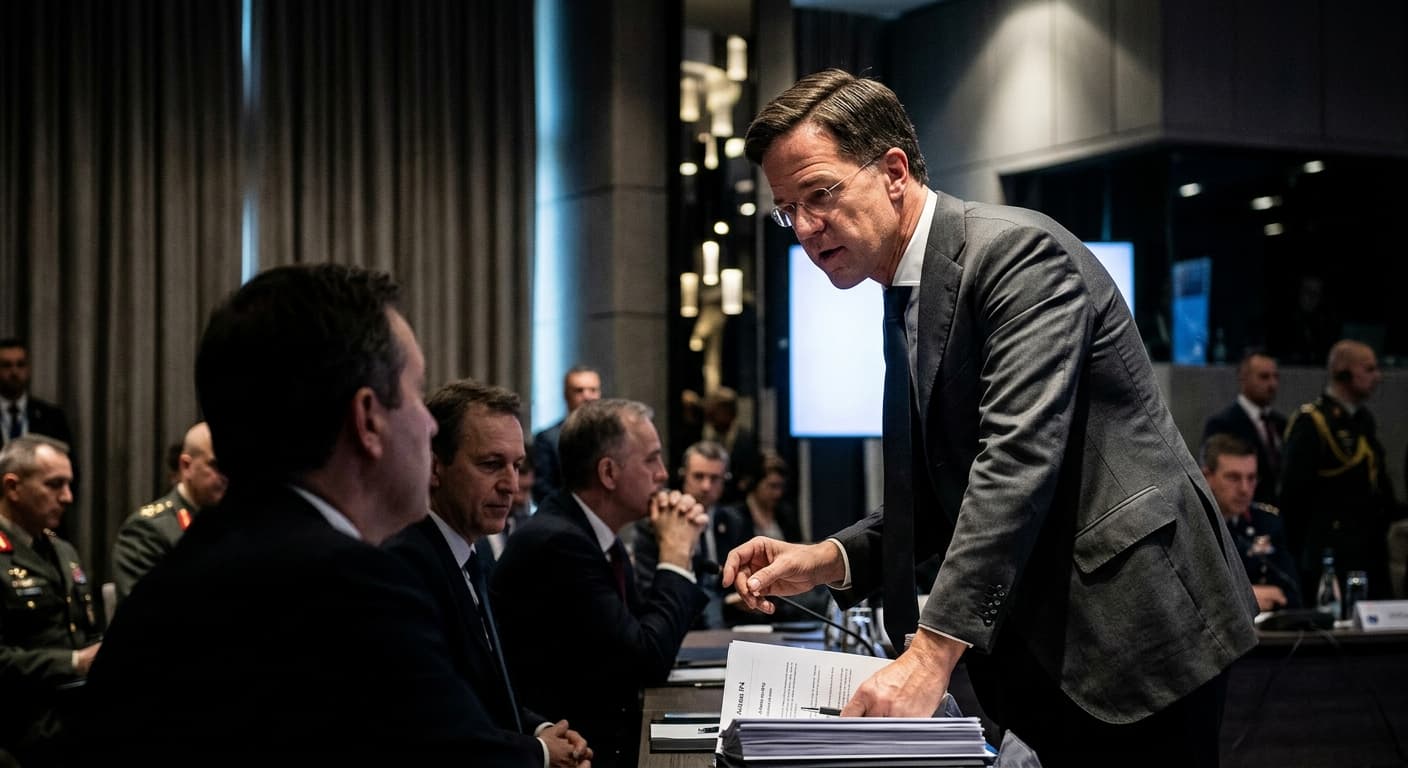
Rutte's Ankara IP4 huddle: an alliance narrowing to arms deals
NATO chief Mark Rutte hosted South Korea's Lee, Japan's Motegi and Koizumi, and Australian and New Zealand ministers in Ankara on July 7, 2026, as the alliance's Indo-Pacific engagement quietly narrowed to defence industry.
NATO's Indo-Pacific "partnership" survived contact with a second Trump term on July 7, 2026, but it survived only by shrinking. Secretary General Mark Rutte hosted the IP4 — Australia, Japan, New Zealand and South Korea — on the sidelines of the Ankara summit, yet only Seoul sent its head of state. The thesis of the day is simple and uncomfortable for Beijing's critics: what began in Madrid in 2022 as a political bridge between two theatres has been quietly pared down to a defence-industrial supply arrangement, in which South Korea holds the leverage because Europe cannot rearm Ukraine, or itself, without Korean shells and Korean tanks.
That reframing — from a "global NATO" ambition to a coproduction club — is the story of Ankara, and it is why Lee Jae Myung was the only IP4 leader in the room.
What actually happened in Ankara
The IP4 ministerial ran alongside the 36th NATO summit, which Turkey hosted from July 7–8 with all 32 allied heads of state and government, plus Ukraine's Volodymyr Zelenskyy. According to Al Jazeera, "two non-alliance heads of state" were present in Ankara: Zelenskyy and Lee. Australia, Japan and New Zealand sent defence or foreign ministers — a downgrade Chatham House had flagged after the 2025 Hague summit, when
three of four IP4 heads of government skipped and analysts warned the relationship was "cooling."
Rutte's framing was the by-now-standard NATO line. Speaking at the NATO Summit Defence Industry Forum, he pointed to threats from "China, North Korea and Iran" alongside Russia and warned that "these countries are increasingly working together," as
Al Jazeera reported. The IP4 readout — carried by
The Mainichi — flagged defence-industry cooperation, cyber and "advanced technologies." No new flagship projects were unveiled to match the four (Ukraine support, cyber, disinformation, AI) that Washington produced in 2024.
The one moment of substance came from Lee. Speaking at the industry forum, the South Korean president proposed upgrading Seoul's existing NATO relationship to a "South Korea–NATO defence industry partnership 2.0," involving "not only arms exchanges but joint research, production and operation of weapons systems." He framed the pitch around the war on his own peninsula. As the
Herald Business reported from Ankara, Lee told the small-group IP4 meeting that the Korean Peninsula's persistent conflict risk was the "foundation" for Korean defence industry's credibility as a NATO partner.
Translation: Seoul is monetising the North Korean threat in the European market. Rutte accepted the bid.
Why the delegation levels matter more than the communiqué
The optics tell you everything about how the political ambition has thinned. In 2022, Madrid was the moment NATO's Asia-Pacific pivot was declared — the Council on Foreign Relations notes that the Madrid Strategic Concept "for the first time" named Chinese "ambitions and coercive policies," with all four IP4 leaders in the room. In Washington in 2024, the joint declaration still called Beijing a "decisive enabler" of Russia's war — language China's mission to the EU condemned as
"Cold War mentality", triggering four new IP4 flagship projects.
Ankara produced no equivalent. The Trump administration made clear it does not want NATO to develop an Asia policy that could bind Washington's own escalation choices around Taiwan; the Center for Strategic and International Studies frames "NATO 3.0" as a division of labour in which Europeans do more in Europe precisely so Washington can concentrate on China alone. In that architecture, the IP4 is useful as an industrial base and as a signalling device — not as a coalition with its own voice on Taiwan or the South China Sea.
That is why three of four Indo-Pacific capitals decided a minister was enough. Japan's new prime minister Sanae Takaichi, who took office late in 2025, sent Foreign Minister Toshimitsu Motegi and Defense Minister Shinjiro Koizumi — a serious pairing, but not the political weight that comes with a head of government. Australia and New Zealand did the same. Only Lee, needing something concrete from Europe, flew in personally.
The regional backdrop Rutte cannot ignore
The Ankara meeting sits atop a genuinely deteriorating security picture in Asia — one the IP4 partners came to Turkey to point at, even if the alliance has fewer tools than it pretends. In the last six weeks alone, Taiwan's defence ministry has tracked repeated "joint combat readiness patrols" by the People's Liberation Army around the island; Al Jazeera reported on May 26 that 29 Chinese aircraft and seven warships operated around Taiwan in a single day, with Taipei calling Beijing "the sole source of instability in the Indo-Pacific." China deployed more than 100 ships along the first island chain that same week.
On the maritime side, Beijing on June 11 sanctioned Philippine Defence Secretary Gilberto Teodoro over his South China Sea rhetoric — a further escalation from the standoffs at Scarborough Shoal that
CFR chronicled through the first half of 2026. On the Korean peninsula, the Russia–North Korea axis has hardened into permanent infrastructure. A
BBC investigation published April 2026, based on satellite imagery of Kim Jong Un's new Hwasong memorial, put the North Korean death toll in Russia's war at roughly 2,300; South Korea's National Intelligence Service estimates 6,000 killed or wounded of the 11,000 troops deployed. A new road bridge across the Tumen river — the
Khasan–Tumangang crossing — opened in June 2026 to institutionalise the arms-and-labour trade.
Rutte referenced all of it in Ankara. He can do very little about any of it. That is the gap the IP4 meeting exposed — and the gap Seoul is filling.
Why Lee is the beneficiary — and Beijing lets him be
The unglamorous truth is that NATO needs South Korean industrial capacity more than the IP4 needs NATO's political blessing. According to RAND analysis published in September 2025, 46% of South Korean defence exports flowed to Poland in 2024 alone. Warsaw's $13.7 billion 2022 package — 980 K2 tanks, 648 K9 howitzers, 48 FA-50 jets — was followed by a $6.5 billion follow-on for 180 additional K2s in 2025, with technology transfer and Polish co-production baked in.
That deal architecture is exactly what "partnership 2.0" would generalise: Korean designs, European final assembly, NATO-standard interoperability, deliveries fast enough to matter to Ukraine. Rutte spent April 2026 at ASELSAN's technology base in Ankara selling exactly this vision — "produce together, innovate together, buy from each other." The IP4 pitch is the same script with Seoul substituted for Ankara.
The elegant move is that Lee has managed to sell it without alienating Beijing. Since taking office, Lee has spent political capital rebuilding ties with Xi Jinping, including a January 2026 state visit to Beijing and a K-pop-drumming charm offensive with Takaichi in Nara reported by
the BBC. Selling artillery shells to Poland is not the same as sending them to Ukraine. Building tanks in Gliwice is not the same as deploying troops to Taiwan. Lee is arbitraging the ambiguity — extracting European contracts, US strategic goodwill and Chinese forbearance simultaneously — and Ankara is the venue where he formalised it.
Beijing's tolerance has a ceiling. When Hanwha Ocean agreed to build ships in the United States, Foreign Affairs reported, China immediately sanctioned five US subsidiaries of the firm. But Seoul's calculation is that industrial cooperation inside Europe stays below Beijing's redline in a way that a defence pact would not.
What the Ankara meeting did not do
The IP4 huddle did not produce a joint communiqué naming China. It did not launch new flagship projects on the scale of the 2024 Washington four. It did not put Taiwan on paper. According to Brookings analysis, even last year's Hague summit avoided a "strategic approach to Russia" because of "US efforts to engage the Kremlin" — the same logic constrains an Asia posture. The declaration in Ankara has been kept narrow by design.
That reticence is the deliberate price of keeping Donald Trump inside the tent. NPR reported that Trump warned he might not have come at all had Erdoğan not been hosting, and the White House envisions "NATO 3.0" as a Europe-only alliance freeing Washington to concentrate on Asia bilaterally — through AUKUS, US–Japan, US–ROK, US–Philippines — rather than through a NATO framework that Beijing could portray as encirclement.
The consequence: NATO's Indo-Pacific engagement is being funnelled into the one lane the White House considers safe — defence-industrial coproduction — and the political ambition is being deferred, probably indefinitely.
Diplomat View
The Ankara IP4 meeting looked like continuity and was in fact a managed retreat. NATO's Indo-Pacific project peaked in Washington in 2024 and has since been trimmed to industrial cooperation with Seoul, cyber projects with Tokyo, and rhetorical solidarity with Canberra and Wellington. The winner of that trim is Lee Jae Myung, who has turned the IP4 seat into a marketing platform for Korean defence exports while keeping Beijing calm enough to avoid Hanwha-style retaliation. The loser is the notional "global NATO" that CFR and Brookings analysts spent 2022–2024 sketching: a Euro-Atlantic alliance willing to spell out deterrent costs to China over Taiwan.
The forecast is that this narrowing holds through 2027 — unless one of three things breaks it. The forecast would change if: (1) Beijing initiates a serious Taiwan Strait crisis that forces NATO members individually to state positions on freedom of navigation; (2) a Trump–Kim summit or a US–China deal on Ukraine sanctions cuts the IP4 out of decisions that directly concern them; or (3) Japan under Takaichi decides to elevate its next NATO appearance to prime-ministerial level and push for language on Taiwan the Trump administration will not want to see. None looks likely before the 2027 summit.
What to watch next
- September 2026: The NATO–IP4 defence-industry working group is expected to report on interoperability standards for munitions and air defence — the concrete test of Lee's "partnership 2.0."
- October–November 2026: APEC and East Asia Summit season, where Lee and Takaichi will each face pressure from Beijing over their Ankara appearances.
- Q1 2027: The Pentagon's six-month Europe force-posture review — announced by Defense Secretary Pete Hegseth per
NPR — reports out, defining how much US bandwidth is left for the Indo-Pacific and how much Europe (and by extension the IP4) will have to backfill alone.
The story of Ankara is not that NATO went to Asia. It is that Asia — specifically, one Asian capital with an arms industry — came to NATO, and set the terms.
Discover more
Global Politics
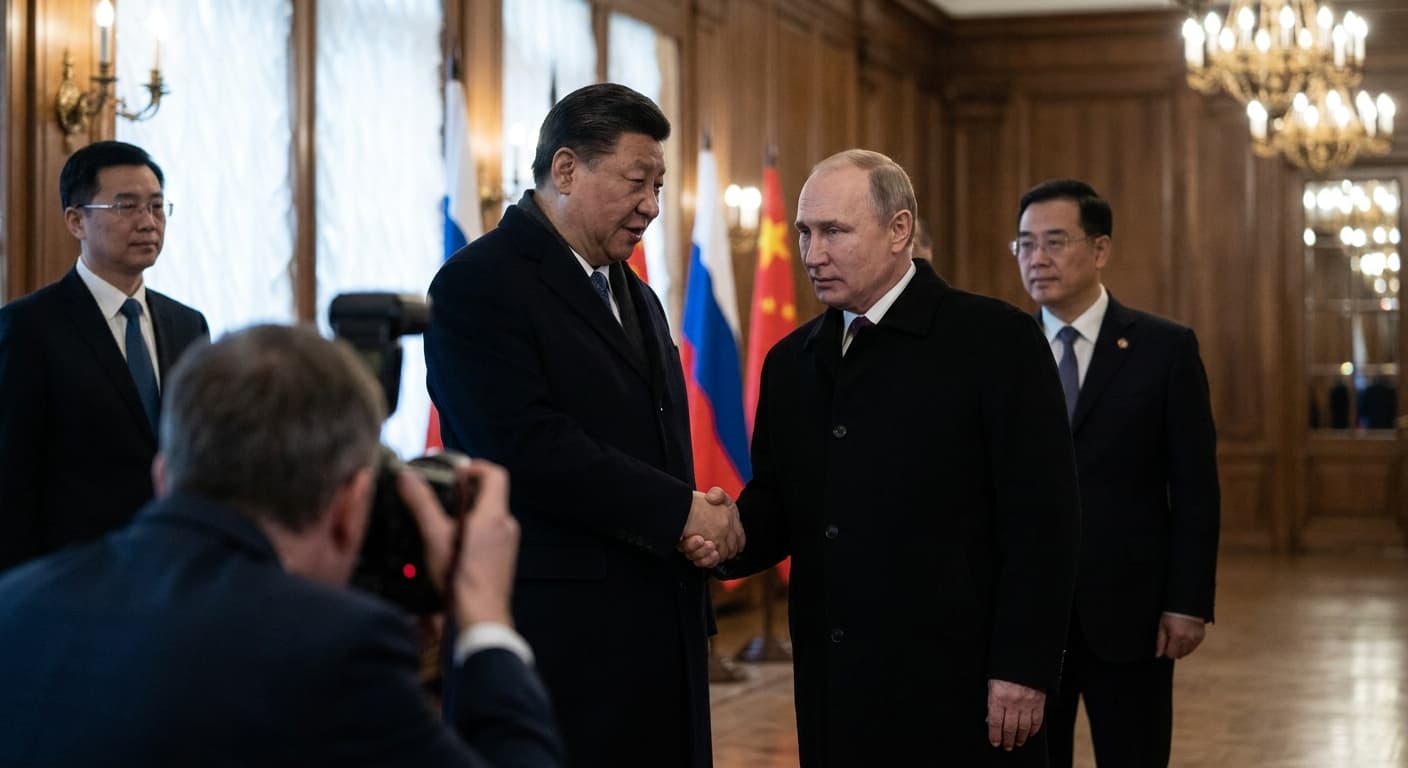
Xi Jinping Calls China-Russia Ties 'Precious'
Xi Jinping's description of China-Russia ties as 'precious' reflects a strategic imbalance, with Beijing dictating terms in the partnership.
India
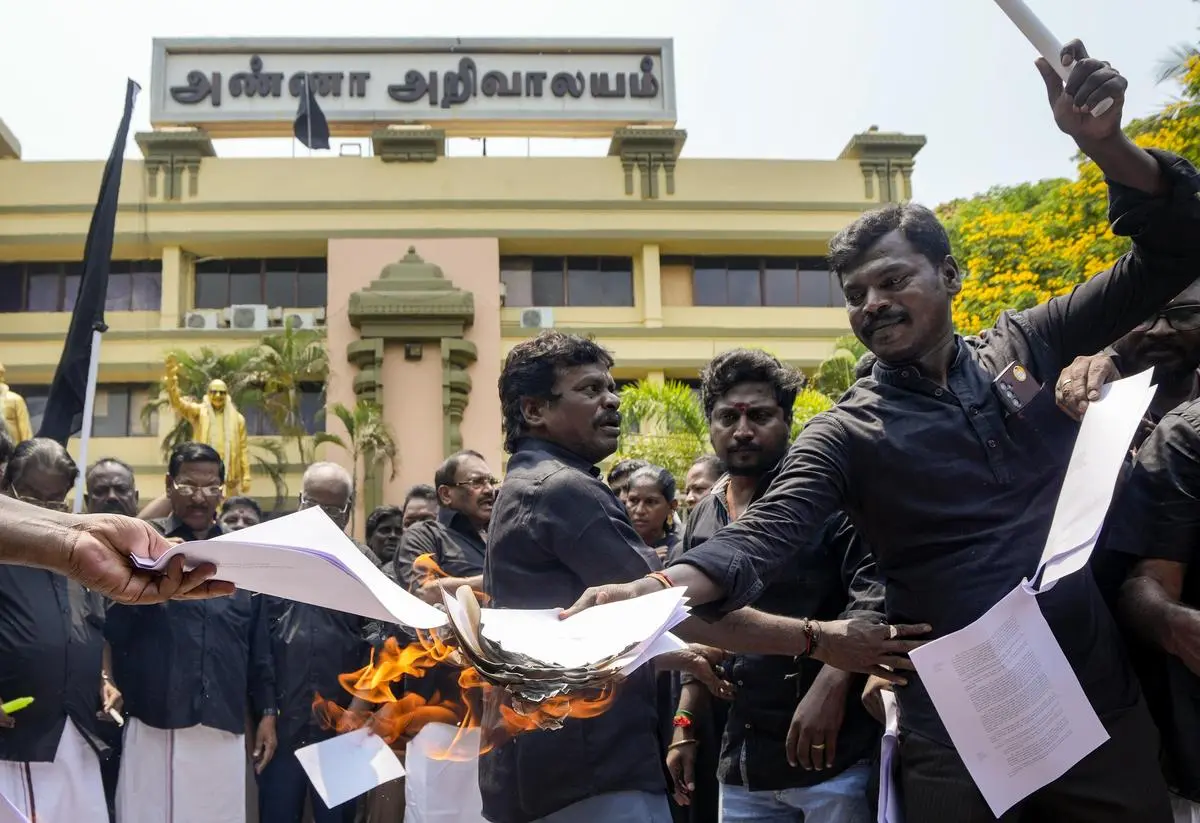
Women’s Reservation Bill 2026
The Constitution (131st Amendment) Bill, 2026 was defeated in Lok Sabha, revealing deeper political conflicts over women's reservation and delimitation.
India
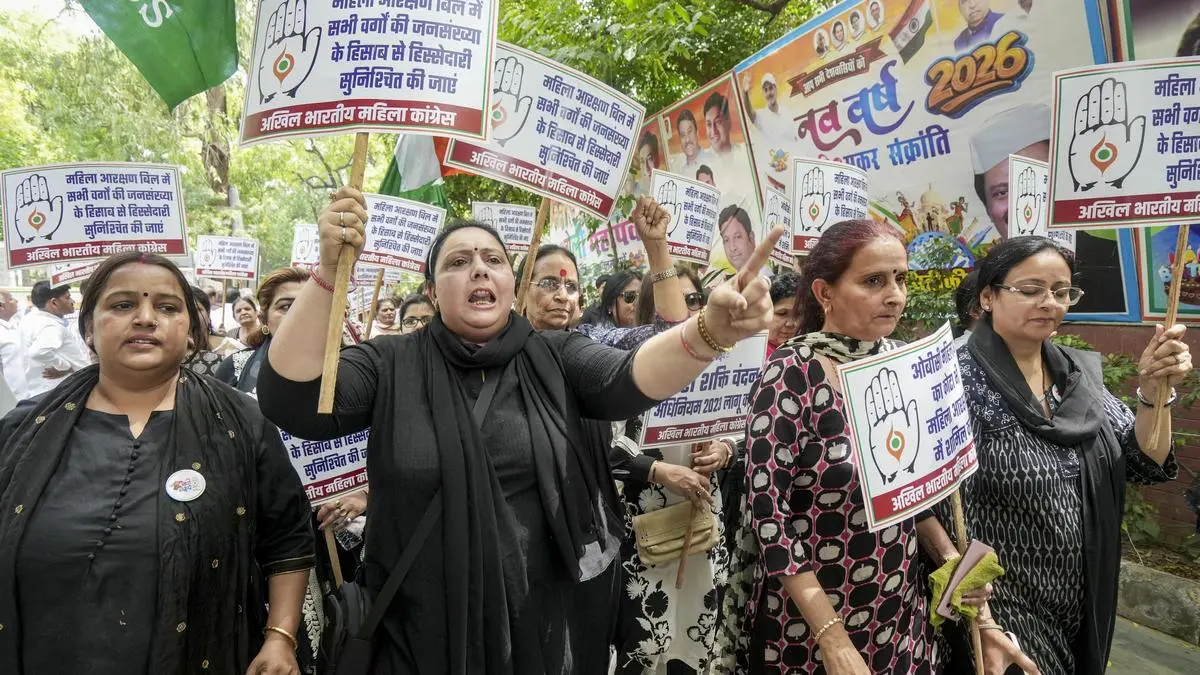
BJP's Misunderstanding of Women's Quota Needs
The BJP's linking of the Women Reservation Bill to delimitation risks delaying women's empowerment in India, misreading the aspirations of female voters.

Conflict & Security
Drone Warfare Killing Aid Workers at Unprec
Over 1,000 humanitarian workers killed in three years as cheap armed drones collapse legal protections. Gaza, Sudan, Ukraine, and DRC see deliberate targeting of aid convoys and hospitals with zero prosecutions.