Russia's Drone and Missile Assault on Ukraine
Escalating attacks raise concerns over civilian safety in Ukraine
Model Diplomat3 min readUkraine
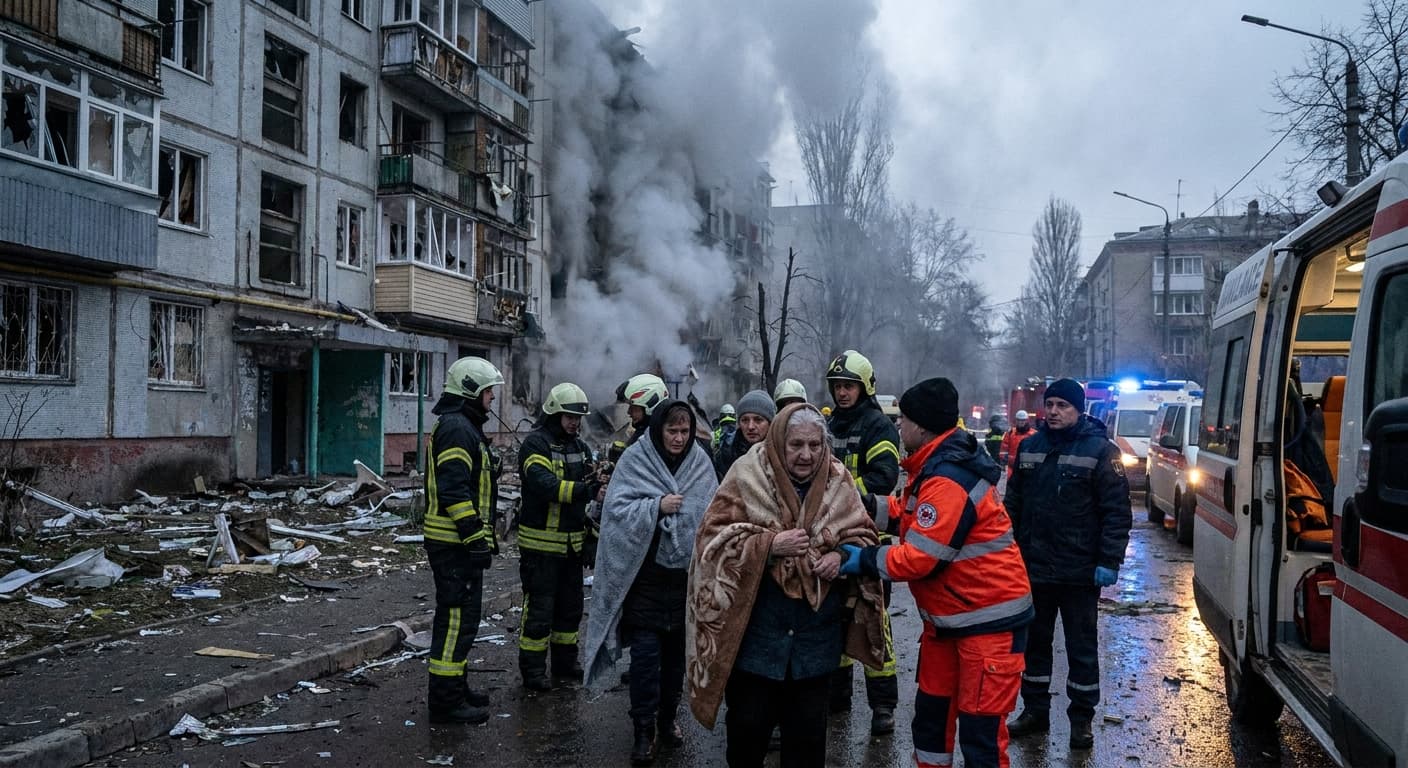
Russia’s Drone and Missile Barrage on Ukraine: Civilian Toll Highlights Escalation Risks
Russia launched a massive waves of drones and missiles against Ukraine’s civilian centers, killing 16 and injuring over 80, signaling an alarming escalation in long-range attacks.
On April 17, 2026, Russia executed a large-scale assault on Ukraine, unleashing hundreds of drones and dozens of missiles in an hourslong bombardment that caused at least 16 deaths and wounded over 80 civilians across multiple regions, including the capital, Kyiv AP News. The strikes repeatedly hit civilian infrastructure—residential areas, transportation hubs, and critical facilities—underscoring Moscow’s willingness to intensify pressure through indiscriminate aerial attacks.
Why This Matters: The Tactical and Strategic Calculus Behind the Bombardment
This multi-pronged missile and drone offensive marks the most extensive aerial strike Russia has launched against Ukraine in months, reflecting a shift toward sustained, high-volume bombardments designed to degrade Ukraine’s defensive capabilities while spreading fear among the civilian population.
The use of hundreds of drones—an increasingly common tool in this war—illustrates Russia’s investment in low-cost, highly maneuverable weaponry to overwhelm Ukraine’s air defenses. Massive saturation attacks complicate Kyiv’s ability to intercept effectively and force Ukraine to divert significant resources to air defense rather than frontline operations.
Notably, the targeting of civilian areas indicates Russia’s ongoing strategy to undercut Ukraine’s will to fight by maximizing societal disruption and infrastructure damage. This aligns with Moscow’s broader campaign itself: blurring the lines between military and civilian targets in hopes of eroding domestic and international support for Kyiv’s resistance.
The human cost—16 dead, 80 wounded—underlines that the war remains intensely deadly for ordinary Ukrainians, even as diplomatic efforts and peace talks stall. The attacks’ scale also pressures Ukraine’s ability to maintain essential services amidst continuous emergency responses, adding a layer of war weariness to the conflict.
What’s Next: Amplifying Pressure and Possible Global Reactions
The repercussions of this strike pattern could be multifaceted:
-
Ukrainian Air Defense Strategy: Kyiv will likely reassess and prioritize missile and drone countermeasures, possibly accelerating requests for advanced Western air defense systems such as the U.S.-made Patriot or European equivalents. This dynamic could influence arms deliveries and diplomatic engagements surrounding military aid.
-
International Community Response: Repeated strikes on civilians potentially sharpen condemnations from Western capitals and may affect the tenor of sanctions or military assistance. If attacks escalate further, calls for broader international involvement or harsher punitive measures against Russia could intensify.
-
Conflict Escalation Risks: Sustained bombardments that significantly impact civilians risk internationalizing the conflict beyond current proxy dimensions. They could provoke responses from NATO countries—whether through increased material support to Ukraine or defensive measures closer to Russia’s western borders.
-
Negotiation Prospects: Ironically, this escalation could either harden Moscow’s battlefield stance or concurrently push Kyiv and Western partners to seek expedited diplomatic solutions to prevent deeper humanitarian crises.
For a broader understanding of the strategic backdrops and conflict dynamics, see our Ukraine conflict analysis and the
Russia country profile.
This episode is a stark reminder that, despite ebbing media attention at times, the Russia-Ukraine conflict remains ferociously violent with civilians caught in the crossfire. Watching how Ukraine adapts its air defenses and whether the West amplifies its support will be critical in the coming weeks.
Sources: AP News
Discover more

US Politics
House Vote on Trump Iran Strikes Reveals Divs
The House narrowly declined to block Trump from striking Iran, a close vote that laid bare deep partisan divides over war powers and U.S. military action.

Global Politics
China's New Strategy for Taiwan and Japan
China softened its stance on Taiwan and Japan, eyeing the 2028 election and regional stability as Middle East turmoil reshapes its geopolitical calculations.
Global Politics
Trump's Economic Warfare Strategy on Iran
The Trump administration escalates economic warfare on Iran, imposing new sanctions to choke its financial lifelines and sever its global economic connections.

Conflict & Security
Drone Warfare Killing Aid Workers at Unprec
Over 1,000 humanitarian workers killed in three years as cheap armed drones collapse legal protections. Gaza, Sudan, Ukraine, and DRC see deliberate targeting of aid convoys and hospitals with zero prosecutions.