Russia Shifts Drone Defense Costs to Banks
Moscow privatizes air defense amid Ukrainian drone strikes
Model Diplomat3 min readEurasia
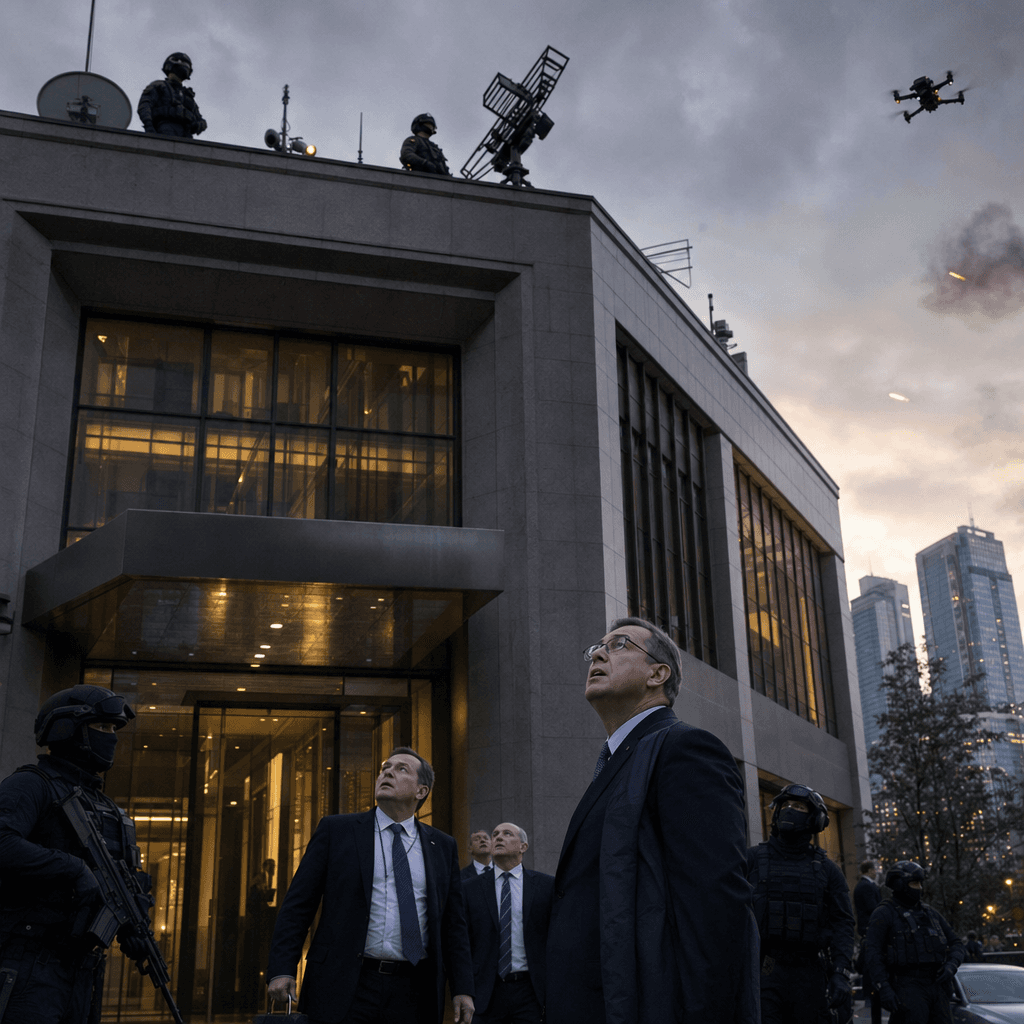
Russia Tells Banks to Shoot Down Drones and Pay the Bill
Russia is shifting drone-defense costs onto banks as Ukrainian strikes expose thin air defenses and force Moscow to privatize rear-area security.
Russia is no longer pretending its air-defense problem is purely military. The Guardian reported that Moscow has told major banks, including Sberbank, to shoot down Ukrainian drones themselves and absorb the cost, after the State Duma moved to let financial institutions operate defensive systems and arm staff without special forces involvement (The Guardian). That is a policy admission as much as a security measure: the Kremlin is signaling that it cannot fully protect every high-value site on Russian territory, so the private sector must now pay to harden the rear.
The state is pushing risk down the balance sheet
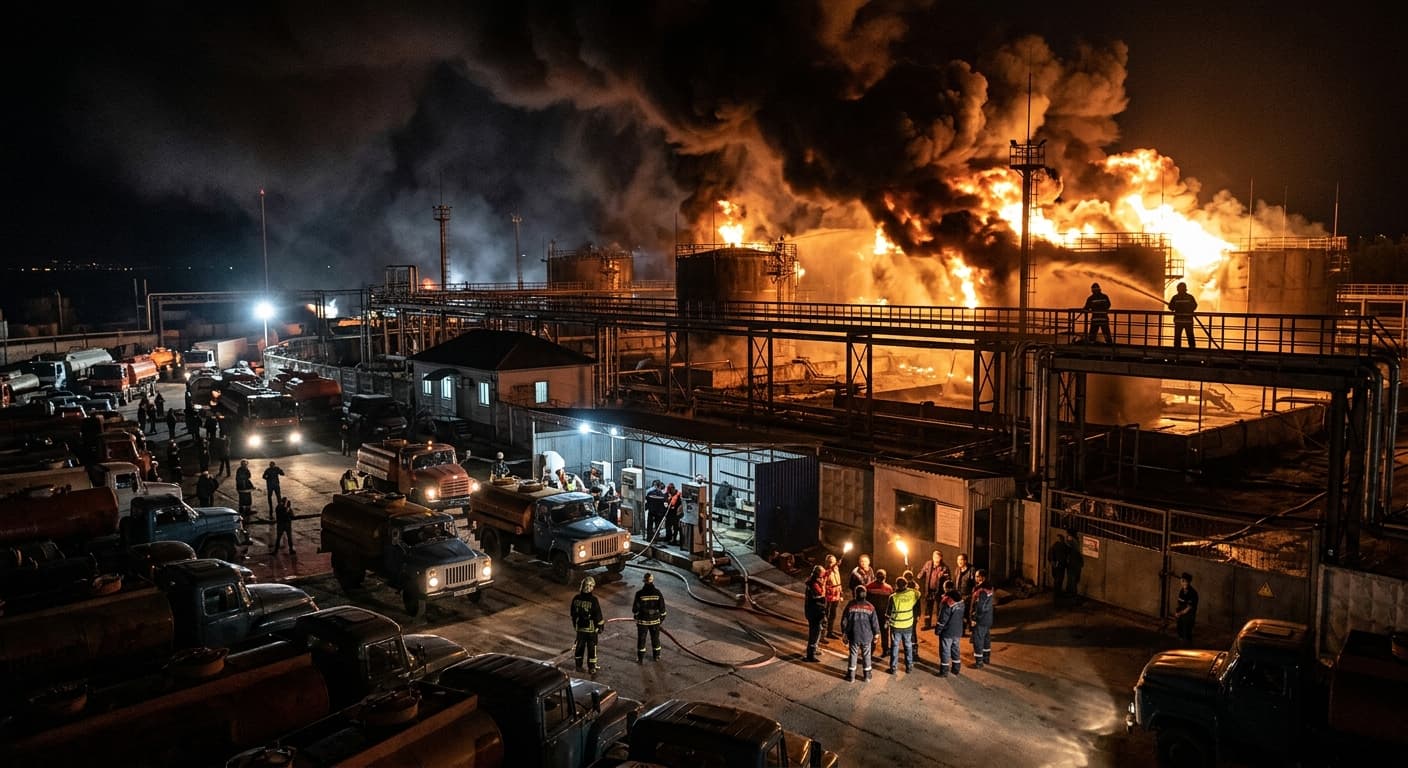
The leverage here belongs to the Kremlin. Russian air defenses are concentrated around priority areas such as Moscow, leaving large parts of the country exposed, while Ukrainian drones keep hitting the infrastructure that funds Russia’s war effort — refineries, pipelines, depots, airfields and industrial sites (The Guardian). By making banks finance their own protection, Moscow reduces pressure on the state budget and spreads the war’s costs onto institutions that are too strategic to ignore.
The immediate winners are the security services and the treasury. The losers are the banks themselves, which are being turned into quasi-defence actors while still expected to keep lending, processing payments and maintaining confidence. Once a bank has to buy air-defense equipment and arm personnel, it is no longer just a financial institution; it becomes part of the war zone. That raises operating costs, insurance risk and the incentive to relocate critical systems farther from the front.
Russia is copying a wartime model already visible in Ukraine
This move is also an acknowledgment that drone war is becoming decentralized. The BBC reported that Ukraine has already pulled private firms into air defense, with companies deploying remote machine-gun towers and cheap interceptor drones to protect sites that the state cannot cover on its own (BBC). In other words, Moscow is not inventing a new model; it is catching up to a battlefield reality in which low-cost drones can outrun expensive centralized defenses.
That matters because it changes the political economy of the war. If Ukraine can force Russia’s banks to fund their own shields, then Kyiv is not just damaging physical assets — it is imposing an across-the-board security tax on the Russian system. The Kremlin can absorb some of that in the short term, but the longer the drone campaign runs, the more corporations will price war risk into every investment decision. For readers tracking the broader conflict, this is the logic behind Conflict: the front line is increasingly defined by who can afford to defend the rear.
What to watch next
Watch whether this stays limited to banks or expands to energy, telecoms and industrial groups. Alexander Shokhin, head of Russia’s main business lobby, has already said companies are prepared to buy heavier weapons and electronic systems for self-defense (The Guardian). If Moscow broadens the order, it will be formalizing a privatized air-defense layer across the Russian economy — a sign that the state expects the drone war to intensify, not ease.
Discover more
Global
Kyiv's Empty Quiver: Ankara Summit on NATO
As Russia strikes Kyiv, NATO's Ankara summit must address Ukraine's urgent air defense needs amid dwindling interceptor supplies.
India
Russia's Balancing Act with India and China
Russia's deepening dependence on China is straining its long-standing strategic partnership with India, exposing the limits of Moscow's balancing act in Asia.
Conflict & Security
Russia Encircles Konstantinovka—Key to Donbas
Russia's encirclement of Konstantinovka could unlock the wider Donbas for further advances, marking a pivotal moment in its grinding eastern offensive.
Conflict & Security
Ukraine's Energy Offensive Hits Crimea
Ukraine's drone campaign is disrupting Russian fuel supplies and forcing rationing in Crimea, turning energy infrastructure into a key front of the war.