Rubio's Cuba Aid Claim and Pressure Tactics
Examining the dynamics of U.S. aid and sanctions on Cuba
Model Diplomat3 min readNorth America
Rubio’s Cuba Aid Claim Masks a Bigger Pressure Campaign
Rubio says Havana rejected $100 million in aid, but the real story is who controls distribution — and how Washington is pairing relief with sanctions.
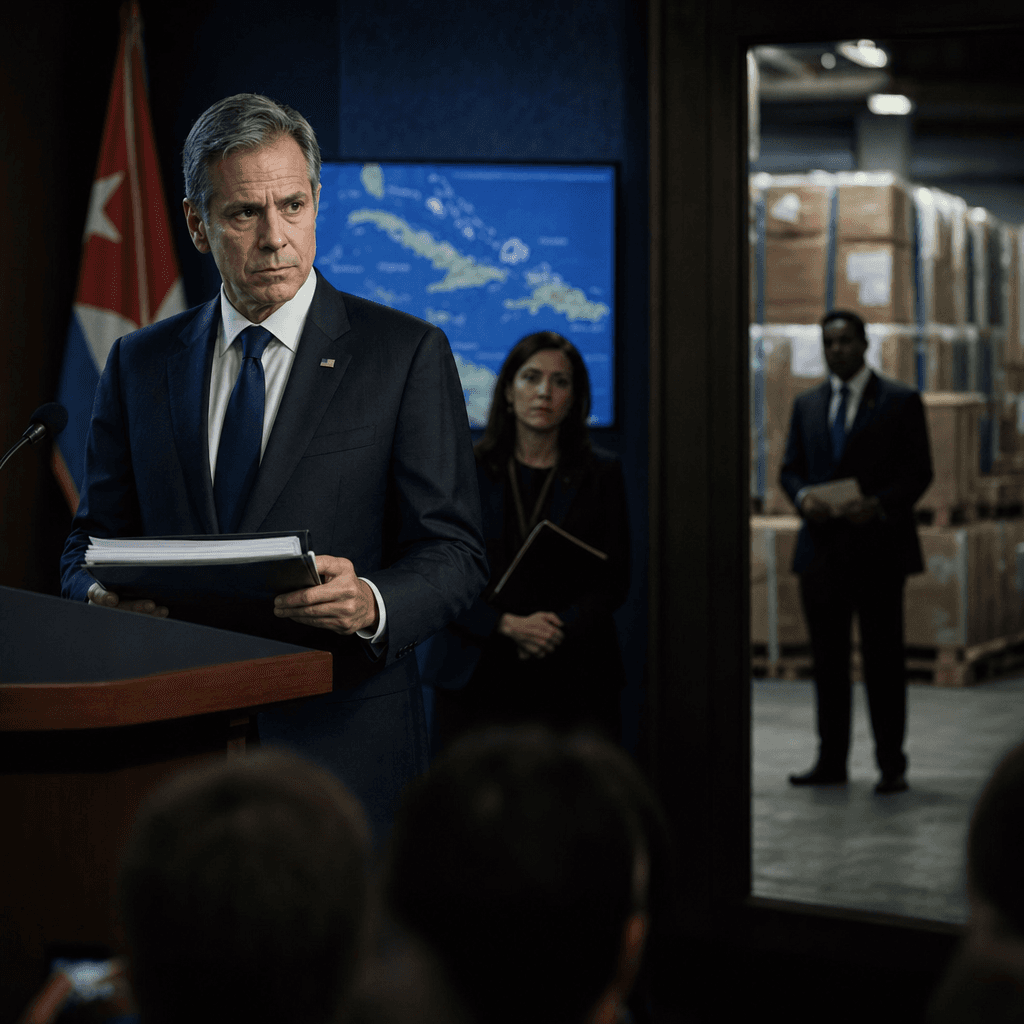
Secretary of State Marco Rubio said Friday that Cuba turned down a $100 million humanitarian aid offer from the United States, a claim immediately rejected by Havana as fabricated. Rubio told reporters in Italy that Washington had already delivered $6 million in aid through Caritas and was prepared to send more, but said the Cuban government was “standing in the way” (The Hill). Cuba’s foreign minister, Bruno Rodríguez, responded on X that Rubio was inventing the offer to justify what he called Washington’s “criminal assault” on the island (
The Hill;
Capital News/Xinhua).
The leverage is distribution, not just dollars
The fight is not over whether Cuba needs help. It clearly does: The Hill reported a hurricane, a weak economy, and a prolonged fuel shortage; a UN assessment in April said the island had gone three months without sufficient fuel and described an “acute and persistent” humanitarian crisis (The Hill). But Washington’s leverage lies in how aid reaches people, not in the headline number. Rubio is insisting on channels that bypass the state — notably Caritas and the Catholic Church — because the Trump administration does not trust Havana to distribute relief independently (
The Hill;
Miami Herald/AP).
That matters politically. If the U.S. can funnel aid around the Cuban state, it weakens the regime’s claim that sanctions are the sole cause of shortages. If Havana blocks the channel, Rubio gets the stronger propaganda line: the government is starving its own people rather than allowing outside help in. Either way, the Cuban state loses control of the narrative — and possibly the logistics.
Sanctions and aid are being used together
Rubio’s aid claim landed in the same week the State Department imposed new sanctions on GAESA, the military-run conglomerate that controls much of Cuba’s economy (The Hill;
Washington Post/AP). AP, via the Washington Post, reported that those sanctions also hit Moa Nickel, with Canadian firm Sherritt International immediately suspending its role on the island (
Washington Post/AP). In other words, Washington is combining pressure and relief: squeeze the regime’s revenue while offering aid directly to the population.
That strategy benefits Rubio and the Trump administration in domestic politics too. It lets them present a hard line on Cuba without appearing indifferent to civilian suffering — a familiar move in US Politics, where humanitarian language often rides alongside coercive policy. It also keeps the Vatican involved: Rubio said he discussed Cuba and aid delivery with Pope Leo XIV this week, suggesting the Church may be one of the few institutions both sides can tolerate (
The Hill;
The Washington Post).
What to watch next
The next test is whether anyone can verify the $100 million offer and whether Caritas can scale beyond the small shipments already reported. If the aid remains stuck in diplomatic dispute, Rubio’s sanctions-first approach wins the day. If the Church can expand distribution, Washington gets a route into Cuba that bypasses the state and makes the pressure campaign harder for Havana to dismiss. Watch for any Vatican statement, any Cuban follow-up on the alleged offer, and whether the administration pairs more sanctions with a larger relief package over the coming week. *
Discover more
Global Politics
Trump's Conflicting Messages on Iran War
Trump's mixed messages on Iran reflect a strategy of audience management, benefiting Tehran amid a complex geopolitical landscape.

Conflict & Security
Drone Warfare Killing Aid Workers at Unprec
Over 1,000 humanitarian workers killed in three years as cheap armed drones collapse legal protections. Gaza, Sudan, Ukraine, and DRC see deliberate targeting of aid convoys and hospitals with zero prosecutions.

Global
World Normalises Taliban as Afghan Women Eras
UN data shows Afghan women erased from public life as Russia recognises the Taliban, EU hosts officials in Brussels, and ICC warrants for gender persecution go unenforced.
Conflict & Security
West Africa Food Crisis: Three Shocks in 2026
Conflict, climate extremes, and the Strait of Hormuz closure drive a severe food crisis in West and Central Africa, with fertilizer prices surging 80% and millions displaced.