RFK Jr. Grilled on HHS Budget and Vaccines
Kennedy's hearings reveal a White House pivot on vaccines.
Model Diplomat7 min readUnited States

RFK Jr. Grilled on HHS Budget and Vaccines: What the April Hearings Really Settled
Robert F. Kennedy Jr.'s April 2026 grilling on the HHS budget and vaccines exposed a White House that has already decided vaccines are a losing issue before the midterms.
Health Secretary Robert F. Kennedy Jr. sat through seven congressional hearings across eight days in April 2026 to defend a $15.8 billion, 12.5% cut to his department — and the story the transcripts tell is not that Democrats scored points on measles. It is that the White House has quietly benched its own health secretary on vaccines while asking Congress to bankroll the rest of his agenda. Kennedy the campaigner spent a decade attacking childhood immunization; Kennedy the witness told the Senate Finance Committee, "We promote the measles vaccine." The distance between those two sentences is the entire political story of the Trump administration's second-year health policy.
The number Congress is being asked to swallow
The document at the center of the grilling is the Office of Management and Budget's FY2027 request, released in April. It asks for $111.1 billion in HHS discretionary budget authority — a $15.8 billion, 12.5% cut from the 2026 enacted level — and formally reproposes the Administration for a Healthy America (AHA), the reorganized super-agency Kennedy has been promising since March 2025, according to the White House budget appendix. Kennedy's own written statement to House Appropriations on April 16 used almost identical language, calling the request a demonstration of "the Trump Administration's commitment" to reorienting HHS around chronic disease, per his
prepared testimony on Congress.gov.
The problem for Kennedy is that Congress already rejected an almost identical request. The bipartisan FY2026 law that President Trump signed in early February 2026 fully funded NIH, restored the centers at the CDC that Kennedy had hollowed out, and wrote detailed line-item instructions requiring HHS to staff programs and give Congress notice before any reorganization, NPR reported. Sen. Tammy Baldwin (D-Wis.), ranking member on the Labor-HHS subcommittee, wrote those guardrails specifically because Kennedy's team had ignored appropriations language in 2025.
Democrats on Ways and Means pointed to the receipts. Rep. Bradley Schneider (D-Ill.) flagged a proposed $5.7 billion NIH cut and cited a Congressional Budget Office finding that shrinking the agency would mean fewer approved drugs. Rep. Gwen Moore (D-Wis.) hit Kennedy on proposed cuts to WIC and SNAP — programs Kennedy's own "Make America Healthy Again" agenda claims to depend on to reduce childhood chronic disease. Kennedy conceded he was "not happy" with the nutrition cuts, per NPR's write-up.
The vaccine pivot that isn't a pivot
The BBC's summary of the House Ways and Means hearing captured Kennedy's stagecraft: he tried to keep the three-hour session on chronic disease, but Democrats brought a chart showing nearly 4,000 U.S. measles cases across 2025 and 2026 and refused to let him off it, the BBC reported. Rep. Linda Sanchez (D-Calif.) asked whether the measles vaccine could have saved the unvaccinated Texas child who died in the 2025 outbreak. Kennedy answered, "It's possible, certainly." Rep. Mike Thompson (D-Calif.) told him: "Your dangerous conspiracy theories are undermining safe and effective vaccines."
Then came the tell. Asked in the House Energy and Commerce Health Subcommittee whether the Trump White House had told him to say less publicly about vaccines, Kennedy said no. He also claimed to be unaware of internal Republican polling suggesting his vaccine posture is politically hazardous heading into the November midterms, NPR reported. But an HHS official told NPR in March that the department was "shifting away" from vaccines toward diet and food policy because "we've already accomplished what we want to do with vaccines," per NPR's
MAHA rally story. That is not a denial of the pivot. That is the pivot, on the record.
The evidence sits in the transcript. When Sen. Michael Bennet (D-Colo.) demanded a direct answer on whether the measles vaccine is vital to keeping American children healthy, Kennedy replied, "We promote the measles vaccine." A year earlier, the same Kennedy had told the Senate HELP Committee that if he warned senators about alligators in a lake, they would want to know. Between May 2025 and April 2026, alligators became a promotion.
The Cassidy problem
The single most revealing exchange on Capitol Hill was the one that did not happen. Sen. Bill Cassidy (R-La.), the physician who cast the tie-breaking Finance Committee vote for Kennedy's confirmation in February 2025, extracted explicit written commitments that Kennedy would preserve the CDC's Advisory Committee on Immunization Practices (ACIP) recommendations "without changes," per Cassidy's floor speech and NPR's contemporaneous reporting.
Since then, Kennedy has fired all 17 ACIP members, appointed eight replacements including several vaccine skeptics, canceled roughly $500 million in mRNA vaccine research and clawed back $11 billion in COVID-era grants to state and local vaccination programs. A federal judge later ordered HHS to release the grants. In January 2026, the CDC's acting director — bypassing ACIP entirely — approved a new childhood immunization schedule built out of a White House memorandum. On March 16, 2026, the U.S. District Court for the District of Columbia stayed that schedule and reverted it to the May 2025 version, according to the Congressional Research Service's report on the 2026 childhood schedule. HHS said it would appeal. It has not.
Cassidy, given his first public shot at Kennedy on April 22, used most of his five minutes in Senate Finance to ask about health savings accounts and Medicare Advantage. In the HELP hearing that afternoon, he opened supportively and offered one gentle nudge: "When I see outbreaks numbering in the thousands and people dying once more from vaccine-preventable diseases, particularly children, it seems more than tragic." That is the sound of a senator who has decided the political cost of a confrontation exceeds the policy cost of the retreat he already sponsored.
The measles number and what it costs
The measles caseload is the load-bearing fact under the whole hearing. In 2025 the United States recorded more measles cases than in any year since the disease was declared eliminated in 2000. The BBC put the running 2025–26 total at roughly 4,000. In the Congressional Record, Sen. John Cornyn (R-Tex.) praised Kennedy's role in shipping 7,000 MMR doses and rapid response teams to Seminole, Texas, and celebrated the outbreak's official end, per the October 7, 2025 Senate floor entry on govinfo.gov. Two Texas children died before it was contained.
That is the Kennedy paradox in one paragraph. As secretary he distributed vaccines to end an outbreak; as activist and policymaker he simultaneously undercut the schedule and the infrastructure that would prevent the next one. KFF polling in October 2025 found 59% of Americans disapprove of his job performance and trust in CDC vaccine information has fallen 24 points among Democrats in two years, NPR reported. Among Republicans, Kennedy is trusted roughly as much as their own doctor. That split is why the White House wants him quiet — and why he cannot fully retreat without alienating the anti-vaccine base that delivered him to the Cabinet.
What Congress actually does with the request
Do not confuse the hearing theatre with the appropriations math. The House Appropriations subcommittee report on the FY2027 Labor-HHS-Education bill, H. Rept. 119-696, is where the real fight lives. Congressional Research Service tracking of the request notes several agency-level cuts in the 30%+ range that would have to survive Senate Appropriations — where Cassidy sits — largely intact, per
CRS report R48970. Given that a bipartisan Congress reversed nearly identical cuts five months ago, the FY2027 request is best read as a messaging document, not a fiscal plan.
The AHA piece is the exception. Congress has not authorized the Administration for a Healthy America; there is no statutory framework, no funding line and, according to former HHS Secretary Kathleen Sebelius quoted by NPR, "no budget authority to create a new agency." Kennedy is trying to conjure it by fiat. If Republicans lose the House in November, that door closes for the rest of the term.
Diplomat View
The April hearings were not the moment lawmakers finally held Kennedy accountable. They were the moment the Trump White House decided which parts of Kennedy it still needs. It needs the MAHA brand — food dyes, dietary guidelines, drug pricing wins — because those poll well. It does not need vaccine skepticism attached to Republican House candidates in swing districts where measles is on the local news. Expect Kennedy to be visible on chronic disease and largely invisible on immunizations between now and November. Expect HHS's promised appeal of the March 16 stay to keep slipping. Expect the FY2027 cuts to be gutted again by a bipartisan appropriations package this fall, with AHA quietly deferred. The forecast changes if two things happen: a Republican-led Senate committee actually subpoenas Kennedy over the ACIP purge, or a second measles death in a red state flips the internal polling. Neither has happened. Both would.
What to watch next:
- September 30, 2026: end of fiscal year and the deadline for any FY2027 continuing resolution or omnibus fight over HHS levels.
- The next ACIP meeting under the reconstituted panel: any new votes on the MMR or hepatitis B schedule will test whether the March 16 stay holds.
- HHS's decision on filing (or not filing) its appeal of the childhood-schedule injunction — the tell on whether Kennedy's vaccine agenda is dormant or dead.
The Bottom Line
Kennedy was grilled on the HHS budget and vaccines in April 2026 because Democrats had four thousand measles cases and a $15.8 billion cut to point at — but the deeper story is that the White House has already conceded the vaccine fight for the midterms while trying to preserve the rest of Kennedy's agenda. The FY2027 request will not survive Senate appropriations intact; the childhood immunization schedule Kennedy tried to rewrite is frozen in court; and the Republican who put him in the job is now asking about health savings accounts. Kennedy still runs HHS. He no longer sets its vaccine policy in public.
Discover more

US Politics
SNAP Food Assistance Faces Legal Challenges
In 2026, SNAP faces stricter eligibility rules and mounting legal challenges, threatening food assistance for the millions of Americans who rely on the program.
US Politics
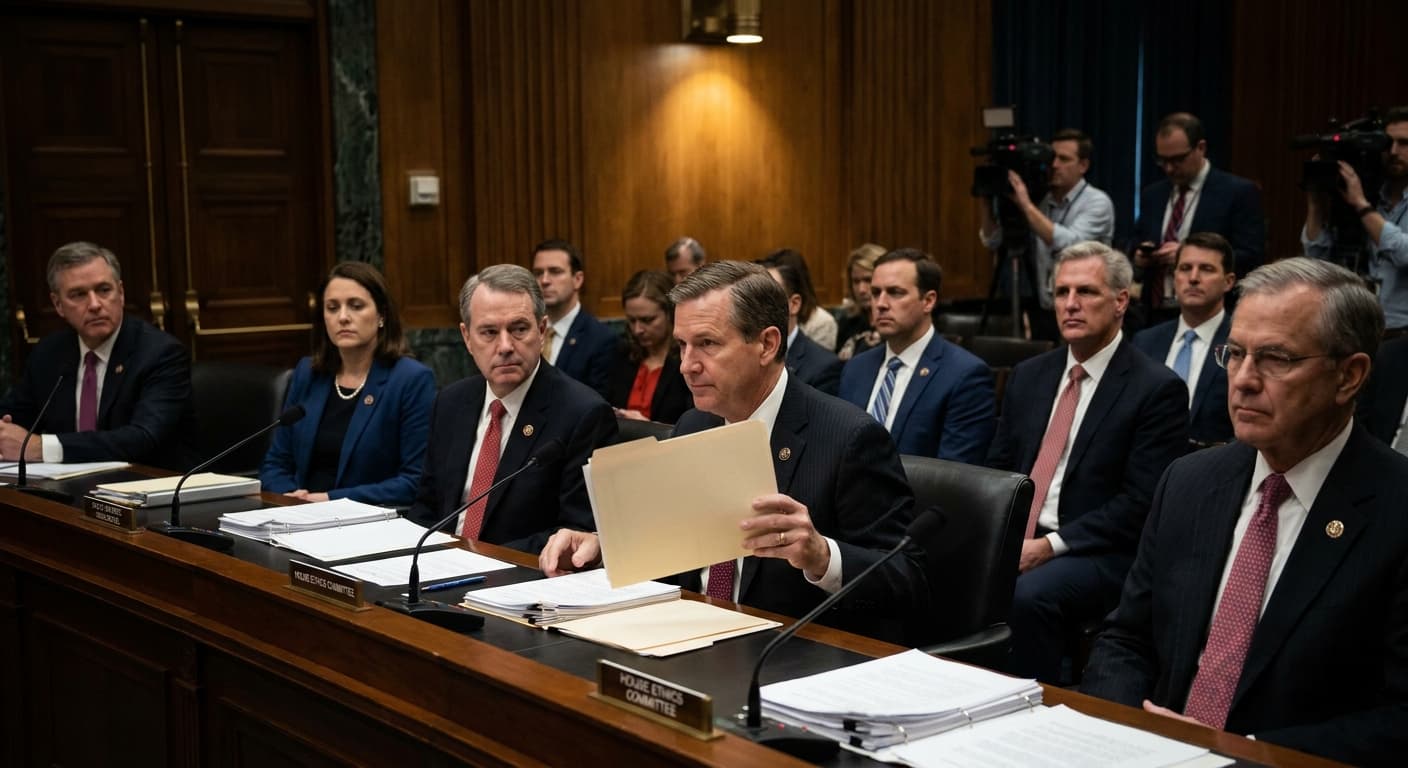
House Ethics Committee Pushes Sexual Miscond.
The House Ethics Committee has shifted responsibility for sexual harassment settlement records to the Office of Congressional Workplace Rights, complicating disclosure efforts.
US Politics
Congress Targets AI Chatbot Access for Terror
The House passed the Generative AI Terrorism Risk Assessment Act, focusing on AI's role in terrorism and potential surveillance implications.

Conflict & Security
Drone Warfare Killing Aid Workers at Unprec
Over 1,000 humanitarian workers killed in three years as cheap armed drones collapse legal protections. Gaza, Sudan, Ukraine, and DRC see deliberate targeting of aid convoys and hospitals with zero prosecutions.