Repsol's Horcón Deal: US Oil Colony
Repsol's agreement marks a new era for Venezuelan oil.
Model Diplomat9 min readAmericas
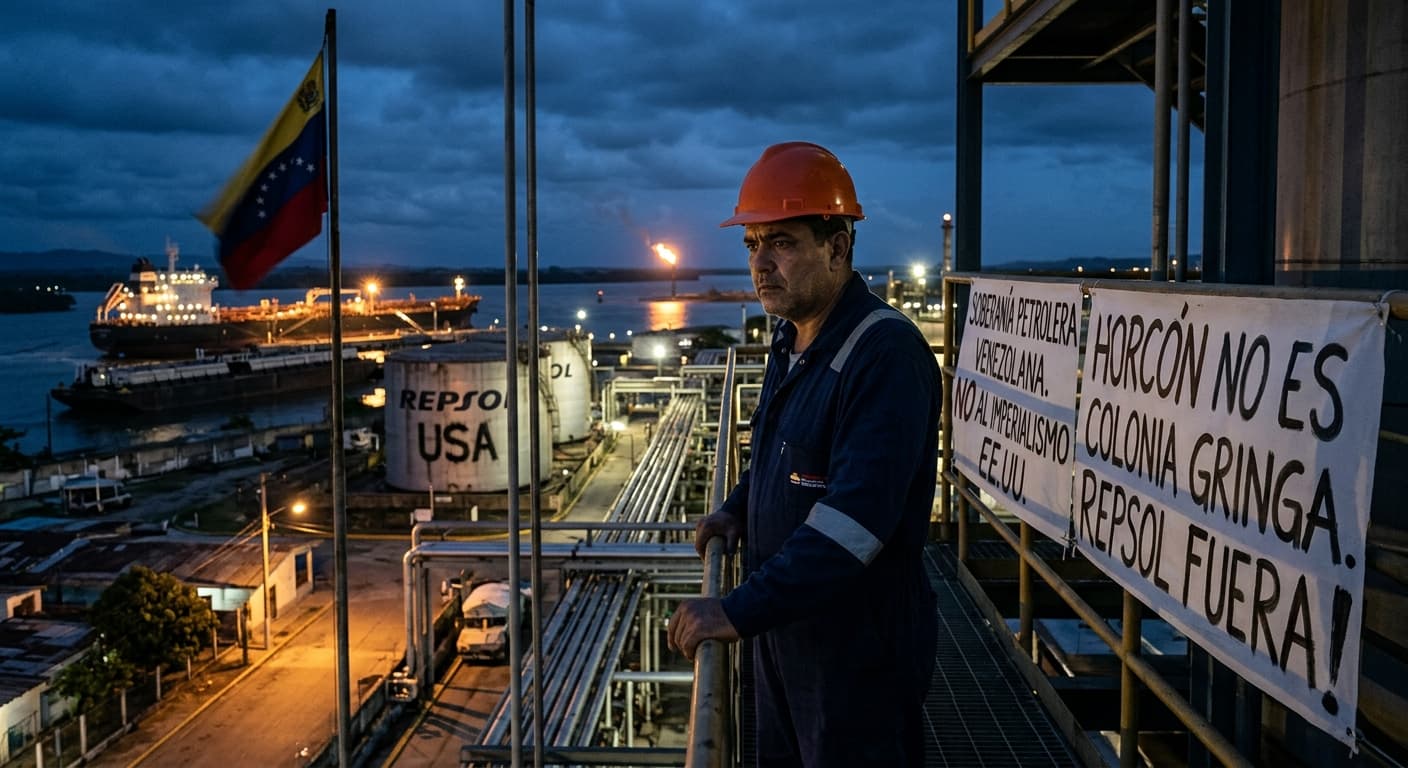
Repsol's Horcón deal makes Venezuela the first US-run oil colony
Repsol's July 8 Horcón agreement with PDVSA is the first field-level test of Trump's US-controlled Venezuelan oil regime — and Europe's tacit endorsement of it.
Repsol signed a letter of intent on July 8, 2026 with Venezuela's Ministry of Hydrocarbons and state oil company PDVSA to explore and develop the Horcón block southeast of Lake Maracaibo — a deal that, on paper, adds 20,000 barrels per day of light crude and offshore gas to Spanish energy security, according to Energiminas. The real story is not in Caracas or Madrid. It is in a footnote of US Treasury General License 50A: every dollar Repsol earns from Horcón must flow through Foreign Government Deposit Funds controlled by the US Department of the Treasury, under an executive order President Donald Trump signed six months before the ink dried at Miraflores Palace. Repsol is not opening a new Venezuelan frontier. It is the first foreign major to formally operate inside a US-administered petro-protectorate — and the deal it just signed reveals what a post-sanctions Venezuela actually looks like: an OPEC founding member with its hydrocarbons regulated from Washington.
The deal, the timing, the mechanics
The agreement was inked at Miraflores in an act presided over by interim President Delcy Rodríguez, according to El Destape. Horcón sits adjacent to Repsol's existing Barúa and Motatán fields and complements its stakes in the Petroquiriquire and Petrocarabobo joint ventures. The Spanish company has operated in Venezuela since 1993 and, per the letter of intent, will also evaluate offshore gas prospects tied to the Cardón IV development it operates with Eni. Repsol chief executive Josu Jon Imaz told investors the company sees room to raise Venezuelan output "more than 50 per cent over the next 12 months" and to triple it within three years,
the Financial Times reported. Baseline production stood at 71,300 barrels of oil equivalent per day in 2025.
The context is what makes Horcón unusual, not the geology. On January 3, 2026, US special forces seized Nicolás Maduro from Caracas and delivered him to a Manhattan courtroom on narco-terrorism charges. His vice president, Delcy Rodríguez, was installed as interim president under explicit US pressure. Six days later, Trump signed Executive Order 14373, declaring a national emergency to shield "Foreign Government Deposit Funds" — Treasury accounts holding proceeds from Venezuelan oil sales — from any US court seeking to attach them on behalf of creditors like ConocoPhillips or ExxonMobil. On January 30, Rodríguez signed a reform of the 2006 Chávez-era Hydrocarbons Law that cut royalties from 30% to as low as 15%, allowed private operators to market their own crude, and permitted international arbitration of disputes,
Al Jazeera reported.
Then, on February 18, 2026, the US Treasury's Office of Foreign Assets Control issued General License 50A, authorising six named foreign companies — BP, Chevron, Eni, Maurel & Prom, Repsol and Shell — to conduct oil and gas transactions with PDVSA. The license does not liberalise Venezuela. It vassalises it. Two conditions are decisive. Contracts with PDVSA must specify that "the laws of the United States or any jurisdiction within the United States govern the contract and that any dispute resolution under the contract occur in the United States." Monetary payments to blocked Venezuelan parties must be "made into the Foreign Government Deposit Funds, as specified in Executive Order 14373 of January 9, 2026." The same license explicitly bans transactions "involving a person located in the Russian Federation, the Islamic Republic of Iran, the Democratic People's Republic of Korea, the Republic of Cuba, [or] the People's Republic of China."
That is the framework inside which Repsol just signed Horcón.
Who wins, who loses
The obvious beneficiary is Repsol itself. The Spanish major came into 2026 nursing a €4.55 billion debt that Venezuela had accumulated in unpaid crude-for-gas swap arrangements, the Financial Times reported — a receivable so distressed that Repsol's Venezuelan operations were an unresolved balance-sheet problem. General License 50A converted that debt from a hostage into a claim inside a US-legal framework, with future payments running through Treasury-controlled accounts rather than opaque PDVSA channels. Imaz told investors that "the latest developments will allow payments for the gas supply to resume." Repsol shares closed at €22.80 on July 8, up 82.4% year-on-year, according to
FT market data. That is the market pricing certainty, not oil.
The bigger winner is Washington. The Trump administration has spent six months arguing publicly that US oil majors would pour $100 billion into Venezuela; the private response was captured by ExxonMobil chief executive Darren Woods, who told Trump directly at a January 9 White House meeting that Venezuela was "uninvestable" after two rounds of asset seizures, the BBC reported. Chevron, which produces roughly a fifth of Venezuelan output, expanded incrementally. Exxon and Shell held back. Into that vacuum, second-tier European players — Repsol, Eni, Maurel & Prom — moved first. Every barrel they lift under the OFAC framework validates the legal architecture Trump built. Horcón is not just a Repsol project; it is a proof-of-concept that Washington can license foreign firms to operate Venezuelan oil on US terms, without US oil companies having to take the political risk.
The losers are more instructive.
China loses hardest. Beijing was the largest buyer of Venezuelan crude for most of the sanctions era, taking discounted heavy oil to Shandong "teapot" refiners. General License 50A explicitly bars any transaction involving a Chinese person or entity. Chinese foreign ministry spokeswoman Mao Ning called the US seizure of Maduro and control of Venezuelan oil "a typical act of bullying" and "a serious violation of international law," the BBC reported in January. Six months later, China has no counter-offer. The Russian and Iranian oil-supply networks that shipped Venezuelan crude in defiance of sanctions have been dismantled by US Navy tanker seizures — a pressure campaign that included
seven tanker seizures in the first three weeks of January alone.
US-headquartered creditors lose next. ConocoPhillips holds an $8.7 billion World Bank tribunal award against Venezuela dating to the 2007 nationalisations, the BBC reported. ExxonMobil holds similar claims. Executive Order 14373 declared that any attachment against the Treasury-held oil-revenue accounts "constitutes an unusual and extraordinary threat to the national security and foreign policy of the United States." In plain English: the White House used International Emergency Economic Powers Act authorities to insulate Venezuelan money in US banks from US court judgments in favour of US companies. That is why the majors sat on their hands in January — and why Repsol could move.
Spain's foreign policy loses coherence. The Sánchez government spent 2024 in an open row with Caracas over Defence Minister Margarita Robles's description of the Maduro government as a "dictatorship," which prompted Venezuela to recall its ambassador, the BBC reported. Opposition leader María Corina Machado publicly snubbed Sánchez during an April 2026 Madrid visit, meeting only the conservative Partido Popular and far-right Vox, according to
Al Jazeera. Yet Repsol has just signed the largest new European upstream commitment in the country. Madrid is not driving this; Repsol is, under a US license, and the Spanish government is a spectator to its own flagship energy champion embedding itself in a Trump-administered petro-state.
The energy-security reality check
Set aside the politics for a moment. Does Horcón actually matter for the barrel counters?
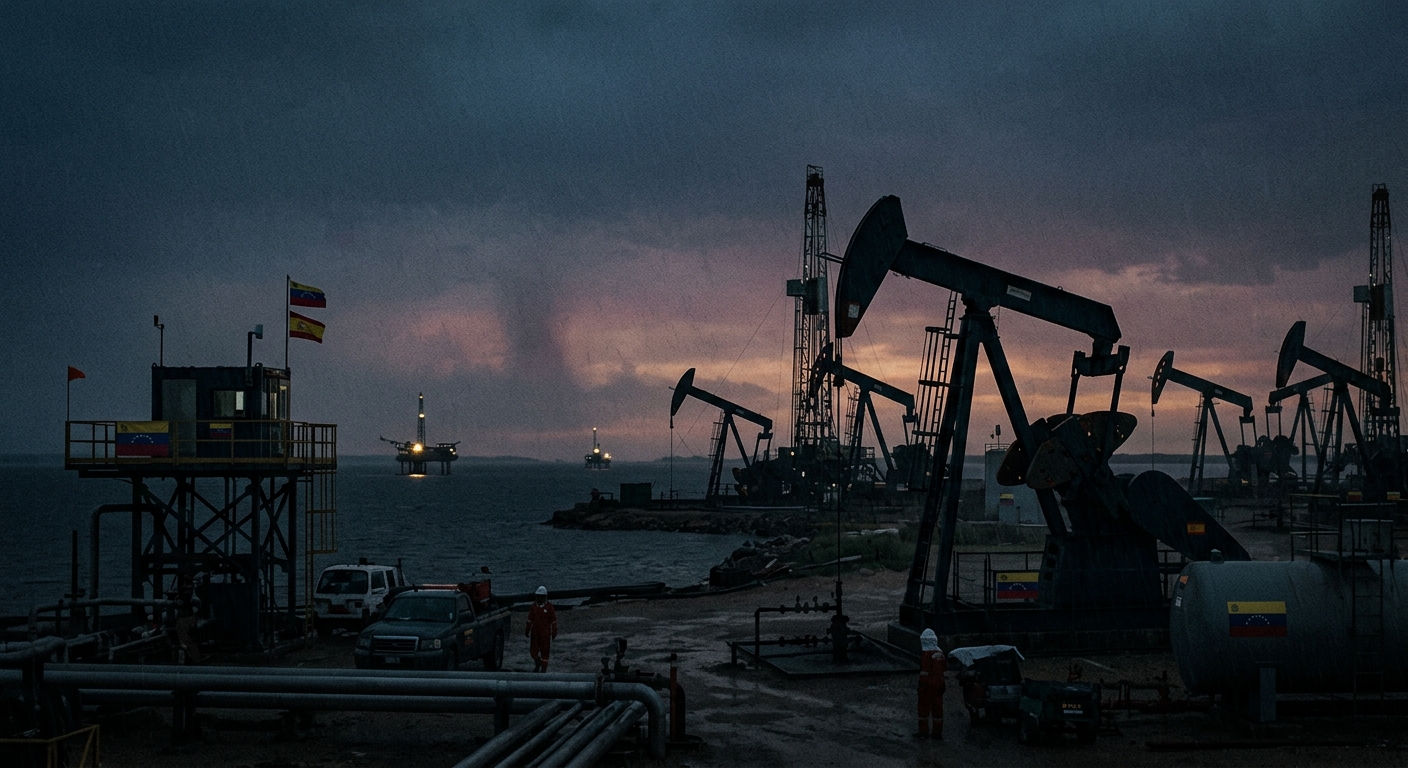
Venezuela pumped 910,000 barrels per day by early 2026, up from a 2020 nadir but still less than a third of the 3.2 million bpd it produced in 1999, the Financial Times reported. Zulia state, the region around Lake Maracaibo where Horcón sits, supplied roughly half of that 1999 output; local officials now claim 13,000 wells in the basin could be recovered against 26 billion barrels of reserves,
the BBC reported. In March 2026, monthly exports crossed one million bpd for the first time in six months, with Chevron alone lifting 250,000 bpd,
the BBC reported. Repsol's promised 20,000 bpd from Horcón is real but rounding-error at global scale — less than 0.02% of world consumption.
The Center for Strategic and International Studies modelled a "modest growth scenario" in which Venezuelan output rebounds to approximately 1.5 million bpd by 2028 under "adequate political, legal, fiscal, and operating conditions"; a "significant growth" case reaching 3 million bpd requires substantially larger capital commitments and greenfield projects by 2035, according to a CSIS analysis. The Council on Foreign Relations put the price tag at $10–20 billion to rehabilitate existing fields and roughly $100 billion over a decade to reach 3 million bpd, per a
CFR briefing. Rystad Energy chief economist Claudio Galimberti told
NPR that Venezuelan project breakevens sit around $80 per barrel while the global benchmark trades near $60 — meaning that outside the OFAC-blessed set, the marginal Venezuelan barrel is not commercially attractive. Rystad separately estimates $183 billion over more than a decade is needed to restore 1990s-era output.
Which is precisely the point. Repsol is not chasing a mega-project. It is banking barrels that recover a €4.55 billion sunk cost under a legal umbrella no US major will accept — because the US majors want compensation for 2007, and Trump's executive order says they cannot have it out of Venezuelan revenues. The economics that make Horcón marginal for ExxonMobil make it rational for Repsol: sunk-cost recovery beats a positive-NPV bar.
The historical parallel that reframes this
Venezuela's oil industry has been in one of three states for a century: foreign concession (pre-1976), state monopoly (1976–1999), or contested joint-venture nationalisation (2007–2025). The Horcón-era framework is a fourth model, with no clean historical precedent in the Western Hemisphere since the 1930s: a sovereign state whose principal export sector is regulated in real time by another sovereign's Treasury Department, with foreign private operators licensed by the licensing state, not the resource-holding state.
The closest analogue is the UN Oil-for-Food programme in Iraq (1995–2003), in which Iraqi oil revenue was placed in a UN-controlled escrow account. But Oil-for-Food was multilateral, Chapter VII-authorised, and time-limited. General License 50A is unilateral, US-authorised, and — in the words of US Energy Secretary Chris Wright — will operate "indefinitely," the BBC reported. Marco Rubio's State Department has said Venezuela will submit monthly budgets to the White House and receive disbursements under US sanctions controls for public services such as policing and medicine purchases,
the BBC noted after the January 30 hydrocarbons vote. That is a significant structural innovation in how a great power monetises regime change. The Horcón agreement is the first commercial contract written entirely inside it.
What to watch next
Three catalysts will determine whether the Horcón model spreads or breaks.
- Repsol's Q3 2026 earnings call (late October). Imaz has promised a 50% Venezuelan output rise within 12 months. Watch for the first cash-repayment tranche of the €4.55 billion debt via the Foreign Government Deposit Funds. If Treasury releases funds smoothly, the model is credible; if not, the license structure is a fig leaf.
- US Court of Appeals rulings on ConocoPhillips and Crystallex attachments. Executive Order 14373's insulation of Venezuelan oil revenue from creditor attachment will face constitutional and statutory challenges. A judicial defeat would upend the entire GL 50A payment architecture.
- OFAC's next license renewal cycle. GL 50A superseded GL 50 within five days, and GL 48 was replaced within roughly 30. The frequency of amendments signals how contested the framework remains inside the US bureaucracy. Any expansion of the Annex — adding TotalEnergies, Equinor or a Gulf national oil company — would confirm the model is scaling.
Diplomat View
Repsol's Horcón deal is not a Spanish energy-security story and it is not a Venezuelan reopening story. It is the first commercial validation of a legal architecture in which the United States governs a foreign OPEC member's petroleum revenues through Treasury deposit accounts, foreign contract law, and a curated list of licensed operators. If the model holds through the ConocoPhillips litigation and the 2028 US election, expect it to be exported: Iran under a future settlement, potentially Libya, and any future post-sanctions transition where Washington controls the offshore leverage. If it breaks — most likely because US courts refuse to accept EO 14373's sovereign-immunity fiction — Repsol will be left holding Venezuelan barrels under a defunct license, and the €4.55 billion debt reverts to a claim against a hostile Caracas. The forecast revises if Delcy Rodríguez consolidates power independently of Washington, if a Chinese counter-offer to PDVSA emerges through a third-country intermediary, or if a US court attaches the Foreign Government Deposit Funds. Absent those, Horcón is the template. The next foreign operator to sign will not be a mystery — it will be Eni, and the block will be offshore gas.
The Bottom Line
Repsol's Horcón agreement is the first live test of Trump's post-Maduro petro-protectorate — a framework in which foreign oil companies operate Venezuelan fields under US Treasury license, with revenues flowing through US-controlled accounts insulated from US creditors. Madrid did not choose this; Repsol did, to recover a €4.55 billion debt. The barrels are small, but the precedent is enormous: for the first time since the 1930s, a Western Hemisphere OPEC member's hydrocarbon sector is being administered by another sovereign, and Europe just signed on as the pilot customer.
Discover more

US Politics
House Ethics Committee Pushes Sexual Miscond.
The House Ethics Committee has shifted responsibility for sexual harassment settlement records to the Office of Congressional Workplace Rights, complicating disclosure efforts.
US Politics
SNAP Food Assistance Faces Legal Challenges
In 2026, SNAP faces stricter eligibility rules and mounting legal challenges, threatening food assistance for the millions of Americans who rely on the program.
India
Rajnath Singh's Durga Squad for 2026 Polls
Rajnath Singh's Durga Squad promised women's safety in Bengal but has since disappeared from the agenda, revealing BJP's true priorities.

Conflict & Security
Drone Warfare Killing Aid Workers at Unprec
Over 1,000 humanitarian workers killed in three years as cheap armed drones collapse legal protections. Gaza, Sudan, Ukraine, and DRC see deliberate targeting of aid convoys and hospitals with zero prosecutions.