Rejoin EU Uses Makerfield to Reopen Brexit Fight
Peter Ward’s candidacy in Makerfield is less about winning the seat than forcing Brexit back into a Labour-vs-Reform contest that is already shaping the next leadership fight.
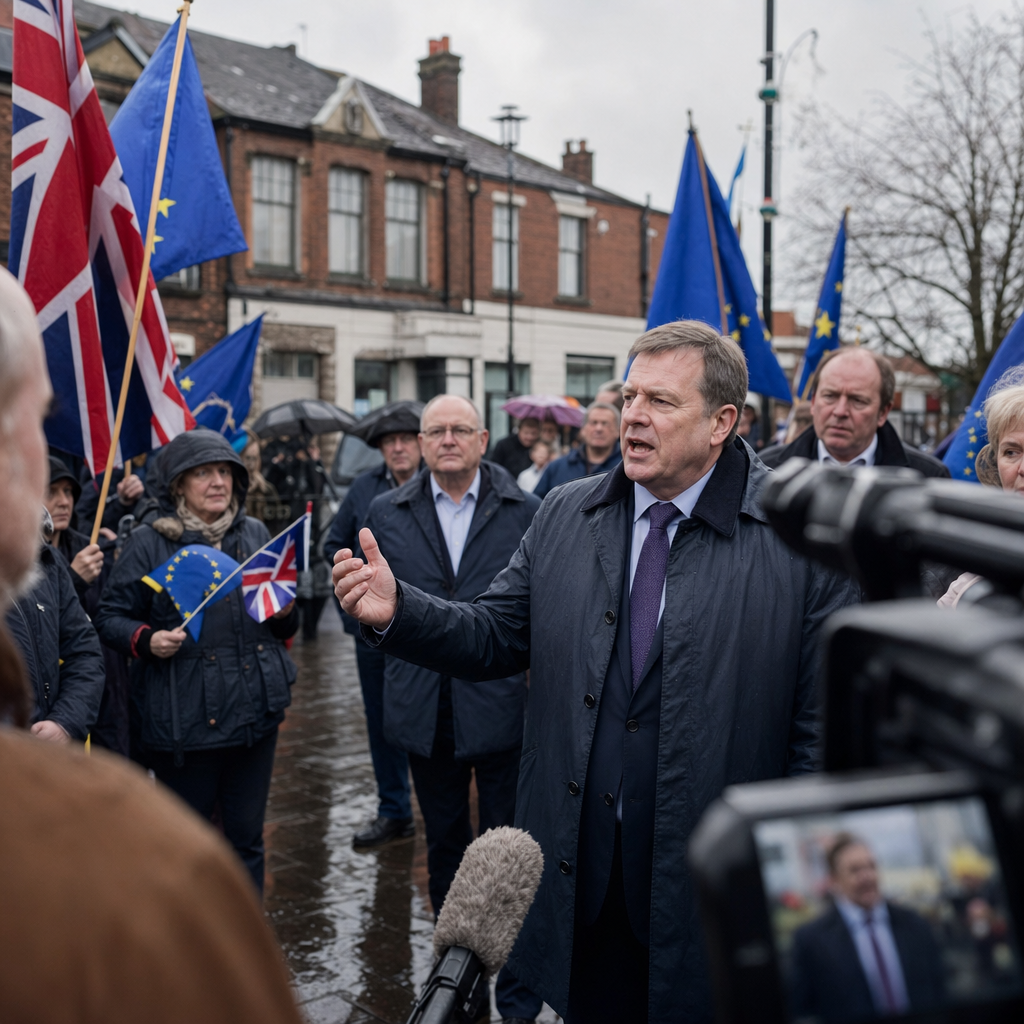
Rejoin EU’s decision to field Peter Ward in the Makerfield by-election is a signal, not a surprise. The party said the issue of rejoining the EU has “come back into the British political debate in a big way,” and Ward will stand on 18 June after Labour MP Josh Simons resigned ( BBC). In a normal by-election, a micro-party candidacy would barely register. Here, it matters because the EU question is re-entering British politics through the side door — at the exact moment Labour is weak, Reform UK is gaining ground, and national figures are treating a local contest as a test of where the party system is headed.
A low-probability candidacy with high political value
Rejoin EU is not trying to win Makerfield. It is trying to keep Brexit visible while the larger parties are forced to define themselves around it. The BBC’s candidate list shows the seat is already crowded, with Labour, Reform UK, the Conservatives, the Liberal Democrats, and others all in the field (BBC). That makes the constituency a useful media stage: every additional candidate can claim to represent a distinct national grievance, but only a few have a plausible path to power.
That is exactly why Rejoin EU’s move is useful. It gives pro-EU voters somewhere to go without having to default to Labour or the Liberal Democrats, and it keeps a divisive issue alive in a seat where Labour is vulnerable. The party’s pitch also exploits a broader opening: there is renewed elite talk about closer UK-EU ties, but no mainstream party is willing to carry a rejoin platform into an election. That leaves space for a niche campaign to amplify the argument.
Labour’s problem is not just one resignation
Makerfield is also becoming a reading on Labour’s wider political fragility. The BBC said the by-election follows Josh Simons’s resignation, while other coverage has framed the seat as a test of Labour’s authority in a constituency where Reform did well in recent local contests (BBC;  The Irish News). That matters because the real competition is no longer just between Labour and the Conservatives. Reform is now the party that can turn discontent into pressure, especially in post-industrial seats where the Brexit coalition still has traction.
The bigger strategic point is that Brexit is no longer settled in practice, even if it is settled constitutionally. As EFE reported last week, debate over a possible return to the EU is already dividing Labour’s leadership hopefuls, with allies warning that an internal fight over Europe would hand Reform a gift ( EFE). That is the backdrop to Ward’s candidacy: it is not a standalone event, but part of a wider attempt to reopen the EU issue while Labour is on the defensive.
What to watch next
The key date is 18 June. What matters is not whether Rejoin EU polls well, but whether it can force other candidates to answer the same question: is Britain still arguing about Brexit, or is it already moving beyond it? If Reform continues to dominate the protest vote and Labour keeps framing the seat as a test of national recovery, Ward’s presence will still have served its purpose: keeping Europe in the campaign, and keeping Labour uncomfortable.