Refusing AI Is Becoming a Political Act
An opinion on AI's impact on human thought and labor.
Model Diplomat3 min readGlobal
Refusing AI Is Becoming a Political Act
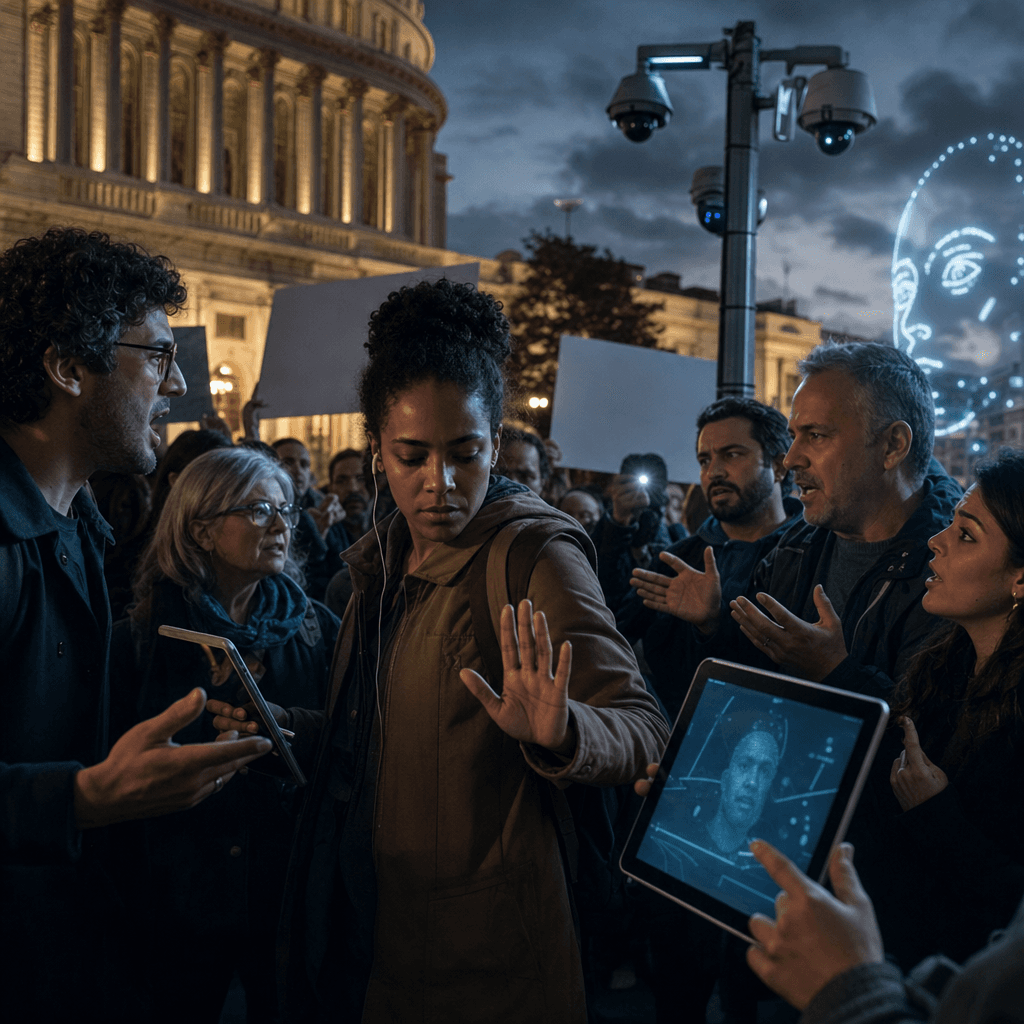
An opinion essay in The Guardian turns a personal choice into an argument about power: who gets to offload thinking, and who pays the cost.
The Guardian’s essay argues that avoiding AI tools is not nostalgia or technophobia; it is a bid to protect the mental work that makes people human, especially in coding and writing, where “vibe-coding” and AI text are already reshaping entry-level norms (The Guardian). That is a personal stance, but it lands in a much bigger fight over
Global Politics: who controls the tools, who captures the productivity gains, and who absorbs the losses when “thinking” becomes a service sold by firms with deep pockets.
Cognitive friction is the point
The essay’s core claim is simple: difficulty is not a bug in human work, it is the feature. The writer says she avoids AI because she worries about “cognitive offloading” — the habit of handing tasks to a machine so thoroughly that the brain stops doing the work itself (The Guardian). That line tracks with the newer research BBC has been reporting: a recent MIT study found people using ChatGPT to write essays showed less activity in brain networks linked to cognitive processing, while a Carnegie Mellon/Microsoft study found heavier AI use was associated with less critical-thinking effort (
BBC News).
That does not prove AI is uniformly harmful. It does show why the debate has moved beyond convenience. If a tool saves time but erodes the habit of evaluation, it changes the skill base of the labor market. That matters most in fields where judgment is the product: software, editing, analysis, law, education. The Guardian piece is right to frame this as a status question as much as a productivity one: if the machine does the first draft, the human becomes the reviewer, and reviewers are cheaper to hire.
The real power is in the platform
What makes this political is not the essayist’s abstinence. It is the concentration of leverage in a handful of AI firms that want to make intelligence into infrastructure. The Guardian frames that as “privatising thought,” and that is the more important argument (The Guardian). The AI boom is not just a software upgrade; it is a capital-intensive race to lock users, employers, schools, and governments into a small number of proprietary systems.
That is why the personal refusal to use AI resonates beyond one writer’s workflow. It names the hidden bargain in the current AI economy: convenience for users, scale for companies, and weaker bargaining power for workers. BBC reporting on AI resistance has already shown the other side of that equation — people who initially reject AI for ethical reasons often end up adopting it when employers cut budgets or expect AI fluency on job descriptions (BBC News). In practice, the market is setting the terms of “choice.”
What to watch next
The next decision point is not philosophical; it is institutional. Schools, employers, and public agencies are deciding whether AI is a tutor, a co-pilot, or a substitute for human judgment. Watch for three markers: whether employers start requiring AI use in white-collar roles; whether universities move from bans to formal AI policy; and whether regulators treat cognitive harm as a labor issue, not just a consumer one. If that happens, the debate shifts from whether people should use AI to who gets to define when thinking still has to be done by a human.
Discover more
US Politics
Congress Targets AI Chatbot Access for Terror
The House passed the Generative AI Terrorism Risk Assessment Act, focusing on AI's role in terrorism and potential surveillance implications.

US Politics
Next Generation Republicans
A leaked survey shows 39% of Republicans under 30 do not identify as MAGA, revealing a split in the GOP's future leadership.

India
BJP's Misunderstanding of Women's Quota Needs
The BJP's linking of the Women Reservation Bill to delimitation risks delaying women's empowerment in India, misreading the aspirations of female voters.

Conflict & Security
Drone Warfare Killing Aid Workers at Unprec
Over 1,000 humanitarian workers killed in three years as cheap armed drones collapse legal protections. Gaza, Sudan, Ukraine, and DRC see deliberate targeting of aid convoys and hospitals with zero prosecutions.