Refugee Convention at 75: hollowed from
How wealthier states are making the 1951 Refugee Convention irrelevant
Model Diplomat10 min readGlobal
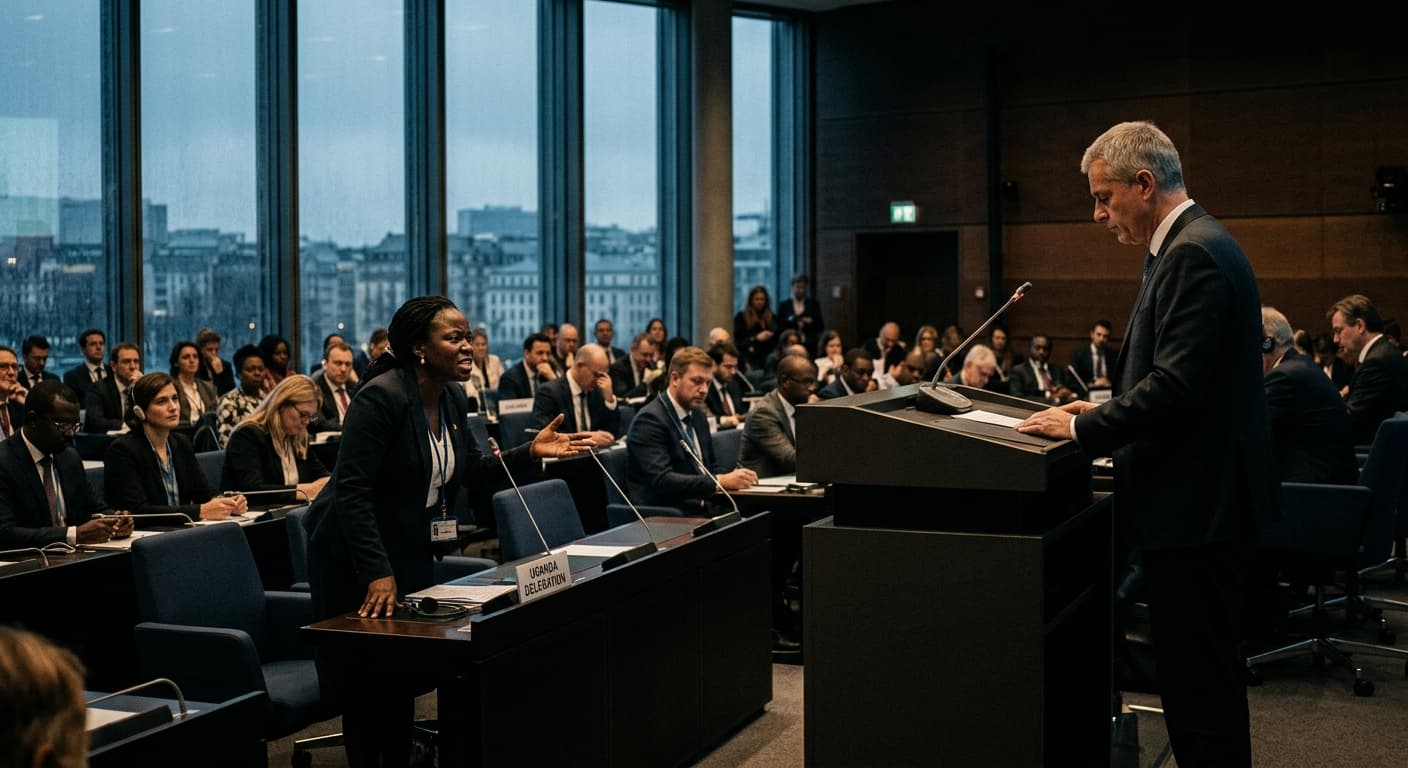
The Convention at 75: hollowed from within
Seventy-five years after the 1951 Refugee Convention was adopted, the treaty is not being torn up — it is being made irrelevant by the very states that built it, through externalization, pushbacks, and third-country removals that preserve legal form while dismantling protection's substance.
The Convention Relating to the Status of Refugees turns 75 on July 28, 2026, ratified by 149 states and still formally intact. Yet the International Rescue Committee's new report, Protection Under Pressure, released July 13, finds the treaty facing "the most serious assault on that commitment in a generation," as governments across the world turn away asylum seekers at borders and normalize forced returns in violation of the Convention's core promise. The assault is not a frontal repudiation. The Convention is being hollowed from within — its letter preserved, its substance evacuated — by wealthier states that externalize asylum, cut humanitarian funding by tens of billions, and collapse resettlement to record lows, while the Global South hosts 68 to 71 percent of the world's 41.6 million refugees. The result is a protection regime where compliance is performative and the right to seek asylum is systematically denied before it can be exercised.
The funding collapse: dismantling the machinery of protection
The infrastructure that gives the Convention practical effect is being defunded at a pace without precedent. Global humanitarian funding fell by more than $31 billion in 2025, according to the IRC, and the UN's coordinated appeals were just 21 percent funded by September — a 40 percent decrease from the prior year, as UN News reported. The United States, historically carrying nearly 40 percent of humanitarian funding, slashed its contribution from roughly $14.1 billion in 2024 to $6.4 billion in 2025 and then announced it would provide just $2 billion to UN humanitarian assistance for the year, as
Al Jazeera documented — a fraction of the up to $17 billion it had provided in recent years. The Trump administration told UN agencies to "adapt, shrink or die."
The consequences are measurable. UNHCR received only 23 percent of its $10.6 billion 2025 budget and warned that 11.6 million refugees — about a third of those it had reached the previous year — risked losing access to humanitarian assistance, according to UN News. The agency shuttered or suspended $1.4 billion in programmes, including a 60 percent reduction in financial aid and emergency relief in Sudan, Myanmar, and Afghanistan. On the Sudan-Chad border, UNHCR could not provide "even basic shelter" to more than six in ten refugees fleeing the war. In Afghanistan, more than 420 health facilities closed. In Somalia, food aid reached 350,000 people in November, down from over one million in August. Half a million Rohingya children in Bangladesh lost access to education, as
OCHA reported. The Carnegie Endowment for International Peace noted that the World Food Programme halved monthly food rations to $6 per person in Cox's Bazar, and that 20 percent of Myanmar's Rohingya population had fallen into Integrated Food Security Phase Classification 4, one step from famine, according to
CFR.
The funding collapse is not evenly distributed in its effects. It falls hardest on the low- and middle-income countries that host roughly 68 to 71 percent of the world's refugees, as UNHCR data shows — states that already bear the heaviest protection burden are now asked to bear it with dwindling external support.
Compliance without substance: the architecture of evasion
The IRC report's central finding is that the Convention's "core promise — that no one should be returned to danger" — is under sustained pressure not through formal withdrawal but through practices that invoke the language of protection while dismantling its substance. David Miliband, the IRC's president and CEO, was direct:
"The Refugee Convention was a promise, made in the shadow of one of the darkest chapters of history, that nobody fleeing persecution should ever be sent back to danger. That promise remains as vital today as it was in 1951. Yet we are witnessing the most serious assault on that commitment in a generation, with governments across the world turning away asylum seekers at borders and normalizing forced returns in violation of the Convention."
The architecture of evasion operates through three mechanisms: externalization, pushbacks, and third-country removals — each designed to prevent asylum seekers from reaching territory where Convention obligations attach.
The European Union's Pact on Migration and Asylum entered into force on June 12, 2026, reshaping European migration governance with a clear restrictive turn. The Pact extends detention periods to up to 24 months — applicable even to families with minors — relaxes the criteria for defining a "safe third country," and formalizes "flexible solidarity," which allows member states to substitute financial contributions for the direct reception of asylum seekers, as CIDOB analyzed. Budget allocations for border security, migration control, and returns far exceed those dedicated to resettlement and humanitarian pathways. Human Rights Watch warned the package risks narrowing asylum protections while expanding detention, externalization, and deflection of responsibility to non-EU states, as
HRW reported. The Meijers Commission, a Dutch human rights advisory body, concluded that the Pact's border procedures risk weakening real access to protection and may be incompatible with Convention Article 33 and the EU Charter's right to asylum, as the
Meijers Commission assessed.
Externalization schemes now span the continent. The Italy-Albania arrangement, the abandoned UK-Rwanda plan, and Dutch proposals involving Uganda represent models for moving asylum processing outside European territory, as the Clingendael Institute analyzed. The EU's cooperation with Tunisia, now in its third year under a memorandum of understanding, has delivered search-and-rescue vessels to Tunisian authorities while Tunisia dismantled its asylum system in 2024 and carried out collective expulsions of asylum seekers to Libya and Algeria, as
Amnesty International documented. The EU celebrated a 97 percent decrease in irregular arrivals to Italy since 2023 while failing to embed effective human rights monitoring.
The United States has pursued a parallel trajectory. Since February 2025, the Trump administration has expanded third-country removals, signing agreements with more than 30 countries to receive nationals who have no connection to those states, as Amnesty International reported. The Migration Policy Institute estimated roughly 15,000 people were removed to third countries between January and December 2025 — 13,000 of them to Mexico — many arbitrarily detained upon arrival. US refugee admissions were capped at 7,500 for the fiscal year that began in October 2025, down from a historic high of 125,000, as the
Carnegie Endowment reported.
The legal frontier is contested. The US Supreme Court, in Mullin v. Al Otro Lado (2026), reaffirmed its 1993 holding in Sale v. Haitian Centers Council that Article 33 of the Convention "cannot reasonably be read to say anything at all about a nation's actions toward aliens outside its own territory," as the Supreme Court ruled. If interdicting Haitian refugees at sea and returning them to Haiti is consistent with Article 33, the Court reasoned, then border officials may stop aliens from entering until they can be processed. The decision confines non-refoulement to those already within a state's territory — a reading that UNHCR's own advisory opinions reject, holding that the obligation extends extraterritorially and prohibits chain refoulement to any territory where persecution threatens, as a
USCCB amicus brief argued. The gap between the Court's territorialist reading and UNHCR's universalist interpretation is the space in which the Convention is being emptied.
The Global South: reliable support, collapsing resources
The structural asymmetry is the story's load-bearing fact. While wealthier states externalize, push back, and defund, the Global South hosts the overwhelming majority of refugees and does so with shrinking international support. Six countries — Colombia, Germany, Türkiye, Uganda, Iran, and Chad — host 36 percent of the world's refugees, as UNHCR reported. Nearly two-thirds of refugees live in countries neighbouring their own. More than a quarter are hosted in the world's least developed countries.
Vincent Chetail, director of the Global Migration Centre at the Geneva Graduate Institute, made the point sharply in a June 2026 essay: "The Global South remains its most reliable support, hosting three quarters of the world's refugees, including non-signatory states such as Lebanon, Jordan, Pakistan, and Bangladesh," as the Geneva Graduate Institute reported. Chetail's diagnosis of the threat is precise: not irrelevance, but "evasion — the externalisation of asylum, pushbacks at borders, and practices that invoke the language of protection while dismantling its substance, hence preserving the appearance of compliance while eroding the very right to seek asylum."
The 2025 resettlement collapse underscores the asymmetry. Only 37,000 refugees departed through UNHCR-supported resettlement programmes in 2025, down from 116,000 the previous year — a 68 percent collapse — while 2.4 million refugees will need resettlement in 2027, as UN News reported. The primary cause was the suspension of the US refugee admissions programme following an executive order signed on January 20, 2025. Jackie Keegan, head of UNHCR's Durable Solutions service, attributed the shortfall to "a combination of policy changes in destination countries that have led to pauses in admissions, more restrictive criteria and processing backlogs."
UNHCR's 2026 Global Trends Report offered a paradoxical headline: global forced displacement fell for the first time in a decade to 117.8 million, as UN News reported. But the decline was driven by 14.7 million returns — the second-highest annual figure since records began — many occurring "under pressure and to precarious conditions." By mid-May 2026, some 549,800 Syrians and 678,500 Afghans had returned to their countries of origin from host countries, many reportedly under pressure from deteriorating security in their countries of asylum, as
Al Jazeera reported. Returns to Syria, Sudan, and the DRC accounted for the bulk. Seventy percent of refugees are now in protracted exile — defined as five or more years with no immediate prospect of a durable solution — amounting to nearly 25 million people across 1,300 situations.
High Commissioner Barham Salih's response was the "50 by 35" initiative: to halve by 2035 the number of refugees in long-term displacement who are dependent on humanitarian assistance, as UNHCR announced. "Humanitarian assistance has saved lives and remains indispensable in emergencies," Salih said, "but it was designed for emergencies. It was never intended to sustain generations of people indefinitely."
The second-order effect: a governance vacuum for climate displacement
The hollowing of the Convention carries a second-order consequence that is barely discussed in the anniversary literature. The 1951 Convention defines a refugee as a person with a "well-founded fear of being persecuted" on specific grounds — race, religion, nationality, membership of a particular social group, or political opinion, as the UN Convention text states. It contains no provision for those displaced by climate change, environmental disaster, or slow-onset ecological degradation. For 75 years, the gap mattered less, because the Convention's broader protection ecosystem — customary law, human rights law, non-refoulement — provided a backstop for those who reached territory and filed claims.
But as wealthier states build architectures of pre-emption — externalization, pushbacks, third-country removals — they are not merely denying access to the Convention's specific protections. They are foreclosing access to the broader normative ecosystem that has, until now, compensated for the Convention's textual gaps. If the right to seek asylum is denied before a claim can be made, it does not matter whether the claim is grounded in persecution or in climate-driven displacement. The gate is closed before the question is asked.
The European Parliamentary Research Service flagged climate change as one of the emerging challenges questioning the Convention's "efficacy and relevance," as an EPRS briefing noted. The EPRS proposed a second protocol to address gaps, including rules for onward movement from initial countries of asylum, rapid response mechanisms for mass displacement, and enhanced financial burden-sharing. Guy Goodwin-Gill, professor of law at the University of New South Wales, has suggested the refugee definition may need review in light of changes in state practice, while UNHCR has consistently resisted proposals to amend or scrap the Convention, arguing it should be interpreted dynamically as a "living instrument."
The tension between reform and preservation is real. Opening the Convention for amendment risks dilution in a political environment where 149 states are signatories but fewer than a handful are willing to expand protections. Chetail's framing — that the Convention is "neither a relic of the past nor a panacea for the future" but "an imperfect instrument for an imperfect world" — captures the dilemma. The Convention's resilience flows not from its text but from its embeddedness in customary law and human rights law. Hollow that embeddedness — through externalization that prevents access, funding cuts that dismantle the machinery, and judicial decisions that confine non-refoulement to those already inside the gate — and the Convention becomes a parchment guarantee.
The Bottom Line
The 1951 Refugee Convention at 75 is not being repudiated. It is being made irrelevant by the states that built it, through a coordinated architecture of externalization, pushbacks, and third-country removals that preserve legal form while dismantling protection's substance. The winners are the wealthier states that reduce their protection responsibilities while maintaining the appearance of compliance; the losers are 41.6 million refugees — 70 percent in protracted exile, hosted overwhelmingly by the Global South — who find the right to seek asylum systematically denied before it can be exercised, and the protection infrastructure defunded at a pace without precedent.
What to watch
- July 28, 2026: Formal 75th anniversary of the Convention's adoption. UNHCR and IRC are expected to use the date to press governments for renewed commitments under the Global Compact on Refugees.
- September 2026 UN General Assembly High-Level Week: Whether states make concrete pledges toward UNHCR's "50 by 35" target — halving refugees in protracted displacement by 2035 — or whether the initiative stalls without donor backing.
- EU Return Regulation: The complementary measure to the Pact on Migration and Asylum is still under negotiation. Its final text will determine how far "safe third country" designations extend and whether member states can operationalize returns to non-EU processing centres.
- US federal court litigation on third-country removals: Class-action proceedings in Wisconsin and the District of Columbia challenging the absence of due process in removals to countries including South Sudan, Libya, and El Salvador are ongoing, with potential to constrain the administration's expansion of third-country agreements.
Discover more

International Relations
Pakistan's Key Role in US-Israel-Iran Meddle
Pakistan is seeking to mediate the US-Israel-Iran conflict, balancing high-stakes diplomacy against severe economic pressures and steep regional challenges.
US Politics
House Ethics Committee Pushes Sexual Miscond.
The House Ethics Committee has shifted responsibility for sexual harassment settlement records to the Office of Congressional Workplace Rights, complicating disclosure efforts.

Global Politics
US Seizes Iranian Ship, Tensions Surge
The US seizure of the Iranian ship Touska highlights a shift in control over the Strait of Hormuz, favoring Iran's strategic position.

Conflict & Security
Drone Warfare Killing Aid Workers at Unprec
Over 1,000 humanitarian workers killed in three years as cheap armed drones collapse legal protections. Gaza, Sudan, Ukraine, and DRC see deliberate targeting of aid convoys and hospitals with zero prosecutions.

