RBI Cuts Risk Buffer, Lifts Centre’s Dividend by Rs 92,000 Crore
The RBI’s lower contingency buffer unlocked a record payout, giving Delhi fiscal room just as energy shocks and subsidy pressure rise.
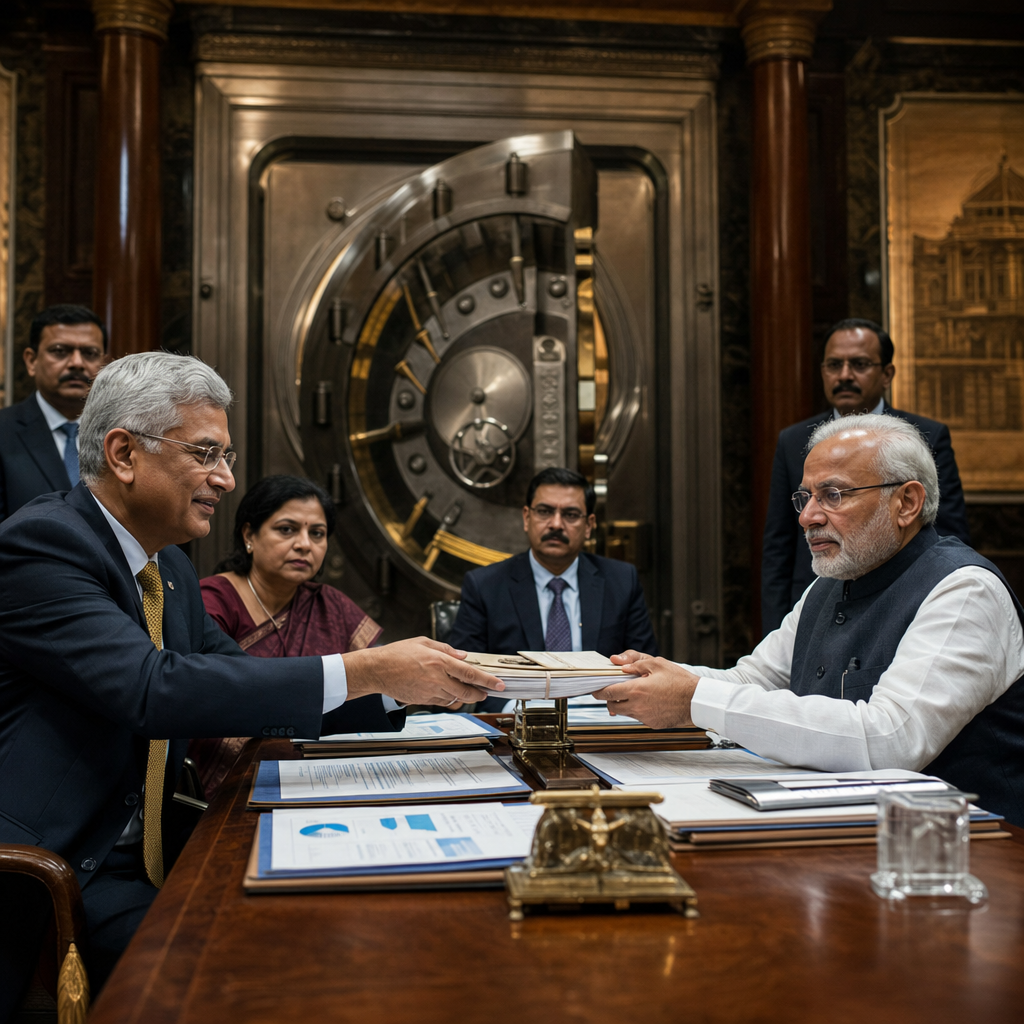
The Reserve Bank of India’s decision to hold its Contingent Risk Buffer at 6.5% instead of 7.5% is the key move here: it lifted the FY26 surplus transfer to the Centre to a record Rs 2.87 lakh crore, about Rs 92,000 crore more than it would have paid under the higher buffer,  The Indian Express reported. The RBI said it made the call after weighing “current macroeconomic factors,” financial performance and the need to maintain appropriate risk buffers. This is not a policy U-turn; it is the central bank deciding how much of its own balance sheet to keep as insurance versus how much to hand over to the government.
Why the buffer cut matters
The Contingent Risk Buffer is the RBI’s shock absorber. When it is reduced, less money is retained inside the central bank’s rainy-day fund and more can be transferred as dividend. That is why a technical adjustment can move tens of thousands of crores from one public pocket to another. The RBI’s balance sheet expanded 20.6% to Rs 91.97 lakh crore, and the transfer into the buffer still rose to Rs 1.09 lakh crore, even after the ratio was cut,  Rediff reported. The bank is still provisioning; it is just provisioning less aggressively than before.
The political significance is bigger than the accounting. The RBI dividend now makes up around 8% of the Centre’s revenue receipts, up from roughly 5% a decade ago, The Indian Express noted. That makes the central bank’s surplus transfer an increasingly important fiscal support line for the Union government. It also makes the government more exposed to RBI decisions it does not control.
Delhi gets relief, but not a clean pass
This year’s payout lands at a time when the Centre is under pressure from higher fertiliser subsidies, weaker tax collections after fuel duty cuts, and likely lower dividends from public sector oil companies, The Indian Express reported. The RBI transfer therefore cushions a real budget strain rather than creating fresh spending space.  The Economic Times added that the Union Budget had assumed Rs 3.16 lakh crore in total dividend receipts from the RBI and state-owned firms, so even a record surplus still leaves the fiscal arithmetic tight if crude prices stay high.
That is the power dynamic worth watching: the government benefits immediately, but the RBI is also signaling that it wants to preserve flexibility. The buffer cut is easier to justify in a year of strong income and a larger balance sheet; it is harder to repeat if macro conditions deteriorate. For policymakers, the windfall is useful. For the fiscal framework, it is a reminder that this is a variable revenue line, not a durable revenue base. India’s current comfort is contingent, not structural — which is exactly why  Global Politics readers should care.
What to watch next
The next decision point is the Centre’s FY27 borrowing and subsidy path, especially if the West Asia conflict keeps energy prices elevated and import costs sticky. Watch whether the government treats this RBI payout as one-off relief or bakes similar transfers into planning for next year. Also watch the RBI’s next buffer decision: if it rebuilds the CRB later, this year’s dividend will look like a one-time fiscal cushion rather than a new normal, The Indian Express and The Economic Times reported.