Ranchi's Role in India's Political Growth
How Ranchi became a hub for tribal-led politics
Model Diplomat8 min readIndia

Ranchi's Role in India's Political Growth: A Tribal Capital Rewrites the Playbook
How Ranchi became India's proving ground for tribal-led regional politics — from Jaipal Singh Munda's 1946 Constituent Assembly speech to Hemant Soren's 2024 comeback and the mining-royalty verdict.
Ranchi is not just Jharkhand's capital. It is the one Indian state capital where a tribal-led party has beaten the Bharatiya Janata Party (BJP) in three of the last four state elections, produced the constitutional argument that just handed mineral-rich states billions in new tax revenue, and — in the eighteen months between January 2024 and August 2025 — absorbed a chief minister's arrest, a comeback landslide, and the death of the movement's founder without losing power. The city has become the operational template for how regional, identity-anchored politics can survive Delhi's centralising pressure — and the reason Ranchi matters to India's political growth is that this template is now being studied, and copied, from Bhubaneswar to Guwahati.
From Adivasi Maidan to the Fifth Schedule
Ranchi's political weight is older than the state it now governs. On January 20, 1939, at Adivasi Maidan — a maidan the Jharkhand government has spent 25 years failing to develop, according to a Times of India reconstruction — the 1928 Olympic hockey captain Jaipal Singh Munda launched the Adivasi Mahasabha and the demand for a separate tribal state. Nine years later he carried that demand into India's Constituent Assembly.
Peer-reviewed work in Modern Asian Studies argues that Munda's Ranchi-based movement, more than any Delhi drafting committee, is why the Fifth and Sixth Schedules — the protections for tribal land and self-governance — survived nationalist opposition and made it into the 1950 Constitution. In the Assembly, Munda demanded that "the aboriginals' land must be inalienable," a claim Rochana Bajpai's
Oxford working paper traces directly into the constitutional exception that permits restrictions on property rights to protect tribes. Munda's line to the House — that the tribes had been "kept, as it were, in a zoo" and now demanded proximity, not paternalism — is the founding text of what Ranchi's politicians still call Adivasi asmita, tribal self-assertion.
That legal architecture is why the BJP's most persistent attack on Hemant Soren — that he acquired 8.86 acres of army land in Ranchi through "proceeds of crime" — collapsed politically. The land case, as the BBC reported when the Enforcement Directorate arrested Soren on January 31, 2024, was literally about a Ranchi plot; the ED alleged he "bought the property through 'proceeds of crime' by illegally selling land owned by the Indian army." It became a referendum on who controls tribal land in the city that invented the argument.
The Chotanagpur Tenancy Act of 1908 — which bars the transfer of tribal land to non-tribals across Ranchi and the surrounding plateau — remains, according to the Observer Research Foundation's Ranchi smart-city case study, the single most consequential land statute in the state. Any national-level move that touches it — a Uniform Civil Code, for instance — has to reckon with a Ranchi veto. As the BBC's reporting on
tribal fears about a UCC documented, Jharkhand's 8.6 million tribespeople, and the academics and activists who speak for them from Ranchi's Xavier's College, treat the city's customary-law framework as non-negotiable.
The 2024 verdict Ranchi wrote — and Delhi has to pay for
If Ranchi's political story were only about elections, it would be a regional curiosity. What makes the city consequential to India's political growth is a July 25, 2024, Supreme Court judgment that Jharkhand's government had pushed for over more than a decade.
In Mineral Area Development Authority v. Steel Authority of India, a nine-judge bench held 8–1 that royalty on minerals is not a tax, and that states — not the Union — hold the constitutional power to tax mineral rights and mineral-bearing land. Writing on SSRN, Supreme Court advocate Tarun Jain calls the decision one that "categorically decided the vexed issue addressing the span and contours of the States' rights to levy taxes on mineral rights" with "far-reaching impact on the economic activity in the country." A
follow-up analysis notes the ruling reaffirms that "the measure of tax is not a true test of the nature of tax" — the doctrinal move that gave states their new fiscal handle.
Jharkhand — one of India's most mineral-rich states, whose forest cover alone exceeds 29% according to the Press Information Bureau — is a principal beneficiary. That is not incidental. Central-government royalty revisions in 2014 had already lifted Jharkhand's collections by 46%, the highest jump of any state, from ₹645.91 crore to ₹944.38 crore, per a
Ministry of Mines release. The 2024 verdict layers a state taxing power on top of that royalty stream. Ranchi turned a tribal-rights argument into a fiscal-federalism precedent — and every mineral-rich state, BJP-ruled or not, now sits on the same side of the constitutional line.
The second-order effect is starker. Research by Oliver Vanden Eynde and Jacob Shapiro, catalogued at IDEAS/RePEc, found that a 2009 iron-ore royalty hike raised affected states' collections tenfold and was followed by "a significant intensification of violence" in mineral-bearing districts — the fiscal logic that turns Ranchi's hinterland into India's "Red Corridor." If the 2024 verdict expands state taxing power further, Ranchi's counter-insurgency and revenue calculations will move in tandem. The Brookings India study on
mining jurisprudence notes that courts have increasingly directed compensation from illegal mining "for benefit of tribals in the affected districts." Ranchi's political class has demanded exactly that for 25 years. In 2024 it won the argument.
The 2024 election: a template, not an accident
The November 23, 2024, result was the data point that reframed Ranchi's national significance. As Al Jazeera noted, the same weekend the BJP swept Maharashtra, the INDIA bloc won Jharkhand — with the JMM taking 34 seats, its highest ever. Al Jazeera's tally: the state's tribal communities (26.2% of the population) and Muslims (14.5%) backed the JMM-led alliance decisively. The
Economic and Political Weekly called it "surprising" — noting that in "today's political climate, it is challenging for any non-BJP government to retain power after a five-year term."
The result matters for three reasons the wires largely missed.
First, the campaign was won on a direct-transfer welfare scheme with a specific number attached. The Maiyya Samman Yojana paid ₹1,000 a month to women, reaching roughly 5.2 million recipients before polling day, according to Al Jazeera's post-election analysis. That cash-plus-identity combination — an economic transfer routed through a specifically tribal-woman category — is the template Bihar's Nitish Kumar and Odisha's opposition are now openly studying.
Second, the BJP's Bangladeshi-infiltrator campaign, led by Assam Chief Minister Himanta Biswa Sarma, backfired inside the tribal belt. Al Jazeera's pre-election reporting documented how the Election Commission ordered the BJP to pull down an Islamophobic video. Minakshi Munda of the University of Kolhan told Al Jazeera the state's tribal communities voted "to keep the BJP out of power … to safeguard the [state's] tribal identity" — because "the BJP are still seen as outsiders." Ranchi is now the empirical counter-example to the argument that Hindutva mobilisation always benefits the BJP in states with significant tribal populations.
Third, Kalpana Soren's political debut proved the movement was portable beyond one man. When Hemant Soren was jailed, Kalpana — until then a schoolteacher whose only public role, per the BBC, had been running blood-donation camps — was launched at a Giridih rally. She was not an MLA at the time. By the end of 2024 she was the JMM's second-most-influential campaigner and, as senior journalist Anand Mohan told
the BBC, "succeeded in adding tribal, Muslim and some other votes" to JMM's core — the coalition that flipped 26 of 28 reserved seats away from the BJP.
Why the founder's death did not break the machine
On August 4, 2025, Shibu Soren, the JMM's founder and three-time chief minister, died at 81. The BBC obituary called him the "grassroot leader" who built the party from a 1973 splinter into the vehicle that carved Jharkhand out of Bihar in 2000. Prime Minister Narendra Modi called him "a grassroot leader who rose through the ranks of public life with unwavering dedication."
Regional parties in India rarely survive founders. The DMK's succession war after M. Karunanidhi, the Shiv Sena's after Bal Thackeray, the Samajwadi Party's Yadav feud — each cost the party at least one electoral cycle. The JMM did not lose one. That is because succession was completed before the founder's death: Hemant Soren had run the government since 2019, Kalpana had become the public face during the 2024 campaign, and the 34-seat mandate was fresh in the assembly. The party institutionalised in Ranchi before it needed to.
The 2013 Development and Change study of Jharkhand argued that the Jharkhand movement had been "de-radicalized" by three instruments — reservations, cultural nationalism, and state-development discourse — which is why "distributive politics continues to be pursued through violent and extra-parliamentary means." The 2024 result complicates that thesis: Ranchi has now demonstrated that a direct-transfer welfare state, wrapped in Adivasi identity, can absorb the distributive demand into electoral politics. Whether that holds through the mining-royalty windfall is the open question.
What to watch — the Ranchi calendar
Three dates decide whether Ranchi's template scales.
- December 2025 – early 2026: state-level demand notices under the MADA verdict. Jharkhand's ability to actually collect retrospective mineral taxes from central PSUs like Coal India and SAIL — whose research and design institutes are headquartered in Ranchi, per
ORF — will test whether the 2024 judgment is enforceable or ornamental.
- Bihar assembly elections, 2025–26: the RJD, JMM's partner in the INDIA bloc, is running the Ranchi playbook — women's cash transfers, caste-plus-tribe coalition, sharp federalism rhetoric. A Bihar win exports the template. A loss confines it.
- JMM organisational election: with Shibu Soren gone, the party constitution requires a new working president. Whether Kalpana Soren gets that role, and whether Champai Soren's
defection to the BJP triggers further splits, will determine whether Ranchi's post-founder consolidation is real or temporary.
Diplomat View
The consensus read of Jharkhand's 2024 election was that Modi's BJP has a tribal problem. That is too narrow. The correct read is that Ranchi has produced the first replicable model of a regional, tribal-anchored, welfare-plus-identity coalition that can beat a national-Hindutva machine in a resource-rich, mineral-belt state. The MADA verdict then handed that model a fiscal engine.
The forecast: if the JMM government successfully collects even a fraction of retrospective mineral dues by 2027, expect Odisha's BJD, Chhattisgarh's Congress, and possibly Telangana's BRS to litigate and legislate along Ranchi's lines. The revision condition: if Kalpana Soren is sidelined in the JMM's post-Shibu reshuffle, or if the Enforcement Directorate secures a conviction in the Ranchi land case, the model's charismatic anchor breaks and the template becomes a curiosity. Watch the JMM working-president appointment and the Supreme Court's handling of Soren's pending challenges. Everything else is downstream.
The Bottom Line
Ranchi's role in India's political growth is not symbolic — it is operational. The city has produced, in eighty-five years, the constitutional protections for tribal land, the party that beat the BJP in a Hindutva-heavy campaign, and the litigation that shifted mineral taxing power from Delhi to the states. If India's federal balance tilts in the next decade, the tilt will have been engineered in Ranchi first.
Discover more
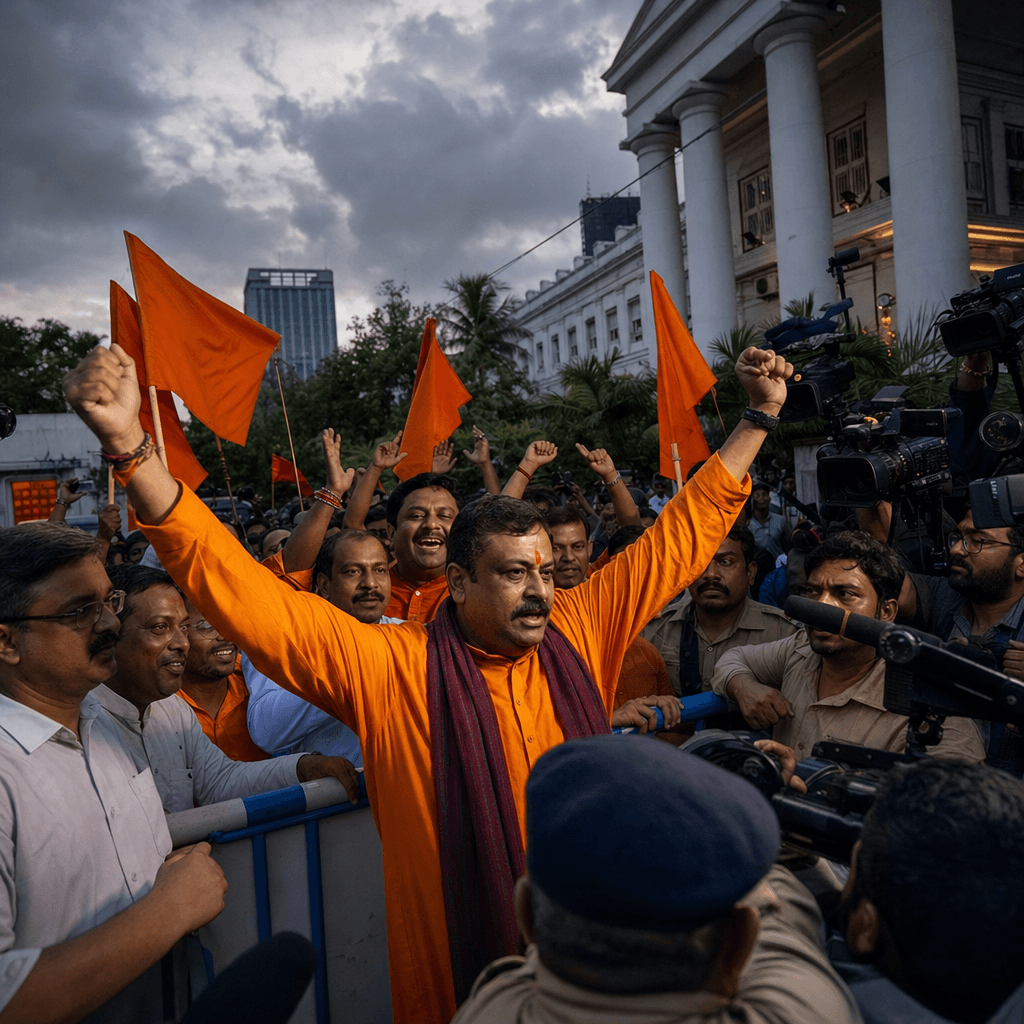
India
BJP’s West Bengal Sweep Forces Rethink
The BJP's sweeping victory in West Bengal reshapes Indian politics, forcing a battered Opposition to rethink strategy as the party extends its dominance.
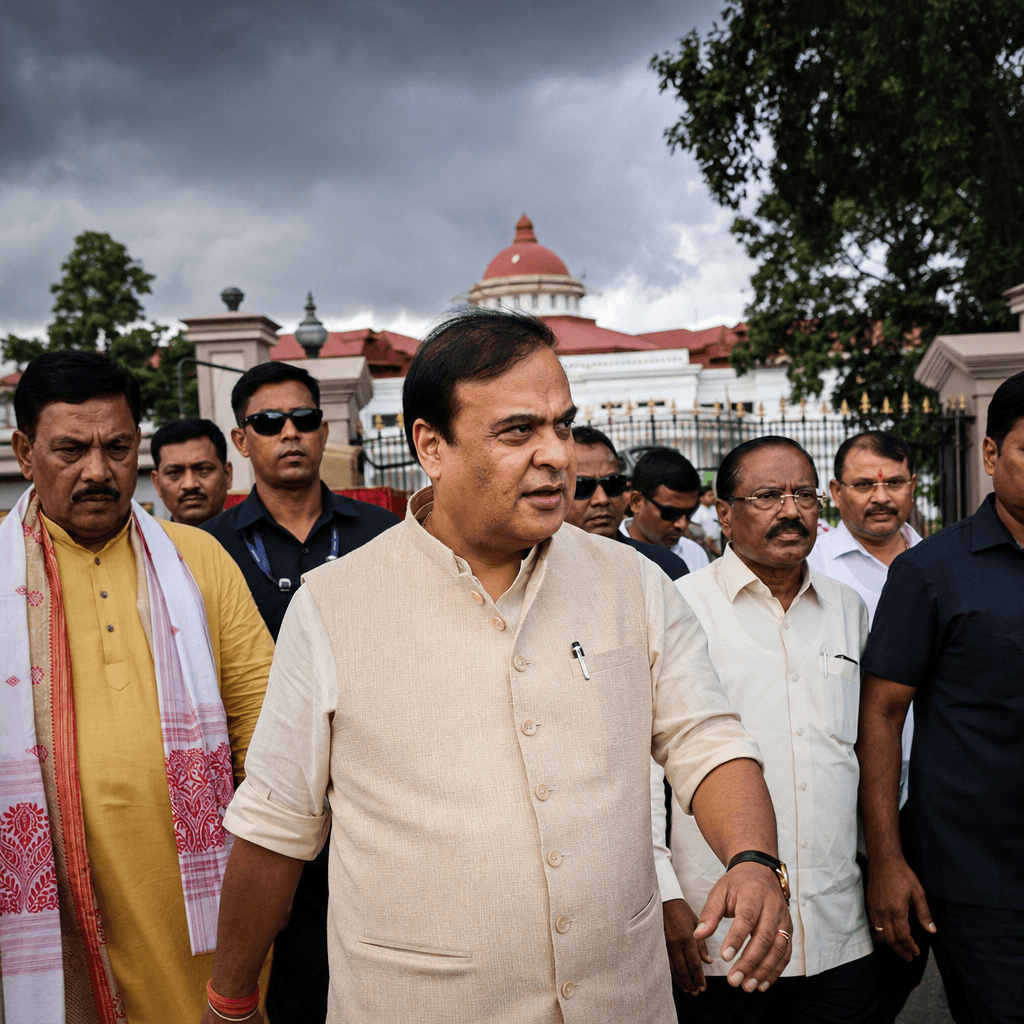
India
Himanta Biswa Sarma Takes Charge in Assam
The BJP's central leadership has locked in Himanta Biswa Sarma for Assam, signaling continuity over Sarbananda Sonowal as the party manages its power transfer.
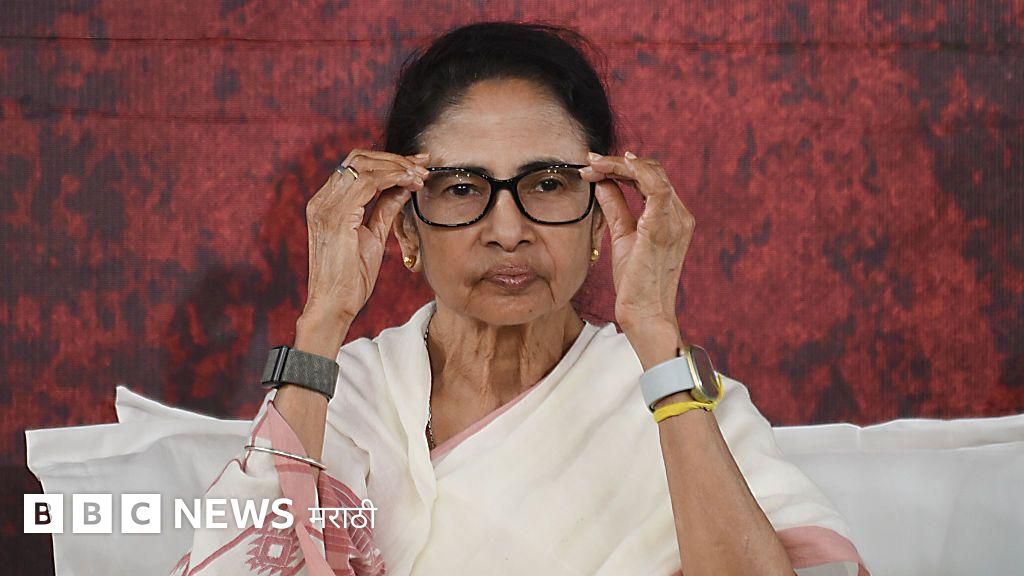
Global Politics
BJP's Victory in West Bengal
The BJP's sweeping win in West Bengal marks a major setback for Mamata Banerjee and the INDIA bloc, signaling a significant realignment in state politics.
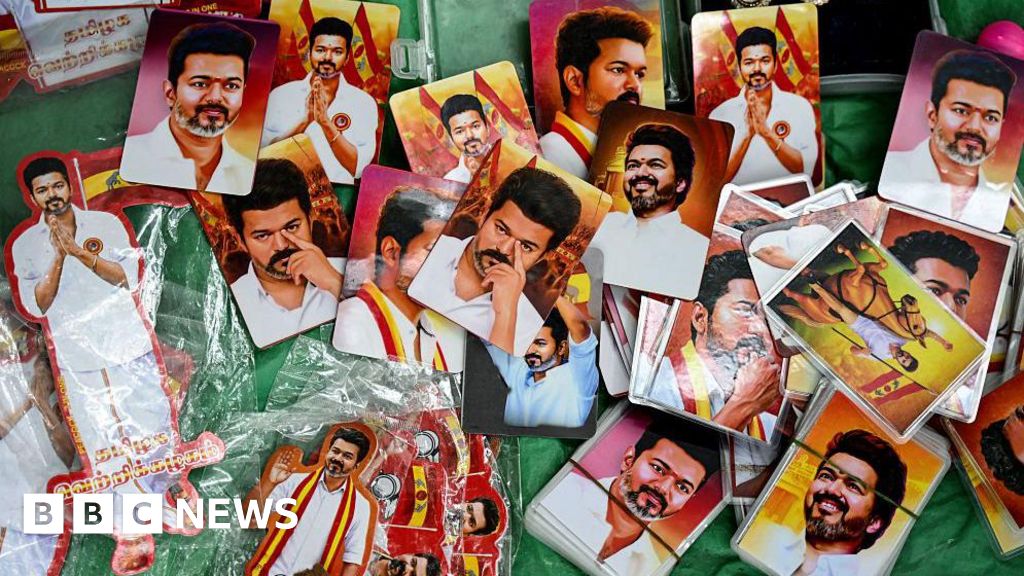
Global Politics
Vijay's Tamil Nadu Win Transforms Politics
C. Joseph Vijay's TVK wins Tamil Nadu elections, ending DMK's dominance and reshaping national opposition dynamics against Modi's BJP.