Rajnath Singh's Push for Women's Reservation
A political recovery operation, not a policy roadmap.
Model Diplomat10 min readIndia
Rajnath Singh's Women's Reservation Push Rings Hollow
Rajnath Singh vowed to implement 33% women's reservation after the 131st Amendment Bill's April 17, 2026 defeat — but the bill's real payload was delimitation.
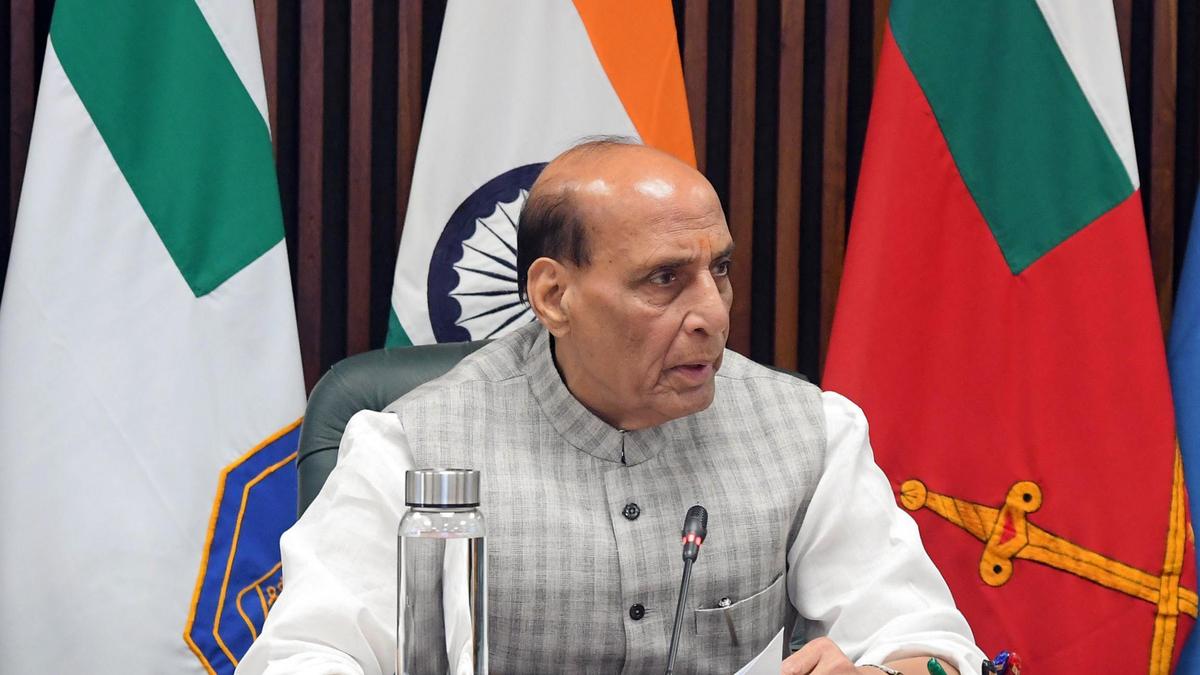
**Defence Minister Rajnath Singh's April 19, 2026 vow in Vasudevanallur that "no power in the world can stop us" from implementing 33% women's reservation is a political recovery operation, not a policy roadmap. **The constitutional amendment his government put to a vote two days earlier collapsed 298–230 in the Lok Sabha because it was engineered to smuggle a contentious redrawing of India's electoral map through under the cover of gender parity; the Tamil Nadu voters he was addressing punished the alliance he leads at the polls three weeks later. Women's reservation is not stalled because the opposition hates women. It is stalled because the government tied it to a delimitation exercise that would shift power to the Hindi-belt north, and refused to detach the two even after the defeat exposed that it lacked the numbers.
What actually happened on April 17
The Constitution (One Hundred and Thirty-First Amendment) Bill, 2026 was one of three pieces of legislation the government rushed through a hastily convened special session between April 16 and 18, 2026, alongside the Delimitation Bill, 2026 and the Union Territories Laws (Amendment) Bill, 2026. According to the
NUS Institute of South Asian Studies, the vote fell to 298 in favour and 230 against — well short of the two-thirds threshold a constitutional amendment requires. It was the first time under Prime Minister Narendra Modi that a constitutional amendment was blocked on the floor of the House.
Singh, campaigning for BJP candidate Ananth in Vasudevanallur two days later, framed the loss as sabotage. The Hindu reported him telling the crowd the Congress and DMK had "defeated" the amendment and vowing that "no power in the world can stop us" from implementing the quota. Modi echoed the line the same evening on national television, accusing the opposition of committing "foeticide" by killing the bill, per
ISAS.
The rhetoric obscures a design choice. The Carnegie Endowment's post-defeat analysis argues that the government's package used the women's quota "as a vehicle to push through a broader reengineering of India's electoral design" — raising the Lok Sabha ceiling from 550 to 850 seats, allocating up to 815 seats to states and 35 to Union Territories, delegating to Parliament the power to pick which census would anchor future delimitations, and eliminating the constitutional requirement to reapportion after every census. In short, the 131st Amendment was three reforms bolted together, with the popular one (women's quota) providing political cover for the other two.
Why the quota did not survive the arithmetic
The bill needed 360 votes in a 543-member Lok Sabha. According to Al Jazeera, Modi's National Democratic Alliance holds 293 seats — meaning the government walked into the session already 67 votes short and dependent on opposition defections it never secured. That the special session was called with less than 48 hours' notice and without customary floor-management outreach was itself a tell. ISAS lists the "way the legislation was introduced… without any prior consultation with opposition parties or floor management" as one of the three fatal flaws, alongside its content and its pre-election timing.
The Congress, DMK, TMC and the Left agreed on the principle of women's reservation but refused to endorse a package that redrew boundaries based on the 2011 census. Rahul Gandhi called it "an attempt to seize power through delimitation and gerrymandering," per Al Jazeera. Congress MP Gaurav Gogoi went further, alleging in the House that the government was introducing delimitation "through the backdoor." CPI(M) MP John Brittas offered the counter-package that has become the opposition's rallying line: reserve one-third of women's seats "based on the current strength of parliament" and freeze overall expansion until "population trends stabilise," he told the BBC.
The southern-state objection is not paranoia. Tamil Nadu, Kerala, Karnataka and Telangana account for roughly 20% of India's 1.4 billion population, per the BBC, but have delivered the sharpest declines in fertility and the highest per-capita incomes over the past three decades — a demographic penalty for policy success. A delimitation based on 2011 census figures — even more so on the 2027 count now under way — would compress their share of the Lok Sabha relative to Uttar Pradesh, Bihar and Madhya Pradesh. Tamil Nadu Chief Minister M K Stalin publicly burned a copy of the bill and called it a "massive historic injustice," per Al Jazeera.
Home Minister Amit Shah's reply in the Lok Sabha insisted the pro-rata 50% expansion would leave southern seat share intact — Tamil Nadu rising from 7.18% to 7.23%, the south's aggregate share of MPs staying near 24%, with total southern representation moving from 129 to 195 seats. But as Arghya Sengupta of the Delhi-based Vidhi Centre for Legal Policy told the
BBC, the legal text contained no such guarantee: the "basis for this number is unclear and does not appear to be proportionate to population growth recorded in the 1971 and 2011 census."
The Takshashila Institution's post-mortem noted the bill made no corresponding expansion for state assemblies, "creating a mismatch: fast-growing states could gain more MPs without a corresponding rise in MLAs." Sanjay Kumar of the Centre for the Study of Developing Societies flagged another unresolved problem: "What criteria will be used to reserve seats for women? That's the tricky part. How do you decide which constituencies are set aside?" he told the BBC. The government's own draft was silent on rotation mechanics for SC/ST women seats. And as Carnegie observes, the 2023 Nari Shakti Vandan Adhiniyam already ties the quota to a fresh census — meaning even without the 131st Amendment, women's reservation cannot legally kick in until after the 2027 census and its downstream delimitation.
The historical parallel that reframes the vow
Singh's vow reads differently against the bill's three-decade backstory. A women's-quota constitutional amendment was first proposed in 1996 under Prime Minister H D Deve Gowda's United Front government, then reintroduced in 1998, 1999, 2008 and 2010, according to the BBC's archival explainer. Each iteration collapsed — often because BJP MPs, alongside socialist parties, refused to back it. As the
Observer Research Foundation has documented, between 1957 and 2019 women candidates actually won at a higher rate than men in every Lok Sabha election — the ceiling has always been party nomination, not electoral appetite.
The 2023 Nari Shakti Vandan Adhiniyam, passed 454-2 in the Lok Sabha and unanimously in the Rajya Sabha, broke the deadlock — but only formally. The BBC noted at the time that implementation would take "several years" because it was contingent on a delayed census and a five-year delimitation exercise. The 131st Amendment was pitched as a shortcut to close that gap. It became instead a demonstration that the shortcut was blocked by the political price of the very tool it required. That is a familiar pattern for the bill's advocates. As the ORF's Sonia Sharma warned before the special session, if "the Bill is sacrificed one more time, it will regress to what The Indian Franchise Committee report of 1932 had stated" — that without special provision "it seems improbable that more than a few, if any, women will secure election."
The Tamil Nadu verdict rewrites the calculus
Singh delivered his defiant vow in a state that then handed the DMK a historic thrashing — and did not hand it to the BJP either. According to the BBC's Tamil Nadu election coverage, film-star-turned-politician C Joseph Vijay's Tamilaga Vettri Kazhagam swept 108 of 234 seats. The DMK collapsed from 133 seats in 2021 to 59; the AIADMK took 47. The BJP, contesting 27 seats in alliance with the AIADMK,
won just one seat, per ISAS. Vijay was sworn in as chief minister on June 22, 2026 after cobbling together support from the CPI, CPI-M, VCK, IUML and Congress to reach 120 legislators, per a
subsequent BBC report.
That result matters for the reservation debate for two reasons. First, it demolished the BJP's implicit theory that the "anger of women" against opposition parties over the quota would tilt southern votes toward the NDA — women in Tamil Nadu broke decisively for Vijay, whose party ran on Dravidian identity and explicit anti-BJP posture. Pollster Pradeep Gupta of Axis My India told the BBC the shift was "most pronounced among younger voters and women," with 18–39-year-olds — roughly 42% of Tamil Nadu's electorate — driving TVK's rise. Second, the result created a new veto point: an incoming Chennai government with its own opposition to delimitation. West Bengal cut the other way — the BJP swept over 193 seats and dislodged Mamata Banerjee — but even there, the BJP's own female nomination rate was 11% versus TMC's 19%, per
ISAS.
The BJP's own record on nominating women complicates its moral posture on the quota. ISAS notes the party fielded 16% women candidates in the 2024 general election — below the Congress and well below the TMC's 33%. In April 2026 it nominated 11% women in West Bengal and 19% in Tamil Nadu. That gap runs into an institutional one: the Election Commission and Home Ministry have long acknowledged that the Central Industrial Security Force — which Singh in 2019 said would be the "first Force to achieve 33% reservation target for Women" — has yet to hit that benchmark seven years later. The rhetorical target keeps moving; the numbers do not.
The primary document reads differently from the speech
The government's own account of the debate, carried on the Press Information Bureau, is worth reading against Singh's rally line. In his intervention, Shah acknowledged the operative constraint verbatim:
"The Nari Shakti Vandan Act stipulates that reservation for women will be ensured in the delimitation exercise to be carried out after the Census conducted post-2026."
That is the government conceding, on the record, that the quota is legally chained to delimitation. Singh's promise on April 19 — that "no power" can stop implementation — sits awkwardly next to Shah's admission on April 18 that implementation runs through a census not yet complete and a delimitation formula not yet agreed. Modi himself, in his separate pre-session PIB address, staked implementation to a 2029 deadline the opposition had demanded — a target Carnegie's analysts describe as effectively unreachable without the census closing and a delimitation commission reporting first. Shah in the same debate confirmed the census's individual-enumeration phase, including caste data, would only begin after the current housing-listing round — pushing usable population totals to 2027 at the earliest.
What the fight is really about
Strip the gender framing away: the 131st Amendment was, first, a delimitation bill. The 543-seat Lok Sabha has been frozen against population since the 1971 census. Shah's floor intervention noted 127 constituencies now hold more than two million voters each — a genuine "one person, one vote, one value" problem that Sengupta of Vidhi agrees requires eventual redress. The question is on whose census, on what timeline, and with what protections for states that succeeded at demographic transition.
That is why the opposition's counter-offer — reserve one-third of the current 543 seats immediately, defer delimitation to a post-2027 exercise — is politically potent. It calls the BJP's bluff: if the government wants women in Parliament by 2029, it can accept Brittas's proposal to freeze the overall size and quota the existing seats. It has declined to. The ORF's pre-session analysis noted the same logic in reverse: Indian political parties can raise women's representation immediately by allocating "the requisite number of party tickets to women without falling back into the vicious circle of tokenistic or dynastic politics" — a step no major party has taken and one that requires no constitutional amendment at all.
Singh's rally rhetoric therefore functions as pre-emptive blame allocation for a delay the government's own legislation guarantees. That is not a policy failure — it is the policy. The women's quota is the wrapper; delimitation is the payload. Whichever party controls the shape of the post-2027 Lok Sabha controls Indian politics for a generation, and the BJP's calculation is that fighting the 2029 election on "who killed women's reservation" is more useful than winning a stripped-down version of the bill now. That calculation was made before Tamil Nadu voted. Tamil Nadu did not cooperate.
What to watch next
- Census enumeration phase (late 2026–early 2027): Shah confirmed on April 18 that individual enumeration — including caste data — will begin after the current housing-listing phase. The published population totals are the base for any legally sound delimitation.
- Monsoon session, July–August 2026: Whether the government reintroduces a stripped-down women's reservation bill unbundled from delimitation. Rejection is the tell — if the BJP won't take the win without the map redraw, the
ISAS thesis on motive holds.
- Tamil Nadu government under Vijay: TVK's stance on federal delimitation litigation. A Supreme Court challenge would freeze the 2011-census framework the BJP wants.
- Bihar assembly election, late 2026: The next test of whether the "anger of women" narrative Modi and Shah have deployed moves votes in a Hindi-belt state where the BJP wants delimitation to reward it.
Diplomat View
Rajnath Singh's April 19 pledge in Vasudevanallur is best read as a hedge, not a promise. The government now needs the women's-reservation defeat to be the opposition's fault more than it needs the reservation itself — because the electoral upside of the grievance runs longer than the policy would, and because the underlying prize was always the delimitation reset that a two-thirds vote could have delivered. Expect the BJP to campaign relentlessly on the vote through the 2029 general election, to slow-walk any monsoon-session compromise that would deliver women's reservation without a delimitation trigger, and to lean on a post-2027 census timeline that puts the constitutional maths back in its favour once southern states have absorbed further relative demographic decline. The forecast changes if two things happen: if the BJP tables a clean, delinked amendment before the 2027 winter session and dares Congress to vote it down, or if a Supreme Court bench takes up a delimitation challenge and freezes the process. Neither looks imminent as of July 2026.
The bottom line: Rajnath Singh's push is a campaign line, not a legislative plan. Women's reservation in India will remain hostage to the delimitation fight the BJP designed it to carry — and the Tamil Nadu verdict just made that fight harder to win.
Discover more
India
India's Women's Reservation Act
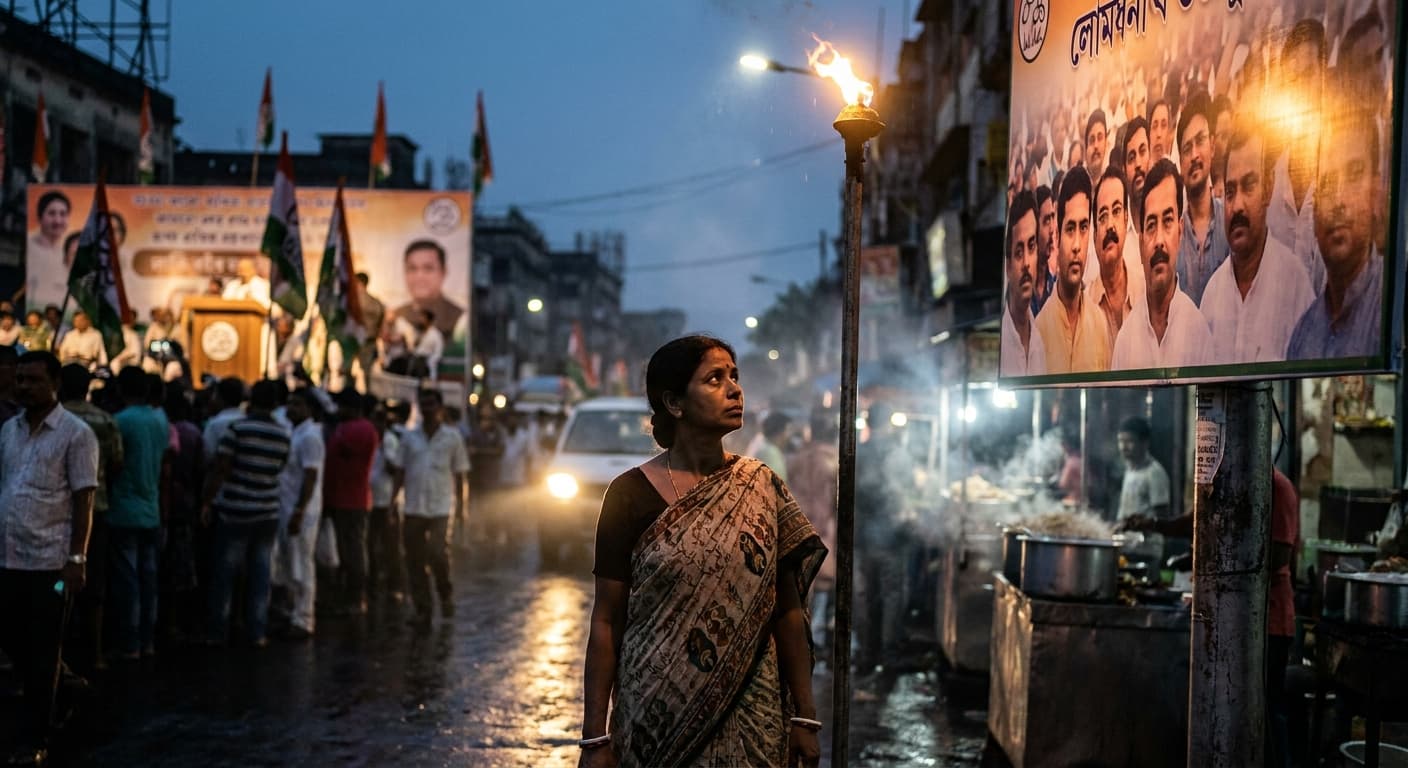
West Bengal's elections expose a stark gap in women's political representation despite India's Women's Reservation Act promising reserved legislative seats.

India
India's 2026 Governance
India's 2026 governance agenda centers on GST reform and the Women's Reservation Act, testing federalism and the country's push for fairer representation.
India
Women’s Reservation Act Sparks Federal Tense
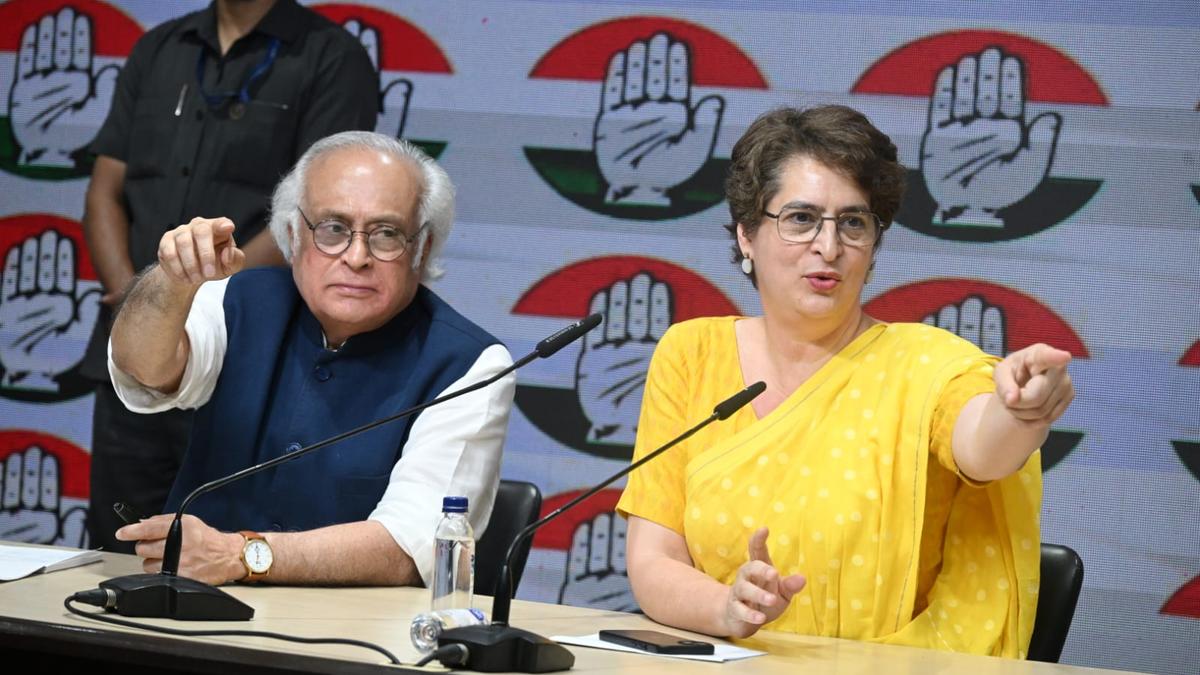
The Lok Sabha's rejection of the 131st Amendment Bill signals a significant shift in India's federal dynamics, impacting women's representation.
India
Women’s Reservation Act Defeated
India's Lok Sabha voted against the Women's Reservation Act, revealing deep federalism issues and Modi's first legislative defeat.