Rahul Gandhi's Bold Stand on Great Nicobar
Opposition leader confronts government on tribal rights and development.
Model Diplomat3 min readAsia
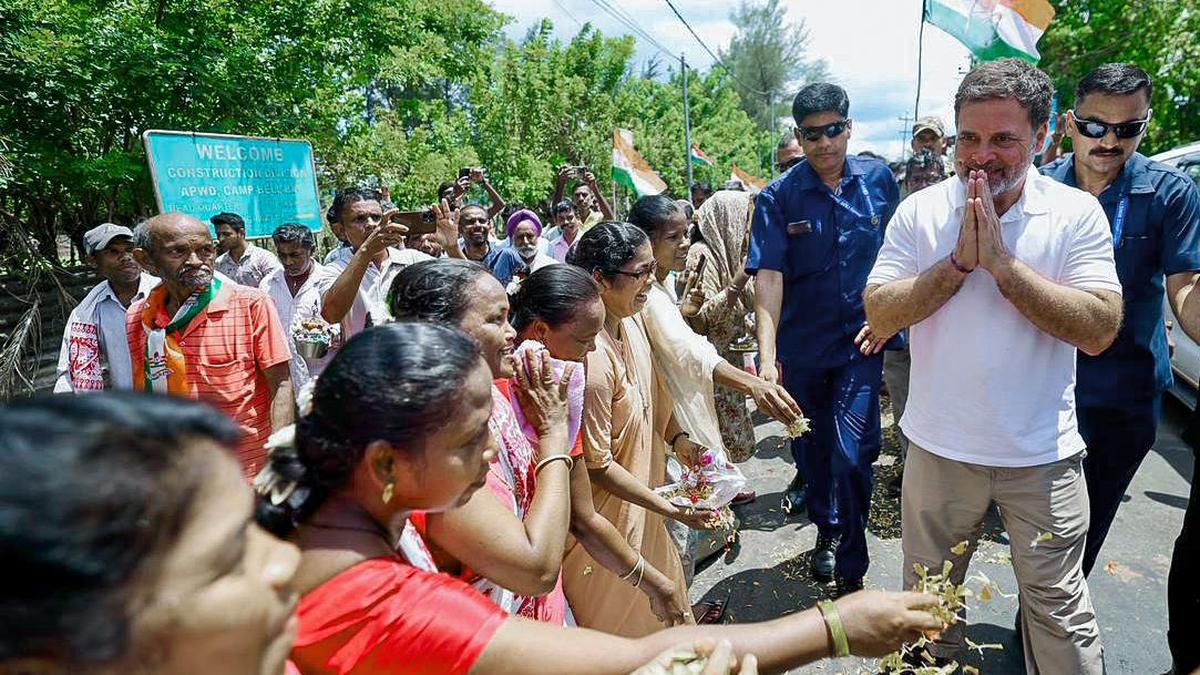
Rahul Gandhi Forces His Way Into Great Nicobar's Political Storm
India's opposition leader reaches a restricted island despite official resistance, turning a ₹92,000-crore development dispute into a direct BJP–Congress confrontation.
Rahul Gandhi has landed on Great Nicobar Island — defying what he described as deliberate administrative obstruction — to meet tribal communities opposing the Modi government's ₹92,000-crore mega-infrastructure project. The visit transforms a slow-burning controversy over indigenous rights and environmental clearances into a live political flashpoint with national implications.
The Dispute He Flew Into
The Great Nicobar project — a transshipment port at Galathea Bay, an international airport, a power plant, and a township — received environmental clearance in 2022 and has since accumulated legal and political opposition. The National Green Tribunal upheld the clearance earlier in 2026, citing "strategic importance," but ordered strict compliance with conditions running to 2052 to mitigate damage to 20,000+ live coral colonies and leatherback turtle nesting sites.
On the ground, the picture is more charged. A March–April 2026 draft "Comprehensive Tribal Welfare Plan" — leaked to The Hindu — outlines relocation of Nicobarese families to sites including Rajiv Nagar (32 households, 101 people) and New Chingenh (30 households, 117 people), funded at ₹42.52 crore over 24 months. The problem: the government has publicly insisted no displacement will occur. Congress leader Jairam Ramesh called the contradiction "a lie." Tribal Council members, handed the document without a Hindi translation, asked for more time to review it.
This is the political opening Gandhi walked through. A Nicobarese delegation led by Barnabas Manju and Titus Peter met Gandhi in New Delhi on March 19, 2026, telling him they had revoked their No Objection Certificate four years ago and received no government response. Gandhi pledged a visit. The administration's reported effort to block that visit has now handed him a sharper narrative than the project's critics could manufacture themselves.
Who Holds the Leverage
The BJP government holds structural power here: NGT clearance is in hand, environmental objections have been batted away on national-security grounds, and the Andaman and Nicobar Administration — a Union Territory — operates directly under the Centre. Restricting access to a remote island is operationally straightforward.
But obstructing the Leader of the Opposition from reaching Indian territory transforms a development dispute into a democratic-access story. Gandhi gets two news cycles from a single trip: first, being blocked; second, arriving anyway. Both images serve Indian opposition politics better than any press conference.
The Shompen and Nicobarese communities are the actors with the least leverage. Their revoked NOC has gone unanswered. Ongoing Calcutta High Court challenges over consent procedures and forest rights remain unresolved. The draft relocation plan, budgeted and timed, suggests the Centre is moving regardless.
What to Watch Next
Three pressure points will define how this plays out. First, the Calcutta High Court proceedings on tribal consent — a ruling against the clearance process would force the Centre to restart consultations and delay the project materially. Second, whether Parliament's monsoon session (expected July 2026) becomes a forum for Gandhi and Ramesh to force a debate using the relocation document as evidence. Third, watch the Tribal Council's formal response to the draft welfare plan — if they reject it publicly and collectively, the government's "no displacement" position becomes legally and politically untenable.
The Great Nicobar project was always a collision between strategic ambition and indigenous rights. Gandhi's arrival means it is now also an election-cycle liability for New Delhi to manage.
Discover more
India
Rajnath Singh's Durga Squad for 2026 Polls
Rajnath Singh's Durga Squad promised women's safety in Bengal but has since disappeared from the agenda, revealing BJP's true priorities.
India
BJP Congress Clash Over MP Bill Defeat
The BJP's defeat of the women's quota amendment sparks a political narrative war with Congress, impacting future elections.
India
Congress Accuses Modi of Stalling Women's Law
Congress accuses Modi of stalling women's reservation law by linking it to delimitation, revealing a deeper electoral strategy.

Conflict & Security
Drone Warfare Killing Aid Workers at Unprec
Over 1,000 humanitarian workers killed in three years as cheap armed drones collapse legal protections. Gaza, Sudan, Ukraine, and DRC see deliberate targeting of aid convoys and hospitals with zero prosecutions.