Punjab Politics
Congress rebellion boosts AAP's chances in 2027 elections
Model Diplomat8 min readPunjab
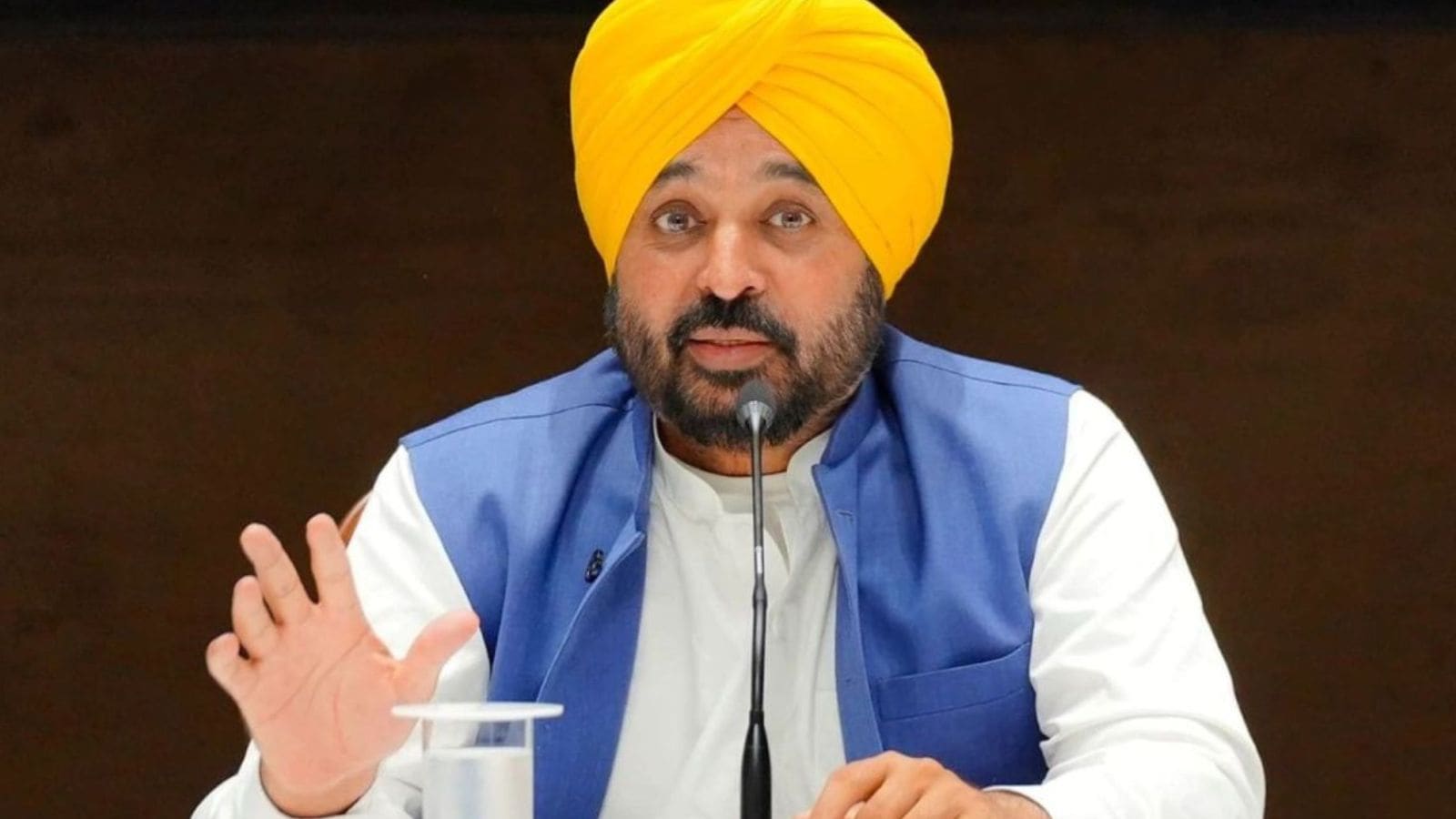
Punjab Politics: Congress Revolt Hands AAP a Second Term
Punjab's ruling AAP is bruised, but the Congress rebellion against state chief Amarinder Singh Raja Warring on July 6, 2026 is why Bhagwant Mann is on track to win 2027.
Punjab Congress leaders opposed to state president Amarinder Singh Raja Warring formally rebelled on July 6, 2026, hours before AICC in-charge Bhupesh Baghel landed in Chandigarh — an open revolt that, on the evidence, will keep Bhagwant Mann's Aam Aadmi Party (AAP) in power in 2027 more reliably than any campaign the ruling party could run itself. The party that ought to be inheriting Punjab's anti-incumbency is instead splitting the vote that would deliver it. That is the story: the Congress is not losing to AAP in Punjab. It is losing to itself, again, three years after its 2022 rout.
The rebel bloc — former chief minister Charanjit Singh Channi, freshly-installed core committee chairman Sukhjinder Singh Randhawa, and roughly a dozen former ministers and MLAs — met in Kharar to decide, per Hindustan Times, to boycott every programme run by Warring and demand his removal before the campaign begins. Leader of the Opposition Partap Singh Bajwa stayed away from the room but, the paper reported, has spent two days coordinating with Channi and Pargat Singh on a common strategy. This was the second public act of dissent inside 72 hours; the first was staged at Channi's residence in Morinda on July 3. The Kharar attendance sheet — Rana Gurjeet Singh, Pargat Singh, Razia Sultana, Tript Rajinder Singh Bajwa, Bharat Bhushan Ashu, Gurpreet Singh Kangar, MLA Kuldeep Singh Dhillon — is a roll call of the party's surviving frontline in a state where it holds only 18 of 117 seats.
The proxy war nobody is naming
Warring is not the real issue. The chief ministerial face for 2027 is. Channi wants it back; Bajwa, the LoP, wants it for the first time; Randhawa, twice denied, wants it too. The AICC's decision in late June to retain Warring as Punjab Pradesh Congress Committee (PPCC) chief and Bajwa as LoP — reported by ThePrint — was read inside the state unit as the high command punting on the succession question. Channi's camp responded by manufacturing an emergency.
The rebel note being drafted for Congress president Mallikarjun Kharge and Rahul Gandhi, according to Hindustan Times, argues that "Congress cannot win the 2027 assembly elections under Warring's leadership." It is the language of a leadership contest wrapped in the vocabulary of electoral triage. Baghel's July 6 mediation attempt — his second inside a fortnight — is the party's tacit admission that containment has failed. A
New Indian Express dispatch two days earlier caught Warring insisting Channi was "like an elder brother" and denying factionalism — the standard tell in Punjab Congress that a factional war has begun.
Warring's own damage-control move is telling. He posted photos of the same rebel meeting on his own social handles and labelled it a "Mission 2027" strategy session, denying any factional dimension. His absence from the group photograph, Hindustan Times noted, "fuelled further speculation." Channi's meeting with Union Home Minister Amit Shah in Delhi last week — a meeting ThePrint flagged as fuelling defection rumours — is the kind of signal Punjab Congress veterans read fluently. In this party's arithmetic, denials are the strongest evidence something is happening.
The AAP problem the rebellion masks
By any conventional read, Bhagwant Mann's government should be a dead man walking. AAP swept 92 of 117 seats and 42% of the vote in 2022 by weaponising anti-incumbency against both the Congress and the Akalis, according to Al Jazeera's count of the Election Commission tally, and
BBC News reported the wipe-out took down five-time CM Parkash Singh Badal, two-time CM Amarinder Singh, then-CM Channi (who lost both his seats), and state Congress chief Navjot Singh Sidhu. Four years in, most of those forces have organised themselves against Mann — separately.
Two of AAP's biggest political wounds are self-inflicted. In April 2026 the Mann government passed a sacrilege law amending the Jaagat Jot Sri Guru Granth Sahib Satkar Act, 2008, prescribing seven-to-twenty-year prison terms and fines up to ₹10 lakh, per BBC News. The Akal Takht, the Sikhs' highest temporal seat, then summoned the AAP-appointed Speaker Kultar Singh Sandhwan on May 8 and, on record, extracted admissions from several legislators that they had not read the bill before voting. Head jathedar Kuldip Singh Gargajj called this "serious negligence" and ordered the government to amend the law within a month and to freeze the disputed provisions on registration and custody of the Guru Granth Sahib until it did. Mann has publicly refused to withdraw the law but signalled openness to amending it — a posture the Akalis, the SAD (Punar Surjit) breakaway meeting at
Doraha, and the Panthic Council are now using to push for Panthic unity ahead of 2027.
The second wound is law and order. On July 3, 2026, per BBC Punjabi, gunmen linked to a Lawrence Bishnoi–Goldy Brar network shot dead Akali youth leader Vikram Singh Shamil at a Tarn Taran gurdwara — the third high-profile political killing of AAP's term after Sidhu Moose Wala in 2022 and Harnirdar Singh Dhali in 2025. Congress LoP Partap Singh Bajwa's line — "the AAP government has no grip; Punjab is unsafe" — is now a nightly news frame. Yet the November 2025 Tarn Taran by-election showed exactly why grievance is not translating into an alternative: AAP won by 12,091 votes, but as
BBC Punjabi noted, Congress ran second, the SAD forfeited its deposit, and turnout collapsed to 60.95% — nearly 11 points below the 71.9% of 2022, according to
BBC Punjabi's live count. Punjab is not endorsing AAP. It is refusing to consolidate against it.
The historical parallel — and why it should scare Delhi
There is a reason this looks familiar. In September 2021, the Congress engineered Amarinder Singh's resignation, installed Channi as its first Dalit chief minister, and detonated its own government inside four months — a sequence BBC News at the time called an "uncharacteristic" but ultimately fatal act of political savvy. By March 2022 Channi had lost both his seats. As BBC's post-mortem put it, "Undermining the decisions of your own government day in and day out, without hindrance from the Congress High Command, has cost us dear" — the words, notably, of Sukhjinder Singh Randhawa, now the man convening the current rebellion. The July 6, 2026 meeting is the same players running the same script one election earlier.
The second-order effect is national. Punjab is one of only a handful of states where the Congress can plausibly win single-handedly, without the INDIA-bloc arithmetic it needs elsewhere. In January 2024, as Al Jazeera reported, Bhagwant Mann announced AAP would fight Punjab solo and the state became a live front in the opposition alliance's Delhi tensions. A Congress that cannot govern its own faction fight in Chandigarh has almost no leverage to demand Punjab's 13 Lok Sabha seats from AAP in any 2029 seat-sharing talk — and every incentive for AAP to keep the state as its personal fortress. The winner of the July 6 revolt, in other words, is neither Channi nor Warring. It is Arvind Kejriwal.
The caste map that decides everything
Punjab's dominant faultline is not left-right; it is Jat Sikh, Dalit and Hindu urban. Since 1967, chief ministers have overwhelmingly come from the Jat Sikh community despite it forming only 21% of the population, according to Wikipedia's summary of Punjab electoral history. Dalits, at roughly 32%, are the single largest bloc — the reason Channi's elevation in 2021 was, on paper, the smartest move Congress had made in a decade, per
BBC News. The current fight replays that arithmetic: Warring is a Jat Sikh from the Malwa belt, Channi a Ramdasia Dalit from Doaba, Bajwa a Jat Sikh from Majha, Randhawa a Jat Sikh from Majha. A leadership handover to Channi would signal a Dalit-first campaign; keeping Warring signals a Jat Sikh core. The high command's inability to choose is what has produced the war.
AAP has quietly benefited from Congress's caste immobility. Mann is Jat Sikh but the party's 2022 slate included working-class and Dalit unknowns — BBC News singled out mobile-repair mechanic Labh Singh Ugoke, who defeated Channi in Bhadaur. That coalition — Jat Sikh farmers plus non-elite Dalits plus urban Hindu voters tired of the Badals and the Gandhis — is the one Congress needs to prise apart. It cannot do that while its top three leaders are contesting a chief ministership that has not been offered.
What the numbers say the Congress is defending from
The Congress's structural position in Punjab is bleaker than the daily news makes it look. Its 2022 vote share was 22.9% — down from 38.5% in 2017. Its seat count collapsed from 77 to 18. Its 2024 general-election recovery in Punjab (7 of 13 Lok Sabha seats) came, per state analysts quoted by BBC Punjabi, largely because AAP fought solo and the anti-Modi vote had nowhere else to consolidate — a dynamic that reverses in a state contest where AAP is the incumbent.
The November 2025 by-election result is the tell. Even in a seat where AAP was defending in the middle of a term dogged by scandal, sacrilege, and killings, BBC Punjabi reported the Congress could not close a 12,091-vote gap. Warring's own diagnosis — that Amarinder Singh's continued attacks split the anti-AAP vote — is functionally correct; his problem is that in the current revolt he is now cast as the Amarinder figure.
What to watch next
Three catalysts will determine whether this becomes a real leadership change or another Congress simulacrum of one.
- Baghel's report to Kharge and Rahul Gandhi, mid-July 2026. If the high command replaces Warring, expect Channi installed as PPCC chief or de-facto CM face; if it does not, expect a second, larger rebel meeting and defection whispers to harden.
- The Punjab Assembly's response to the Akal Takht ultimatum on the Guru Granth Sahib Satkar (Amendment) Act, 2026. A formal amendment climbdown by Mann's government would neutralise the Akali revival before it starts. A refusal will hand SAD (Punar Surjit) and its Panthic Council allies a Sikh-identity plank Congress cannot occupy.
- The 2027 assembly poll notification, expected between January and March 2027. Punjab's 16th Assembly's term expires by then; the ECI's model code of conduct will freeze factional realignment. Every week Congress spends fighting itself before that date is a week AAP does not need to defend its record.
The Bottom Line
The July 6, 2026 revolt in Kharar is not a threat to AAP — it is AAP's insurance policy. Punjab's ruling party is unpopular, scandal-battered, and losing turnout even in seats it wins; a united opposition would end its term. The Congress is instead re-running the 2021 Channi-versus-Amarinder war ten months before an election, and the beneficiary — as in 2022 — will be Bhagwant Mann.
Discover more
India
Bhagwant Mann Launches Punjab Campaign Summit
Punjab Chief Minister Bhagwant Mann launches a campaign summit to frame the AAP government's governance record ahead of the high-stakes 2027 state elections.

India
Akal Takht Challenges Punjab Anti-Sacrilege
The Akal Takht challenges Punjab's new anti-sacrilege law, demanding amendments and asserting Sikh religious authority against the AAP government's measure.
India
Punjab Defectors vs AAP: Constitutional Clash
Seven AAP MPs defect to BJP using a merger loophole, prompting a constitutional clash over India's anti-defection law.

India
Bhagwant Mann's Recall Efforts Hit Limits
Bhagwant Mann's recall push hits constitutional limits, narrowing the AAP leader's options as Punjab's standoff with the BJP exposes deep legal hurdles ahead.