Piyush Goyal Critiques DMK-Congress on Women
Piyush Goyal's remarks on women's reservation bill defeat
Model Diplomat8 min readIndia
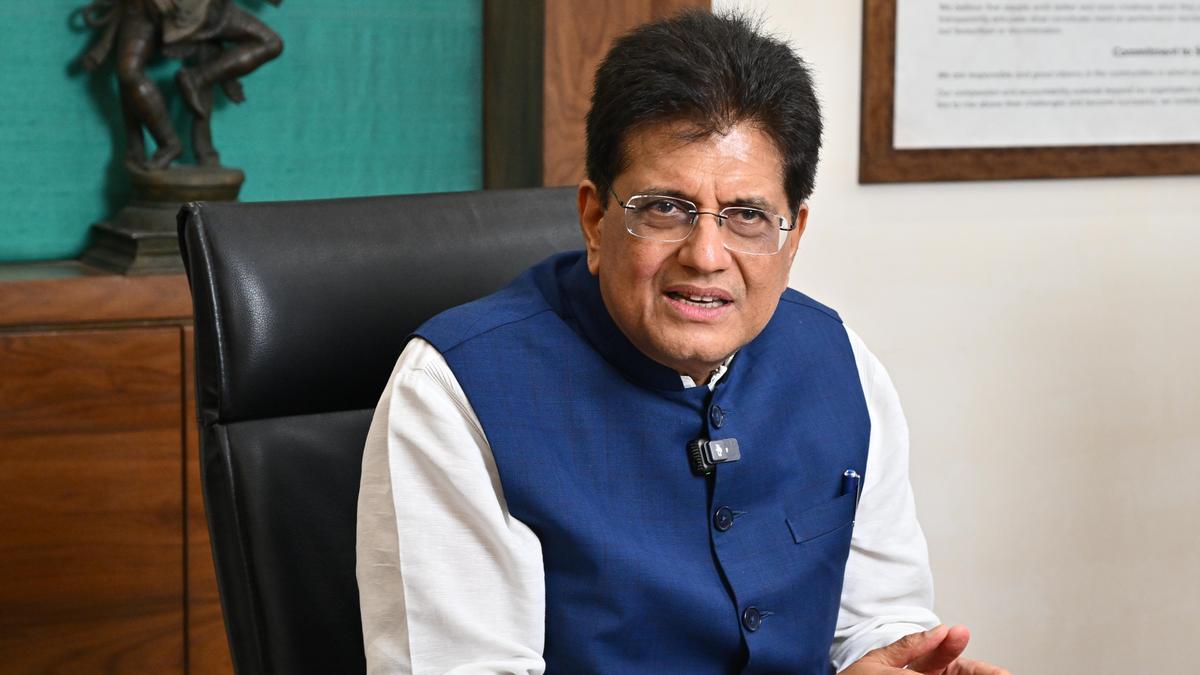
Piyush Goyal's Attack on DMK-Congress Over Women's Bill
Why Piyush Goyal's "no woman will be happy with DMK-Congress" line, aimed at the April 17 defeat of the women's reservation amendment, still shapes India's politics in July 2026.
Union Commerce Minister Piyush Goyal's April 19–20 broadside against the DMK-Congress alliance — that "no woman will be happy" with parties that sank the Constitution (131st Amendment) Bill on April 17, 2026 by 298 to 230 votes — was tactically vindicated and strategically hollow. The DMK was routed in the Tamil Nadu assembly election weeks later. But the women who abandoned M.K. Stalin did not migrate to the BJP; they went to actor Joseph Vijay's Tamilaga Vettri Kazhagam. Nearly three months on, Goyal's line survives as the government's justification for the largest failed constitutional amendment of the Modi era — and as evidence that the "anger of women" is a weapon the BJP can fire but cannot fully collect.
What Goyal actually said, and when
Speaking to reporters in Chennai on Sunday, April 19, 2026 — two days after the Lok Sabha vote and days before Tamil Nadu polling — Goyal told The Hindu that "no woman would be happy" with the DMK-Congress decision to defeat the women's reservation bill, accusing the alliance of "always dividing the nation: sometimes North and South, North East and North." He pointed to Amit Shah's floor offer of a uniform 50% seat increase across states as proof that southern grievances had been technically addressed.
The next day, Goyal escalated. He called Stalin a "liar" spreading a "false narrative", according to a separate Hindu report, and told voters that "women of Tamil Nadu should teach DMK a lesson", per the
New Indian Express. The choreography was deliberate: with polling imminent in a state where female electors outnumber male electors, the government wanted the last political image before the vote to be of the opposition blocking women's seats. Goyal even publicly demanded that Stalin apologise, per the
Daily Excelsior, framing the Tamil Nadu Chief Minister personally as the architect of a national setback.
The vote that started it
The government convened a special session on April 16–18, 2026 to pass three linked bills: the Constitution (131st Amendment) Bill, 2026, the Delimitation Bill, 2026, and the Union Territories Laws (Amendment) Bill, 2026. Carnegie's Milan Vaishnav and colleagues note the package would have raised the Lok Sabha cap from 550 to 850 seats and operationalised the one-third women's quota enacted in the 2023 Nari Shakti Vandan Adhiniyam by adding the new seats as reserved for women. Under the 2023 amendment, women's reservation "cannot take effect until after the 2027 census is completed and a new delimitation is carried out" — the government's argument was that the 131st Amendment would sever that dependency.
The bill fell 62 votes short of the two-thirds threshold. As the NUS Institute of South Asian Studies recorded, this was the first constitutional amendment defeated during Narendra Modi's tenure — a genuinely unusual reversal for a government that has passed the CAA, the Article 370 abrogation, and the 2023 women's quota itself without breaking a sweat.
In his reply on the floor of the House, captured in a Press Information Bureau release, Home Minister Amit Shah cast the defeat as a betrayal. Of the 130 members who spoke, 56 were women, he noted, and the opposition was rejecting reservation itself, not the mechanics:
"The objective is to implement the principle of 'one person, one vote, one value,' which was laid down by the Constituent Assembly… The opposition will have to face the 'anger of women' not just in the 2029 Lok Sabha elections, but at every level, in every election, and at every place."
Shah's speech, delivered on April 17 before the vote, is the primary document from which every subsequent BJP attack line — including Goyal's — has been assembled. He also disclosed that 127 constituencies now have more than 2 million voters each, arguing the current 1971-freeze violates "one person, one vote, one value."
Why the opposition sank it
The DMK-Congress case rested on three technical objections that Goyal's rhetoric never quite engaged with.
First, the amendment did not, as Al Jazeera reported, spell out a proportional formula that would protect southern states from losing relative influence — even as Shah promised a uniform 50% increase, the legal text contained no such guarantee. Second, per Carnegie, the bill would have "removed the constitutional requirement that parliamentary and state assembly seats be reapportioned after every census," transferring that discretion to Parliament — a structural power grab dressed as a gender reform.
Third, the Delimitation Bill specified allocation based on "the latest census" as on the date of the commission's constitution, which in April 2026 meant the 2011 census — an arithmetic that opposition parties argued would lock in a redistribution favouring Hindi-belt states before the ongoing 2027 census could produce fresher, potentially southerly-friendly numbers. Congress MP Gaurav Gogoi called it delimitation "through the backdoor." Rahul Gandhi, in a widely-reported social media statement, told Al Jazeera: "The proposal that the government is now bringing has no connection to women's reservation. It is merely an attempt to seize power through delimitation and gerrymandering."
Even the Vidhi Centre for Legal Policy's Arghya Sengupta, quoted by the BBC, noted the 850-seat cap had no obvious mathematical grounding in either the 1971 or 2011 census, and that the bill oddly left state assemblies untouched — "creating a mismatch: fast-growing states could gain more MPs without a corresponding rise in MLAs". That mismatch mattered in Tamil Nadu, Kerala, Karnataka and Telangana, which had jointly demanded a 25-year extension of the existing freeze.
The Tamil Nadu verdict — vindication and repudiation at once
Goyal's threat that women would "teach DMK a lesson" landed, but not the way the BJP wanted. On results day, the DMK collapsed from 133 seats in 2021 to 59 in 2026; Stalin himself lost Kolathur, his own constituency. According to the Institute of South Asian Studies, the collapse was driven "largely due to younger voters and women backing" Vijay's TVK, which won 108 seats and 35% of the vote. The BJP, contesting in alliance with the AIADMK, won exactly one seat.
The BBC's Vijay victory analysis cited Axis My India pollster Pradeep Gupta on the shift: women "moved toward his party in significant numbers, with support cutting across caste lines, including among… Scheduled Castes and Other Backward Classes." First-time voters — a bloc of roughly 42% of the electorate aged 18–39 — swung disproportionately toward TVK.
Two figures explain the strategic problem for Goyal's party. In the 2021 assembly, women constituted just 5.13% of Tamil Nadu MLAs, per the Observer Research Foundation; at the national level, women hold about 13.6% of Lok Sabha seats, a decline from 2019 and well below the 27% global average. The DMK's own record on women's representation was thin — and yet women voters treated the delimitation-defeat narrative as noise, not signal. They rewarded Vijay's welfare promises (₹2,500 monthly transfers, six free LPG cylinders, gold for poor brides) over the BJP's constitutional messaging.
On June 7, 2026, Vijay was sworn in as chief minister after Congress — the very party Goyal had attacked as anti-woman — pledged its five MLAs to help him form the government, per the BBC. Four other parties (CPI, CPI-M, VCK, IUML) added eight more seats, taking TVK past the 118-seat majority mark. The Modi-appointed governor, Rajendra Vishwanath Arlekar, initially refused to swear him in — an intervention the
BBC reported as a demand for proof of majority — before ultimately relenting.
The historical parallel and the second-order effect
There is a precedent that reframes what Goyal was really doing in April. In 1996, the first women's reservation bill was introduced; it took 27 years and multiple Lok Sabhas to pass in 2023, largely because parties disagreed over sub-quotas for OBC and Muslim women. The ISAS 2023 brief noted at the time that the government's decision to condition implementation on delimitation was "most likely done with an eye on its impact on women voters in the coming assembly polls and next general election." In other words: the BJP built the trigger into the 2023 law specifically to keep the fuse burning.
The April 2026 defeat is that fuse detonating early. The Australian Institute of International Affairs' Sarkar and Dhanuka analysis notes that regional parties including the Samajwadi Party and Trinamool Congress — not just Congress — quietly resisted the delimitation-linked package, precisely because it locked in Hindi-belt gains. The DMK simply became the loudest and easiest target.
The second-order effect is more consequential than the Tamil Nadu vote. The U.S. Congressional Research Service now formally records the 2026 upsets — Vijay's TVK ousting the DMK, and the BJP sweeping "more than 70% of seats" in West Bengal — as a structural shift in India's political map. The BJP has taken eastern India but lost its ability to shape Tamil Nadu's narrative to a third force it does not control.
What to watch next
Three concrete catalysts will determine whether Goyal's April line ages into vindication or embarrassment:
- Census 2027: Phase I house-listing runs through late 2026; population enumeration begins in early 2027. Per
ORF, preliminary results could arrive by late 2027 — the earliest point at which delimitation, and therefore women's reservation, can legally proceed.
- Monsoon session, 2026: Whether the government re-tables a scaled-back version of the 131st Amendment without the delimitation trojan horse. ISAS analysts flagged that a bill introduced after the state elections, "in the coming monsoon session," would face far less regional resistance.
- 2029 Lok Sabha: The election in which Shah has now formally promised women will exact revenge. If the BJP fails to translate the Bill's defeat into a national swing among women, the "anger of women" framing collapses — and with it, one of the government's clearest 2029 attack vectors.
The Bottom Line
Piyush Goyal's April 2026 attack on the DMK-Congress worked as a state-election weapon and failed as a national strategy: Tamil Nadu's women did punish Stalin, but they handed power to an outsider actor, not the BJP. The deeper story is that the government engineered a 2023 women's reservation law dependent on a delimitation it needed the opposition to block, and now owns both the moral high ground and the political vacuum. Whether the "anger of women" the BJP keeps invoking materialises in 2029 depends less on Goyal's rhetoric than on whether the 2027 census delivers the reapportionment that women's reservation was quietly hostaged to in the first place.
Discover more

India
Modi's Nari Shakti Gambit
Modi's Varanasi speech redefines women's empowerment as a Nari Shakti gambit, blending appeals for women's votes with the contentious delimitation debate.
India
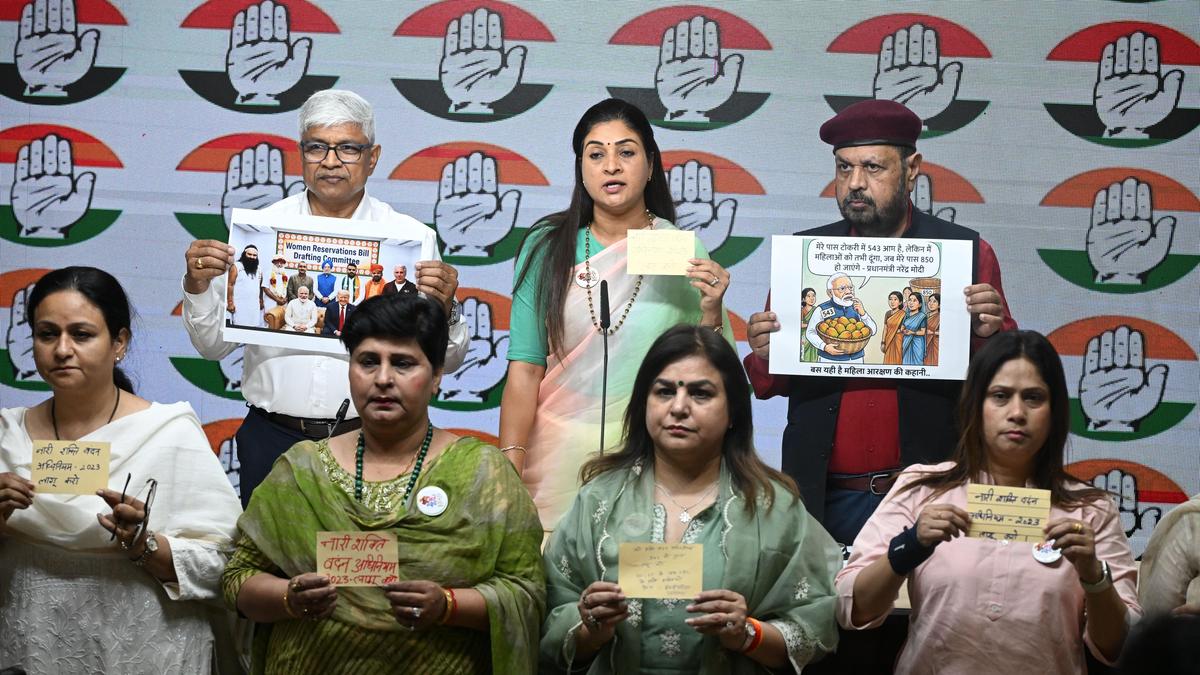
Mahila Congress Postcard Push for Women's Quo
The Mahila Congress launches a postcard campaign to demand immediate implementation of the 33% women's reservation in India's Lok Sabha, targeting PM Modi.
India
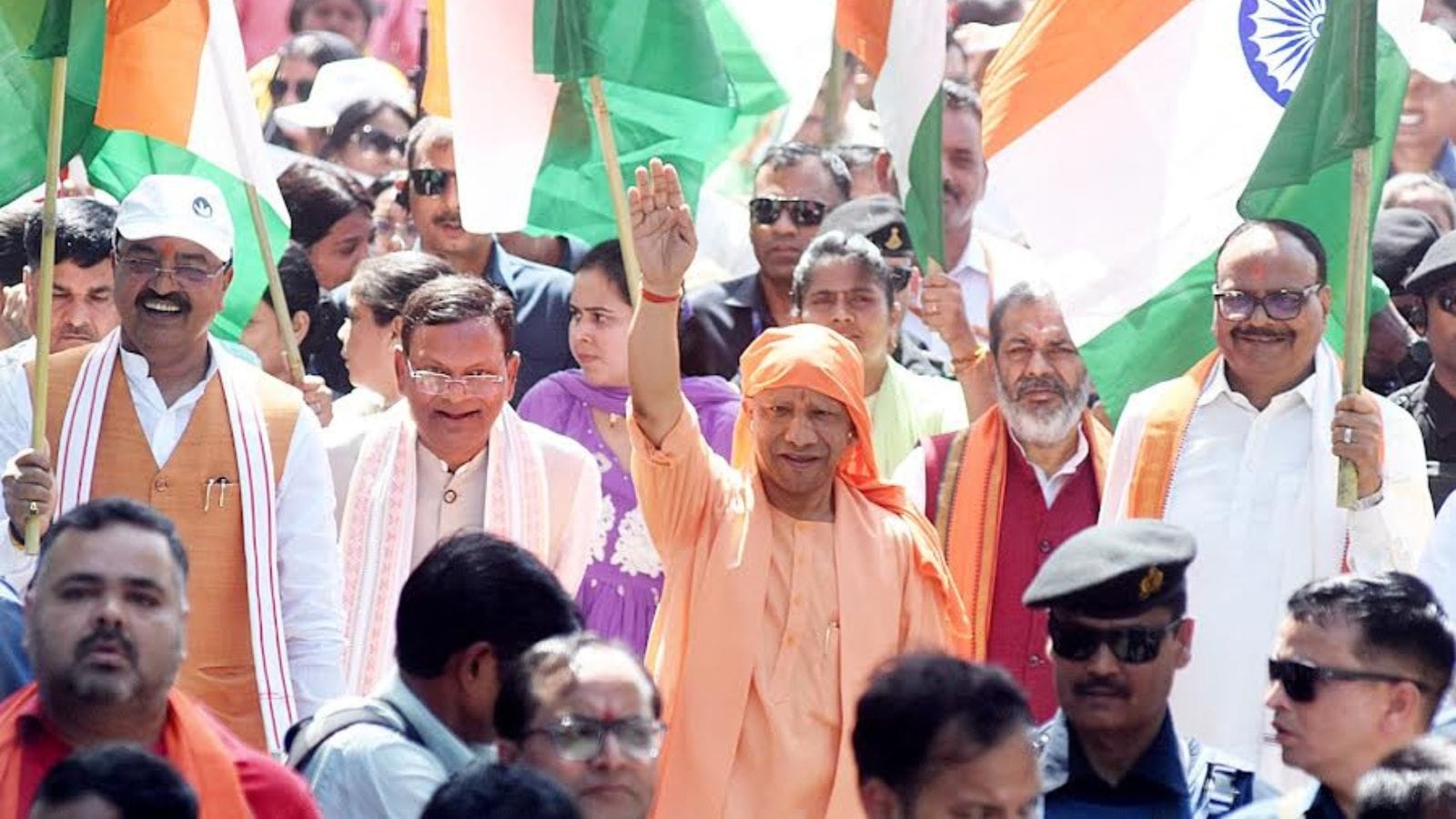
Yogi Adityanath's BJP March on Women's Bill
Yogi Adityanath's padyatra after the women's bill defeat aims to reshape UP's 2027 elections, targeting women's votes against the SP.
India
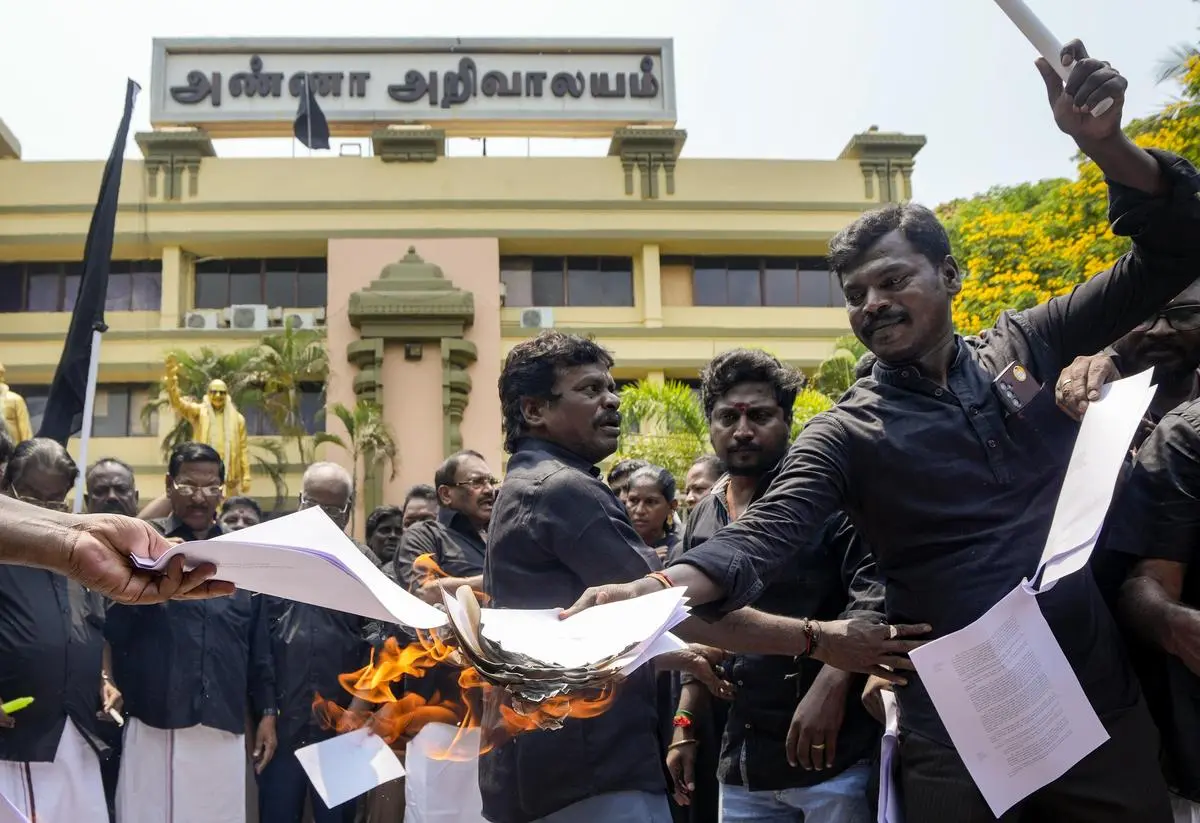
Women’s Reservation Bill 2026
The Constitution (131st Amendment) Bill, 2026 was defeated in Lok Sabha, revealing deeper political conflicts over women's reservation and delimitation.