Philippine Core Inflation Hits 31-Month High
BSP faces tough choices as inflation pressures mount
Model Diplomat7 min readAsia
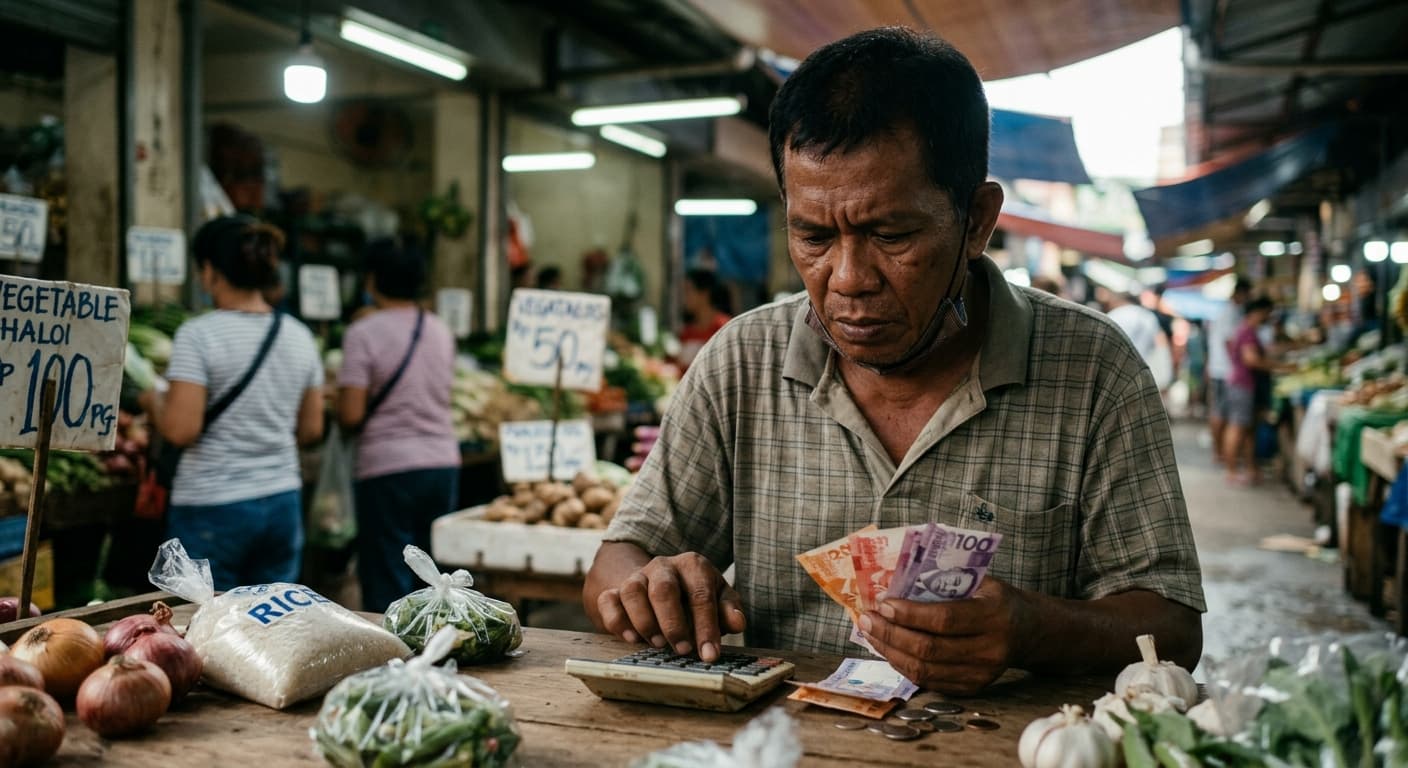
BSP boxed in as Philippine core inflation hits 31-month high
Philippine headline inflation eased to 6.4% in June 2026, but core CPI climbed to 4.4% — signalling the oil shock is now embedded in wages, rents and services.
The headline number falling from 6.8% to 6.4% is the wrong number to watch. The one that will decide the Bangko Sentral ng Pilipinas' August rate meeting is 4.4% — the June core inflation print, a 31-month high — and it says the February oil shock has migrated from the pump to the payroll. That leaves Governor Eli Remolona Jr. with the worst combination in his toolkit: supply-driven inflation broadening into services and wages, growth already weakening, a peso pinned near record lows, and a policy rate stuck at 4.25% because moving it in either direction makes something worse.
The number the market missed
The Philippine Statistics Authority reported on July 8 that headline consumer prices rose 6.4% year-on-year in June, down from 6.8% in May and below the 6.6% median forecast in a BusinessWorld poll of 18 analysts. The relief came almost entirely from fuel: gasoline inflation dropped from 51.6% to 39.2%, diesel from 58.5% to 39%, and transport CPI from 16.2% to 12.8%, as
Rappler noted after the release. Food inflation cooled to 5.2% from 5.7%, helped by the arrival of rice imports and a temporary price ceiling.
That is the story every wire led with. It is not the story the Monetary Board will lead with.
Core inflation — the measure that strips out volatile food and energy, and which the BSP watches to gauge whether shocks are becoming embedded — accelerated for a sixth straight month to 4.4%, matching the December 2023 reading, according to GMA News. The BSP's own
inflation primer defines core inflation as "an indicator of the long-term inflation trend as well as future inflation … primarily affected by demand conditions which, in turn, can be influenced by monetary policy." That is central-bank speak for: this is the number we can and must act on.
In its own statement Tuesday, the central bank was blunt: "Rising core inflation indicates broadening price pressures and second-round effects, including higher inflation expectations," it said, quoted by BusinessWorld. Electricity inflation jumped from 8.8% to 12% after Manila Electric Co. raised rates by 14.88 centavos per kilowatt-hour. Restaurant inflation rose from 6.7% to 7%. Education services rose from 2.9% to 3.9%. Housing, water, electricity and gas together rose from 7.8% to 8%. These are precisely the components where a supply shock becomes a wage-price cycle.
How a five-month oil shock became a services problem
The chain from Hormuz to Manila is short and well documented. US and Israeli strikes on Iran that began on February 28, 2026 disrupted the Strait of Hormuz, through which roughly 20% of global oil transits — a shock the ISEAS – Yusof Ishak Institute has called arguably worse than the 1970s episodes for the Philippines, which imports around 98% of its crude from the Middle East. Brent breached $107 by late March. Headline CPI accelerated from 2.0% in January, per the BSP's
February Monetary Policy Report, to 7.2% in April — the fastest print since March 2023.
President Ferdinand Marcos Jr. declared a national state of energy emergency on March 24 — the first country in the region to do so — after disclosing crude stocks would last only until June 30, according to the BBC. Diesel prices nearly tripled to about ₱150/litre in April,
Chatham House reported from Manila, and the peso hit a record ₱61 per US dollar.
Al Jazeera tracked the same currency stress rippling across ASEAN's energy-importing economies.
Fuel prices are now retreating — diesel is back around ₱90/litre — but the pass-through has already happened. Once diesel doubles, jeepney fares rise; once fares rise, unions demand wage increases; once wages rise, restaurants and schools reprice. That is what a 4.4% core print, six consecutive months of acceleration, and rising services inflation collectively describe. The ECB's June 2026 assessment of the same shock in Europe uses identical language: "the extent to which higher energy costs may broaden inflationary pressures through indirect and potential second-round effects."
Manila is further along that curve than Frankfurt.
The trap: rate hikes hurt growth, rate cuts hurt the peso
The BSP had spent 2024 and 2025 easing. A 175-basis-point rate cut and a 450-basis-point reserve requirement reduction since August 2024 helped ease financial conditions, according to the IMF's 2025 Article IV staff report published in November 2025, which projected a further 50-bp cut by Q1 2026 as inflation was expected to hover near the 3% midpoint of the target band.
That baseline is now obsolete. In the June 2025 Monetary Policy Report, the BSP's own high-oil-price scenarios showed 2026 average inflation reaching 6.4% if crude hit $130/barrel — a bullseye for the actual first-half average of 4.8% and the BSP's own end-2026 forecast of a 6.4% yearend print, cited by
BusinessWorld. On March 27 the Monetary Board halted its easing cycle at 4.25% and raised its 2026 inflation forecast to 5.1% — a figure already blown through by April's 7.2% headline.
Remolona is now cornered by his own framework. The BSP's flexible inflation targeting regime formally excludes "volatility in the prices of oil products" from its accountability, one of four "explanation clauses" allowing deviation from target for supply shocks. That is why the March pause, not a hike, was defensible. But core inflation is not an explanation clause. It is, by the BSP's own definition, the demand-side signal monetary policy is meant to address.
Yet hiking now is a poor answer. Filipino economist JC Punongbayan argued in an ISEAS analysis that "rate hikes would do little to tame prices but would further dampen already-weak investment," concluding the BSP is likely to hold through 2026 in a stance "that supports neither growth nor price stability convincingly." Private investment has not returned to its pre-pandemic trajectory. The peso is near record lows. And a SAM-multiplier study by researcher Christian Marvin Zamora,
published on SocArXiv, estimates the shock alone shaves 1.12–2.23% off GDP depending on pass-through — with the poorest rural households losing 2.4 times more income than the richest urban ones.
Cutting would relieve growth but risk the currency, given the peso's ₱61 record and what Al Jazeera's June documentary called an incipient "new currency crisis" across Asia's oil importers. Holding is the least-bad choice for now — but it also lets core inflation and wage expectations drift.
Who gains, who loses
The winners from the June disinflation are narrow. Marcos gets a political talking point: the Department of Economy, Planning and Development called Tuesday's number "a welcome development." Rice millers and consumers benefit from the temporary price ceiling and cheaper imports. Fuel retailers price in lower crude with a lag.
The losers are structural. Wage earners: the ₱60/day minimum wage hike for the National Capital Region takes effect on July 19, bringing the daily rate to ₱755, with a second ₱25 tranche in January 2027. National Statistician Claire Dennis Mapa said the PSA is monitoring how this wage adjustment feeds through into prices, according to BusinessWorld — because in real terms, the increase barely covers a diesel round-trip. Overseas Filipino workers in the Gulf, roughly 2.4 million people, face the twin threat of a proposed US tax on Philippine-bound remittances and physical exposure to any renewed Middle East escalation, per the same ISEAS analysis. Households, especially the bottom 40%, absorb the regressive burden — the government's
₱26.13-billion food security plan and targeted transport subsidies offset only part of it.
The quiet beneficiary of a stuck policy rate is fiscal policy. With monetary tools frozen, the Marcos government has taken over the inflation fight: Republic Act 12316 suspending TRAIN excise taxes on petroleum products, the UPLIFT emergency transfer framework under Executive Order 110, rice import authority, transport subsidies. That expands executive economic power in a way that survives the shock — and reshapes the boundary between the BSP and the Palace.
Forward look
- August 2026 BSP Monetary Board meeting — the first policy review with June's 4.4% core print in hand. A hold at 4.25% is now the base case; consensus among analysts polled by BusinessWorld tilts toward extended pause, but any hint of a hike would jolt the peso stronger and equities weaker.
- July 19 — NCR minimum wage hike takes effect. PSA and BSP will watch for pass-through into July and August restaurant, transport, and services CPI. A second-round wage-price signal would harden the case for a hike.
- Q3 2026 — Dubai crude trajectory. If prices stay below $80/barrel for a full month, the excise-suspension trigger under RA 12316 reverses, restoring fuel taxes and mechanically re-raising retail prices. If Hormuz re-escalates, all bets are off.
Diplomat View
The June print is being read backwards. Markets and headlines are treating 6.4% as a green light; the BSP's own statement, the 4.4% core figure, and the pattern of accelerating services inflation say the opposite. Our call: the Monetary Board holds at 4.25% in August and through year-end 2026, treating the oil-driven headline spike as a supply-side event covered by its "explanation clauses" while relying on Palace measures — excise suspensions, targeted transfers, rice imports, price ceilings — to blunt the second-round damage. This forecast would revise if any of three conditions triggers: (1) core inflation exceeds 4.75% in the July or August prints, forcing a 25-bp hike to defend expectations; (2) the peso breaches ₱62/USD on a sustained basis, forcing intervention or an off-cycle tightening; or (3) Hormuz re-closes and Dubai crude returns above $110, which would push headline inflation back toward 7%+ and re-anchor the debate on emergency measures rather than rates. The deeper signal from this print is not about monetary policy at all — it is that Philippine inflation management has quietly become a fiscal instrument, and the BSP's independence is being tested less by politics than by the limits of its own tools against a shock that started 6,700 kilometres away.
The bottom line: The 6.4% headline is a distraction. The 4.4% core reading is the one that binds Remolona's hands — and hands the Marcos government, not the BSP, the lead role in what happens to Philippine prices for the rest of 2026.
Discover more

International Relations
U.S.–Iran Peace Deal
A narrow US-Iran deal on nuclear and regional issues could reshape Middle East diplomacy, offering a pragmatic path forward despite grand bargain obstacles.
US Politics
SNAP Food Assistance Faces Legal Challenges
In 2026, SNAP faces stricter eligibility rules and mounting legal challenges, threatening food assistance for the millions of Americans who rely on the program.
India
BJP's Misunderstanding of Women's Quota Needs
The BJP's linking of the Women Reservation Bill to delimitation risks delaying women's empowerment in India, misreading the aspirations of female voters.

Conflict & Security
Drone Warfare Killing Aid Workers at Unprec
Over 1,000 humanitarian workers killed in three years as cheap armed drones collapse legal protections. Gaza, Sudan, Ukraine, and DRC see deliberate targeting of aid convoys and hospitals with zero prosecutions.