Paris Prosecutors Investigate Foreign Smear
Probe into foreign interference in French elections
Model Diplomat3 min readEurope
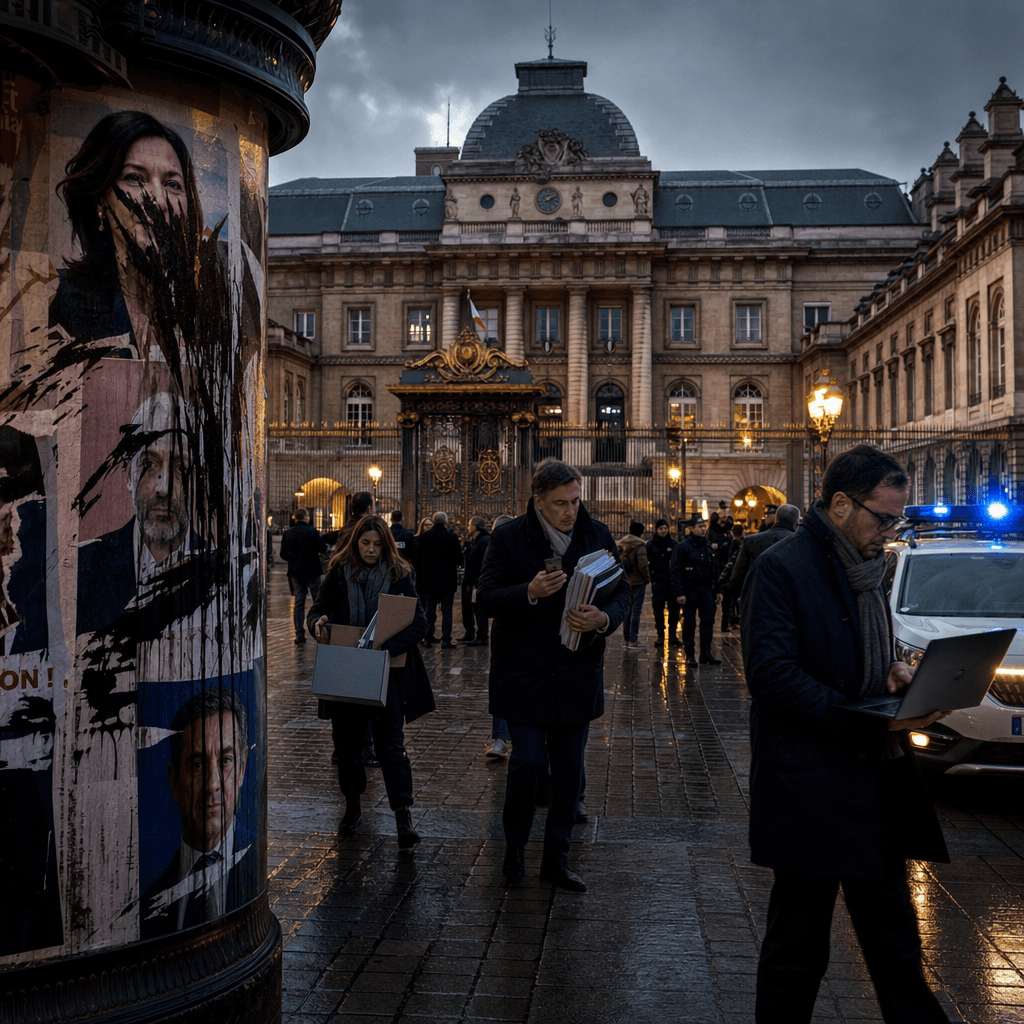
Paris Prosecutors Probe Foreign Smear Ops in Local Races
French investigators are testing whether foreign actors targeted left-wing mayoral candidates, a move that could harden France’s response to election interference.
Paris prosecutors have opened a probe into whether a foreign operation tried to discredit candidates in France’s municipal races, after authorities detected fake websites and social media accounts aimed at hard-left politicians from La France Insoumise, Reuters reported (Reuters). The immediate power play is clear: someone wanted to shape local French contests by damaging candidates before voters could scrutinize them on the merits. The targets, according to AFP reporting, include lawmakers Sébastien Delogu and François Piquemal, both running for mayor in Marseille and Toulouse (
Mediapart).
Why this matters
This is not just a defamation case dressed up as cybersecurity. France’s VIGINUM agency said it found inauthentic-looking websites and social accounts with “foreign technical markers,” and that the activity targeted “a French political party and… some of its candidates” in Marseille and Toulouse (AFP via Inkl). That matters because it moves the issue from noisy online abuse into the realm of state-backed influence operations, where attribution, deterrence, and retaliation all become policy questions.
The alleged method is also important. According to the AFP report, the campaign used fake blogs, QR-code posters, social posts, and disparaging ads to circulate allegations of criminal behavior (AFP via Inkl). That is a low-cost, high-impact toolkit: it can swamp local campaigns, force candidates into defense mode, and leave little forensic trace once accounts disappear. Reuters, via a separate report, said French authorities suspect the operation was carried out at least in part by an obscure Israeli firm, BlackCore, though they have not publicly confirmed who controlled it (
Devdiscourse). BlackCore has not been independently verified, which is exactly the problem: these campaigns are designed to outpace attribution.
Who gains, who loses
The immediate losers are the LFI candidates themselves, especially in Marseille and Toulouse, where local races are already nationalized by French debates over Gaza, identity, and anti-establishment politics (AFP via Inkl). Delogu and Piquemal are outspoken critics of Israeli military operations in Gaza, which makes them obvious targets for politically charged amplification and counter-messaging. If the allegations hold, the beneficiaries are less a single party than a logic of escalation: any foreign actor that can convert French domestic polarization into reputational damage for a candidate gets leverage for almost nothing.
The broader beneficiary, at least for now, may be the French state. Interior Minister Laurent Nunez said prosecutors are already investigating and promised to publish the electoral-safety report in full, after reporting that officials had considered burying it (Devdiscourse). That signals the government understands the political cost of appearing passive. It also shows why this file is moving from administrative monitoring to judicial scrutiny: once an election is tainted, silence becomes a strategic liability.
What to watch next
Two things matter now. First, whether prosecutors can tie the operation to a real organizer rather than a digital shell; without attribution, France will get headlines but not deterrence. Second, whether the electoral-safety report names patterns that go beyond one party and one election cycle. Reuters noted that France’s disinformation watchdog has already flagged another foreign interference case this month, involving a Russian-linked operation against a center-right Paris mayoral candidate (Reuters). That suggests France is confronting a recurring capability, not an isolated stunt.
For policymakers tracking European election security, this is the line to watch on Global Politics: whether France treats these incidents as isolated criminal acts or as part of a wider foreign influence campaign that demands faster attribution, public exposure, and tighter campaign-protection rules.
Discover more
International Relations
France’s Flotilla Probe Signals European Rift
France's war crimes probe into Israel over the Gaza aid flotilla marks a significant diplomatic shift, signaling a widening rift in European relations.
Global Politics
France Bans Itamar Ben-Gvir Amid EU Pressure
France's ban on Israeli minister Itamar Ben-Gvir signals mounting EU pressure on Israel, marking a pointed diplomatic rebuke that deepens strains over its.
Conflict & Security
Macron's Kenya Summit: France's Africa Reset
Macron's Kenya summit tests France's bid to reset its Africa strategy, courting investment and partnership to rebuild influence after continental setbacks.
International Relations
Macron's Kenya Summit to Rebrand France in Af
Macron's Kenya summit is a calculated bid to rebrand France's role in Africa, reasserting relevance through diplomacy as Paris loses ground on the continent.