Pakistan's Faceless Court: A Foreign-Policy D
Balochistan's repression turns into a global liability
Model Diplomat7 min readAsia
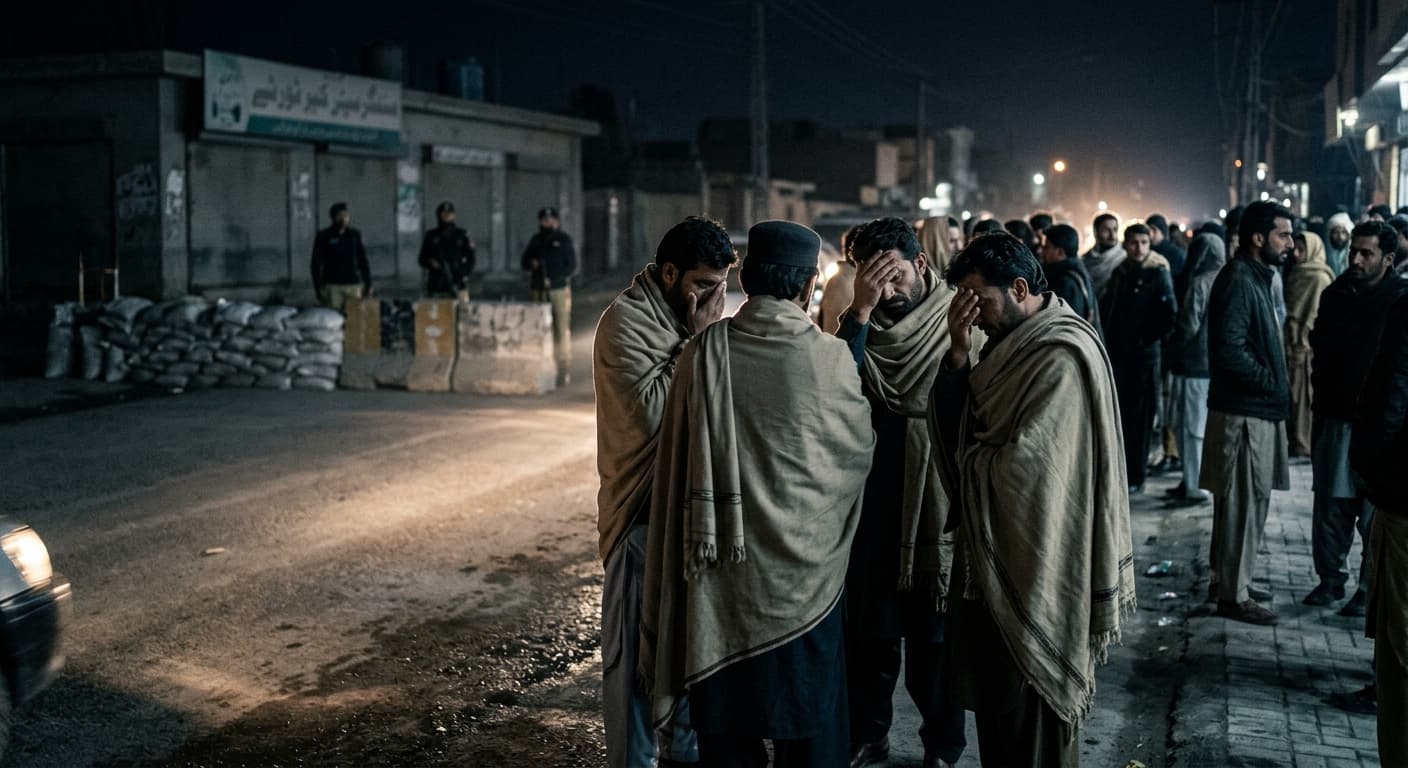
Pakistan's "Faceless Court" in Balochistan: When Repression Becomes a Foreign-Policy Liability
The June 22, 2026 life sentence for Dr. Mahrang Baloch — issued in a closed prison court — is turning a domestic crackdown into a UN human-rights case and a CPEC security problem.
On June 22, 2026, an anti-terrorism court sitting inside Quetta's Hudda prison handed a life sentence to Dr. Mahrang Baloch, leader of the Baloch Yakjehti Committee (BYC), and three co-defendants — a closed-door verdict the BBC reported was delivered by a "faceless court" without cross-examination of the eyewitnesses whose video testimony sealed the conviction. The verdict is the clearest evidence yet that Islamabad's Balochistan strategy has crossed a threshold: what began as an internal counter-insurgency has produced a documented pattern of enforced disappearances and arbitrary detention that United Nations experts have formally condemned, that armed groups are exploiting to recruit at record pace, and that is directly menacing the Chinese and American investments the Pakistani state used to justify the crackdown in the first place. Repression is no longer just a human-rights story in Balochistan; it is a foreign-policy liability.
The verdict, and what the court did not do
The Quetta anti-terrorism court, presided over by Judge Muhammad Ali Mubin, convicted Mahrang Baloch and fellow BYC activist Sibghatullah Shah of murder, sedition, and terrorism in connection with the 2024 killing of Federal Constabulary soldier Shabbir Ahmed at a Gwadar protest. Two other BYC-linked leaders — Balach Qadir of the Baloch Students Organization and Abubakar Kalanchi — received the same sentence, with a fine of 200,000 Pakistani rupees (roughly $719) payable to the soldier's heirs, according to the BBC's account of the ruling. The defendants boycotted the trial along with their lawyers, prosecution witnesses testified only by video link, and the defence was denied effective cross-examination.
Amnesty International, which had already labelled the five detainees prisoners of conscience, said in an Urgent Action bulletin that the group had been held for more than a year in "arbitrary detention" on "trumped up charges," with the trial conducted in prison "without access to media or independent observers." The Human Rights Commission of Pakistan (HRCP), a domestic body, went further, warning that the state has "continued its policy of treating fundamental rights advocacy in the same way it treats extremism, resulting in administrative and judicial decisions that are one-sided and biased." Swedish activist Greta Thunberg, in a widely circulated statement, called the proceeding a "mockery of justice" conducted "in utter secrecy."
The sequence that produced the verdict matters. UN experts, in a March 2025 statement, documented that on March 21, 2025, Quetta police stormed a peaceful BYC protest outside the University of Balochistan and shot three demonstrators dead. Mahrang led a sit-in with the bodies; police raided it at 5:30 am the next morning with batons and tear gas, and she was held incommunicado "for nearly 12 hours" — the classic marker of enforced disappearance under the International Convention for the Protection of All Persons from Enforced Disappearance, to which Pakistan is not a party.
The pattern the UN has now documented
The verdict does not stand alone. In April 2025, six UN Special Rapporteurs and the Working Group on Enforced or Involuntary Disappearances (WGEID) urged Pakistan to address an "unrelenting use of enforced disappearances" in the province, characterising the practice as "a serious human rights violation." In its 136th-session general allegation, the Working Group told Islamabad that since January 2025 the Commission of Inquiry on Enforced Disappearances (COIED) had effectively ceased to function following the sudden death of its newly appointed chair — a body the
WGEID's public communication already deemed under-resourced, non-transparent, and legally toothless because Pakistan has never criminalised enforced disappearance as an autonomous offence. A 2021 amendment bill passed the National Assembly but never reached the Senate; no successor bill exists.
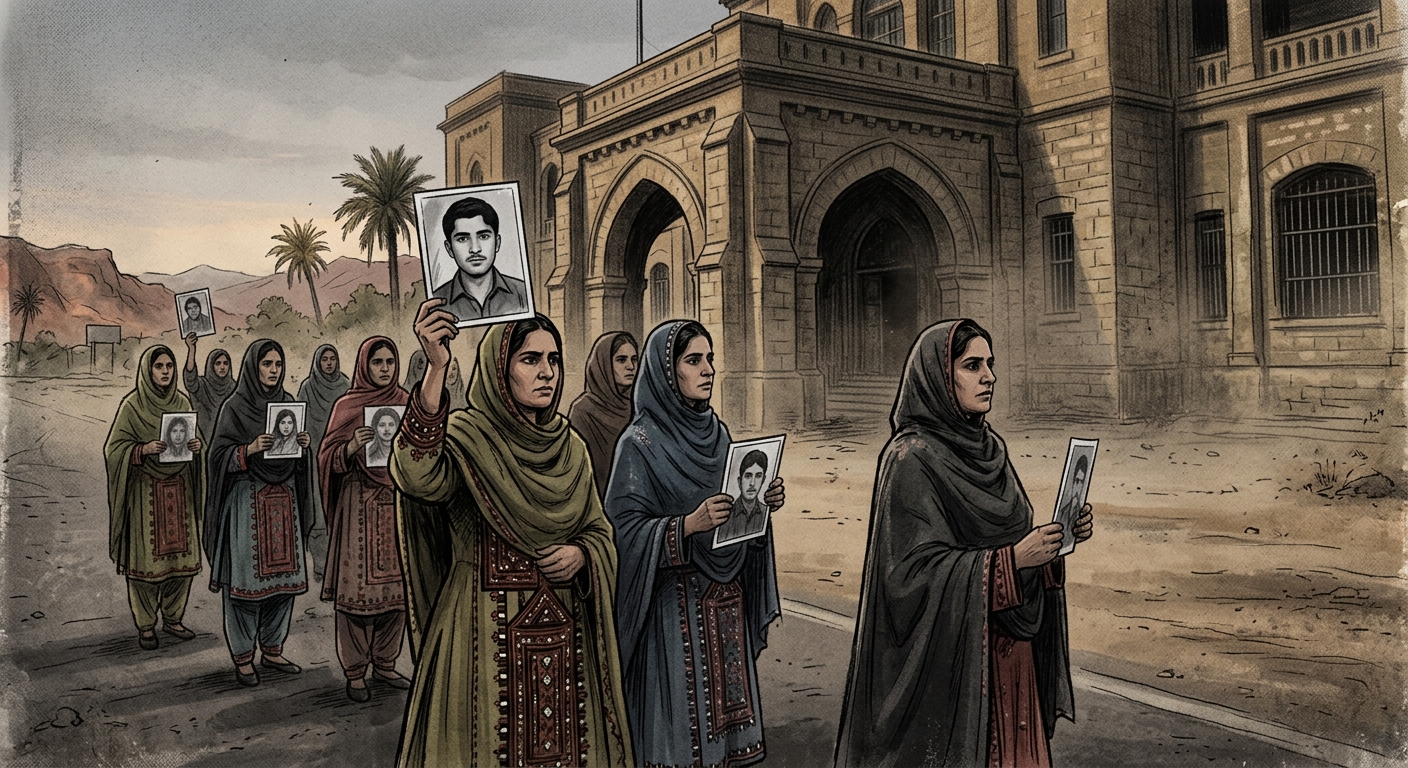
The numbers make the pattern legible. The COIED itself has registered 10,592 cases nationally between 2010 and August 2025, of which 2,752 originate in Balochistan, according to a civil-society joint submission led by Amnesty International filed for Pakistan's fourth-cycle Universal Periodic Review follow-up. That same submission records that the BYC documented 546 new enforced disappearances in Balochistan in just the first seven months of 2025, and that 293 people registered as "disappeared" were later found dead or extrajudicially killed. Voice for Baloch Missing Persons puts total Balochistan cases since 2004 at roughly 7,000. Pakistan's interim prime minister
told the BBC in 2024 that only about 50 people were missing.
The second-order effect: repression is producing the insurgency it claims to fight
Here is the load-bearing point most Western coverage misses. According to the Pakistan Institute for Peace Studies' Security Report released in January 2026, Balochistan recorded 254 militant attacks and 1,026 casualties in 2025 — a 26 percent jump over 2024 — even as the state expanded its security footprint. The Balochistan Liberation Army's late-January 2026 coordinated assault across Quetta, Gwadar, Mastung and Noshki killed 31 civilians and 17 security personnel in a single 40-hour window, before the military said it had eliminated 216 fighters in Operation Radd-ul-Fitna-1, as
Al Jazeera reported. On July 7–8, 2026, a further wave of attacks killed 27 police officers, 11 soldiers and four civilians in three separate incidents,
Al Jazeera reported from Islamabad.
The IDSA analysis is unusual in that it is written from an Indian strategic-studies platform yet echoes what Baloch, Pakistani and UN sources are all saying: the insurgency is not being fed primarily by external funding but by "coercive state responses" that have converted a political grievance into a security spiral. Cambridge doctoral candidate Rafiullah Kakar told Al Jazeera that the "militarised approaches" have "failed to bring stability" and that any credible reset requires a Truth and Reconciliation Commission and structured political dialogue — a proposal that is nowhere on Islamabad's agenda.
The historical parallel that reframes the picture is not Kashmir but Sri Lanka in the late 1980s. In both cases, a state facing a genuine armed challenge in a peripheral, ethnically distinct province responded with mass disappearances routed through counter-terrorism law; in both, the disappearance economy produced a generation of activists — often women, often relatives of the vanished — whose politicisation eventually eclipsed the armed movement in international legitimacy. The Baloch Yakjehti Committee's rise as the province's most credible political voice, precisely as the BLA's violence escalates, is the tell. Repression has hollowed out the mainstream Baloch nationalist parties that once mediated between Islamabad and the militants, a dynamic the Countercurrents original analysis frames as the "silent collapse" of politics in Balochistan.
Who loses: China, and Pakistan's minerals pitch to Washington
The foreign-policy cost is now measurable. In September 2025, Field Marshal Asim Munir arrived at the White House with a briefcase of Balochistan mineral samples, pitching President Donald Trump on a U.S. investment role in Reko Diq and other deposits, Al Jazeera reported. China had already committed to the $60 billion China-Pakistan Economic Corridor (CPEC), of which Gwadar port is the terminal node. Both bets depend on the security of a province where the BLA has repeatedly attacked Chinese engineers and where, as RAND noted in a
January 2025 commentary, Beijing's frustration with Pakistan's inability to protect Chinese personnel is now a structural feature of the "iron brothers" relationship.
The Balochistan Liberation Army knows precisely who to hit. Its May 2026 suicide bombing of a troop train in Quetta killed at least 24, and its 2025 hijacking of the Jaffar Express seized 400 hostages, Al Jazeera noted. The Saindak copper-gold project, cited by the HRCP, now allocates 50 percent of proceeds to Chinese stakeholders and 48 percent to the federal government — leaving 2 percent for Balochistan itself, a distribution that the insurgents can and do quote back to the province's youth. Abdul Basit of Singapore's RSIS argues the strategic investors will not walk away because "these are government-to-government deals," but he concedes the violence "shakes investor confidence" and hands India a low-cost lever to complicate CPEC without acting itself.
Islamabad's counter-move has been securitisation of the streets. Section 144 was imposed for 30 days in Kech district ahead of BYC-called protests, banning public gatherings and face coverings; the BBC's Urdu service documented the pattern of pre-emptive shutdowns and mobile-internet blackouts that now precede any BYC mobilisation. The result is a governance model in which the provincial capital can be sealed by decree but the mountains cannot be held by force — Berlin-based scholar Saher Baloch's observation that "where the state rules through fear rather than trust, intelligence also dries up" now reads as operational description, not commentary.
What to watch
- The appeal. Nadia Baloch, Mahrang's sister and part of her legal team, told the BBC the verdict will be challenged in the Balochistan High Court; the first hearing dates will test whether the higher judiciary is prepared to review an anti-terrorism court proceeding widely deemed procedurally void.
- Pakistan's next UPR follow-up at the Human Rights Council. Of the 340 recommendations Pakistan received in its fourth-cycle Universal Periodic Review, 253 were
accepted and 87 noted; mid-term implementation reporting through 2026 is where the Mahrang case will be tested against Islamabad's stated commitments on enforced disappearances.
- The COIED reconstitution. The Working Group has formally asked Pakistan when a new chairperson will be named and whether the 2021 draft criminalisation bill will be reintroduced. No answer has been filed.
- CPEC security posture. Watch for a Chinese demand — public or private — that Pakistani troop deployments around Gwadar and Reko Diq be expanded, and for any signal from Washington on whether the September 2025 minerals framework survives an anti-terrorism court verdict now cited by name in Amnesty and OHCHR filings.
The Bottom Line
The Mahrang Baloch life sentence is the moment Pakistan's Balochistan playbook stopped being cost-free. By trying its most prominent peaceful activist in a closed prison court while UN experts, Amnesty, HRCP and its own domestic media documented the process in real time, Islamabad has ensured that the next Chinese engineer killed in Gwadar, the next mineral deal pitched in Washington, and the next Human Rights Council cycle will all be read against this verdict. The state may still hold the province; it has lost the argument about how.
Discover more

Global Politics
US Proposes Pakistan for Iran Talks Amid Ties
The US-Iran negotiations are now mediated by Pakistan, highlighting Islamabad's strategic role and the implications for regional diplomacy.

India
Delhi CM Rekha Gupta Blasts Opposition's Delm
Delhi CM Rekha Gupta's remarks on women's quota defeat reveal BJP's strategy for the 2029 Lok Sabha elections, focusing on delimitation.
Global Politics
US-Iran Tensions Rise
Tensions escalate in the Strait of Hormuz as Iran and the US clash over maritime control, with a ceasefire hinging on a contested MoU paragraph.

Economics
Fed's Amex AML order puts correspondent banking on notice
Federal Reserve's Amex AML order requires board-level controls and a 90-day plan; OCC fined the bank $350 million over enterprise-wide deficiencies.