Pakistan's Afghan Deportation Deadline
Nationwide crackdown on undocumented Afghans begins July 10, 2026.
Model Diplomat8 min readAsia
Pakistan's July 10 Afghan Deportation Deadline: Refoulement and Regional Fallout
Pakistan begins arrests of undocumented Afghans on July 10, 2026, deepening a refugee crackdown UN agencies warn violates non-refoulement obligations.
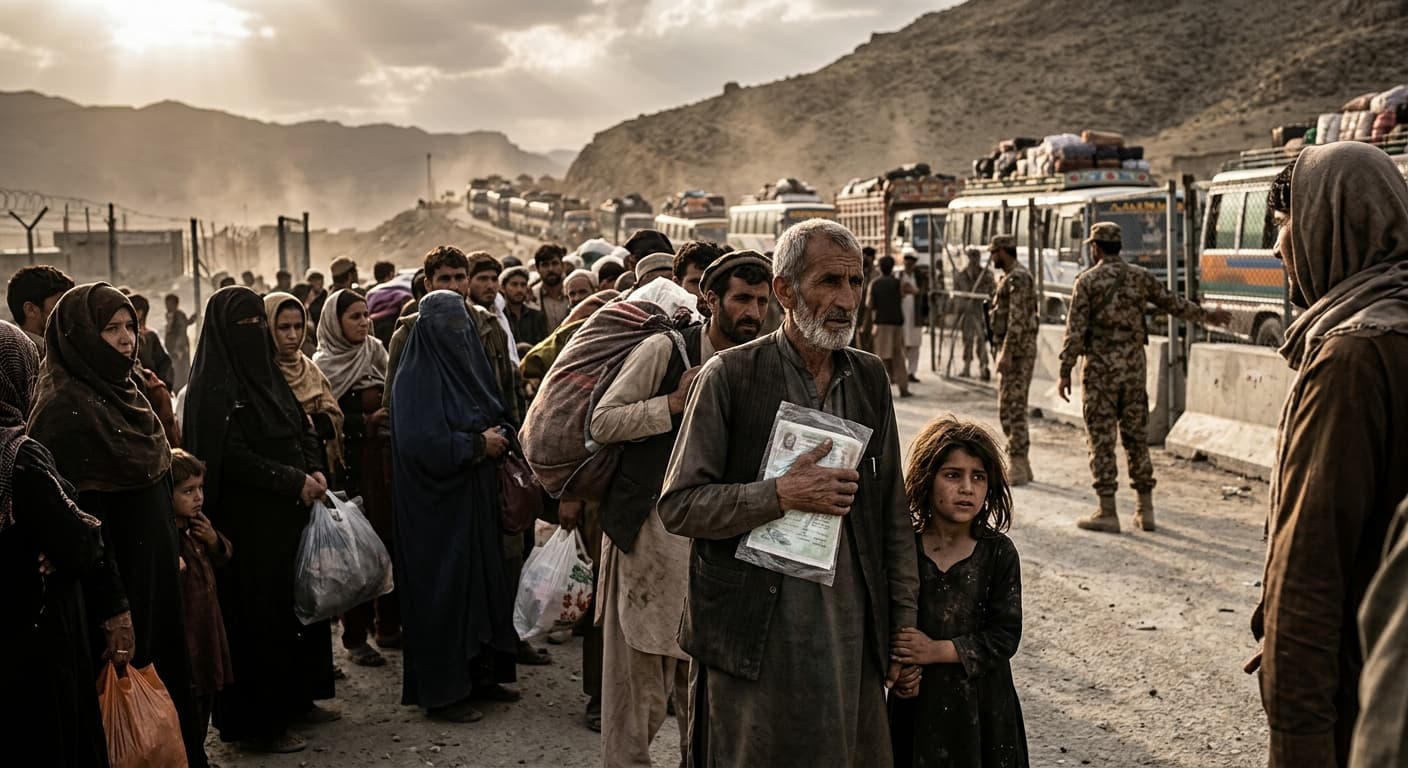
Pakistan's Ministry of Interior lets its deadline expire on July 10, 2026, unlocking a nationwide arrest campaign against Afghan nationals without valid visas — a policy Islamabad frames as counter-terrorism but which the UN refugee agency, Amnesty International and Human Rights Watch describe as a systematic breach of the non-refoulement principle affecting the 932,000 registered refugees still inside the country. The July 10 deadline turns Pakistan's Afghan population into leverage in a war with the Taliban that its air strikes have already failed to win — and the humanitarian cost is being paid disproportionately by women and children, who account for roughly half of the 2.39 million Afghans pushed across the border since 2023.
What the July 10 directive actually does
According to a directive obtained by AFP and reported by JIJI Press, Pakistan's federal government has ordered law-enforcement agencies nationwide to arrest, from July 10, any Afghan citizen residing without a valid visa. Provincial governments in Khyber Pakhtunkhwa and Punjab have activated parallel enforcement plans. In Rawalpindi, police began pre-deadline sweeps against Afghan Citizen Card (ACC) holders on July 8, according to the
Daily Independent. In Peshawar, a senior officer told the
Burak Baloch newsroom that station-level lists of undocumented Afghans have been compiled and door-to-door warnings issued.
The trigger officials cite is the June 28 attack on a Rangers headquarters in Karachi, claimed by Jamaat-ul-Ahrar — a splinter faction of Tehreek-e-Taliban Pakistan (TTP). The suspect captured alive was identified as an Afghan national, according to reporting by Al Jazeera. Pakistan responded on June 29 with air strikes in Paktia, Paktika and Kunar; Islamabad claims 25 fighters killed, Kabul reports 36 civilian dead. Pakistan's Director-General of Inter-Services Public Relations, Lieutenant General Ahmed Sharif Chaudhry, has publicly vowed that all illegal Afghan citizens will be expelled, framing the campaign as counter-terrorism rather than immigration enforcement.
According to figures published by Burak Baloch, 988,812 Afghan nationals have returned from Pakistan since April 2025 alone — 686,772 undocumented, 71,570 ACC holders, and 230,470 Proof of Registration (PoR) cardholders. That last figure is the legally significant one: PoR holders are UN-recognised refugees whose expulsion the UN High Commissioner for Refugees has explicitly called a violation of international law. Khyber Pakhtunkhwa alone saw more than 14,000 Afghan families depart between July 1 and July 6, according to
Pakistan Today.
The non-refoulement question the government won't answer
Pakistan is not a party to the 1951 Refugee Convention. But it has ratified both the International Covenant on Civil and Political Rights and the 1984 Convention Against Torture, and the customary international-law principle of non-refoulement — the prohibition on returning anyone to a country where they face a real risk of persecution or torture — binds it regardless of Convention status.
That is the argument UNHCR spokesperson Babar Baloch made from Geneva on August 5, 2025, when the agency formally condemned the campaign. In a statement carried by UN News, Baloch said the forced return of PoR cardholders "would constitute a violation of the principle of non-refoulement," singling out women and girls as particularly at risk.
"Given that those holding PoR cards have been recognized as refugees for decades, their forced return is contrary to Pakistan's long-standing humanitarian approach to this group and would constitute a violation of the principle of non-refoulement." — Babar Baloch, UNHCR spokesperson,
UN News, August 5, 2025
The legal weight matters. Amnesty International's April 2025 report 'Treat Us Like Human Beings' argues that Taliban treatment of women constitutes the crime against humanity of gender persecution under Article 7(1)(h) of the Rome Statute. Human Rights Watch's
March 2025 briefing reported that Pakistani authorities had by then authorised detention in 49 holding centres, seized property, and imposed criminal penalties on anyone sheltering undocumented Afghans — practices that pull the campaign well beyond ordinary immigration enforcement. HRW also documented that 85 per cent of Afghans who left in the first wave cited fear of arrest as the reason.
Islamabad's stated defence — repeated by anonymous law-enforcement officials cited in the Burak Baloch report and by DG ISPR — is that the operation targets "facilitators of militant groups," not a community. That framing is politically necessary but factually strained. Half of the returnees are women and children, according to UN estimates cited by Amnesty International in December 2025, which put the total unlawfully deported from Iran and Pakistan in 2025 at 2.6 million. The International Crisis Group
urged the EU in May 2025 to use its diplomatic leverage — sharpened by Pakistan's request for European help managing tensions with India — to press Islamabad to exempt vulnerable groups. That leverage was not used before June 30, when PoR cards expired.
Regional stability: the leverage that isn't working
The July 10 deadline sits inside a larger, deteriorating conflict. Pakistan declared "open war" on the Afghan Taliban on February 27, 2026, launching Operation Ghazab-lil-Haq after Taliban forces attacked Pakistani border posts, per Al Jazeera reporting. Chinese-mediated talks in Urumqi in April 2026 briefly reduced the tempo — Taliban officials were reportedly prepared to offer written guarantees against the TTP — but by late June the two governments were again trading air strikes and drone attacks. Afghan Taliban forces fired four rudimentary drones into Balochistan on July 1, all intercepted, according to the
BBC.
The Council on Foreign Relations counted more than one million Afghans deported in 2025 alone, with the Torkham border largely closed since October 2025 — a closure NPR described as the
longest in recent decades, paralysing bilateral trade and Central Asia transit. Prime Minister Shehbaz Sharif told reporters in January 2026 that Pakistan had no choice: "We didn't want to, but they forced us." The Taliban government in turn banned Pakistani pharmaceutical imports outright in February 2026 and asked India for help routing Afghan goods through Chabahar port — a strategic realignment Islamabad did not want and cannot easily reverse.
The strategic logic Pakistani officials offer — expel the population, coerce the regime — has not produced the outcome it promised. Attacks have intensified: nine police officers were killed in a July 7 attack on a dam project in Balochistan, according to Al Jazeera. Karachi analyst Aslam Saleem, quoted in the Burak Baloch report, argued that new biometric technology and intelligence-sharing make the current sweep more effective than earlier operations dating to the 1990s. That is a claim about tactics, not strategy. As analyst Abdul Basit told
Al Jazeera during the 2023 campaign, the deportation drive is a "pressure tactic" precisely because Islamabad has no leverage over the Afghan Taliban on the TTP question. Three years and 2.4 million deportations later, that assessment holds — and the attackers themselves increasingly travel more than 1,200 kilometres from the Afghan border to reach Karachi, planning with facilitators inside Pakistan itself, as Venice-based analyst Federica Alvarez pointed out to Al Jazeera. This raises a domestic-intelligence question no deportation can answer.
The Brookings Institution's Madiha Afzal has documented how TTP attacks accelerated after the 2021 Taliban takeover, which Pakistani officials themselves once celebrated as a strategic win. The deportation programme is what a state does when its Afghan policy has run out of tools that work on the actor it is actually trying to influence. The historical parallel is unflattering: Pakistan spent two decades tolerating Afghan Taliban sanctuary in Balochistan and Khyber Pakhtunkhwa; it is now expelling Afghan civilians to punish the government that sanctuary produced.
Who pays: the humanitarian ledger
Afghanistan cannot absorb the returns. According to the UN Office for the Coordination of Humanitarian Affairs, nearly 23 million Afghans — almost half the population — require humanitarian assistance in 2026. The UN Afghanistan Returnees Overview for January 2026 documents 5.5 million cumulative returnees since September 2023, with reception facilities exhausted and reports of child labour, psychosocial distress and housing displacement widespread across areas of return. The UN's
2025 Integrated Response Plan had planned for a worst-case scenario of 20,000 returnees per day through Torkham and Spin Boldak; the actual daily pace has since averaged around 2,500, but the July 10 deadline is designed to accelerate that curve.
The gender dimension sharpens the legal argument. According to UN Women's June 2025 Gender Alert, half of Pakistan-sourced returnees are women and girls. Under Taliban rule they cannot attend school past age 12, work for NGOs or the UN, or move without a male guardian. Only 10 per cent of women-headed returnee households live in permanent shelter, and nearly 40 per cent fear eviction. Amnesty documented the case of Sakina, a women's rights activist forcibly returned in September 2025 despite being registered with UNHCR and listed on a US resettlement programme.
The third-country resettlement pipeline is a separate casualty. According to NPR, a January 2025 directive from Prime Minister Sharif's office ordered the deportation of Afghans awaiting resettlement to third countries if their cases were not processed by March 31, specifying that "no public announcements shall be made" about the policy. Roughly 24,000 Afghans in the US pipeline were affected. The UN Afghanistan office confirmed in January 2026 that Pakistan had already begun repatriating nearly 20,000 Afghans awaiting US resettlement.
The winners are the Pakistani security establishment — which gets a visible domestic-security deliverable — and the Karachi business community, which the Baloch report notes has publicly backed the sweeps. The losers are named and countable: 932,000 UNHCR-registered refugees, an estimated 665,000 ACC holders, tens of thousands of resettlement applicants stranded by their own destination countries, and a receiving state whose humanitarian architecture the UN describes as beyond capacity.

What to watch
- July 10–31, 2026: Detention pace in Karachi, Peshawar and Rawalpindi. Whether Pakistan uses the 49 authorised holding centres HRW documented to expand mass detention, or restricts arrests to intelligence-led operations as officials claim.
- UNHCR ExCom, October 2026: Whether the UN refugee agency's executive committee escalates from statements to a formal finding of non-refoulement violation — a step it has stopped short of taking.
- Next Chinese-mediated round: The Urumqi format collapsed in June. Any renewed talks that pair TTP guarantees with a repatriation pause would signal Beijing had extracted concessions Islamabad could not get bilaterally.
- Torkham crossing status: Reopening would indicate de-escalation; continued closure past its ninth month cements the economic decoupling and pushes Kabul further toward Chabahar and India.
The Bottom Line
The bottom line: Pakistan's July 10 deportation deadline is not an immigration policy — it is coercive diplomacy aimed at a Taliban government that has not responded to air strikes, border closures or a million-person expulsion. The 932,000 registered refugees still inside Pakistan are the collateral, and their forced return, as UNHCR has stated on the record, breaches customary international law that binds Islamabad regardless of its non-signature to the Refugee Convention.
Discover more
India
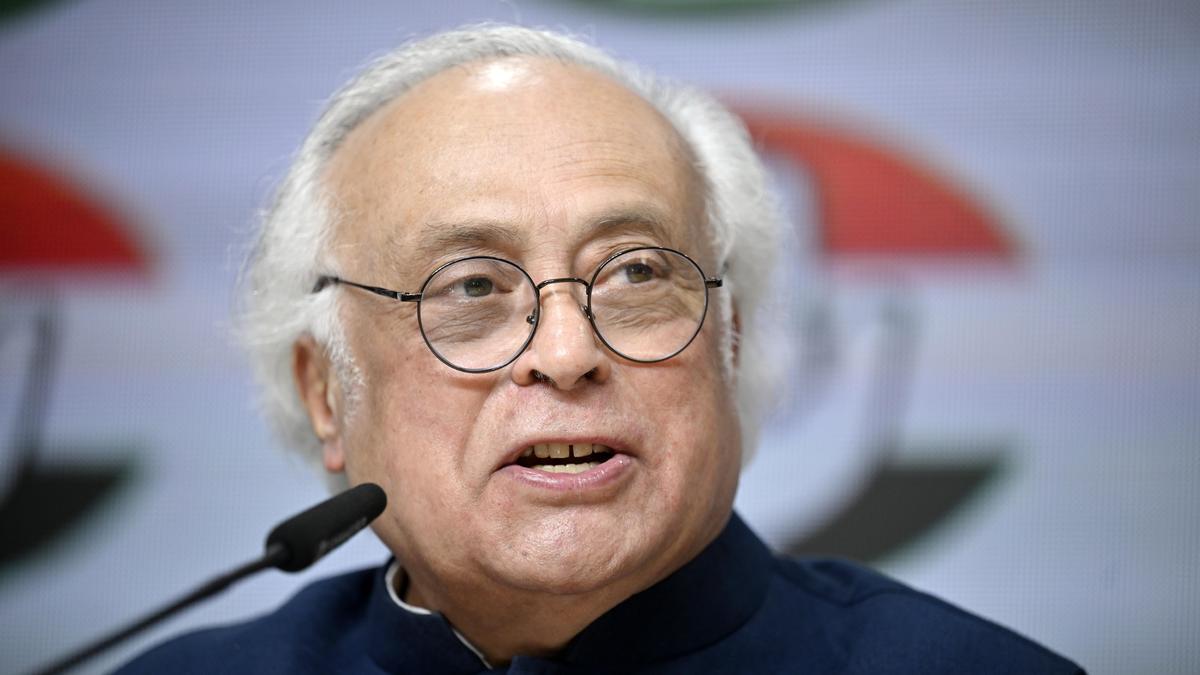
Congress Accuses Modi of Stalling Women's Law
Congress accuses Modi of stalling women's reservation law by linking it to delimitation, revealing a deeper electoral strategy.
India
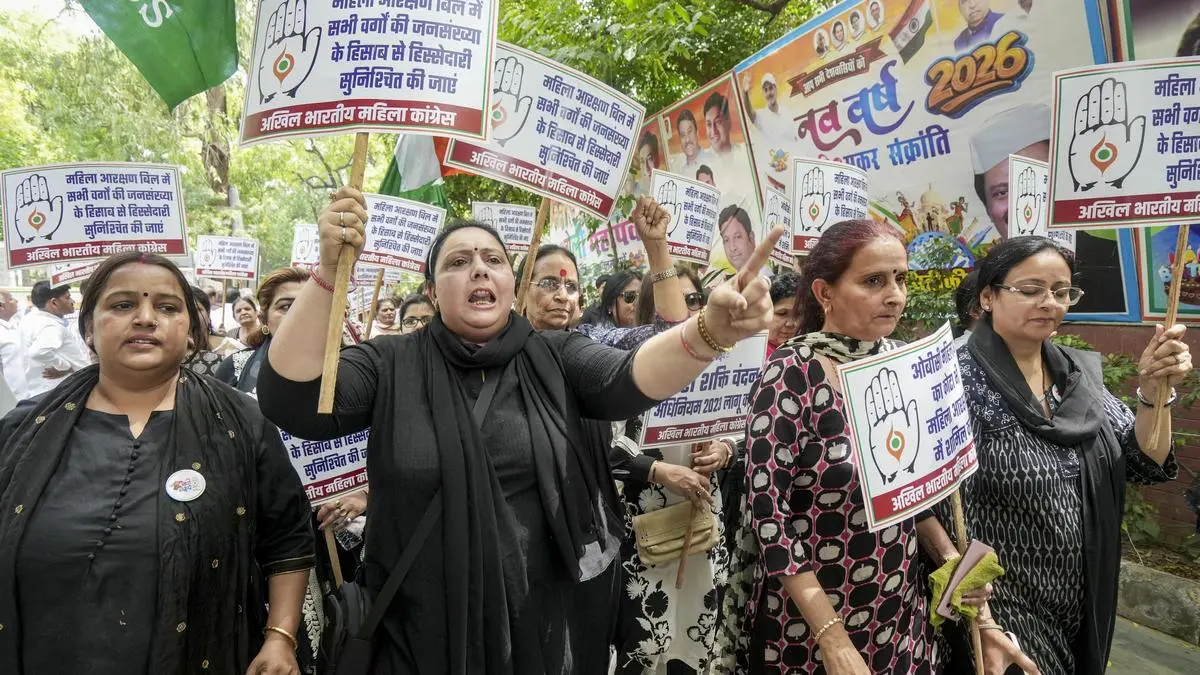
BJP's Misunderstanding of Women's Quota Needs
The BJP's linking of the Women Reservation Bill to delimitation risks delaying women's empowerment in India, misreading the aspirations of female voters.
India
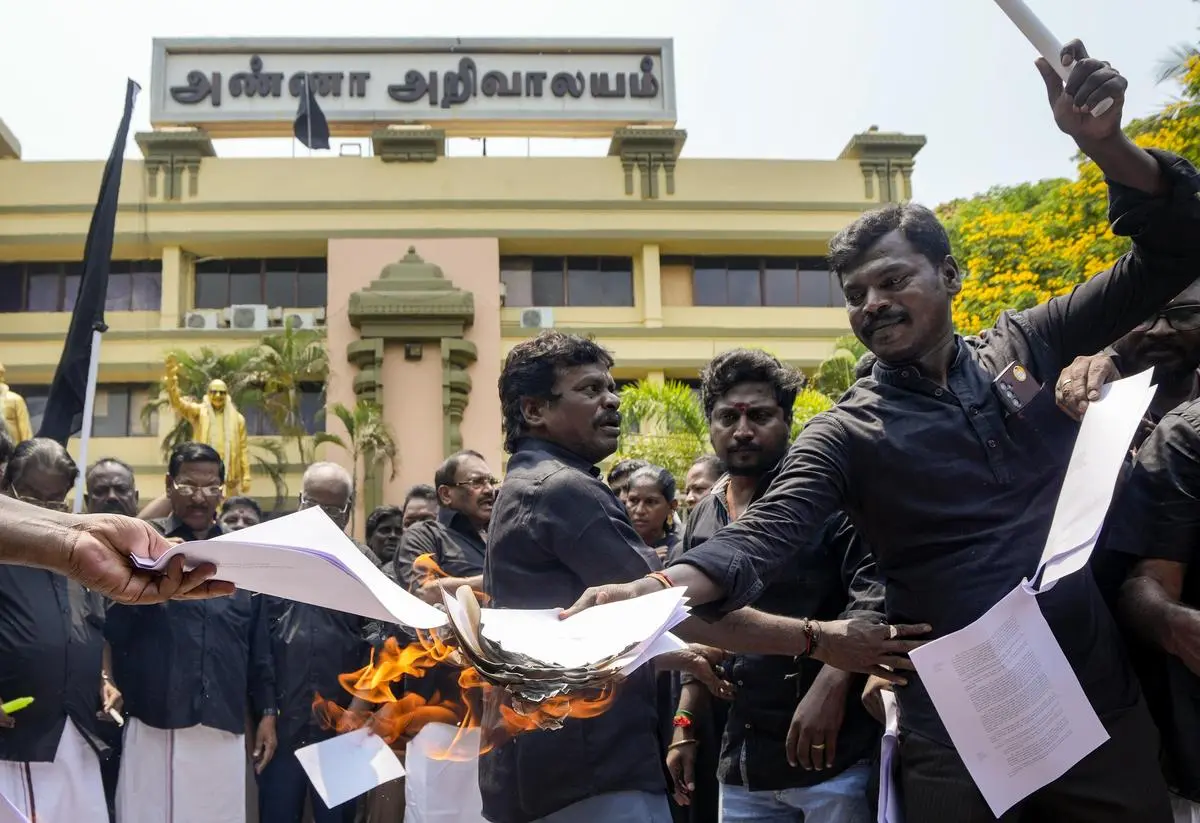
Women’s Reservation Bill 2026
The Constitution (131st Amendment) Bill, 2026 was defeated in Lok Sabha, revealing deeper political conflicts over women's reservation and delimitation.

Conflict & Security
Drone Warfare Killing Aid Workers at Unprec
Over 1,000 humanitarian workers killed in three years as cheap armed drones collapse legal protections. Gaza, Sudan, Ukraine, and DRC see deliberate targeting of aid convoys and hospitals with zero prosecutions.