Oyo School Abductions Expose Nigeria’s Security Gap
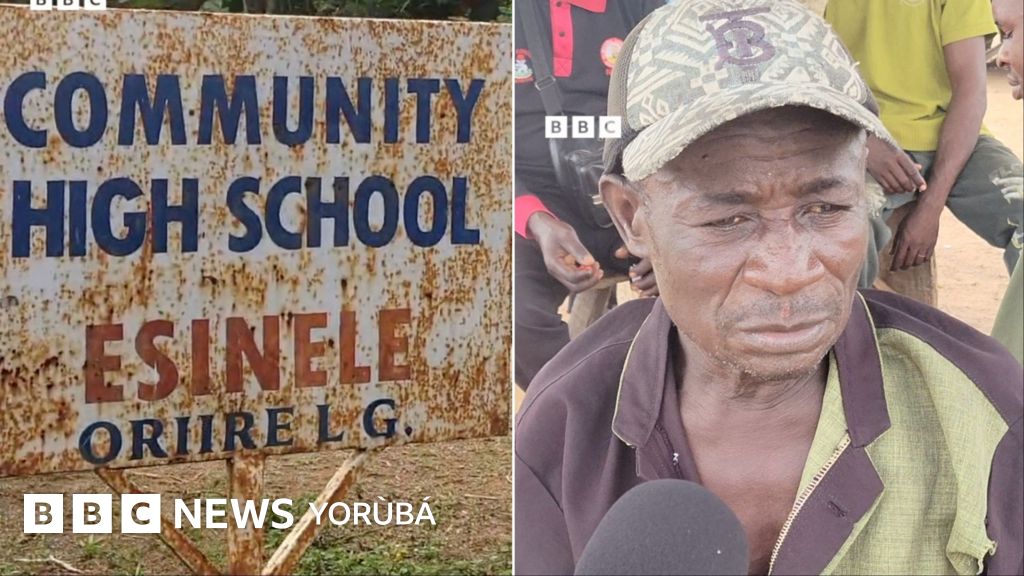
Local hunters say they chased the gunmen from Ahoro-Esinele, but the state and military are still reacting after 46 people were taken in Oriire.
The abductors who hit three schools in Oriire, Oyo State, still have the initiative. Local hunters in Esinele say they moved to repel the attackers as the raid unfolded, but they were not backed by better-armed state forces, while the military is now trying to contain the political fallout by insisting the episode does not amount to a permanent terror base in the South-West  BBC News Yorùbá
  THISDAYLIVE.
The real power is in the forest corridors
The key fact is not just the kidnapping itself, but where it happened and how. BBC News Yorùbá says 46 people were taken from Community High School, Ahoro-Esinele, Yawota Baptist Nursery and Primary School, and L.A. Primary School — seven teachers and 39 pupils in all BBC News Yorùbá. That is a tactical win for the attackers and a strategic loss for the state: once schoolchildren become ransom inventory, government authority starts to look conditional.
This is why the forest matters more than the school gates. The kidnappers are exploiting rural geography, weak early warning and slow inter-agency response. Oyo Governor Seyi Makinde has already said the attack exposed a major intelligence gap and used it to justify a new violent-crime response unit THISDAYLIVE. For policymakers, the lesson is blunt: this is no longer a “one-off” law-and-order incident. It is a contest over who controls ungoverned space. For the broader regional picture, see  Conflict.
Who gains from the official narrative
The military has a reason to narrow the story. By describing the Oriire abductions as isolated criminal acts rather than evidence of a rooted insurgent structure, it protects the claim that recent clearance operations have degraded the threat THISDAYLIVE. That helps Abuja avoid admitting the South-West is sliding into the same pattern of forest-backed banditry seen elsewhere in Nigeria.
But that framing also has limits. ThisDAY reported earlier this month that bandits are increasing their incursion into the South-West through Kwara and Kogi, with attacks spreading across Oyo, Ekiti, Ondo and other border areas THISDAYLIVE. That matters because it shows leverage is shifting: the armed groups only need to keep moving and keep kidnapping; the state has to defend schools, roads and villages everywhere at once.
The losers are obvious. Rural families lose school attendance, farmers lose movement, and local hunters are left to perform a security role they cannot fully sustain. The beneficiaries are equally clear: the abductors gain ransom leverage, and governments gain time if they can keep the crisis framed as temporary.
Watch the rescue effort, not the rhetoric
The next decision point is whether the state can turn intelligence into recovery. Watch for arrests, hostage rescue claims, and any proof that the new Oyo response unit is getting real community reporting rather than just announcements THISDAYLIVE. Also watch whether the military’s forest operations produce visible results before schools and parents decide the system cannot protect them.
If that confidence breaks, local hunters will keep filling the vacuum — and the attackers will keep setting the terms BBC News Yorùbá.