OPEC's August Hike: Saudi Arabia vs UAE
Riyadh races Abu Dhabi for Asian oil market share
Model Diplomat8 min readMiddle East
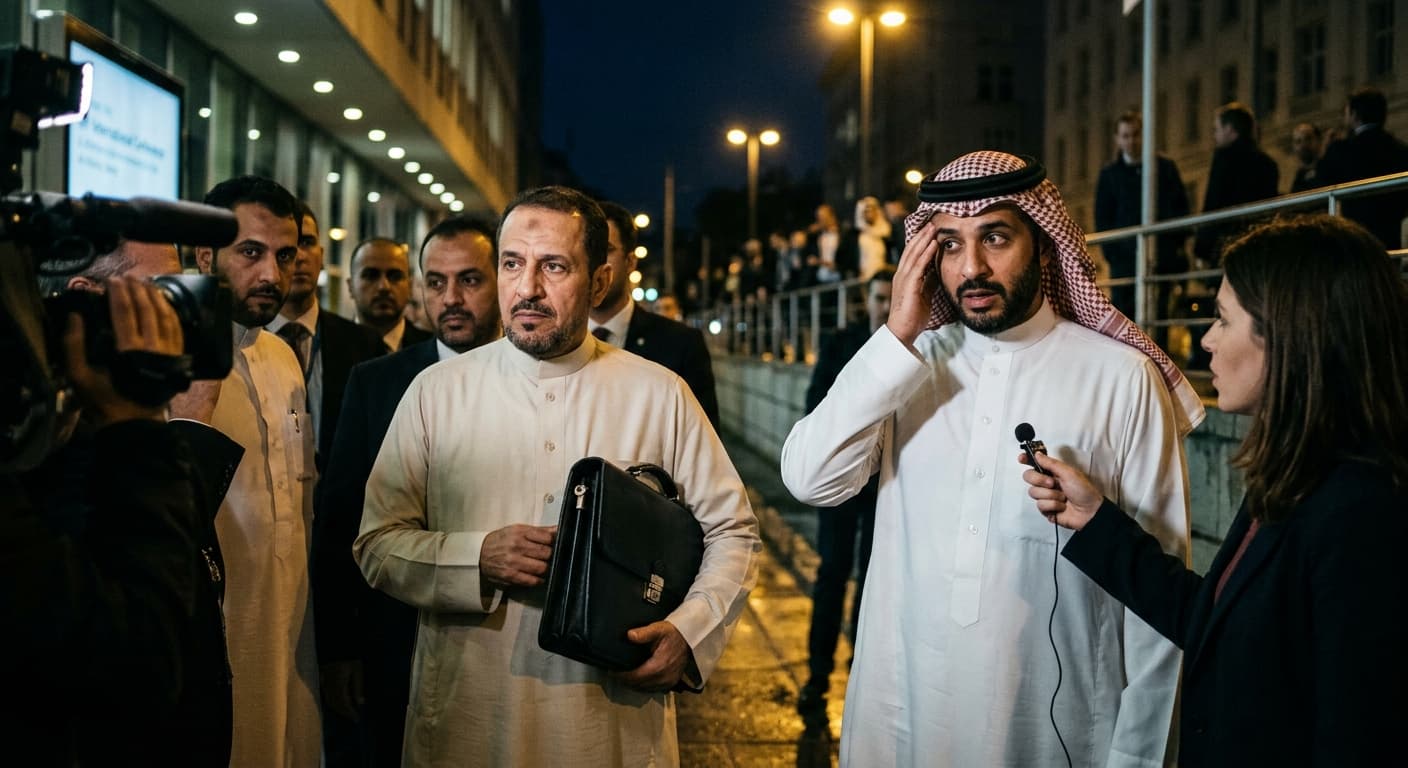
OPEC's August hike is Riyadh racing UAE for Asia's barrels
Saudi Arabia's fifth straight production increase and an Aramco price cut signal that the Iran war premium is gone — and that Gulf oil diplomacy has fractured for good.
On July 5, 2026, seven OPEC+ producers agreed to add another 188,000 barrels per day in August — the fifth straight monthly hike — while Saudi Aramco simultaneously cut the Arab Light official selling price to Asia by roughly a dollar a barrel. Read together, the two moves do not merely say oil is heading lower; they say Riyadh has decided to race the UAE for Asian market share before Abu Dhabi's post-Hormuz supply glut arrives, and that the political architecture of the Gulf — Saudi-Emirati alignment, an intact OPEC, a US-underwritten strait — no longer holds. The tanker strikes and US retaliation of July 7 are the second half of that same signal: the war premium is gone, but the strategic risk premium is permanent.
The signal, decoded
The July 5 statement from the seven "participating countries" — Saudi Arabia, Russia, Iraq, Kuwait, Kazakhstan, Algeria and Oman — pointedly omitted the UAE, which quit OPEC and OPEC+ on May 1 after 59 years, according to Al Jazeera. The group said it would "continue to closely monitor and assess market conditions" and reconvene on August 2, language that gives Riyadh cover to pause if Iran closes the strait again.
The market read it as bearish anyway. Brent settled near $72 on July 6, below the $72.48 close on February 27, the day before US and Israeli strikes on Iran began the war, Al Jazeera reported. That is a remarkable round trip: prices touched $126 in April at the height of the Hormuz closure, and total OPEC+ output collapsed from 42.77 million bpd in February to 33.13 million bpd in May.
The Aramco price move is the harder signal. Saudi official selling prices, as the Financial Times has long noted, are less a headline number than a demand thermometer — a cut in the Asian differential means Aramco is fighting to keep refiners on long-term contracts rather than defecting to Russian, Iraqi or, soon, Emirati barrels. Analyst Fabien Yip at IG told Al Jazeera the quotas themselves are "a paper formality" so long as Hormuz is contested; the OSP cut is the real instrument.
Riyadh's calculation: sell now, before UAE floods the market
The Emirati exit reframes every Saudi decision from here. The UAE spent the past decade building capacity from 3.0 to 4.8 million bpd and openly targets 5 million by 2027, according to Al Jazeera. Inside OPEC it was capped at roughly 3.2 million. Within days of quitting, state producer Adnoc announced $55 billion in new upstream and downstream projects for 2026–2028,
the BBC reported — spending calibrated to sprint through peak-demand years before the energy transition bites.
That is the mirror image of the Saudi bind. The IMF's own estimate put Riyadh's fiscal breakeven near $96.20 per barrel in 2024, and Saudi Finance Minister Mohammed Al-Jadaan told the FT this year the kingdom would "review" spending after prices slid — including on Vision 2030 megaprojects. Every month oil trades near $72, the deficit widens; every month it trades near $72 while Adnoc adds capacity, Aramco loses future share. The rational Saudi play is to book revenue now, at prices its economy hates, rather than defend a price the UAE will break anyway.
The Council on Foreign Relations framed the split as strategic, not commercial: MBS and MBZ diverged over Yemen, Somaliland, and now Iran, with Riyadh joining Pakistan, Egypt and Turkey in pushing a diplomatic settlement while Abu Dhabi demanded harder security guarantees. The Middle East Institute's
analysis notes the four remaining Gulf swing producers — Saudi Arabia, Iraq, Kuwait plus Oman — hold roughly 9.8 million bpd of capacity and could add 2.7 million by 2030, enough to offset the UAE loss on paper. In practice, only Riyadh is willing to absorb the pain of coordination.

The Hormuz deal that isn't one
The oil price collapse rests on a 14-point US-Iran memorandum of understanding signed electronically by Donald Trump and Masoud Pezeshkian on June 17, 2026, according to Al Jazeera. It promised a 60-day ceasefire, gradual Hormuz reopening, US sanctions waivers, unfreezing of Iranian assets, and a $300 billion reconstruction fund to be assembled from regional partners.
Read the primary document and the leverage is Tehran's. Under the MoU, Iran committed only to "best efforts for the safe passage of commercial vessels with no charge for 60 days" and to consult with Oman to "define the future administration and maritime services" of the strait, the BBC reported. It did not dismantle the Persian Gulf Strait Authority it created during the war to issue passage permits. Brookings scholar Kari Heerman told colleague Bruce Jones that Iran has "not taken that authority down" and had its national insurance company open a policy required for transit — a monetisation architecture parked in neutral,
according to Brookings.
Bruce Jones put the physical reality more bluntly:
"In practice, the strait is still mined. And getting rid of the mines is a major operation… Either Iran removes them, which is the easier way. If they are fully implementing the deal and with full cooperation, they remove the mines. That's the easier way."
The Joint Maritime Information Center recommended tankers hug a narrow southern corridor along the Omani coast confirmed clear of mines. On July 2 Al Jazeera counted 38 transits; the pre-war daily average was around 138.
The US Treasury built its half of the deal on temporary licences. OFAC's own Iran sanctions page lists General License X1 authorising Iranian crude sales through August 21, and a wind-down licence following its June 21 revocation. That legal architecture — a 60-day window, revocable — is what Treasury pulled on July 7, cancelling waivers effective 12:01 EDT on July 17 after three commercial vessels were struck inside the strait, according to
Al Jazeera. Centcom then hit "more than 80 targets" — air defence, coastal radar, fast boats — and Trump told reporters at the NATO summit that the MoU was "over," per
the BBC. Brent jumped 3% to $76.48. It stayed well below the war peak.
That combination — sharp geopolitical shock, muted price response — is the market saying it now believes the disruption is manageable. It is also what OPEC+ was betting on.
Who benefits, who loses
The clean winner is the UAE. It exited the cartel exactly when quotas became binding, secured US backing during the war, and now sits on 1.6 million bpd of unused capacity plus the Fujairah pipeline that bypasses Hormuz entirely. Rystad Energy's Jorge Leon called the group's loss of a member "with 4.8 million bpd of capacity and the ambition to produce more" a real tool removed from OPEC's hands. Adnoc's $55 billion capex plan is the second act.
The loser is Riyadh's price-setter role. Saul Kavonic at MST Financial told the BBC the departure marks "the beginning of the end" of OPEC as a swing manager, and that Saudi Arabia "will struggle to keep the rest of OPEC together." The kingdom now runs a first-quarter $15.6 billion deficit, already more than half of its full-year target, and has begun quietly reviewing which Vision 2030 megaprojects to delay.
Iran gained the most from the war it lost militarily. As Brookings put it, Tehran established "a system that both recognised its control of the strait and established a mechanism for its monetisation." Even with Khamenei killed on day one and Centcom striking at will, Iran walks away with a Persian Gulf Strait Authority, a joint-management arrangement with Oman, and roughly 50 million barrels pushed to market during the sanctions waiver.
China is the invisible arbiter. Beijing tapped commercial stockpiles rather than pay $126 crude, pivoted imports to Russia, Kazakhstan, Brazil, Indonesia and Venezuela, and has not yet returned to Middle Eastern volumes even with Hormuz reopening, according to Al Jazeera. Independent teapot refiners — Iran's traditional buyers — have moved on. That is why Morgan Stanley cut its price forecast twice in two weeks and the IEA now sees global demand contracting 420,000 bpd in 2026 to 104 million bpd,
Argus reported. Energy Intelligence goes further: a
big 2027 surplus if the Iran deal holds.
Diplomat View
The OPEC+ signal is not that oil is heading down. It is that Saudi Arabia has quietly conceded the price-defence strategy of 2023 and pivoted to volume — because the alternative is watching Abu Dhabi and Baghdad take Asian market share it may never recover. The July 7 strikes will not reverse that: they lift risk premium, not physical flows. Expect Brent to trade in a $70–$85 band through Q4 2026, with spikes on Hormuz incidents that fade within days. The forecast breaks if two conditions hit together — Iran remines the southern corridor and China's imports return to 11-plus million bpd on stockpile rebuild. Then the war premium comes back for real, and Riyadh regains a leverage it currently does not have. The tell will be the August 2 OPEC+ meeting: if the seven pause the hike, they have decided the ceiling matters more than share. If they add another 188,000 bpd, Riyadh has made its choice.
What to watch
- July 17, 2026 — OFAC's revocation of the Iran oil waiver takes effect at 04:01 GMT; secondary sanctions exposure resumes for Chinese teapot refiners and shadow-fleet operators.
- August 2, 2026 — Seven-nation OPEC+ meeting sets September quotas; a pause signals Saudi capitulation on volume, a further hike signals full pivot to market share.
- August 16, 2026 — End of the 60-day MoU window; without a final US-Iran deal, the Persian Gulf Strait Authority's fee regime activates and the free-transit clause lapses.
The Bottom Line
The August production hike is not a demand call — it is Saudi Arabia locking in Asian barrels before the UAE's post-Hormuz flood arrives and before Vision 2030 spending forces harder choices. The July 7 tanker strikes proved Iran retains chokepoint leverage; the muted price reaction proved the market has already accepted that as a permanent feature. Gulf oil diplomacy has fractured into three tracks — Riyadh's volume play, Abu Dhabi's solo sprint, Tehran's monetisation of geography — and OPEC as a price cartel is no longer the frame that explains where the barrel goes next.
Discover more

US Politics
SNAP Food Assistance Faces Legal Challenges
In 2026, SNAP faces stricter eligibility rules and mounting legal challenges, threatening food assistance for the millions of Americans who rely on the program.
India
Congress Accuses Modi of Stalling Women's Law
Congress accuses Modi of stalling women's reservation law by linking it to delimitation, revealing a deeper electoral strategy.

India
Delhi CM Rekha Gupta Blasts Opposition's Delm
Delhi CM Rekha Gupta's remarks on women's quota defeat reveal BJP's strategy for the 2029 Lok Sabha elections, focusing on delimitation.

Economics
Fed's Amex AML order puts correspondent banking on notice
Federal Reserve's Amex AML order requires board-level controls and a 90-day plan; OCC fined the bank $350 million over enterprise-wide deficiencies.