Omar Abdullah Pressures Delhi on J&K Stateho
J&K's stalled statehood raises political stakes for BJP.
Model Diplomat2 min readAsia
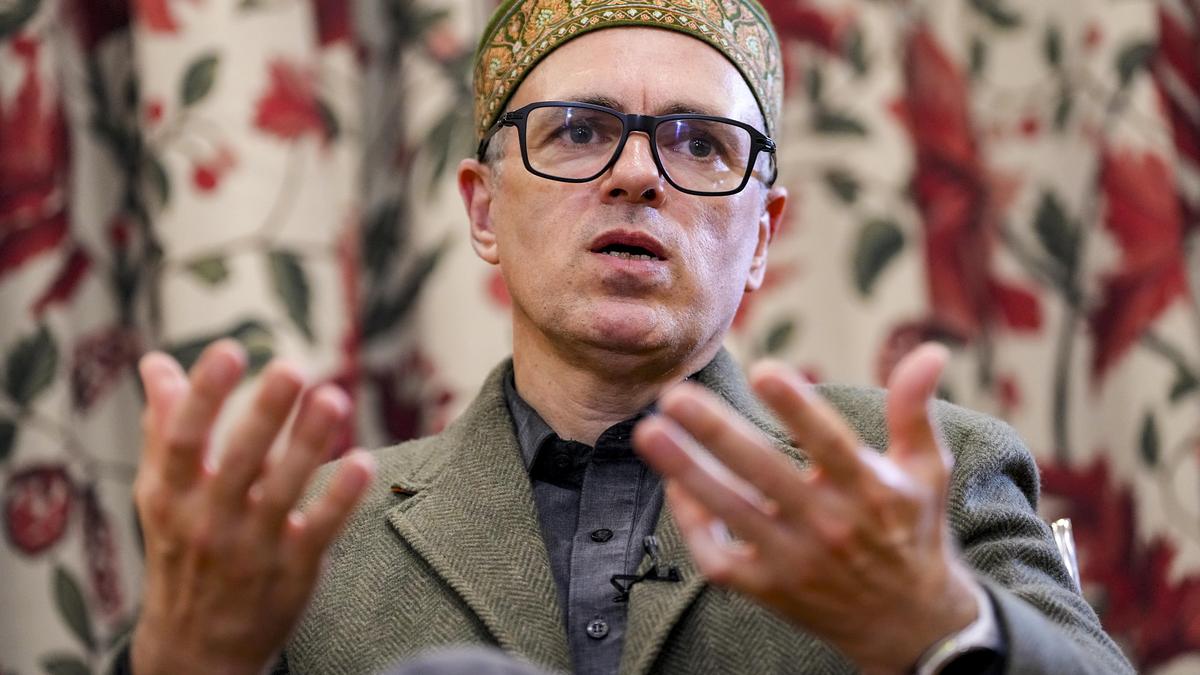
Omar’s statehood charge raises pressure on Delhi in J&K
Omar Abdullah is casting J&K’s stalled statehood as political punishment, sharpening pressure on Delhi after the Centre’s vague delays.
Omar Abdullah is trying to convert a constitutional delay into a political liability for the BJP. In remarks reported by The Hindu, the Jammu and Kashmir chief minister said the statehood promise is “deeply unfair” to the people and asked whether they were being punished for not electing a BJP chief minister. That is not just frustration; it is an attempt to put the burden of explanation back on New Delhi.
Delhi still holds the real leverage
The power balance has not changed. The Centre controls the timeline, and Abdullah has little more than public pressure and legal argument. The Hindu reported that the Supreme Court, in its December 2023 verdict on Article 370, upheld the abrogation but directed Assembly elections by September 30, 2024, while accepting the Centre’s assurance that statehood would be restored “at the earliest.” That phrasing is the problem: it gave Delhi political cover, not a deadline.
Abdullah is exploiting that ambiguity. His complaint is simple: the Centre repeatedly invokes “appropriate time,” but never says what has to happen first. As long as that remains undefined, the BJP keeps the leverage and J&K’s elected government carries the blame for a promise it cannot deliver. For readers tracking center-state bargaining, this is a classic India case: constitutional ambiguity becomes political control.
Why the BJP is in the frame
The sharper edge in Abdullah’s charge is the suggestion that statehood may be contingent on a BJP chief minister. A parallel Kashmir Observer report carried the same PTI interview and Abdullah’s argument that if the BJP had made that condition explicit, it should have said so in Parliament or before the Supreme Court. That framing matters because it turns statehood from a federal issue into a question of partisan reward.
The National Conference gains by keeping statehood at the center of J&K politics and by portraying itself as the party being denied a settled constitutional promise. The BJP loses if the delay hardens into a story of selective restoration: elections first, statehood later, and only on Delhi’s terms. For the Centre, the cost is longer-term. Every month of vagueness makes statehood look less like a transition and more like a withholding.
What to watch next
The next decision point is whether Delhi offers a clearer timeline or leaves Abdullah to escalate. Watch for any public signal from Prime Minister Narendra Modi or Home Minister Amit Shah, and for whether J&K’s government returns to the Supreme Court to pin down what “at the earliest” actually means. If the Centre stays silent, the statehood issue will stop being a procedural delay and become a standing test of credibility.
Discover more
India
BJP's Delimitation Strategy
K.C. Venugopal claims BJP uses women's reservation to push delimitation, raising concerns over electoral fairness ahead of 2029 elections.
India
Congress Advocates 33% Women’s Quota
YS Sharmila of Congress reaffirms 33% women's quota, accusing Modi of politicizing the issue amid delimitation talks.
India
BJP Congress Clash Over MP Bill Defeat
The defeat of a Constitution Amendment Bill in Madhya Pradesh sparks a fierce clash between BJP and Congress, highlighting political tensions ahead of 2027 elections.
Global Politics
Iran Demands US Enforce Ceasefire
Iran insists the US must enforce a ceasefire in Lebanon to uphold the MoU.